
Summary

Verifying Red Light Therapy (RLT) specifications in 2026 requires a shift from relying on manufacturer marketing to performing independent, technical validation. To ensure therapeutic efficacy and safety, users must distinguish between "marketing irradiance"—often inflated by 20-50% through the use of solar meters—and true laboratory-grade spectroradiometry. A legitimate verification process involves measuring actual irradiance (mW/cm²) at specific treatment distances, assessing electromagnetic field (EMF) emissions (both magnetic and electric), and confirming that flicker modulation remains below the 5% threshold defined by IEEE 1789-2015 standards.
Key takeaways
- Avoid Irradiance Inflation: Solar meters are designed for broad-spectrum sunlight and typically overestimate RLT power; only spectroradiometers provide accurate wavelength-specific data.
- Dual-Field EMF Testing: Safe RLT devices should show near-zero readings for both magnetic fields (mG) and electric fields (V/m) at the recommended treatment distance.
- Flicker Safety: High flicker rates can cause neurological stress; verify that your device uses constant-current drivers to maintain a low-risk flicker profile (<5%).
- Wavelength Precision: Therapeutic outcomes depend on specific peaks (e.g., 660nm and 850nm); verification ensures the LEDs haven't shifted into less effective ranges.
- Standards Compliance: Look for devices that reference photobiomodulation safety standards such as IEC 60601-2-57:2026 for technical legitimacy.
Why Technical Verification is Essential in 2026
The red light therapy market has matured significantly, but the "trust gap" between factory claims and actual performance remains a challenge for consumers. Many brands continue to use "marketing shells"—impressive-looking device casings that house sub-standard components. Without independent verification, you may be receiving a fraction of the intended dose, or worse, exposing yourself to unnecessary electromagnetic stress.
Accurate specs are the foundation of any successful treatment plan. If you are following red light therapy protocols and dosage designed for muscle recovery or skin health, those protocols are based on specific energy densities (Joules/cm²). If your device's irradiance is half of what is claimed, your 10-minute session is actually providing only 5 minutes of therapeutic value.
Logic Summary: This guide assumes that the user is seeking to validate a device for home or clinical use. The recommendations prioritize accuracy over convenience, acknowledging that while professional tools are expensive, understanding their methodology allows consumers to better interpret third-party lab reports.
The Irradiance Inflation Problem: Solar Meters vs. Spectroradiometers
The most common deception in the RLT industry is the use of solar power meters (like the Tenmars TM-206) to measure irradiance. These devices are calibrated for the full spectrum of the sun. When exposed to the concentrated, narrow-band light of RLT LEDs, they "over-read" the energy.
In a 2026 technical landscape, we recognize that a solar meter might show 100 mW/cm², while a calibrated spectroradiometer reveals the true output is only 60 mW/cm². This discrepancy is what we call "irradiance inflation." To truly compare red light therapy panels, you must look for data derived from a spectrometer that accounts for wavelength specifications and their effects.
How to Verify Irradiance at Home
While most users won't buy a $2,000 spectroradiometer, you can still perform a "sanity check" using power consumption as a proxy.
- Check the Wall Draw: Use a simple "Kill-A-Watt" meter to measure how many watts the device pulls from the wall.
- The 30% Rule: Generally, about 25-35% of the power consumed by a high-quality LED panel is converted into light energy (the rest is heat).
- Calculate the Area: If a panel draws 100W and has a surface area of 500 cm², it is physically impossible for it to deliver 200 mW/cm² across that entire area.

Verifying EMF Safety: Magnetic and Electric Fields
Electromagnetic Fields (EMF) are a byproduct of the electrical components inside RLT devices, particularly the switching power supplies and fans. In 2026, the industry standard for "Low EMF" means addressing two distinct types of radiation:
1. Magnetic Fields (ELF)
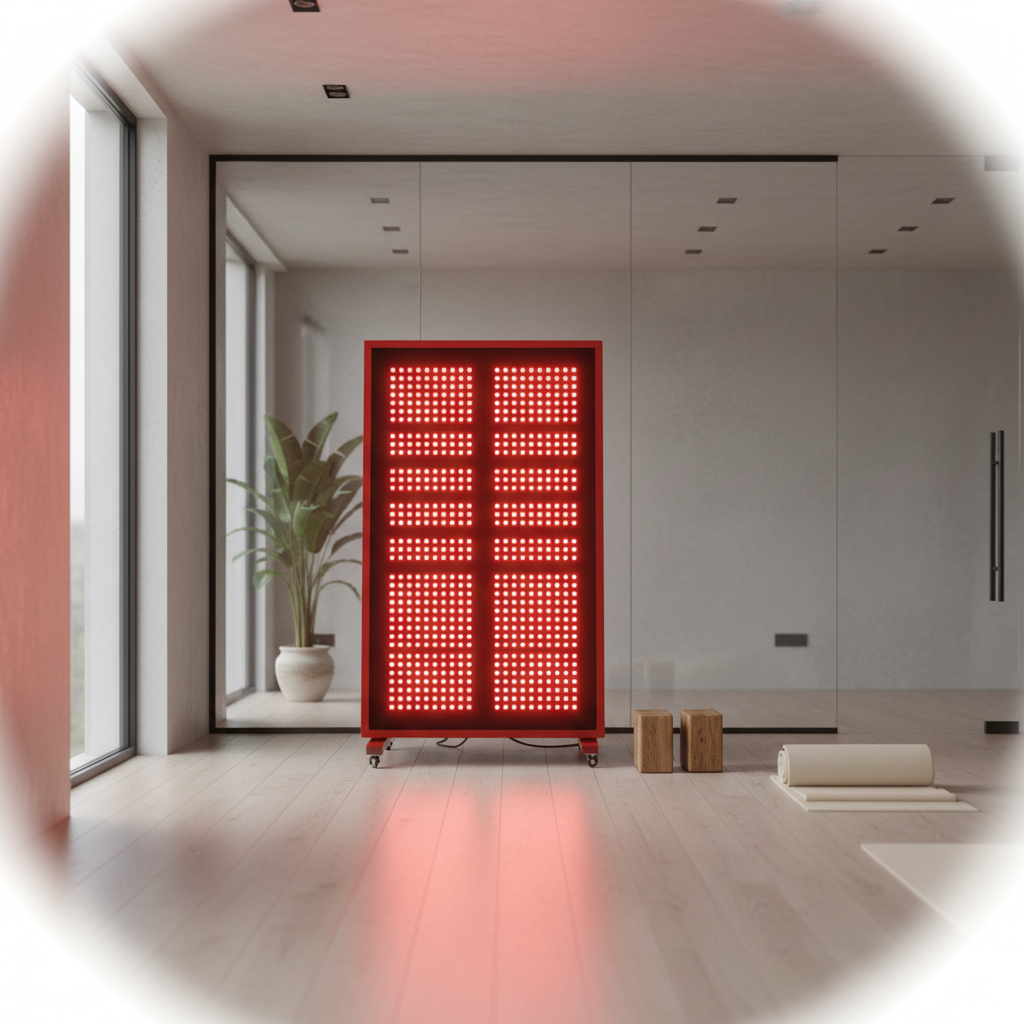
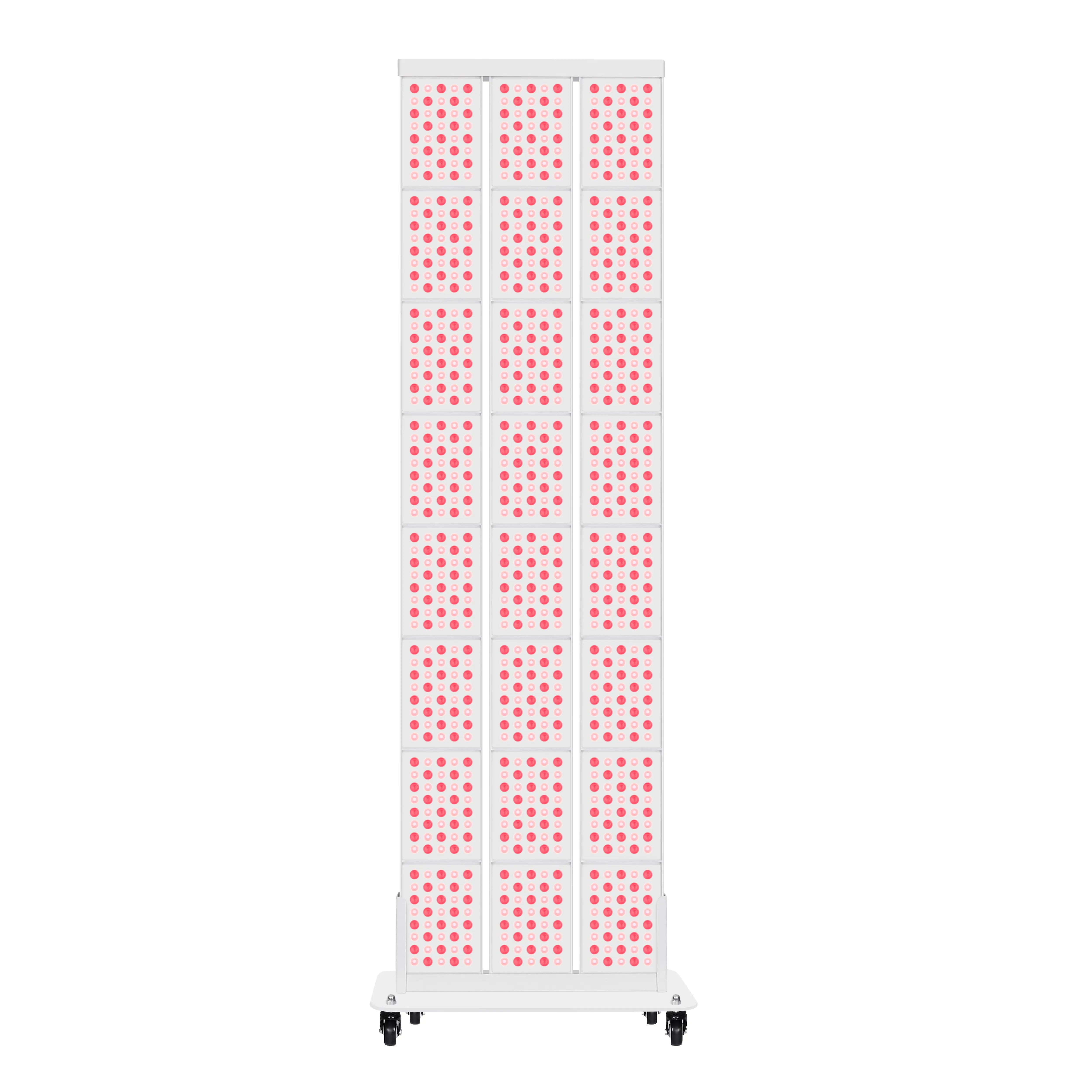
Measured in milliGauss (mG), these fields are generated by the flow of current. Most high-quality panels, such as the YOULUMI Red Light Therapy Panel specifications, are engineered to ensure magnetic fields drop to near-zero within 3-6 inches of the device.
2. Electric Fields (V/m)
Often overlooked, electric fields are present even when the device is plugged in but not turned on. Verification requires a meter that can measure Volts per meter (V/m). A "zero EMF" claim is only valid if the device is properly shielded and grounded.
| Metric | Safe Threshold (at 6") | Common "Marketing Shell" Reading |
|---|---|---|
| Magnetic Field | < 1.0 mG | 20 - 50 mG |
| Electric Field | < 10 V/m | 100+ V/m |
| Radio Frequency | 0 (unless Bluetooth/Wi-Fi active) | Variable |
Logic Summary: EMF safety thresholds are based on the precautionary principle. While short-term exposure at higher levels may not be immediately harmful, RLT is often used daily for 10-20 minutes, making cumulative exposure a valid concern for health-conscious users.
Flicker Modulation and the IEEE 1789-2015 Standard
Flicker is the rapid "on-off" pulsing of LEDs. While often invisible to the naked eye, high-frequency flicker can be detected by the brain, potentially leading to eye strain, headaches, or even neurological fatigue.
The gold standard for verification is the IEEE 1789-2015 "Recommended Practices for Modulating Current in High-Brightness LEDs for Mitigating Health Risks to Viewers." For RLT, we look for "flicker-free" drivers. When understanding flicker and frequency specifications, it is important to distinguish between intentional pulsing (used in some protocols) and unintentional flicker caused by cheap power supplies.
Verification Method: The Slow-Motion Test
A quick, non-technical way to check for severe flicker is to point your smartphone camera at the device and record in "Slow Motion" mode (240 fps). If you see distinct black bands or heavy strobing on the screen, the device has high flicker modulation. Professional verification requires an oscilloscope or a specialized flicker meter to ensure the modulation depth is below 5%.
Step-by-Step Verification Protocol for RLT Devices
If you are serious about technical legitimacy, follow this protocol when evaluating a new device:
- Request a Third-Party Spectroradiometry Report: Do not accept "factory specs." Ask for a report from an independent lab (like ITL or UL) that shows the spectral power distribution.
- Verify the Testing Distance: Irradiance claims are meaningless without a distance. A claim of "150 mW/cm²" might be true at the surface (0") but drop to 30 mW/cm² at 6". Ensure the specs match your intended use distance.
- Check for Grounding: Ensure the device uses a 3-prong grounded plug. This is essential for eliminating electric field EMFs.
- Audit the Wavelength Peaks: Ensure the report shows peaks at the advertised wavelengths (e.g., 660nm and 850nm). Some cheap LEDs have "wide" peaks that bleed into less effective orange or far-infrared ranges.
- Assess Thermal Management: High-power LEDs generate heat. If a device doesn't have adequate heat sinking or fans, the irradiance will drop as the LEDs heat up (thermal droop).
The Role of Regulatory Standards (IEC 60601-2-57:2026)
In 2026, the most authoritative devices reference the IEC 60601-2-57:2026 standard. This international standard specifically covers the basic safety and essential performance of non-laser light source equipment intended for therapeutic use.
Devices that meet this standard have undergone rigorous testing for:
- Optical safety (preventing retinal damage).
- Electrical safety (insulation and leakage current).
- Electromagnetic compatibility (ensuring the device doesn't interfere with other electronics).
When a brand provides a "Declaration of Conformity" to these standards, it represents a much higher level of technical legitimacy than a simple "FDA Registered" claim, which often only means the company has paid a registration fee without any actual product testing.
FAQ
How can I tell if a brand is inflating their irradiance numbers? The most common sign of irradiance inflation is a claim of over 100 mW/cm² at a distance of 6 inches or more for a standard-sized panel. Unless the device is drawing an immense amount of power from the wall and has heavy-duty cooling, such numbers are physically improbable and likely measured with a solar meter. Always ask if the measurements were taken with a spectroradiometer.
Is zero EMF actually possible in a red light therapy device? "Zero EMF" is a relative term. Every electrical device produces some field, but a well-engineered RLT panel will have shielded internal wiring and a grounded metal chassis that reduces the electric field to negligible levels. The magnetic field should drop to background levels (less than 0.5 mG) within a few inches of the LEDs.
Does flicker matter if I can't see it? Yes, flicker can still affect the nervous system even if it is not consciously perceived. The retina and brain can still process the rapid modulation, which for some individuals may trigger sub-clinical stress responses. For a therapeutic device intended for relaxation and healing, minimizing this biological stressor is a priority.
What is the difference between a solar meter and a spectrometer? A solar meter measures the total energy of all light hitting its sensor across a very wide range (often 300nm to 1100nm). A spectrometer (or spectroradiometer) breaks the light down into individual wavelengths and measures the energy at each specific nanometer. This allows it to ignore "noise" and accurately report only the therapeutic red and near-infrared energy.
Why do some devices have a "pulsing" mode if flicker is bad? Intentional pulsing (often at frequencies like 10Hz or 40Hz) is different from the high-frequency flicker caused by poor power supplies. Intentional pulsing is a controlled feature used in specific photobiomodulation protocols to elicit a biological response, whereas unintentional flicker is a sign of low-quality electronics and provides no therapeutic benefit.
Are consumer-grade EMF meters accurate enough for RLT testing? Consumer-grade meters like the TriField TF2 are generally sufficient for identifying "hot spots" and verifying that fields drop off at a safe distance. While they aren't as precise as laboratory Gauss meters, they are excellent tools for a "pass/fail" safety check in a home environment.
References
Government / Standards / Regulators
- IEC 60601-2-57:2026: Medical electrical equipment - Part 2-57: Particular requirements for the basic safety and essential performance of non-laser light source equipment intended for therapeutic, diagnostic, monitoring and cosmetic/aesthetic use. International Electrotechnical Commission.
- FDA 21 CFR 890.5525: Physical Medicine Devices - Infrared Lamp. U.S. Food and Drug Administration.
Industry Associations / Research Institutes
- IEEE 1789-2015: IEEE Recommended Practices for Modulating Current in High-Brightness LEDs for Mitigating Health Risks to Viewers. IEEE Standards Association.
- ICNIRP Guidelines: Guidelines for Limiting Exposure to Electromagnetic Fields (100 kHz to 300 GHz). International Commission on Non-Ionizing Radiation Protection.
Platform Official Docs & Policies
- Photobiomodulation Standards: Irradiance, EMF, and Safety Whitepaper. YouLumi Technical Guide 2026.
Community (Intent Discovery Only)
- Reddit r/redlighttherapy: Discussion on consumer-grade meter accuracy and "solar meter" vs "spectrometer" debates. (Note: Community consensus used for intent discovery; not an authoritative technical source).