Summary
Integrating red light therapy (RLT) into a yoga studio environment offers a dual-benefit strategy: it significantly enhances student physiological outcomes—such as increased flexibility, accelerated muscle recovery, and reduced inflammation—while simultaneously providing studio owners with a high-margin, low-maintenance revenue stream. In the 2026 wellness landscape, boutique fitness centers are increasingly adopting clinical-grade photobiomodulation to differentiate their offerings, moving beyond traditional practice into holistic bio-optimization. By strategically placing high-irradiance panels in dedicated recovery rooms or integrating them directly into the studio space, owners can cater to the growing demand for longevity-focused fitness.
Key takeaways
- Physiological Synergy: Red light therapy (660nm) and near-infrared light (850nm) penetrate deep into tissues to stimulate mitochondrial function, which can improve joint mobility and reduce the delayed onset muscle soreness (DOMS) often associated with intensive Vinyasa or Power Yoga.
- Strategic Revenue Growth: Studios can implement RLT through tiered membership models, "recovery add-ons," or standalone sessions, typically seeing a return on investment (ROI) within 6 to 12 months depending on member adoption rates.
- Optimized Timing: While post-session RLT is standard for recovery, pre-session exposure is gaining traction in 2026 for its ability to "prime" muscles, potentially increasing range of motion and preventing injury during deep stretching.
- Safety and Compliance: Professional installations must adhere to the latest photobiomodulation safety standards and EMF considerations, ensuring that devices meet IEC 60601-2-57:2026 requirements for shared wellness environments.
- Environment-Specific Integration: Successful implementation requires specialized hygiene protocols, particularly in high-humidity environments like hot yoga studios, to maintain equipment longevity and student safety.
The Strategic Advantage of Red Light Therapy in Modern Yoga Studios
The wellness industry in 2026 has shifted from a focus on "pure exercise" to "integrated recovery." For yoga studio owners, this evolution presents a unique opportunity to elevate the student experience while stabilizing business growth. Red light therapy, or photobiomodulation (PBM), has emerged as the cornerstone of this transition. Unlike traditional saunas that rely on heat, RLT uses specific wavelengths of light to trigger cellular-level healing without adding thermal stress to the body. This makes it an ideal companion for yoga, where the goal is often to balance physical exertion with restorative practices.
From a business perspective, adding RLT is a "low-friction" upgrade. High-quality LED panels require minimal square footage and no additional staffing once the initial orientation is complete. Studios are finding that members are willing to pay a premium for access to "bio-optimization" tools that were previously only available in elite sports clinics. By positioning the studio as a center for both mindfulness and cutting-edge recovery science, owners can improve member retention and attract a demographic that prioritizes long-term health and performance.
Logic Summary: The recommendation for RLT integration is based on the 2026 market trend toward "recovery-as-a-service." This assumes a studio has at least 50 square feet of underutilized space or wall capacity. ROI estimates vary based on local market rates and existing membership tiers.
Enhancing the Practice: Physiological Benefits for Yoga Students
The marriage of yoga and red light therapy is grounded in the science of light-tissue interaction. When students are exposed to 660nm (red) and 850nm (near-infrared) light, their mitochondria—the powerhouses of the cell—absorb the photons. This process increases the production of adenosine triphosphate (ATP), the energy currency of the cell. For a yoga practitioner, this translates into tangible physical improvements that can be felt during and after class.
Increased flexibility is perhaps the most immediate benefit. Studies in photobiomodulation have shown that light therapy can improve the elasticity of collagen fibers and reduce joint stiffness. When used before a Yin or Hatha session, RLT can help students safely reach deeper expressions of a pose. Furthermore, the anti-inflammatory effects of NIR light are crucial for those practicing high-intensity styles like Ashtanga or Power Yoga. By modulating oxidative stress, RLT helps the body repair micro-tears in muscle tissue more efficiently, allowing students to return to their mats sooner without the lingering fatigue of overtraining.

Optimizing Integration: Pre-Session vs. Post-Session Protocols
One of the most frequent questions from studio owners is when students should use the therapy. In 2026, the consensus has moved toward a "dual-protocol" approach based on the student's specific goals for the day.
Pre-Yoga Priming (10-15 minutes): Using RLT before a class is designed to "warm up" the cells. This is particularly effective for morning classes or for practitioners dealing with chronic stiffness. The light increases local blood flow and prepares the muscles for the eccentric and concentric loading found in Vinyasa flows. It acts as a non-thermal warm-up that doesn't deplete the student's energy but rather enhances their metabolic readiness.
Post-Yoga Recovery (15-20 minutes): This remains the most popular application. After a strenuous session, the body enters a state of repair. RLT applied within 2-4 hours of exercise can significantly dampen the inflammatory response and stimulate the lymphatic system to clear metabolic waste. For studios, this is often integrated into a "Savasana+ " experience, where students transition from their final resting pose into a dedicated RLT recovery zone.
| Protocol Type | Primary Goal | Recommended Duration | Best Yoga Style Pairing |
|---|---|---|---|
| Pre-Session Priming | Mobility & Energy | 10 Minutes | Yin, Hatha, Morning Vinyasa |
| Post-Session Recovery | Inflammation & Repair | 20 Minutes | Power Yoga, Ashtanga, Hot Yoga |
| Restorative Synergy | Nervous System Balance | 15 Minutes | Restorative Yoga, Nidra |
Designing the Recovery Room: Practical Studio Layouts
Integrating RLT doesn't necessarily require a full renovation. Many boutique studios are successfully utilizing "Recovery Nooks" or "Wellness Walls." The key is to create an environment that maintains the studio's aesthetic while ensuring technical efficacy.
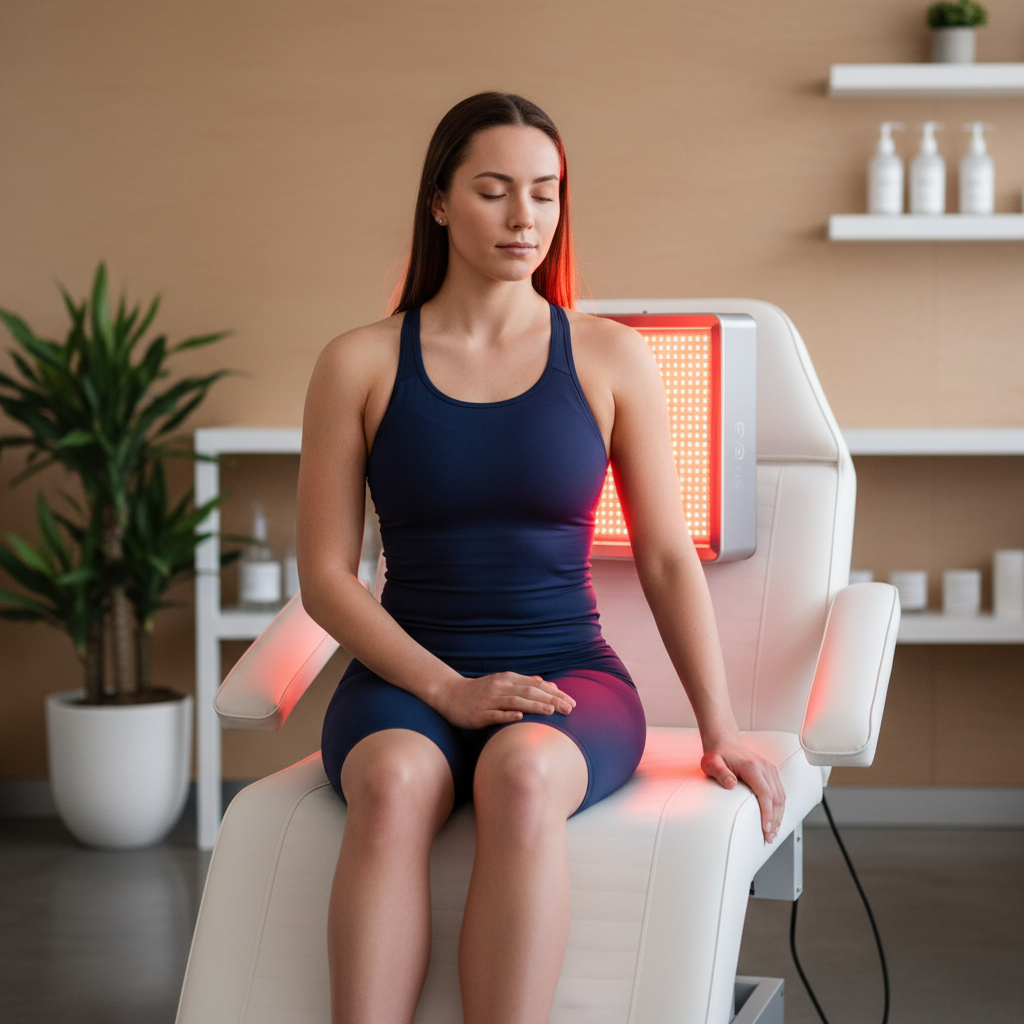
Wall-Mounted Arrays: For studios with limited space, mounting large-scale panels directly onto the walls of a secondary room or even at the back of the main practice hall allows for "passive recovery." Students can stand or sit in front of the panels. It is essential to ensure that the irradiance levels are consistent across the treatment area.
The "Savasana" Integration: Some high-end studios are installing overhead RLT arrays in a dedicated "Quiet Room." Students lie on bolsters under the light for a guided meditation or extended Savasana. This creates a deeply immersive, multi-sensory experience that justifies a higher drop-in rate.
Hygiene and Maintenance in High-Sweat Environments: This is a critical consideration often overlooked. In 2026, hygiene standards for shared wellness equipment are more stringent than ever. For studios offering hot yoga, RLT panels must be positioned away from direct steam and sweat. We recommend using medical-grade, non-porous covers for any touchpoints and implementing a strict "wipe-down" protocol using electronics-safe antimicrobial solutions after every session.
Logic Summary: Layout recommendations prioritize student flow and equipment longevity. We assume the use of professional-grade LED panels with a minimum irradiance of 100mW/cm² at 6 inches to ensure therapeutic dosing within a 10-20 minute window.

Technical Excellence and Safety Standards for 2026
As red light therapy becomes a staple in professional environments, the "trust gap" regarding equipment safety has become a focal point for regulators. Studio owners must be diligent in selecting hardware that meets the 2026 benchmarks for safety and efficacy.
A primary concern is the implementation of the IEC 60601-2-57:2026 standard, which governs the safety of non-laser light sources used in medical and wellness applications. This standard ensures that the equipment does not emit harmful levels of ultraviolet (UV) radiation and that the electromagnetic interference (EMI) is within safe limits for a shared space. Additionally, the IEEE 1789-2015 standard for flicker modulation is vital; low-quality LED drivers can produce a "strobe" effect that, while invisible to the naked eye, can cause headaches or eye strain in sensitive individuals.
When evaluating panels, owners should look for transparent reporting on irradiance. Many consumer-grade devices use legacy solar meters that "inflate" irradiance numbers. Professional studios should demand data verified by laboratory-grade spectroradiometry. For a deeper dive into these technical requirements, we recommend reviewing our comprehensive guide on photobiomodulation safety standards and EMF considerations, which serves as the canonical reference for technical validation in the industry.
Style-Specific Applications: From Yin to Hot Yoga
Not all yoga is created equal, and neither should be the RLT protocol. Tailoring the light therapy experience to the specific style of yoga offered can significantly enhance the "perceived value" for the student.
Yin Yoga and RLT: Yin focuses on the deep connective tissues—fascia, ligaments, and joints. Since RLT (specifically the 850nm NIR wavelength) is excellent at penetrating these deeper structures, it is the perfect companion for a Yin practice. Combining the two can lead to a profound release of chronic tension.
Hot Yoga Considerations: In a heated environment, the body is already under significant cardiovascular and thermoregulatory stress. RLT should be used after the student has cooled down and rehydrated. Adding RLT during a hot yoga class is generally not recommended as it may contribute to overheating, and the high humidity can damage the internal circuitry of the LED panels unless they are specifically rated for high-moisture environments (IP-rated).
Restorative Yoga and Mental Wellness: Beyond the physical, RLT has been shown to influence the circadian rhythm and mood. Integrating soft red light into a Restorative Yoga or Yoga Nidra class can help trigger the parasympathetic nervous system, leading to a deeper state of relaxation and better sleep quality for the student later that evening.
FAQ
Is red light therapy safe for all yoga students? Generally, red light therapy is considered safe for the vast majority of people as it is non-invasive and does not contain harmful UV rays. However, students with specific medical conditions, such as light-sensitive epilepsy or those taking photosensitizing medications, should consult with a healthcare provider before use. It is also standard practice in 2026 for studios to provide protective eyewear for those who prefer not to close their eyes during high-intensity sessions.
How much should a yoga studio charge for red light therapy sessions? Pricing models vary by region, but a common 2026 benchmark is $25–$45 for a standalone 20-minute session. Many studios find success by offering a "Recovery Pass" for $99/month, which allows for unlimited sessions, or by including it as a perk in their highest-tier "Platinum" memberships. This creates a predictable recurring revenue stream while increasing the overall value proposition of the membership.
Can red light therapy panels be installed inside the hot yoga room? We strongly advise against installing standard RLT panels inside a high-humidity hot yoga room unless the equipment is specifically rated with an IP (Ingress Protection) rating of IP65 or higher. The combination of high heat and moisture can lead to rapid degradation of the LED components and poses an electrical safety risk. The most effective setup is a dedicated, climate-controlled recovery zone adjacent to the hot room.
Does red light therapy help with yoga-related injuries like "yoga butt" (proximal hamstring tendinopathy)? Yes, photobiomodulation is widely used in sports medicine to treat tendinopathies. The 850nm wavelength can reach the deep attachments of the hamstring at the sit-bone, helping to reduce inflammation and stimulate collagen production in the tendon. While not a replacement for physical therapy, it is an excellent adjunctive treatment to speed up the healing process for common repetitive strain injuries.
How often should students use red light therapy to see results? Consistency is key in photobiomodulation. For general wellness and flexibility, 2-3 sessions per week are typically recommended. For students recovering from a specific injury or intense training block, daily sessions for a period of 1-2 weeks may be more beneficial. Most practitioners report feeling a difference in muscle soreness and joint mobility after just 3 to 5 sessions.
What is the maintenance requirement for professional RLT panels? In a commercial studio setting, maintenance is relatively low but essential. Panels should be dusted weekly to ensure maximum light output and wiped down daily with a non-abrasive, alcohol-free disinfectant. Every six months, it is recommended to check the cooling fans for debris and verify that the power cables are secure. Most professional-grade panels in 2026 are rated for 50,000 to 100,000 hours of use, meaning they can last for years even with heavy daily traffic.
References
Government / Standards / Regulators
- International Electrotechnical Commission (IEC): IEC 60601-2-57:2026 - Medical electrical equipment - Part 2-57: Particular requirements for the basic safety and essential performance of non-laser light source equipment
- IEEE Standards Association: IEEE 1789-2015 - Recommended Practices for Modulating Current in High-Brightness LEDs for Mitigating Health Risks to Viewers
- U.S. Food and Drug Administration (FDA): Product Classification for Light Based Energy Devices (510k)
Industry Associations / Research Institutes
- North American Association for Photobiomodulation Therapy (NAALT): Clinical Guidelines and Research Updates
- World Association for photobiomodulation Therapy (WALT): Dosage Recommendations for Musculoskeletal Disorders
Academic / Whitepapers
- Photobiomodulation, Photomedicine, and Laser Surgery: Mechanisms of Low-Level Light Therapy
- Journal of Biophotonics: Impact of 660nm and 850nm Wavelengths on Mitochondrial ATP Production
Platform Official Docs
- Youlumi Store Technical Whitepaper: Photobiomodulation Standards: Irradiance, EMF, and Safety