
The Hidden Costs of Cheap Red Light Therapy Devices on Amazon
Many shoppers are drawn to low-priced red light therapy panels on Amazon, expecting the same biological benefits as more expensive options. However, these budget devices often hide significant tradeoffs in real irradiance output, electromagnetic field (EMF) levels, flicker rates, and LED durability. These factors can make initial savings a "false economy" when the device fails to deliver the intended physiological results or requires frequent replacement.

Understanding Irradiance Claims and the "Distance Gap"
Irradiance, measured in milliwatts per square centimeter (mW/cm²), determines the density of therapeutic light energy reaching your skin. A common hidden cost of budget panels is "spec inflation." Many inexpensive units advertise high numbers measured directly at the LED surface or using inexpensive solar meters that are known to overstate RLT intensity by up to 2x-3x compared to laboratory spectroradiometers.
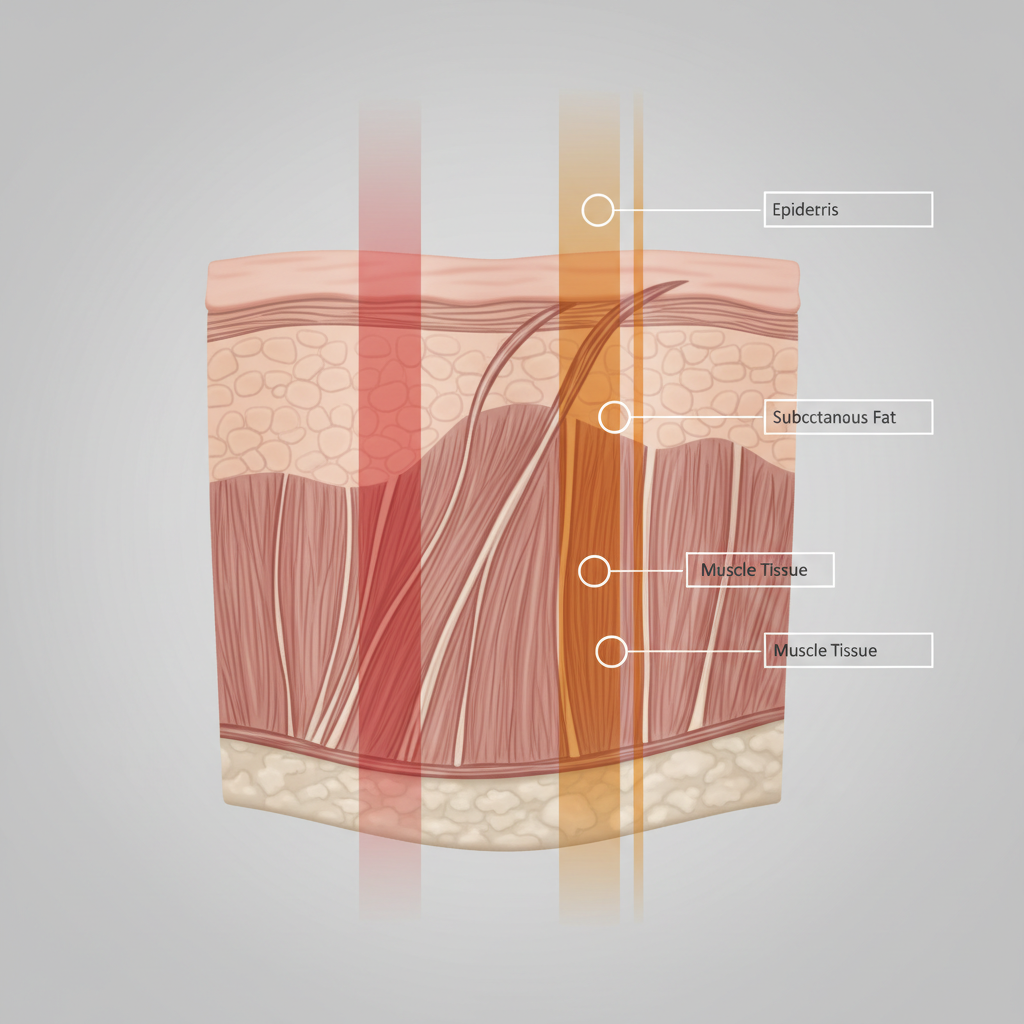
In practice, the therapeutic window for photobiomodulation (PBM) is generally recognized in clinical literature to fall between 20–100 J/cm² for most systemic and deep-tissue applications. To reach this dose with a budget panel that loses 70% of its power just 6 inches away, you might need to stand inches from the device for 30+ minutes—increasing the risk of heat stress or EMF exposure.
As this official throw-ratio guide explains, proper measurement requires standardized protocols. Professional-grade panels typically provide "distance-decay" charts based on spectroradiometer data, ensuring you know exactly how much energy you are receiving at 6, 12, or 18 inches.
The Risks of Elevated EMF and Flicker in Budget Devices
Electromagnetic fields (EMF) and light flicker are two quality factors often sacrificed to lower production costs.
EMF Thresholds
Cheap panels often lack internal shielding or use ungrounded power supplies. While there is no universal "safety" cutoff for non-ionizing radiation in RLT, many wellness communities and "Building Biology" guidelines suggest a precautionary preference for magnetic fields under 0.5–1.0 mG at the treatment distance. Budget panels frequently exceed 10–20 mG when measured close to the chassis, which may be a concern for daily, long-term users.
Flicker and Eye Strain
Flicker—the rapid pulsing of LEDs—is often a byproduct of cheap "ripple" in the power driver. High flicker rates can lead to headaches or eye strain. Following IEEE 1789-2015 standards, high-quality devices aim for "flicker-free" operation (typically defined as less than 1% modulation at low frequencies). Budget Amazon listings rarely disclose flicker data, leaving users to discover discomfort only after purchase.
While testing EMF and flicker at home with consumer-grade meters is a growing trend, these tools are best used for relative comparisons. For absolute safety, users should rely on manufacturers who provide third-party lab reports.
LED Quality, Thermal Management, and Device Lifespan
The longevity of a panel depends on LED "binning" and heat dissipation. Lower-priced units often use LEDs with wider wavelength tolerances—sometimes ±15–20nm—meaning a "660nm" panel might actually be outputting light at 640nm or 680nm, moving outside the most researched "biological windows."
Furthermore, poor thermal management is the primary killer of LEDs. If a panel lacks robust aluminum heatsinks or high-cfm fans, the internal junction temperature rises, causing:
- Wavelength Drift: The light color shifts as the chip heats up.
- Lumen Depreciation: The irradiance drops permanently over the first 500 hours of use.
- Early Failure: The advertised 50,000-hour lifespan is rarely reached in poorly cooled budget units.
Illustrative Tradeoff Radar Chart
Illustrative Tradeoff Map: Cheap Amazon Panels vs Factory-Direct Panels
Heuristic comparison only; relative scales summarize evidence synthesis, not measured benchmarks.
View chart data
| Series | Price Advantage | Irradiance Reliability | Lower EMF | Lower Flicker | Lifespan | Real-World Dose Delivery |
|---|---|---|---|---|---|---|
| Cheap Amazon Devices | 9.0 | 4.0 | 3.0 | 3.0 | 4.0 | 4.0 |
| Higher-Quality Factory-Direct Panels | 5.0 | 8.0 | 7.0 | 7.0 | 8.0 | 8.0 |
Illustrative synthesis only. Relative 1-10 scores derived from evidence-based tradeoff patterns in the hidden-costs discussion and scenario comparison; no false precision implied. Higher values indicate more favorable outcome on each dimension, except Price Advantage where higher = cheaper.
Note: This chart is a heuristic model based on common industry observations; individual product performance may vary.
Amazon vs. Professional-Grade: The Verification Gap
When comparing a $150 Amazon panel to a $600 professional-grade unit, the price difference is often found in the "Verification Gap." Professional manufacturers typically provide a transparent data package that budget sellers omit.
| Feature | Budget Amazon Panel (Typical) | Professional/Clinical-Grade |
|---|---|---|
| Irradiance Data | Surface-only; often measured with solar meters. | Distance-specific; measured via Spectroradiometer. |
| Wavelength Precision | Wide tolerance (±15nm+); inconsistent binning. | Tight binning (±5nm); consistent spectral peaks. |
| EMF/EMC Testing | Rarely disclosed; minimal shielding. | Lab-verified low EMF; EMC compliant (low interference). |
| Flicker Rate | Often high (visible or invisible pulse). | Verified "Flicker-Free" (per IEEE 1789-2015). |
| Thermal Design | Plastic housing or thin metal; loud/cheap fans. | Heavy-duty aluminum heatsinks; dual-ball bearing fans. |
| Warranty | 30-90 days or 1-year limited. | 3–5 year comprehensive warranty. |
Common Myths About Cheap Red Light Therapy Panels
A widespread myth is that "all LEDs are the same." In reality, the semiconductor material and the phosphor coating (for NIR) determine the efficiency and spectral purity. Another misconception is that an "FDA Registered" logo on an Amazon listing guarantees efficacy. Registration simply means the manufacturer has notified the FDA of their intent to sell; it does not imply the FDA has tested the device for irradiance accuracy or clinical results.
Practical Checklist: How to Evaluate Panels Before Buying
Use this checklist to verify the value of a panel before committing:
- Irradiance at 6" and 12": Does the seller provide a chart? If they only show "0 cm" data, the device likely lacks the power for efficient sessions.
- Wavelength Tolerance: Look for a tolerance of ±5–10nm. This ensures the light stays within the bioactive range (e.g., 660nm and 850nm).
- EMF Disclosure: Does the manufacturer claim "Zero EMF" at a specific distance? Verify if they specify the measurement tool used.
- Flicker Confirmation: Check for "flicker-free" or "low-ripple" driver specifications.
- Heatsink Material: Prefer powder-coated aluminum over plastic. Weight is often a good proxy for heat-sinking capability.
- Third-Party Reports: Ask the seller for a spectroradiometer report or an EMC safety certificate.
When a Budget Device Might Still Make Sense
Budget panels aren't always a "bad" choice. They may be appropriate for:
- Occasional Spot Treatment: Treating a small area like a finger joint or a minor skin blemish where high-power density and full-body EMF shielding are less critical.
- Testing the Waters: If you are unsure if RLT works for you, a small budget panel can serve as a low-cost entry point, provided you verify it is flicker-free for eye safety.
However, for daily users or those targeting deep-tissue recovery, the "cost per mW of effective light" is usually lower on a high-quality panel that lasts five years than on a budget panel that loses power after twelve months.
Choosing a Reliable Red Light Therapy Solution
As the market matures, the gap between "marketing specs" and "delivered specs" is closing for brands that prioritize transparency. Factory-direct brands that control their own manufacturing and quality assurance help eliminate the middleman costs of Amazon's marketplace while maintaining professional-grade standards.
Important Note on Comfort and Safety: This article discusses technical specifications and purchasing considerations. It does not constitute medical advice. Red light therapy should not replace professional medical care. If you have existing health conditions or experience discomfort, consult a qualified healthcare professional before use.
Ready to explore well-engineered options? Check our guide on choosing the right red light therapy panel or browse our red light therapy panels.
For deeper technical understanding, read our analysis of RLT LED quality and chip technology or learn how to test EMF at home.