Buyer and research reference
Red light therapy terms can get technical fast. This glossary explains the words shoppers see in device specs, research articles, and usage guides, including wavelength, irradiance, fluence, Hz, EMF, PBM, ATP, cytochrome c oxidase, therapeutic window, and LED-vs-laser comparisons.
Use it as a plain-English reference before comparing red light therapy panels, mats, caps, masks, belts, or sleep bags.
A-Z red light therapy terms
#
660nm
Wavelengths660nm is a visible red-light wavelength commonly used in red light therapy devices, especially for skin-facing and surface-level routines.
Why it matters: Many shoppers compare 660nm with 850nm because those two wavelengths appear together in many panels, masks, belts, and caps.
Common mistake: Do not treat 660nm as automatically better than every nearby red wavelength. The device design, output, distance, and session time also matter.
How to compare devices: Check whether the product lists the exact wavelength and whether red light is paired with NIR for your intended routine.
850nm
Wavelengths850nm is a near-infrared wavelength. It is invisible or barely visible to the eye and is often used when users want deeper tissue exposure than red light alone.
Why it matters: 850nm is one of the most common NIR wavelengths in home red light therapy panels, mats, belts, and caps.
Common mistake: Do not expect 850nm LEDs to look bright red. NIR output can be strong even when the light is hard to see.
How to compare devices: Look for clear wavelength disclosure, realistic treatment distance, and safety instructions for eye comfort.
A
ATP
BiologyATP, or adenosine triphosphate, is the main energy-carrying molecule cells use to power normal biological processes.
Why it matters: Photobiomodulation research often discusses ATP because mitochondria are a key target in proposed red and near-infrared light mechanisms.
Common mistake: More light does not mean endless ATP production. PBM research often describes a dose window rather than a simple more-is-better response.
B
Beam Angle
Device specsBeam angle describes how widely light spreads from an LED. A narrower angle is more focused, while a wider angle covers more surface area.
Why it matters: Beam angle affects how distance changes coverage and intensity on red light therapy panels.
Common mistake: A narrow beam can make an irradiance number look high at one point, but it may not mean even full-body coverage.
How to compare devices: Compare beam angle together with panel size, LED layout, and measured irradiance at the distance you will actually use.
Biphasic Dose Response
DosageBiphasic dose response means a low-to-moderate dose may produce a different biological response than an excessive dose.
Why it matters: This concept explains why red light therapy instructions usually set session time and distance instead of saying to use maximum exposure forever.
Common mistake: Do not assume longer sessions always produce better results. Too much exposure can fall outside the intended dose window.
How to compare devices: Favor devices and guides that explain session time, distance, and intensity together.
C
Chromophore
BiologyA chromophore is a molecule or structure that absorbs specific wavelengths of light.
Why it matters: PBM mechanisms often focus on cellular photoacceptors such as cytochrome c oxidase and other light-sensitive molecules.
Common mistake: Light must be absorbed by relevant biological targets to matter; simply making a device brighter is not the whole story.
Continuous Mode
ModesContinuous mode means the LEDs stay on steadily throughout the session instead of pulsing on and off.
Why it matters: Continuous output is the baseline mode most users compare against pulsed settings such as 10Hz or 40Hz.
Common mistake: Do not confuse continuous mode with unlimited use. Session time and distance still determine dose.
Coverage Area
Device specsCoverage area is the body area a device can expose during a session, based on device size, distance, beam angle, and body position.
Why it matters: Coverage helps explain why a full-body panel, mat, mask, cap, or belt can feel very different even when wavelengths look similar.
Common mistake: Do not compare devices only by total wattage. A smaller device can have less practical coverage even if one spec looks powerful.
Cytochrome c Oxidase
BiologyCytochrome c oxidase is an enzyme in the mitochondrial electron transport chain and is often discussed as a key photoacceptor in PBM research.
Why it matters: Many proposed PBM mechanisms connect red and near-infrared light absorption with mitochondrial signaling, ATP, nitric oxide, and ROS.
Common mistake: This is a research mechanism, not a guarantee that every consumer device or routine produces the same biological outcome.
D
Dose
DosageDose is the total light exposure delivered to an area during a session. It is usually discussed with irradiance, fluence, distance, and time.
Why it matters: A higher-power device does not automatically mean a better session. Dose depends on output, distance, exposure time, and body position.
Common mistake: Do not compare dose without knowing measurement distance and session length.
How to compare devices: Use irradiance and time together: dose changes when either the device intensity or the session duration changes.
E
EMF
SafetyEMF stands for electromagnetic field. In device comparisons, it usually refers to electric and magnetic fields measured near the device.
Why it matters: EMF readings can vary by distance, testing method, device electronics, and operating mode.
Common mistake: Do not compare EMF numbers unless the test distance, meter type, and operating setting are clear.
How to compare devices: Look for low readings at realistic use distances and transparent testing conditions.
Energy Density
DosageEnergy density is another name for fluence, usually shown as joules per square centimeter, or J/cm2.
Why it matters: Energy density helps users compare the total amount of light delivered over a session.
Common mistake: Do not confuse energy density with irradiance. Irradiance is a rate; energy density accumulates over time.
Eye Protection
SafetyEye protection means goggles, shields, or usage habits that reduce direct exposure to bright LEDs, especially with panels and NIR modes.
Why it matters: Bright red and near-infrared devices can be uncomfortable to look at directly, even when the light is non-UV.
Common mistake: Do not stare into active LEDs. Follow the device manual and use protection when recommended.
How to compare devices: Panel users should pay more attention to direct eye exposure than close-contact mat or belt users.
F
FDA Cleared
RegulatoryFDA cleared usually means a device received clearance through a pathway such as 510(k) for a specific intended use.
Why it matters: Clearance is not the same as a general wellness marketing claim, and it applies to specific device indications.
Common mistake: Do not treat FDA cleared, FDA registered, and FDA approved as interchangeable phrases.
How to compare devices: Check the exact device name, intended use, and listing or clearance language before comparing brands.
FDA Registered
RegulatoryFDA registered usually refers to establishment registration or device listing requirements, not proof that FDA reviewed a device for effectiveness.
Why it matters: Many shoppers misunderstand this phrase when comparing wellness devices.
Common mistake: Do not read FDA registered as FDA approved. Registration and clearance are different regulatory concepts.
Fluence
DosageFluence means energy density, usually expressed as J/cm2. A simple way to think about it is irradiance multiplied by treatment time.
Why it matters: Fluence helps users compare total light energy delivered during a session, not just how powerful a device appears at one moment.
Common mistake: Do not calculate fluence from a marketing number unless the irradiance measurement distance and method are stated.
How to compare devices: Use fluence together with device instructions; similar fluence can come from different combinations of intensity and time.
Frequency / Hz
ModesHz means cycles per second. In red light therapy, frequency can mean pulsing rate or how often a user repeats sessions.
Why it matters: Searches for 10Hz vs 40Hz are not the same as searches for how often to use red light therapy.
Common mistake: Do not confuse pulse frequency with weekly usage frequency.
How to compare devices: When comparing devices, check whether Hz describes a pulse mode, a comfort setting, or a suggested schedule.
Full-Body Red Light Therapy
Device formatsFull-body red light therapy refers to devices or setups designed to expose larger body areas in one session, such as large panels, mats, or sleep bags.
Why it matters: Full-body formats are usually chosen for convenience, coverage, and consistent routines rather than small targeted sessions.
Common mistake: Do not assume full-body means the same dose everywhere. Distance, contact, position, and coverage still matter.
I
Infrared Sauna
ComparisonsAn infrared sauna uses infrared heat to warm the body, while red light therapy uses specific red and near-infrared light exposure without relying on sauna-level heat.
Why it matters: Users often compare sauna blankets, red light mats, and red light panels because the words infrared and light overlap.
Common mistake: Do not assume infrared sauna heat and red light therapy dosing are the same mechanism.
Irradiance
Device specsIrradiance is the amount of light power reaching a surface area, commonly shown as mW/cm2.
Why it matters: Irradiance is one of the most important technical specs for red light therapy devices, but it only makes sense with a clear test distance and method.
Common mistake: Do not compare irradiance numbers measured at different distances as if they are equal.
How to compare devices: Prefer specs measured at realistic use distances and compare them with session time and treatment area.
J
J/cm2
UnitsJ/cm2 means joules per square centimeter. It is the common unit used to describe fluence or total light energy delivered per area.
Why it matters: J/cm2 helps users understand session dose, especially when comparing power levels and session lengths.
Common mistake: Do not treat J/cm2 as a standalone recommendation without knowing the body area, goal, and device instructions.
Joule
UnitsA joule is a unit of energy. In red light therapy, joules help describe total light energy delivered over time.
Why it matters: Joules connect power output and session length.
Common mistake: Do not compare total joules alone if treatment area differs. J/cm2 is usually more useful for dose discussion.
L
LED Therapy
Device formatsLED therapy uses light-emitting diodes to deliver specific light wavelengths to the skin or body.
Why it matters: Most modern home red light therapy devices use LEDs because they can cover larger areas than narrow laser points.
Common mistake: Do not assume every red-looking LED product is designed for photobiomodulation. Wavelength, output, and safety design matter.
LED vs Laser
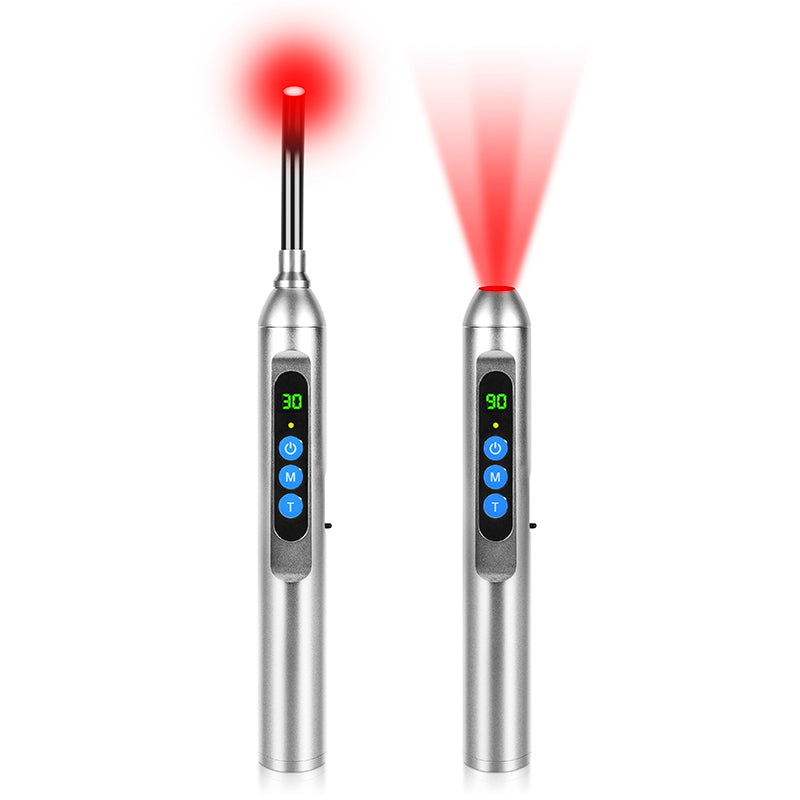
ComparisonsLEDs spread light over a larger area, while lasers deliver more coherent and focused light. Both can appear in PBM discussions.
Why it matters: Home panels, masks, mats, belts, and many caps use LEDs because broad coverage is practical for routine use.
Common mistake: Do not assume laser is always stronger or better for home use. The best format depends on intended use, coverage, and device design.
How to compare devices: For home wellness routines, compare coverage, comfort, output transparency, and instructions rather than the light source alone.
LLLT
TerminologyLLLT stands for low-level light therapy or low-level laser therapy, an older term often used in research and clinical discussions.
Why it matters: Some hair growth and clinical-style content uses LLLT instead of red light therapy or PBM.
Common mistake: Do not assume LLLT always means laser only. In modern writing, the term may include LED-based light therapy.
How to compare devices: When reading studies or product pages, check the actual device type, wavelength, irradiance, and dose.
M
Mat vs Panel
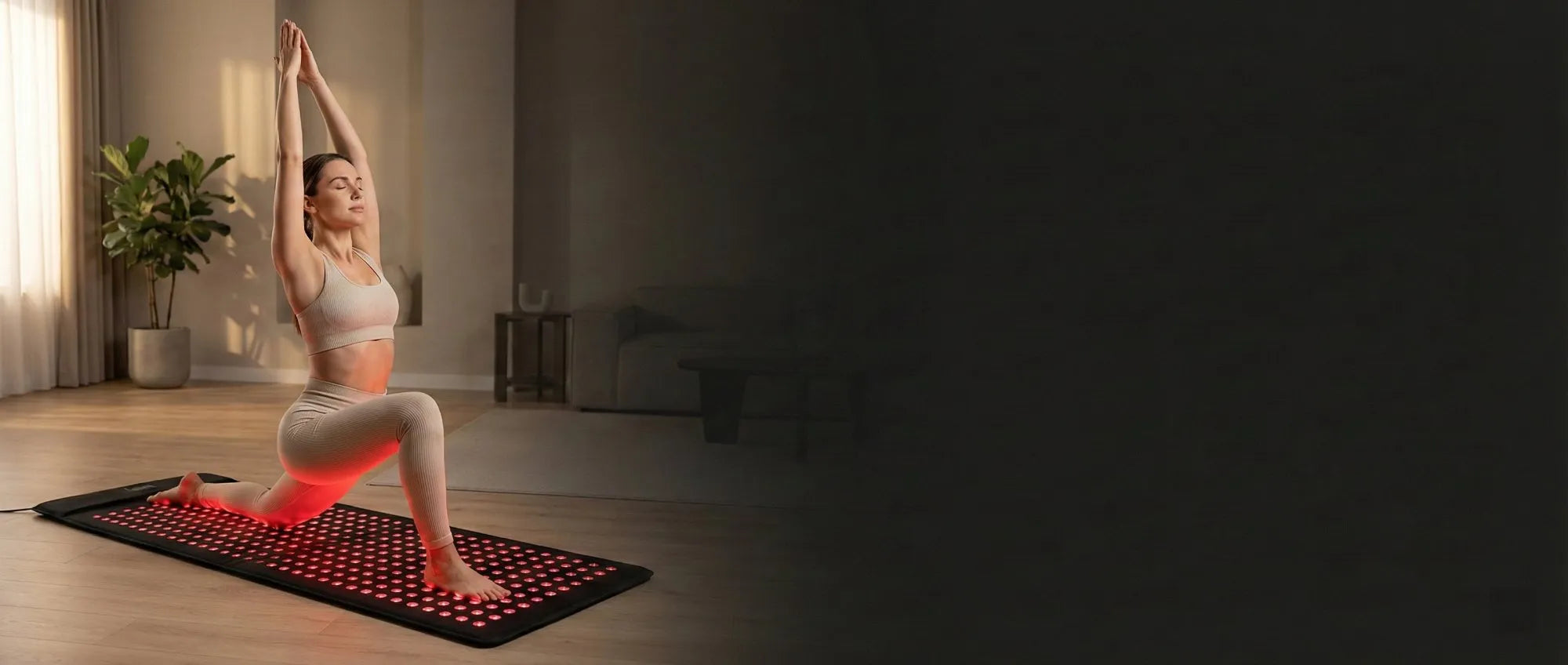
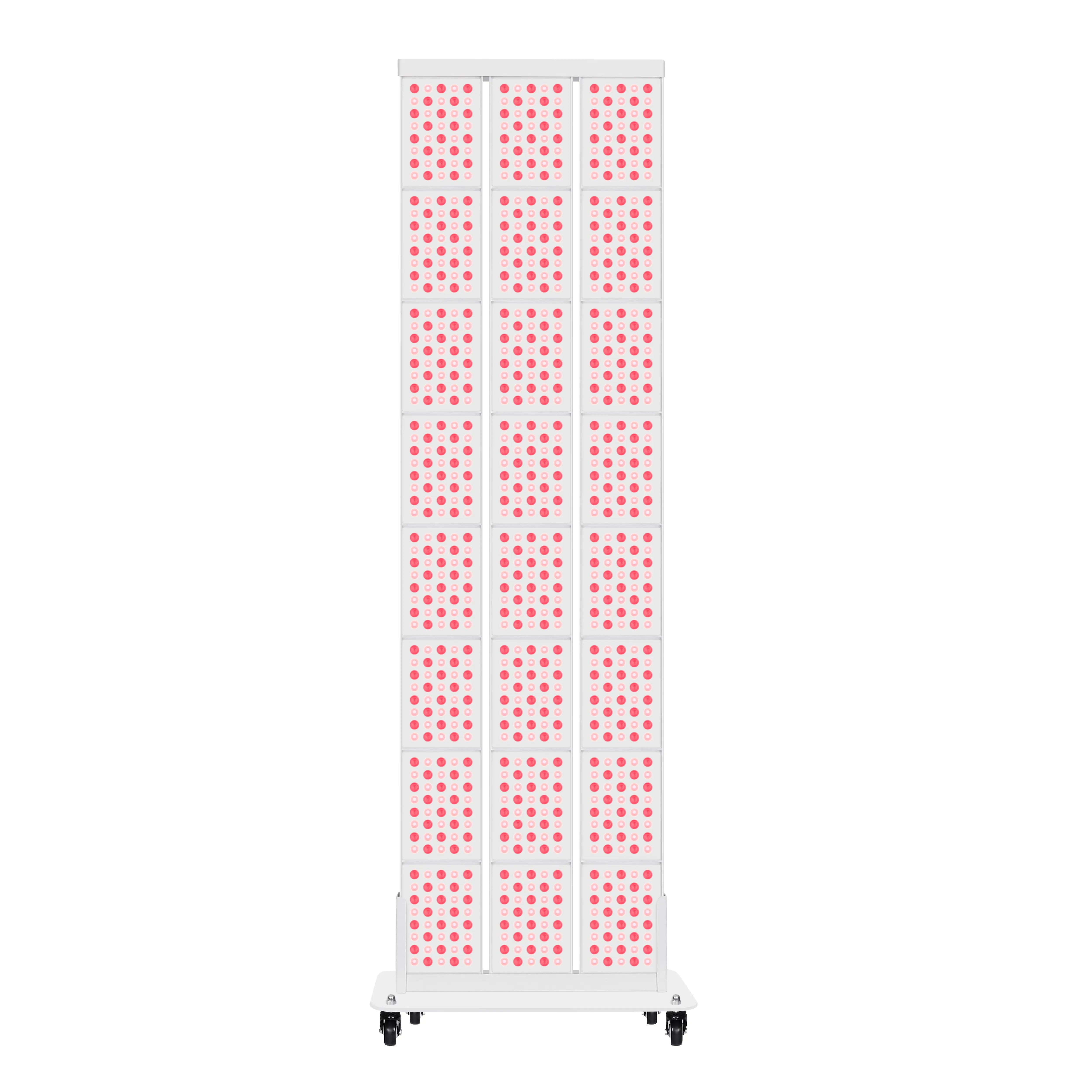
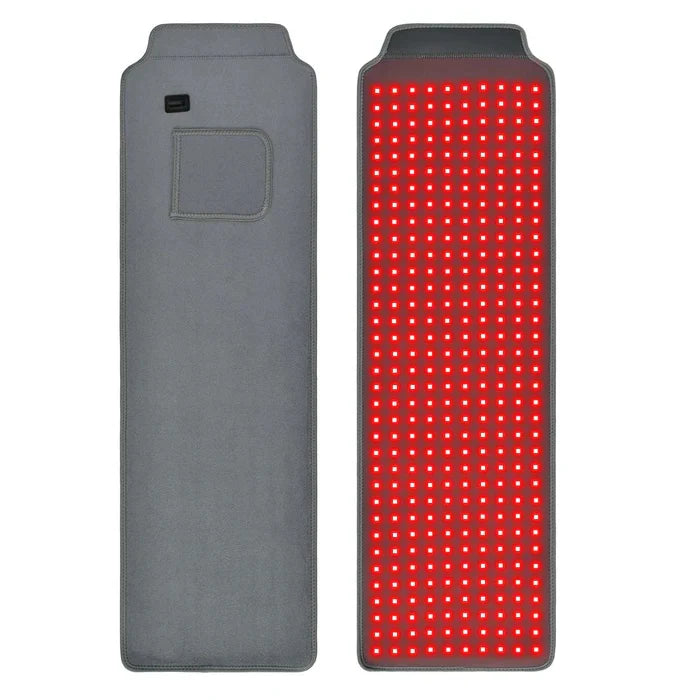
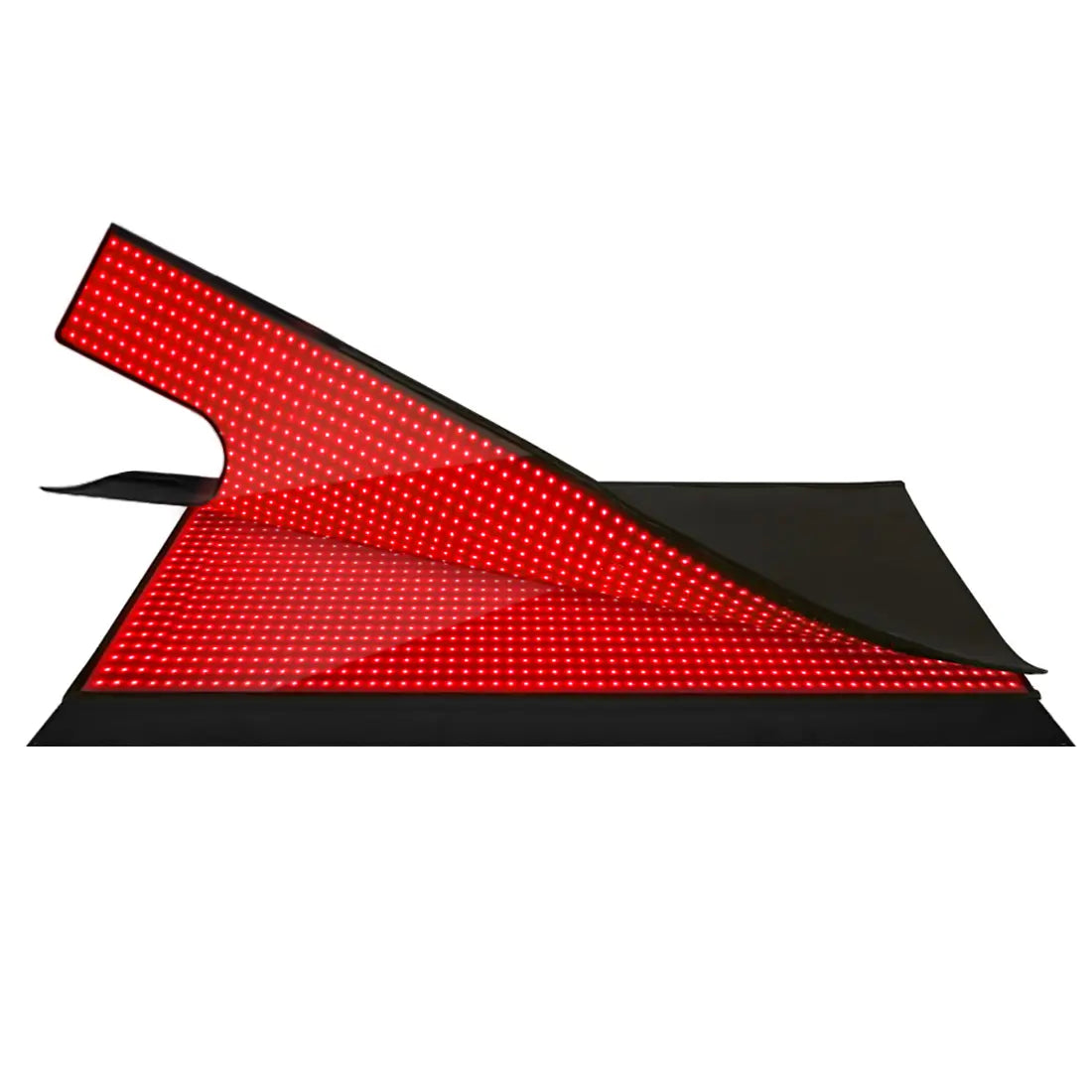
ComparisonsA red light therapy mat is designed for close-contact or near-contact coverage. A panel is designed for distance-based exposure.
Why it matters: Mats are often chosen for relaxed full-body routines, while panels give more control over distance, angle, and intensity.
Common mistake: Do not compare a mat and panel by one output number. The delivery geometry is different.
How to compare devices: Choose a mat for contact comfort and broad routine coverage; choose a panel when distance control and targeted intensity matter more.
Milliwatt
UnitsA milliwatt, or mW, is one thousandth of a watt. It is commonly used in irradiance units such as mW/cm2.
Why it matters: Small units make it easier to describe light power delivered over a small surface area.
Common mistake: Do not confuse mW with mW/cm2. One is power; the other is power per area.
Mitochondria
BiologyMitochondria are cell structures involved in energy production and cellular signaling.
Why it matters: PBM research often discusses mitochondria because red and NIR light may influence mitochondrial pathways.
Common mistake: Do not reduce all red light therapy effects to one simple mitochondria claim. Mechanisms are still an active research area.
mW/cm2
UnitsmW/cm2 means milliwatts per square centimeter. It is a common unit for irradiance or power density.
Why it matters: This unit tells users how much light power reaches a given surface area at a stated distance.
Common mistake: Do not compare mW/cm2 specs unless both were measured under similar conditions.
N
Nanometer
UnitsA nanometer, or nm, is one billionth of a meter and is the unit used to describe light wavelength.
Why it matters: When a device lists 660nm or 850nm, it is naming a specific wavelength range.
Common mistake: Do not treat nm as a power rating. It describes the type of light, not the amount of light.
Near-Infrared / NIR
WavelengthsNear-infrared, or NIR, refers to wavelengths just beyond visible red light. In red light therapy devices, 850nm is one of the most common NIR wavelengths.
Why it matters: NIR is often paired with red light for users comparing skin, muscle, joint, and full-body wellness routines.
Common mistake: Do not expect NIR LEDs to look bright. NIR is mostly outside visible perception.
Nitric Oxide
BiologyNitric oxide, or NO, is a signaling molecule involved in blood flow and mitochondrial function.
Why it matters: Some PBM mechanisms discuss light-related changes in nitric oxide binding and release around cytochrome c oxidase.
Common mistake: Do not treat nitric oxide references as a guaranteed outcome from every device or session.
Non-Ionizing Light
SafetyNon-ionizing light does not have enough photon energy to ionize atoms the way X-rays or gamma rays can.
Why it matters: Red and near-infrared light used in red light therapy is non-ionizing and different from UV or ionizing radiation.
Common mistake: Non-ionizing does not mean instructions can be ignored. Brightness, heat comfort, photosensitivity, and eye exposure still matter.
O
Optical Power
Device specsOptical power is the actual light output from LEDs or lasers, separate from the electrical power a device consumes.
Why it matters: Optical power is closer to what matters for light delivery than a large wall-plug wattage claim.
Common mistake: Do not confuse electrical watts with optical watts. They are not the same measurement.
How to compare devices: The most useful comparison is usually irradiance at distance and treatment area, not headline wattage alone.
P
PBMT
TerminologyPBMT stands for photobiomodulation therapy. It is a formal term for therapeutic use of light to influence biological processes.
Why it matters: PBMT appears in research papers, medical discussions, and technical device education.
Common mistake: Do not assume PBMT and every consumer red light product are identical in protocol, evidence, or intended use.
Penetration Depth
WavelengthsPenetration depth describes how far light can travel into tissue before it is scattered or absorbed.
Why it matters: Red light is often discussed for more superficial exposure, while NIR is commonly discussed for deeper exposure.
Common mistake: Do not treat penetration depth as fixed. Tissue type, skin tone, wavelength, contact, and intensity can all change practical exposure.
How to compare devices: Match wavelength and device format to your routine rather than chasing a single deepest number.
Photobiomodulation / PBM
TerminologyPhotobiomodulation, often shortened to PBM, is the scientific term for using light to influence biological processes.
Why it matters: PBM is a credibility term. Users who search it are often more technical and research-aware.
Common mistake: Do not use PBM language to imply medical claims unless the device and intended use support that claim.
How to compare devices: When evaluating PBM claims, look for wavelength, irradiance, fluence, session protocol, and references.
Photosensitivity
SafetyPhotosensitivity means increased sensitivity to light, which may be related to medications, medical conditions, or individual response.
Why it matters: People with photosensitivity concerns should be more cautious with bright light devices and should ask a qualified professional when unsure.
Common mistake: Do not start a high-intensity routine if you know you are light-sensitive or use photosensitizing medications without appropriate guidance.
Power Density
Device specsPower density is another way to describe irradiance, usually in mW/cm2.
Why it matters: Some brands use power density and irradiance interchangeably, so shoppers should understand both terms.
Common mistake: Do not compare power density claims without the distance and measurement method.
How to compare devices: Ask whether the number is measured at the surface, 3 inches, 6 inches, or another realistic use distance.
Pulsed Light
ModesPulsed light turns LEDs on and off at a set rhythm, such as 10Hz or 40Hz.
Why it matters: Some Youlumi devices include pulsed modes for users who want configurable routines.
Common mistake: Do not assume every pulse frequency has the same evidence or purpose. Read the product instructions and routine guidance.
How to compare devices: Check whether pulsing changes comfort, brightness perception, or a specific protocol setting.
R
Rated Watts
Device specsRated watts usually refers to a theoretical or maximum electrical rating, not necessarily real optical output at the body.
Why it matters: Large wattage numbers are common in product marketing, but they can be less useful than measured irradiance.
Common mistake: Do not choose a panel only because the rated watts number is large.
How to compare devices: Compare rated watts with actual power draw, optical output, irradiance, coverage, and safety design.
Reactive Oxygen Species / ROS
BiologyReactive oxygen species, or ROS, are reactive molecules involved in cellular signaling and oxidative stress.
Why it matters: PBM research often describes controlled ROS signaling as part of downstream cellular response.
Common mistake: Do not assume ROS is always bad or always good. Context and dose matter.
Red Light
WavelengthsRed light is visible light in the red portion of the spectrum, commonly discussed around 630-670nm for red light therapy.
Why it matters: Red light is often used for skin-facing routines and is frequently paired with NIR.
Common mistake: Do not assume any red-colored bulb is a therapeutic red light therapy device.
Red Light Therapy / RLT
TerminologyRed light therapy, or RLT, is the everyday term for using red and often near-infrared light in structured wellness routines.
Why it matters: RLT is the phrase most shoppers use, while PBM and LLLT appear more often in research or technical content.
Common mistake: Do not use RLT as a catch-all for UV tanning, infrared sauna heat, or bright-light mood lamps.
S
Session Time
DosageSession time is how long a red light therapy session lasts. Common sessions vary by device format, distance, intensity, and comfort.
Why it matters: Session time is part of dose. Longer is not always better.
Common mistake: Do not extend sessions beyond product instructions just because the device feels comfortable.
How to compare devices: Compare recommended time together with device intensity, contact style, and treatment distance.
Skin Contact Device
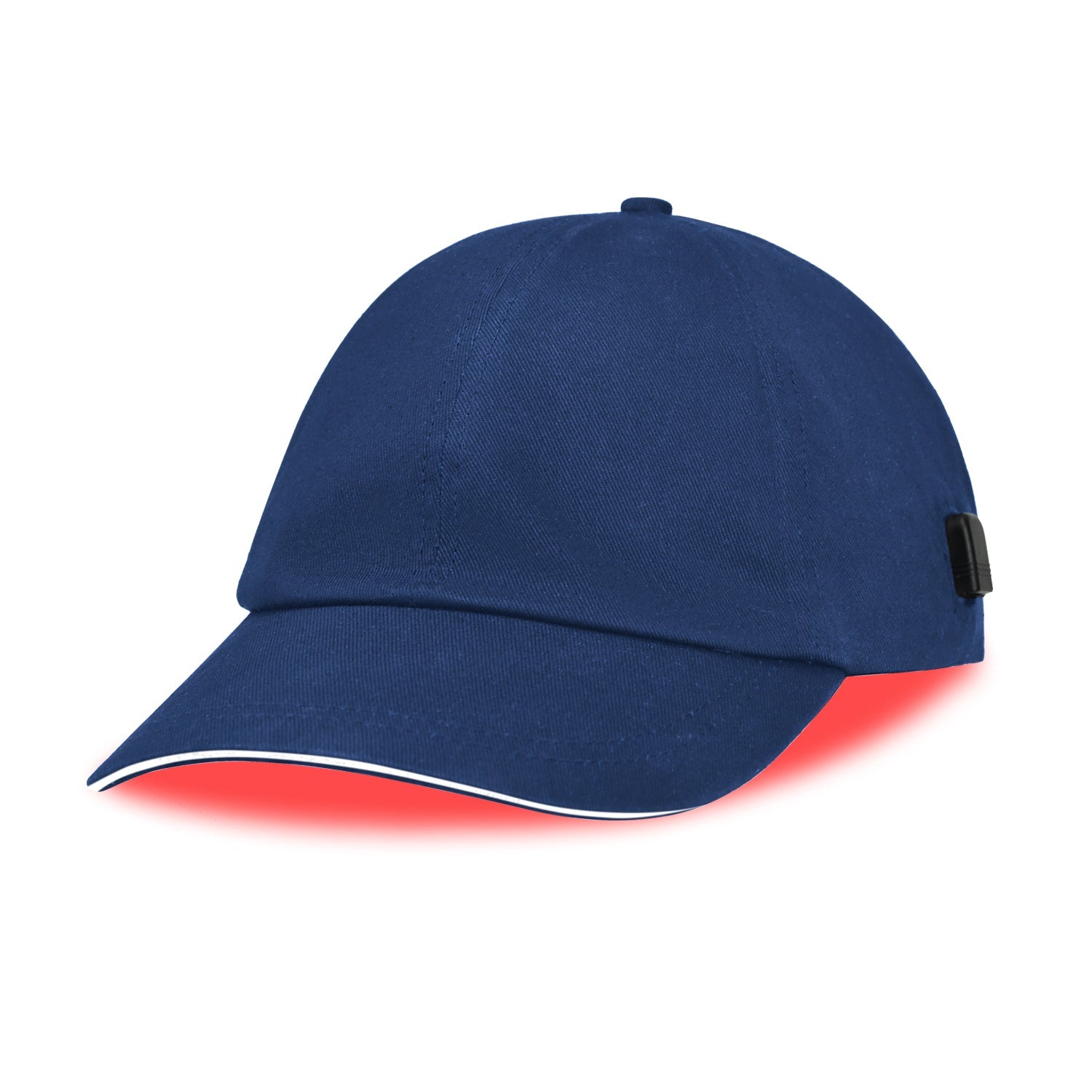
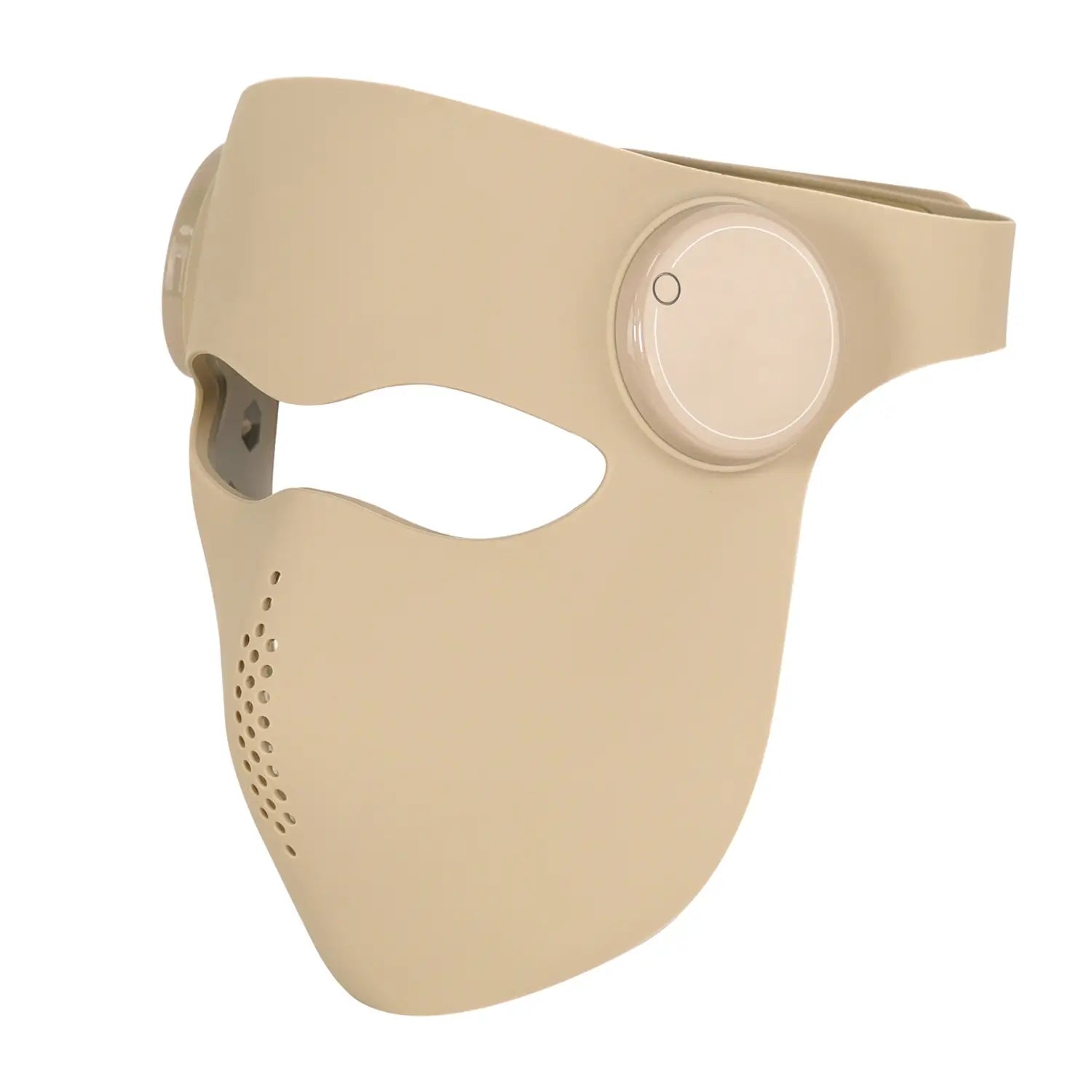
Device formatsA skin contact device is designed to be used directly against or very close to the body, such as a belt, mat, cap, or mask.
Why it matters: Contact devices reduce distance uncertainty but may have different comfort, heat, and coverage considerations than panels.
Common mistake: Do not apply panel distance rules directly to a contact mat or belt.
Spectral Output
Device specsSpectral output describes the wavelengths a device emits and how strongly it emits at each wavelength.
Why it matters: A spectrometer can verify whether a device actually emits the wavelengths listed in its specifications.
Common mistake: Do not rely only on LED color appearance. NIR may be invisible and red LEDs can vary by peak wavelength.
T
Therapeutic Window
DosageTherapeutic window means the approximate range where wavelength, intensity, and exposure time are suitable for the intended routine.
Why it matters: It helps users understand why both too little and too much exposure can be unhelpful.
Common mistake: Do not interpret the therapeutic window as one universal dose for every person, tissue, device, or goal.
How to compare devices: Look for instructions that combine wavelength, distance, intensity, time, and use frequency.
Treatment Distance
DosageTreatment distance is the space between the device and the body. It strongly affects irradiance, coverage, and comfort.
Why it matters: A panel used at 6 inches is not the same experience as a mat used in direct contact.
Common mistake: Do not compare panel specs measured at the surface with real sessions performed farther away.
How to compare devices: Use the distance recommended by the device manual and compare specs at similar distances.
U
UV Light
SafetyUV light is ultraviolet light, a shorter-wavelength category different from the red and near-infrared wavelengths used in red light therapy.
Why it matters: Red light therapy devices should not be confused with tanning beds or UV phototherapy.
Common mistake: Do not assume a device uses UV just because it is a light device. Check the listed wavelengths.
W
Watts
Device specsWatts are a unit of power. In red light therapy marketing, watts may refer to rated electrical power, consumed power, or optical power.
Why it matters: Watts are easy to advertise but can be misleading when used without irradiance, distance, and treatment area.
Common mistake: Do not assume a higher watt number means a better dose at your body.
How to compare devices: Ask which type of watts is being shown and prioritize measured irradiance at realistic use distance.
Wavelength
WavelengthsWavelength describes the type of light and is measured in nanometers, or nm. Common red light therapy wavelengths include red around 650/660nm and NIR around 850nm.
Why it matters: Wavelength is one of the first specs users compare when deciding whether a device fits skin-facing, deeper tissue, or full-body routines.
Common mistake: Do not use wavelength alone to judge device quality. Output, distance, coverage, and protocol matter too.
How to compare devices: Match wavelength to use case, then confirm irradiance, coverage, and session guidance.
Fast comparison
| Term | Plain-English meaning | Common user question |
|---|---|---|
| Wavelength | Type of light, measured in nm. | Which wavelength is best for my goal? |
| Irradiance | Light power reaching the body. | Is this device strong enough at my use distance? |
| Fluence | Total light energy over time. | How much dose does a session deliver? |
| Watts | Power rating that may be electrical or optical. | Is the headline wattage meaningful? |
| Frequency / Hz | Pulse rate or usage schedule. | What does 10Hz vs 40Hz mean? |
| EMF | Electric and magnetic field readings near a device. | How was the EMF test performed? |
| Mat vs Panel | Contact-style vs distance-based delivery. | Which format fits my routine? |
| FDA Registered vs Cleared | Different regulatory concepts. | Has FDA reviewed this device for a specific intended use? |
Use these terms when comparing devices
FAQ
What is the difference between 660nm and 850nm?
660nm is visible red light and is often used for skin-facing routines. 850nm is near-infrared light and is commonly discussed for deeper exposure. Many devices combine both rather than treating one as universally better.
What is the difference between irradiance and fluence?
Irradiance is light power reaching an area at a moment in time, usually mW/cm2. Fluence is total energy delivered over a session, usually J/cm2, and depends on irradiance and time.
Are watts the same as irradiance?
No. Watts describe power, but the number may refer to rated electrical watts, consumed watts, or optical watts. Irradiance describes light power reaching a surface area at a stated distance.
Is PBM the same as red light therapy?
Photobiomodulation, or PBM, is the more scientific umbrella term. Red light therapy is the everyday phrase many shoppers use for red and near-infrared light routines.
Is LED red light therapy the same as laser therapy?
Not exactly. LEDs spread light over larger areas, while lasers are more focused and coherent. Both can appear in PBM contexts, but home-use devices commonly use LEDs for practical coverage.
Do I need eye protection for red light therapy?
Follow the device manual. Bright panels can be uncomfortable to look at directly, and goggles are often recommended. Avoid staring into active red or near-infrared LEDs.
What does EMF mean for red light therapy devices?
EMF means electromagnetic field. Device EMF readings depend on distance, meter type, operating mode, and electronics design, so numbers should be compared only when test conditions are clear.
Is a red light therapy mat better than a panel?
Not always. A mat is convenient for contact-style full-body routines. A panel gives more control over treatment distance, angle, and targeted intensity.
Is longer red light therapy session time better?
Not automatically. Session time is part of dose, and PBM research often discusses dose windows. Follow product instructions and avoid assuming more exposure is always better.
References and review note
- PBM mechanismFreitas and Hamblin, Proposed Mechanisms of Photobiomodulation or Low-Level Light Therapy
- Dose responseHuang et al., Biphasic Dose Response in Low Level Light Therapy - An Update
- LLLT overviewChung et al., The Nuts and Bolts of Low-level Laser (Light) Therapy
- PBM reviewHamblin, Mechanisms and applications of the anti-inflammatory effects of photobiomodulation
- LED vs laserHeiskanen and Hamblin, Photobiomodulation: lasers vs light emitting diodes?
- FDA guidanceFDA, Device Registration and Listing
- FDA guidanceFDA, Premarket Notification 510(k)
Review noteThis glossary is for general education and product comparison. It is not medical advice and does not diagnose, treat, cure, or prevent any disease. Follow your device manual, avoid staring directly into bright LEDs, and ask a qualified healthcare professional if you have a medical condition, are pregnant, use photosensitizing medications, or are unsure whether light therapy is appropriate for you.