
Red Light Therapy for Morning Energy: The Circadian Reset Protocol
Medical Disclaimer: The information provided in this guide is for educational and informational purposes only and is not intended as medical advice, diagnosis, or treatment. Red light therapy (RLT) is a wellness tool designed to support general health and is not a substitute for professional medical consultation. Always seek the advice of your physician or other qualified health provider with any questions you may have regarding a medical condition. Individuals who are pregnant, have a history of epilepsy or seizures, or are taking photosensitizing medications (such as certain antibiotics or acne treatments) should consult a doctor before use.
Summary
Utilizing high-irradiance red light therapy (RLT) within the first hour of waking is a strategic biological intervention designed to support the body's transition into alertness. By interacting with mitochondrial pathways and supporting the Cortisol Awakening Response (CAR), a morning RLT protocol—often referred to as a "Circadian Reset"—aims to align internal rhythms with the external day. While individual results vary, many users report a reduction in morning sleep inertia and improved cognitive clarity without the physiological stress often associated with high-stimulant intake.
Key Takeaways
- Mitochondrial Support: Morning RLT targets Cytochrome C Oxidase in the mitochondria. In vitro and animal studies suggest this process supports Adenosine Triphosphate (ATP) production, providing cellular energy during the critical wake-up window.
- Circadian Signaling: Exposure to red (660nm) and near-infrared (850nm) wavelengths mimics the spectral density of sunrise. This signals the suprachiasmatic nucleus (SCN) to help regulate the sleep-wake cycle (Evidence Level: Human Pilot Studies).
- Hormonal Modulation: Early light exposure is associated with an optimized Cortisol Awakening Response, which supports natural alertness while potentially stabilizing evening melatonin onset.
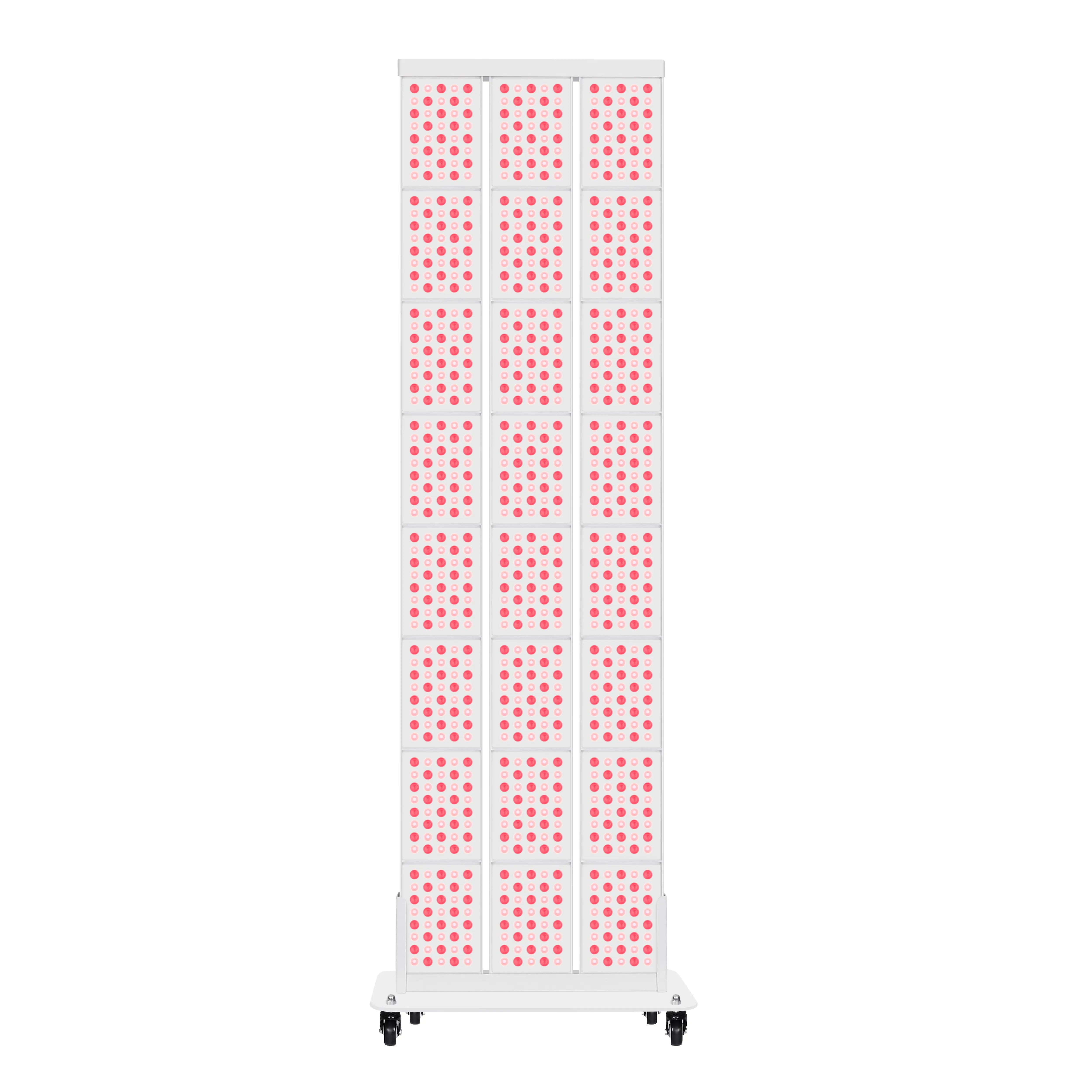
- Quantitative Protocol: For a therapeutic dose (typically 5–20 J/cm² for systemic effects), a 10-minute session at 6–12 inches from a verified high-irradiance panel is recommended.
- Safety & Standards: To ensure efficacy and safety, devices should be verified for irradiance and flicker according to IEC 60601-2-57:2026 standards to minimize potential eye strain or EMF exposure.
How Red Light Therapy Supports Morning Biology
Waking up refreshed is often a matter of biological synchronization. In modern environments, we frequently wake up in "biological darkness," shielded from the natural spectral signals that historically synchronized human internal clocks. This can lead to a "circadian mismatch," manifesting as heavy-headedness or sleep inertia. Red light therapy, or photobiomodulation (PBM), provides a non-invasive method to deliver concentrated wavelengths that interact with cellular receptors.
When photons in the 600–900nm range reach the mitochondria, they are absorbed by the enzyme Cytochrome C Oxidase. Laboratory research indicates this process may displace inhibitory nitric oxide, allowing oxygen to bind more effectively and supporting the production of ATP. By initiating this process in the morning, you are not simply masking fatigue; you are supporting the cellular mechanisms responsible for energy metabolism.
Logic Summary: This protocol leverages the phase-response curve of human circadian rhythms. Light exposure in the early biological morning typically causes a "phase advance," which may make it easier to maintain a consistent wake-up time and improve morning alertness.
The Circadian Reset: Supporting Natural Rhythms
The human body’s master clock, the suprachiasmatic nucleus (SCN), is highly sensitive to the light spectrum. While blue light is well-known for suppressing melatonin, red and near-infrared light provide the spectral density found at dawn, which helps "anchor" the circadian rhythm. A morning reset using RLT provides a signal to the brain that the day has begun, which research suggests can help ensure that melatonin production begins on a healthy schedule 14–16 hours later.

A critical component of this reset is the Cortisol Awakening Response (CAR). Within 30 to 45 minutes of waking, the body should ideally experience a sharp rise in cortisol to activate metabolism and mental clarity. Small-scale human trials suggest that early light exposure can help modulate this response. For those struggling with morning grogginess, RLT serves as a catalyst to sharpen this biological "switch-on" signal.
Designing Your Morning Red Light Protocol
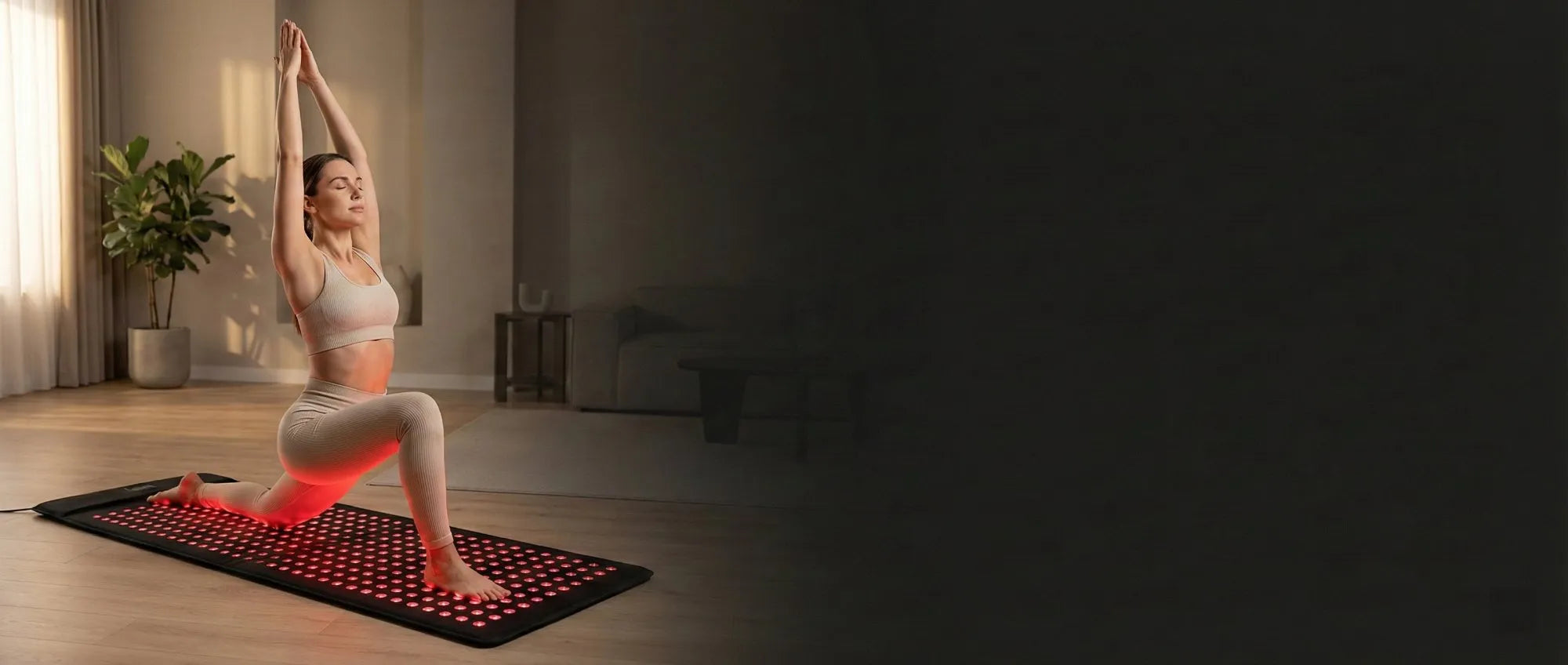
Consistency is vital for circadian health. To achieve a meaningful reset, aim to use your RLT device within 30 to 60 minutes of waking. Timing should be adjusted based on your chronotype: "Larks" (early birds) may use it immediately, while "Owls" (night types) looking to shift their schedule earlier should prioritize RLT as soon as they can tolerate light exposure.
| Parameter | Recommendation for Morning Energy | Evidence/Notes |
|---|---|---|
| Wavelengths | 660nm (Red) & 850nm (NIR) | Dual-spectrum for surface & deep tissue |
| Target Dose | 5–20 J/cm² | Calculated based on device irradiance |
| Timing | Within 60 minutes of waking | To influence the CAR and SCN |
| Duration | 10–15 minutes | Avoid over-exposure (Arndt-Schulz Law) |
| Distance | 6–12 inches | Varies by device power output |
| Frequency | 5–7 days per week | Consistency is key for circadian shifts |
Calculating Your Dose: If your device delivers an irradiance of 50 mW/cm² at 6 inches, a 10-minute session provides 30 J/cm² ($0.050 W/cm² \times 600 seconds$). For morning energy, a moderate dose of 10–30 J/cm² is generally considered the "sweet spot" for most users.
Technical Verification and Safety Standards
In the 2026 landscape, technical precision is essential for safety and efficacy. The biological impact of PBM is governed by the Arndt-Schulz Law: an optimal dose provides benefits, while an excessive dose may inhibit cellular function or cause temporary fatigue.
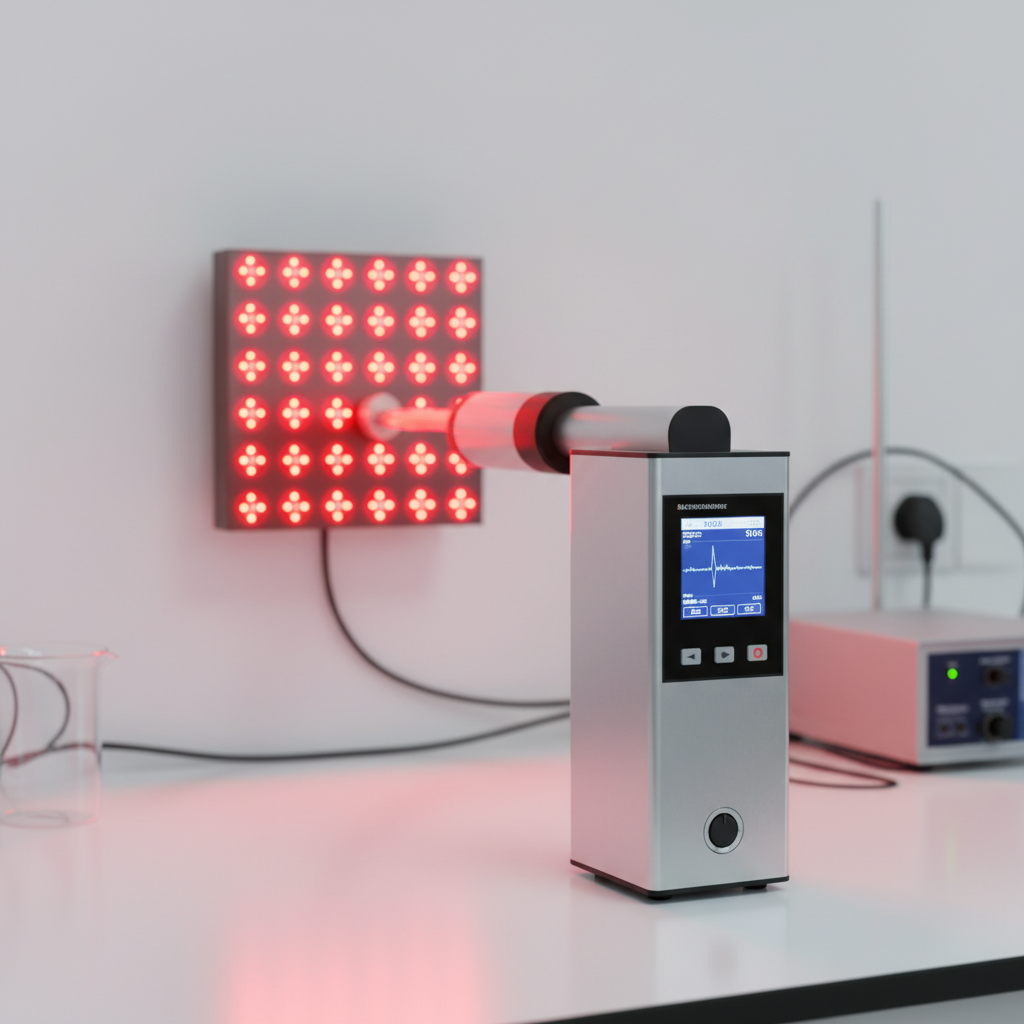
It is important to consult safety standards for red light therapy devices to understand how your equipment performs. As noted in our guide on Photobiomodulation Standards: Irradiance, EMF, and Safety, the industry now prioritizes benchmarks like IEC 60601-2-57:2026. This standard requires accurate irradiance measurements via laboratory-grade spectroradiometry rather than low-cost solar meters, which often overstate power. Furthermore, it addresses flicker modulation and EMF (electromagnetic fields), which can cause headaches in sensitive individuals.
Logic Summary: Technical verification ensures you receive a therapeutic dose (Joules) without the neurological stress of high flicker or EMF, which could otherwise counteract the mitochondrial benefits of the protocol.

The "Sunlight Sandwich" Technique
For optimal results, RLT should be part of a broader light hygiene strategy. A common practice among performance enthusiasts is the "Sunlight Sandwich":
- 10 Minutes RLT: Immediately upon waking to provide concentrated mitochondrial stimulus.
- 10–20 Minutes Natural Light: Outdoor exposure (even on overcast days) to provide the high-intensity blue light required for full melatonin suppression.
This combination provides a robust signal to the brain. For those in northern latitudes or windowless offices, RLT is particularly useful as it provides NIR wavelengths often filtered out by modern window glass.
Risk Factors and Contraindications
While RLT is generally considered safe for healthy individuals, certain groups should exercise caution:
- Photosensitivity: If you have a condition like Lupus or are taking medications (e.g., Tetracycline, Retinoids), RLT may cause skin irritation.
- Eye Health: Avoid staring directly into high-intensity LEDs. Use blackout goggles if you have a history of retinal issues.
- Pregnancy: While there is no evidence of harm, clinical data is limited; consult your OB-GYN before use on the torso.
- Seizure Disorders: Individuals with photosensitive epilepsy should avoid devices with detectable flicker.
FAQ
Can I use red light therapy if I wake up before the sun? Yes. Using RLT in the "pre-dawn" hours provides a signal to your mitochondria and SCN to begin the transition into wakefulness, which may help clear residual sleep pressure.
Will morning RLT interfere with my evening sleep? Current research suggests the opposite. By anchoring your rhythm in the morning, you help set the biological timer for melatonin production to begin 14–16 hours later, potentially supporting faster sleep onset.
Do I need to wear eye protection? Under IEC 60601-2-57 standards, caution is advised for high-irradiance devices. We recommend keeping eyes closed or using provided goggles during close-range sessions.
How long until I notice a difference? While some report immediate improvements in clarity, significant circadian recalibration typically requires 7 to 14 days of consistent use.
Can I combine RLT with caffeine? There are no known contraindications. RLT supports ATP production while caffeine blocks adenosine receptors; they work through different pathways to support alertness.
References
Standards & Regulatory
- International Electrotechnical Commission (IEC). (2026). IEC 60601-2-57:2026 - Safety and performance of non-laser light source equipment. https://www.iec.ch
- IEEE Standards Association. (2015). IEEE 1789-2015 - Recommended Practices for Modulating Current in LEDs. https://standards.ieee.org
Academic & Clinical Research
- Hamblin, M. R. (2018). Mechanisms and applications of the anti-inflammatory effects of photobiomodulation. AIMS Biophysics. (Evidence: In vitro/Animal/Human review).
- Chaves, M. E., et al. (2014). Effects of low-power light therapy on wound healing. Anais Brasileiros de Dermatologia. (Foundational PBM mechanisms).
- Note: Circadian effects of red light are currently supported by pilot human studies and established phase-response curve models.
Industry & Community
- Youlumi Store. (2026). Photobiomodulation Standards: Irradiance, EMF, and Safety. https://www.youlumistore.com/blogs/red-light-therapy-guide/photobiomodulation-standards-irradiance-emf-safety (Commercial Resource).
- Global Wellness Institute. (2025). The Future of Biohacking: 2026 Market Trends.
Transparency Note: This article is published by Youlumi Store. While we strive for objective, science-based reporting, we recommend comparing our guidelines with independent peer-reviewed literature and consulting with a medical professional for personalized health advice.