
Red Light Therapy for Knee Pain: Meniscus and Joint Relief
Many adults dealing with persistent knee discomfort look for non-invasive options that fit into daily routines without surgery or ongoing medication. Clinical reviews and professional guidelines indicate that photobiomodulation (PBM)—commonly known as red light therapy (RLT) or low-level laser therapy (LLLT)—may help reduce knee osteoarthritis pain and improve function in some patients. However, it is most effective as an adjunct to physical therapy and exercise, rather than a standalone "cure."

This article examines the current evidence for red light therapy in knee pain, with special attention to meniscus-related concerns and general joint relief. We focus on what the research actually supports, practical usage considerations, and realistic expectations to help you decide whether it belongs in your recovery plan.
What Is Red Light Therapy and How Might It Affect the Knee?
Red light therapy uses specific wavelengths of red (600–700 nm) and near-infrared (800–900 nm) light delivered through LEDs or lasers. These wavelengths are studied for their ability to interact with cells in a process called photobiomodulation.
According to research literature, the proposed mechanisms involve:
- Mitochondrial Stimulation: Light is absorbed by cytochrome c oxidase, potentially increasing ATP (cellular energy) production.
- Inflammation Modulation: Near-infrared light may help reduce pro-inflammatory cytokines within the joint capsule.
- Enhanced Circulation: Improved blood flow to the area may support the body’s natural recovery processes.
While these biological effects are observed in laboratory settings, they do not equate to guaranteed structural repair of damaged tissues in all human cases.
Clinical Evidence for Knee Osteoarthritis Pain
The strongest available support for RLT is found in the management of knee osteoarthritis (OA).
- AAOS Guidelines: The American Academy of Orthopaedic Surgeons (AAOS), in its Clinical Practice Guideline on Management of Osteoarthritis of the Knee (3rd Edition, 2021), notes that low-level laser therapy (LLLT) received a "Moderate" strength recommendation. The guideline suggests it may help reduce pain and improve function in patients with symptomatic OA.
- Systematic Reviews: Multiple meta-analyses of randomized controlled trials (RCTs) have concluded that LLLT/PBM is superior to placebo (sham) treatments for short-term pain relief. However, these reviews often highlight that "evidence quality varies" and results are highly dependent on using the correct dosage.
- Medical Policy Trends: Many insurer medical policies now recognize LLLT specifically for knee OA as a key use case under investigation, though they remain cautious about its use for other acute joint injuries.
These findings suggest red light therapy is a viable symptom-management tool for chronic, degenerative knee pain when used consistently.

Red Light Therapy for Meniscus Issues: What the Research Actually Shows
When users ask, “Does red light therapy help meniscus tears?” the answer requires a distinction between symptom relief and structural healing.
- Limited Structural Evidence: Most evidence for meniscus "repair" via PBM is preclinical (animal or cell-culture studies). For example, a study in Lasers in Medical Science showed that PBM could stimulate cell proliferation in meniscus-derived stem cells. This does not yet translate to a proven ability to "knit" a human meniscus tear back together.
- Symptom Support: For those with chronic meniscus degeneration (often accompanying OA), RLT may help manage the associated swelling and secondary inflammation.
- Mechanical Limitations: RLT cannot fix "mechanical" symptoms. If your knee is locking, catching, or feels unstable, these are structural issues that require orthopedic evaluation and potentially surgery or specialized physical therapy.
Safety and Precautions for Home Use
Before starting a home protocol, consider these safety essentials:
- Eye Protection: Near-infrared (NIR) light is invisible to the human eye but can still cause thermal stress to the retina. Always wear the provided safety goggles, especially when using high-output panels.
- Photosensitivity: Certain medications (e.g., some antibiotics, diuretics, or retinoids) can make your skin more sensitive to light. Consult your doctor if you are on medication.
- Skin Sensitivity Test: Perform a 3-minute "test dose" on a small area of skin to check for any unusual redness or irritation before treating the entire joint.
- Acute Trauma: Do not use RLT as a first-line treatment for a fresh, severe injury (e.g., a suspected ACL tear or acute fracture). Seek a professional diagnosis first.
Myth vs Reality: Common Misconceptions
-
Myth: Red light therapy "heals" meniscus tears.
- Reality: It may manage discomfort, but there is no clinical proof it replaces the need for surgical or natural structural repair of a tear.
-
Myth: If the pain goes away, the joint is "fixed."
- Reality: Pain relief is a functional improvement; it does not necessarily mean the underlying cartilage or meniscus has been restored to its original state.
-
Myth: Any red light will work.
- Reality: Success depends on dosage (energy density). Low-powered "beauty" lights often lack the irradiance needed to penetrate the deep tissues of the knee joint.
How to Use Red Light Therapy on Knees: Practical Protocol
To align with the parameters used in clinical trials (such as those following WALT—World Association for Laser Therapy—standards), consistency is key.
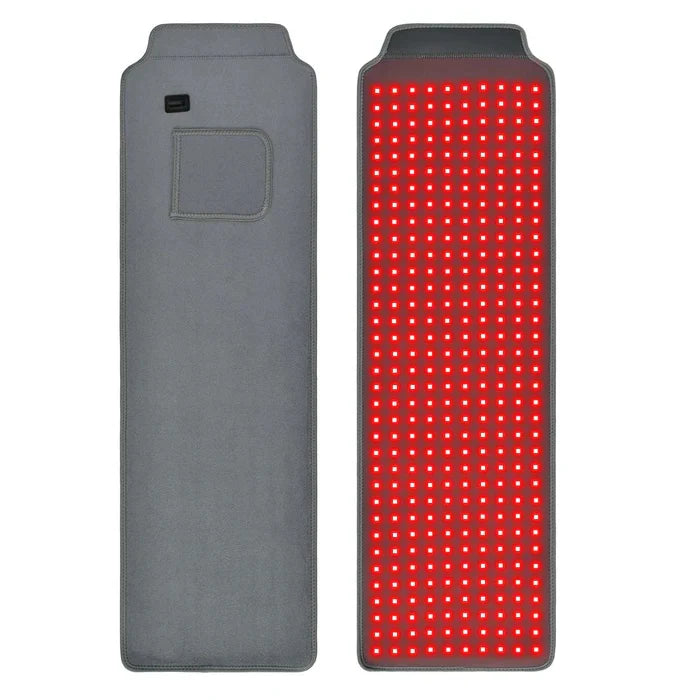
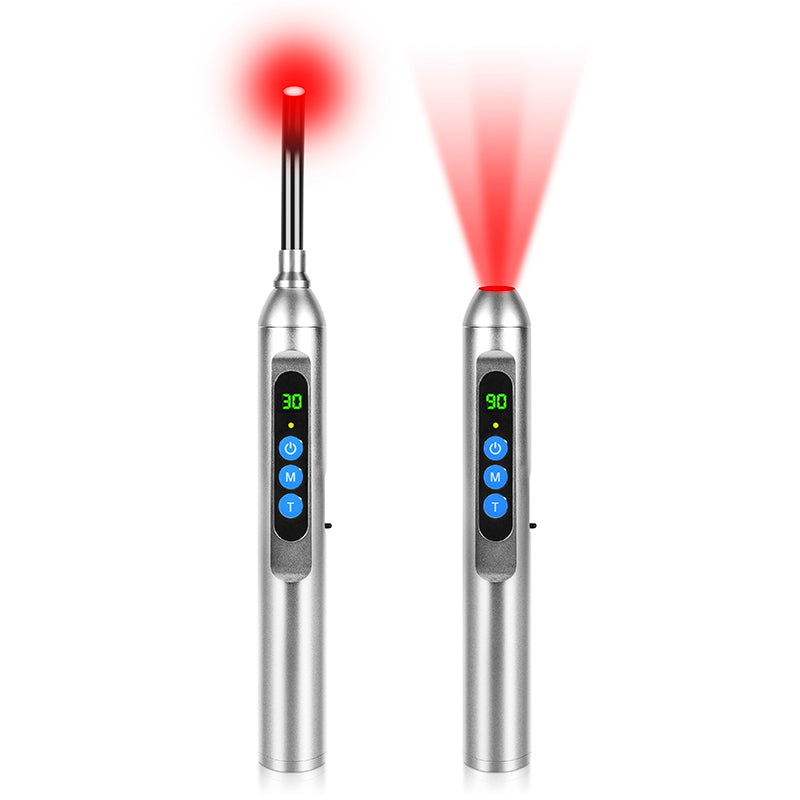
- Placement: Position the device to cover the "joint line"—the space between the femur and tibia. Treat the front, medial (inner), and lateral (outer) sides of the knee.
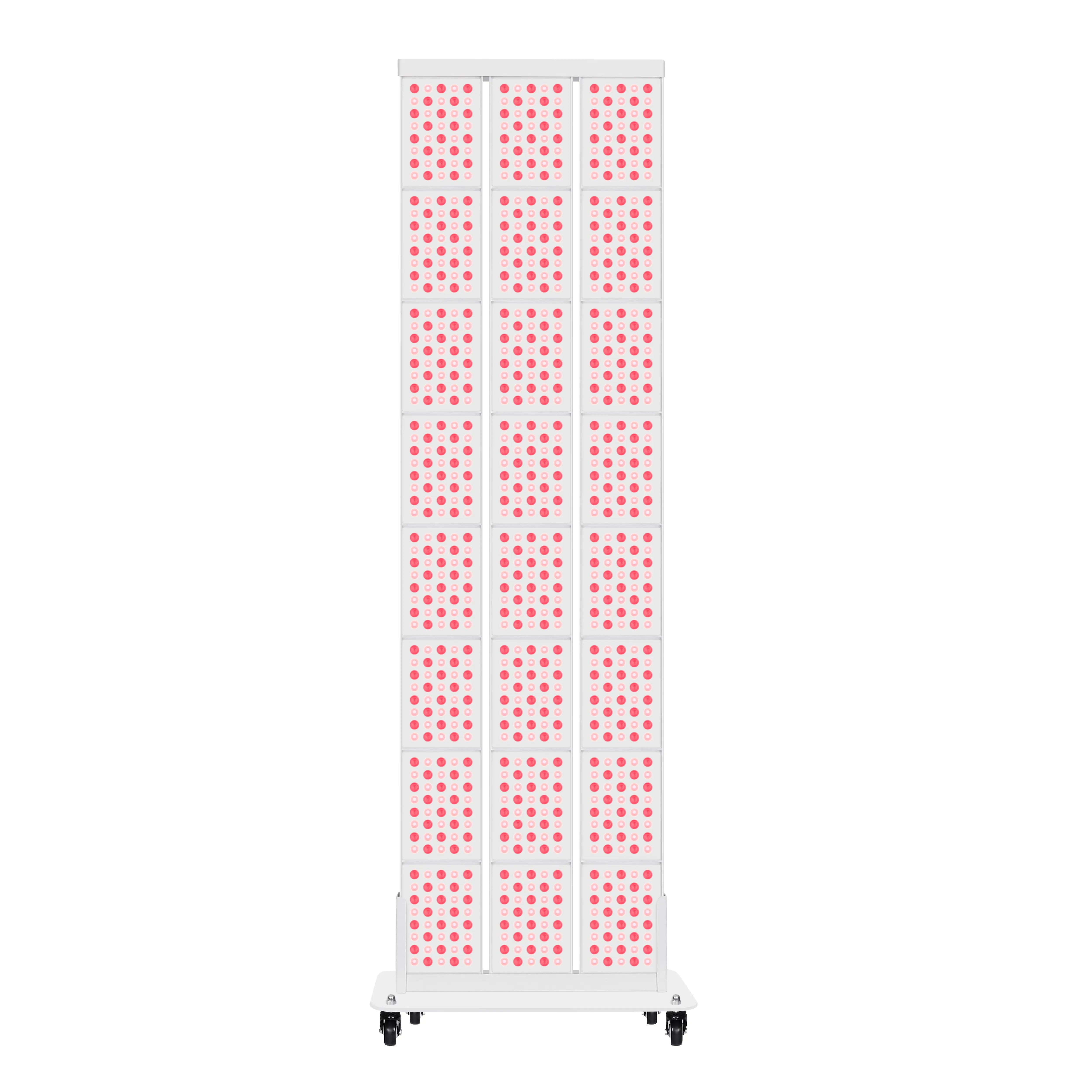
- Wavelengths: Use a combination of 660nm (red) for superficial inflammation and 850nm (NIR) for deeper joint penetration.
-
The "Dose" Logic: Most studies aim for a "Fluence" (Energy Density) of 4–10 Joules per cm² (J/cm²) at the skin surface.
- Simple Formula: (Irradiance in mW/cm² × Time in seconds) / 1000 = J/cm².
- Example: If your device delivers 50 mW/cm² at 6 inches, a 10-minute session (600 seconds) provides 30 J/cm² at the surface.
- Frequency: 3–5 sessions per week for an initial 4–8 week "loading" phase.
Buyer’s Checklist: Choosing the Best Device for Joints
When shopping for a device, use this checklist to filter out underpowered products.
| Feature | Requirement | Why It Matters |
|---|---|---|
| Wavelengths | Dual 660nm & 850nm | Red handles skin/surface; NIR reaches the joint capsule. |
| Irradiance | >50 mW/cm² at 6" | Lower power won't deliver enough energy in a reasonable time. |
| Distance-Specific Specs | Must state distance (e.g., "at 6 inches") | Irradiance drops significantly as you move away; "at the LEDs" is a misleading stat. |
| Treatment Area | Minimum 6" x 6" | Needs to cover the entire knee joint simultaneously for even dosing. |
| Safety Certifications | FDA Class II or CE | Ensures the device meets basic electrical and optical safety standards. |
Exclusion Rule: If a manufacturer does not provide a specific irradiance value at a specific distance, or claims "100% healing of tears," avoid the product.
Evidence Snapshot: Relative Strength Across Knee Conditions
Relative Evidence Strength for Red Light Therapy in Knee Conditions
Heuristic illustration based on review-level evidence, not a measured score.
View chart data
| Category | Relative evidence strength |
|---|---|
| OA Pain Relief | 5 |
| OA Function Improvement | 5 |
| Inflammation Modulation | 3 |
| Meniscus Repair | 1 |
| Structural Healing | 1 |
Heuristic/illustrative scale (0-5) synthesized from writer evidence: AAOS-supported use for knee osteoarthritis pain/function is treated as high; review-level discussion of inflammatory/mechanistic effects is medium; meniscus-tear repair and structural healing are treated as low/limited. This is not a measurement or official grading.
This chart illustrates the relative strength of clinical evidence. Osteoarthritis has the most robust support in human trials, while meniscus and ligament repair remain in the "preclinical/limited" category.
When Red Light Therapy Is Most Suitable
- Best For: Chronic stiffness, "achy" knees due to age or overuse, and as a recovery aid after physical therapy exercises.
- Less Suitable For: Acute "locking" of the joint, sudden swelling after a pop/snap, or severe instability.
For middle-aged adults or athletes with "grumpy" knees, RLT serves as a valuable, drug-free tool in a broader wellness toolkit.
Final Considerations
Red light therapy for knee pain offers a non-invasive option that fits well into a home wellness routine. While it is not a "magic wand" for structural meniscus tears, the evidence for its role in managing osteoarthritis pain is encouraging.
Success depends on device quality, consistent use, and realistic expectations. If you experience ongoing discomfort, consult a healthcare professional to develop an individualized plan. For those exploring high-quality equipment that meets technical standards, review detailed benchmarks in Photobiomodulation Standards: Irradiance, EMF, and Safety.
Additional reading on related applications can be found in our guide What Does a Red Light Therapy Panel Do? and technical analysis of wavelengths in The Impact of a 5 nm Wavelength Difference on Therapeutic Efficacy.