
Many people shopping for red light therapy panels focus on the biggest irradiance number they can find, assuming it automatically means a better or faster treatment. In reality, irradiance only tells you the power density right now, while the true delivered dose—known as fluence—depends on both that power and how long you actually use the device. Learning to calculate fluence from irradiance at your real treatment distance helps you set realistic session times and compare devices more accurately instead of chasing misleading headline specs.

What Irradiance and Fluence Actually Mean in Red Light Therapy
Irradiance measures the power density of light hitting a surface at a given moment, typically expressed in milliwatts per square centimeter (mW/cm²). It tells you how intense the light is right where you stand, but it says nothing about how long the light has been on.
Fluence, also called energy density, measures the total energy delivered over time and is expressed in joules per square centimeter (J/cm²). The basic formula is simple: fluence equals irradiance multiplied by exposure time (after converting units properly). For example, an irradiance of 100 mW/cm² (0.1 W/cm²) for 200 seconds delivers 20 J/cm².
This distinction matters because two devices can advertise similar irradiance figures yet require very different session lengths to reach the same fluence if their measurement conditions differ. As this official guide to photobiomodulation parameters explains, precise reporting of both irradiance and exposure conditions is essential for reproducible results.
Why Distance Dramatically Changes Your Actual Dose
Light intensity falls off rapidly as you move away from the panel. Many manufacturers publish irradiance measured very close to the device or at a single optimal point, yet real-world use often involves standing or sitting farther away for comfort and coverage.
A practical rule of thumb is that irradiance drops roughly with the square of the distance (inverse square law approximation), although real panels with multiple LEDs and diffusers behave a bit differently. A panel delivering 100 mW/cm² at 6 inches may drop to around 25 mW/cm² at 12 inches and even lower at 18–24 inches.
This falloff directly affects your session time. To reach the same fluence target, you must stay longer when irradiance is lower. Without accounting for distance, you risk under-dosing or overestimating how effective a device will be in your actual setup.
The chart below illustrates this relationship using a modeled example.
Illustrative drop in irradiance and session time vs. distance
Modeled approximation of how distance changes irradiance and the session time needed to reach 20 J/cm².
View chart data
| Category | Irradiance (mW/cm²) | Time to 20 J/cm² (min) |
|---|---|---|
| 6 in | 100.0 | 3.33 |
| 12 in | 25.0 | 13.33 |
| 18 in | 11.1 | 30.0 |
| 24 in | 6.25 | 53.33 |
Illustrative model only. Irradiance is normalized to 100 mW/cm² at 6 inches (15 cm) and scaled with an inverse-square approximation for distance; session time is calculated as time (minutes) = fluence (20 J/cm²) / irradiance (W/cm²), then converted to minutes. This is not measured panel performance and should not be read as a health claim.
This chart shows an illustrative approximation of how irradiance may fall with distance, and how that changes the time needed to reach a 20 J/cm² target. It is based on a 100 mW/cm² anchor at 6 inches and a simple inverse-square scaling, so it should be read as a modeling aid rather than measured panel performance.

How to Calculate Your True Red Light Therapy Dose Step by Step
Calculating fluence does not require advanced math, but it does require consistent measurement of your actual setup.
-
Determine the irradiance at your chosen treatment distance using the manufacturer’s data (if provided at that distance) or a reliable measurement tool. Prefer devices that publish irradiance at multiple realistic distances rather than a single peak value.
-
Convert irradiance to watts per square centimeter if necessary: divide mW/cm² by 1,000.
-
Decide on your target fluence based on your goals. Practical ranges discussed in literature often fall between 3–20 J/cm² for skin-focused applications and 20–50 J/cm² for deeper tissue goals, though these are not universal prescriptions.
-
Calculate time in seconds: time = target fluence / irradiance (in W/cm²).
-
Convert seconds to minutes for convenience.
Example: At 50 mW/cm² (0.05 W/cm²) and a 20 J/cm² target, time = 20 / 0.05 = 400 seconds, or about 6.7 minutes. Doubling the distance and dropping irradiance to 12.5 mW/cm² would require roughly 27 minutes for the same fluence.
Keep a simple checklist: always record your exact distance, note the published irradiance at that distance, and calculate fluence rather than relying on timer settings alone.
Common Myths That Lead to Incorrect Dosing
Several widespread claims can mislead buyers and users.
Myth: Highest irradiance wins. Irradiance depends heavily on distance, beam spread, and measurement method. A number taken very close to the panel or with a legacy meter can look much better than one measured more rigorously or at a realistic treatment distance. Compare irradiance only when the distance and measuring instrument are clearly stated, then translate it into fluence for the actual session time.
Myth: If irradiance is higher, the treatment is automatically better. Dose is not just intensity; it is intensity multiplied by time. A very high number without time context can imply a stronger treatment even when the actual fluence is similar, or even excessive. Judge devices by usable dose at your planned distance and session length, not by peak power alone.
Myth: Any meter reading proves the panel’s output. Legacy solar meters and casual testing setups can overstate or distort output, especially when they are not aligned to the device’s actual wavelength range or beam profile. Prefer lab-grade measurement with a spectroradiometer or at minimum demand transparent test conditions and method. This review of measurement methodologies in photobiomodulation highlights the importance of proper instrumentation.
Myth: Peak irradiance is the number that matters. Peak values can hide how uneven the beam is across the treatment area. A panel may have an impressive hotspot but a much lower average across the usable area. Look for average irradiance over the treatment zone, not just the hottest point.
These myths highlight why transparent specs matter more than impressive single numbers.
How to Compare Devices Using Real Dose Information
When evaluating panels, ask two questions instead of one: “How strong is the irradiance at a stated realistic distance?” and “How long would I need to run it to reach a reasonable fluence in my setup?”
Downgrade or screen out devices that only provide peak irradiance with no distance, omit test conditions, or claim fluence without specifying time and distance. A lower but clearly documented irradiance at 12–18 inches can be more useful than an inflated number measured at 2 inches.
Consider your room and usage habits. If you cannot maintain a consistent close distance, prioritize devices with stronger output at farther distances or plan longer sessions accordingly. This authoritative whitepaper on photobiomodulation standards provides further detail on measurement best practices and industry benchmarks.
Practical Checklist for Accurate Red Light Therapy Dosing
Use this checklist before every session or when comparing new devices:
- Confirm irradiance is specified at a distance you can actually maintain.
- Measure and mark your exact treatment distance with a tape measure.
- Calculate expected fluence using the formula rather than guessing timer settings.
- Note wavelength(s) and whether the device uses average or peak values.
- Adjust session time if you change distance or position.
- Track consistency across sessions rather than chasing the highest possible number.
Consistent application of these steps reduces guesswork and helps you make better-informed decisions about both purchase and daily use.
Important Safety and Limitation Notes
This article discusses comfort, setup, and technical calculation guidance only. It does not constitute medical advice, diagnosis, or treatment recommendations. Optimal fluence varies significantly with individual factors, wavelength, treatment area, and personal goals. Higher irradiance does not automatically produce better outcomes and may even follow a biphasic response where too much exposure becomes less effective.
If you experience persistent discomfort, have existing eye conditions, or are using red light therapy for specific health concerns, consult a qualified healthcare professional. Always protect your eyes appropriately and follow manufacturer safety instructions.
Understanding irradiance versus fluence empowers you to move beyond marketing numbers and focus on what actually happens in your own setup. By measuring distance, applying the simple fluence formula, and demanding transparent specs, you can set more realistic expectations and get better value from your red light therapy device.
For more technical depth on related topics, explore our guide to the impact of a 5 nm wavelength difference on therapeutic efficacy or learn how red light therapy supports recovery after high-intensity interval training.
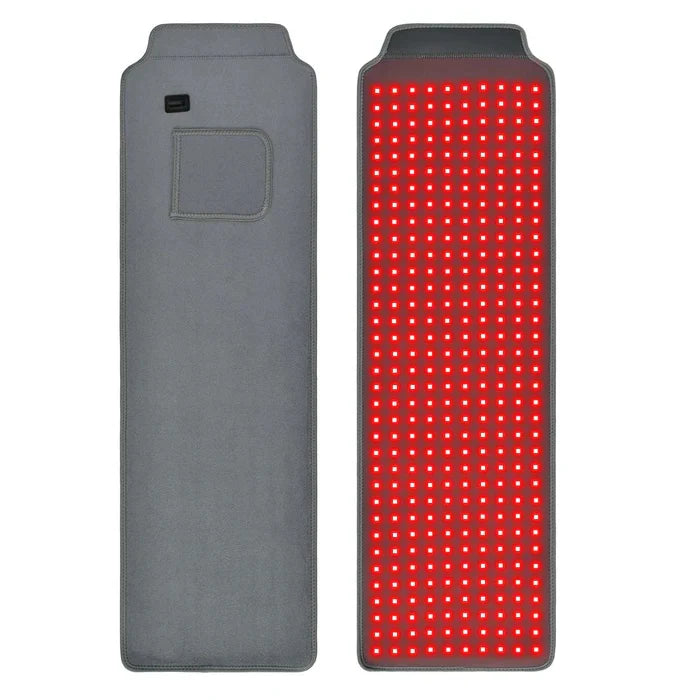
Ready to apply precise dosing with quality panels? Check out our Red Light Therapy Belt collection for flexible, targeted options that make consistent distance easier to maintain.
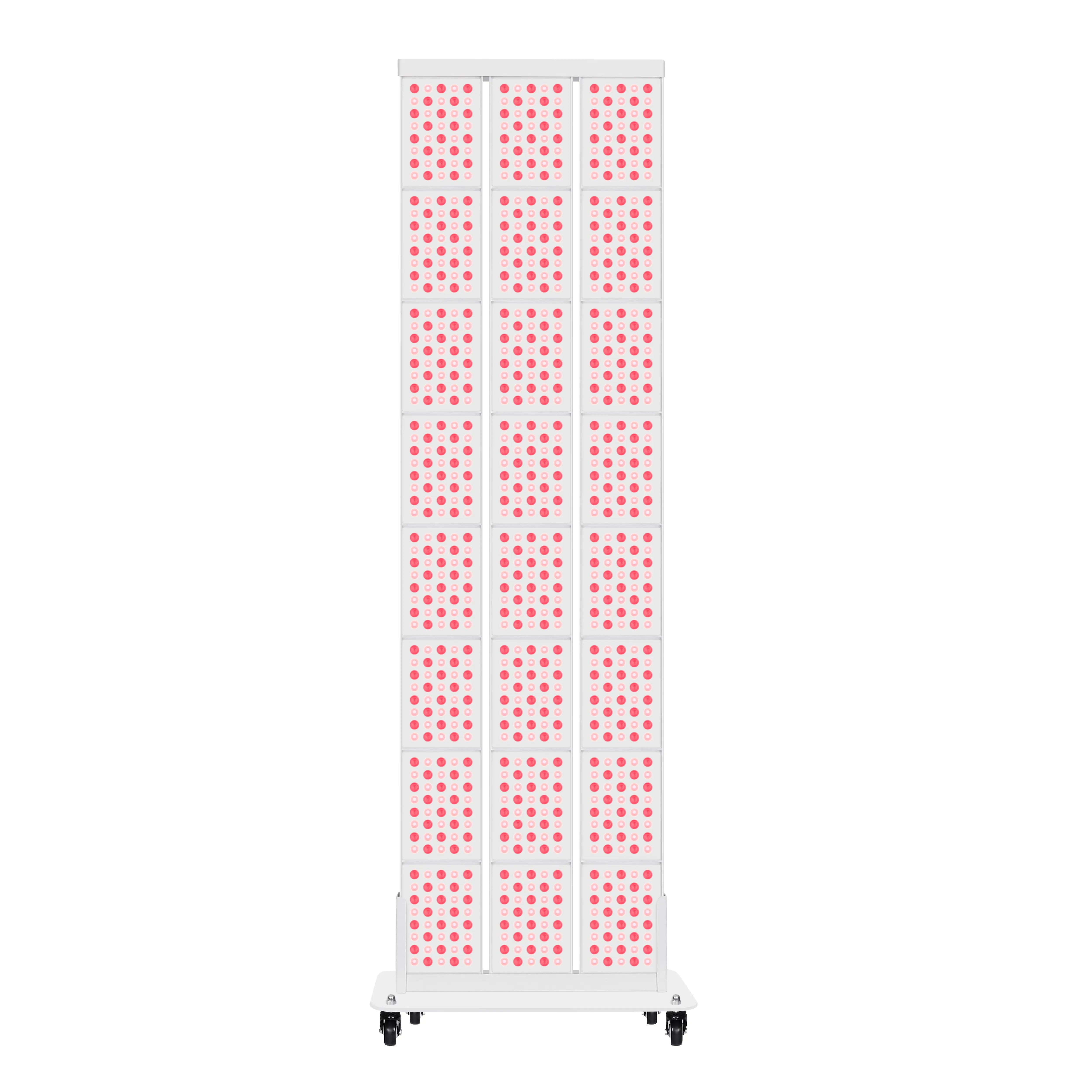
When comparing full-body panels, look for models that publish irradiance data at multiple distances so you can calculate fluence accurately for your preferred setup. Our photobiomodulation standards guide offers additional benchmarks to help you evaluate device claims objectively.