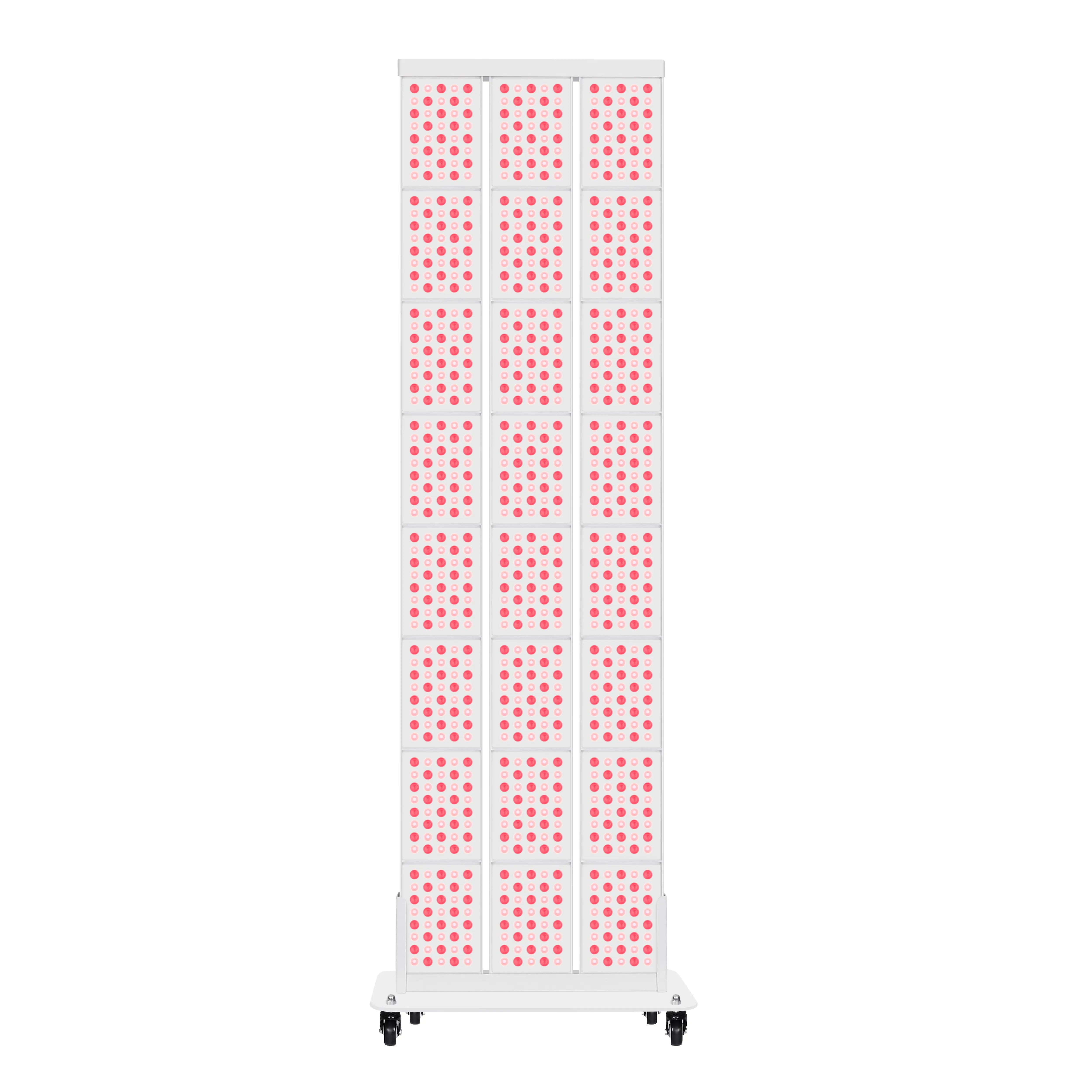

Many health-conscious buyers worry that electromagnetic fields (EMF) from red light therapy panels could offset the benefits of photobiomodulation or introduce unnecessary exposure during daily sessions. The good news is that understanding a few key specs, measurement basics, and setup factors lets you evaluate devices more confidently and choose options that align with lower-exposure engineering.
EMF is an umbrella term that covers different kinds of fields, and the relevant safety interpretation depends on whether the source is electric, magnetic, or radiofrequency exposure. For red light therapy panels the primary concerns are typically low-frequency magnetic and electric fields generated by the power supply, wiring, and LED drivers rather than radiofrequency (RF) emissions.
What the Common EMF Units and Specs Actually Mean
When you see numbers on a spec sheet or meter display, the unit matters just as much as the value. Magnetic fields are usually reported in microtesla (µT) or milligauss (mG), while electric fields appear in volts per meter (V/m). A reading that looks large in one unit can be modest in another, so always check the unit first.
Consensus standards exist for human exposure to electric, magnetic, and electromagnetic fields, and they are the right reference point for technical safety discussions. International exposure guidance uses field-strength and power-density concepts that help translate technical EMF specs into meaningful safety context. These frameworks emphasize that exposure generally decreases with distance, which is why test distance must be disclosed for any “low EMF” claim to be useful.
Exposure limits are defined by formal guidance and compliance methods, so a marketing claim like “low EMF” needs a measurement context to be meaningful. Without knowing whether the reading was taken at the panel surface, at 6 inches, or at 12 inches, it is difficult to compare devices fairly.
How to Test EMF on Red Light Therapy Panels Yourself
Testing at home removes much of the guesswork. You will need a quality EMF meter capable of measuring both magnetic and electric fields in the relevant frequency range (typically 30 Hz to 300 Hz for panel drivers). Turn the panel on at normal operating power, hold the meter probe at the exact distance you plan to use during treatment, and record both magnetic and electric readings. Take multiple points across the panel face because emissions are rarely uniform.

Compare the readings first against your room’s ambient background levels. A panel that produces values only modestly above background at your treatment distance is generally easier to live with than one that remains clearly elevated. Remember that these are illustrative comparisons only; there is no single red-light-specific regulatory limit published by the FDA or FCC for these devices.
The FDA explains basic RF safety concepts and how exposure is evaluated for consumer devices, while the FCC provides detailed bulletins on evaluating compliance with human-exposure guidelines. These resources help frame what “reasonable” looks like even though they are not written specifically for red light panels.
Safe Distance Guidance and How Exposure Changes with Distance
EMF strength from most panels drops rapidly as you move away from the surface. Many users treat at 6 to 12 inches; at these distances well-designed devices often show noticeably lower readings than at the panel face. If a panel still shows relatively high values at 12 inches, it may require you to adjust either distance or session length to stay within your personal comfort zone.
Here is an illustrative example of how magnetic and electric field readings can behave with distance. The chart compares a hypothetical lower-emission panel with a higher-emission one to show the typical decay pattern. These values are modeled for demonstration only and do not represent any specific product’s measured data or official safety limits.
Illustrative EMF Drop with Distance from a Red Light Therapy Panel
Illustrative example only: not measured data or official exposure limits.
View chart data
| Category | Good panel - Magnetic field | Good panel - Electric field | Poor panel - Magnetic field | Poor panel - Electric field |
|---|---|---|---|---|
| 0 in | 10.0 | 100.0 | 30.0 | 250.0 |
| 6 in | 3.0 | 35.0 | 14.0 | 120.0 |
| 12 in | 1.5 | 18.0 | 8.0 | 70.0 |
Illustrative modeled example based on the common expectation that EMF falls rapidly with distance from a panel. Values are hypothetical only and are shown to compare a lower-emission panel versus a higher-emission panel at the panel face, 6 inches, and 12 inches. Units are relative example magnitudes in µT/mG for magnetic field and V/m for electric field; not official measurements or safety limits.
A panel that requires you to sit much farther back than its recommended treatment distance to achieve comfortable readings may not be ideal for routine home use in smaller rooms. Conversely, devices engineered with careful driver placement, shielding, and quality components tend to show lower readings closer to the intended use distance.

Flicker, Wiring Quality, and Other Factors That Affect Perceived Safety
Flicker is a separate issue from EMF, and lighting professionals treat temporal light artefacts as a distinct quality and comfort concern. Professional lighting guidance treats flicker as a measurable issue with potential comfort and health implications. LED modulation can be designed to reduce flicker-related viewer risk, which is why “zero-flicker” claims should be understood in engineering terms rather than as a vague marketing label.
Poor wiring, unshielded cables, or low-quality power supplies can increase both measurable fields and user-perceived discomfort. Devices that incorporate proper grounding, separated low-voltage drivers, and high-quality components generally produce lower fields at typical treatment distances. These design choices matter more for long sessions or for users who report sensitivity to electromagnetic fields.
How to Spot Genuine Low-EMF Engineering vs Marketing Hype
A “low EMF” label is only meaningful when the measurement method, units, and test distance are disclosed. Look for manufacturers that publish third-party test reports or at least clearly state the distance and meter type used. Vague statements without context make comparison difficult.
Common myths can mislead buyers. Here are three frequent misconceptions:
- Myth: “Low EMF” automatically means the device is EMF-safe. Reality: Low EMF is only decision-useful when the maker explains what was measured, how close the reading was taken, and under what operating conditions. Without that context, the label is too vague to compare devices.
- Myth: Any EMF exposure is equally concerning. Reality: The relevant issue is exposure level and use context, not a simple yes/no label. A buyer should compare claimed readings to recognized guidance and ask how the number was obtained.
- Myth: “Zero risk” or “EMF-free” marketing should be taken literally. Reality: That language is too absolute to rely on. A more conservative reading is that a device may have lower exposure in some setups, not no exposure under all conditions.
The IEEE Standard C95.1-2019 and ICNIRP guidelines provide useful reference frames, but they are not red-light-therapy-specific standards. Use them to understand general exposure concepts rather than as pass/fail thresholds for any particular panel.
Practical Checklist: What to Check Before You Buy or Use a Panel
Before purchasing or during setup, run through these checkpoints:
- Ask for or locate the exact test distance used in any EMF claim (surface, 6 in, 12 in).
- Confirm the meter type and whether both magnetic and electric fields were measured.
- Verify that the device uses a high-quality, preferably external or well-shielded driver.
- Check for explicit zero-flicker or flicker-free engineering (look for IEEE 1789-2015 compliance language when available).
- Test the panel yourself at your intended treatment distance after purchase.
- Consider room layout—larger treatment distances or shorter sessions can reduce cumulative exposure if you prefer extra caution.
These steps help translate abstract specs into real-world decisions without relying on marketing shorthand.
Final Thoughts on EMF Safety and Red Light Therapy Use
Understanding what the numbers mean, how distance affects exposure, and which engineering details matter most lets you select and use red light therapy devices with greater confidence. A panel with transparent measurement practices, quality components, and low readings at typical treatment distances can support your wellness routine while addressing common exposure concerns. Always remember that this article only discusses comfort and setup advice; it does not constitute medical advice, diagnosis, or treatment. If you experience persistent discomfort or have existing health conditions, consult a qualified professional.
For further reading on related technical topics, see our guide on Photobiomodulation Standards: Irradiance, EMF, and Safety. You may also want to explore what a red light therapy panel actually does or the impact of small wavelength differences on results.
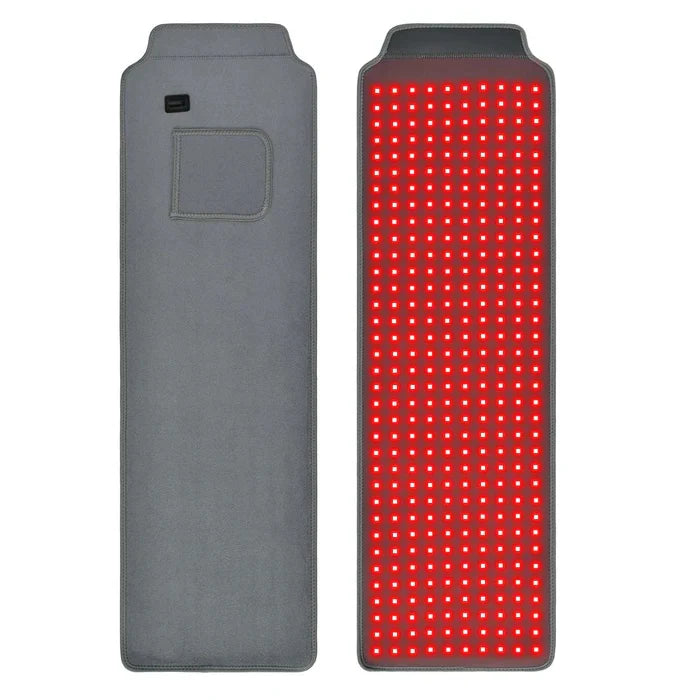
When shopping, consider adding a red light therapy belt to your routine for targeted application that can be used at flexible distances. Additional technical depth is available in articles such as how red light influences facial blood vessels or supports recovery after high-intensity training.