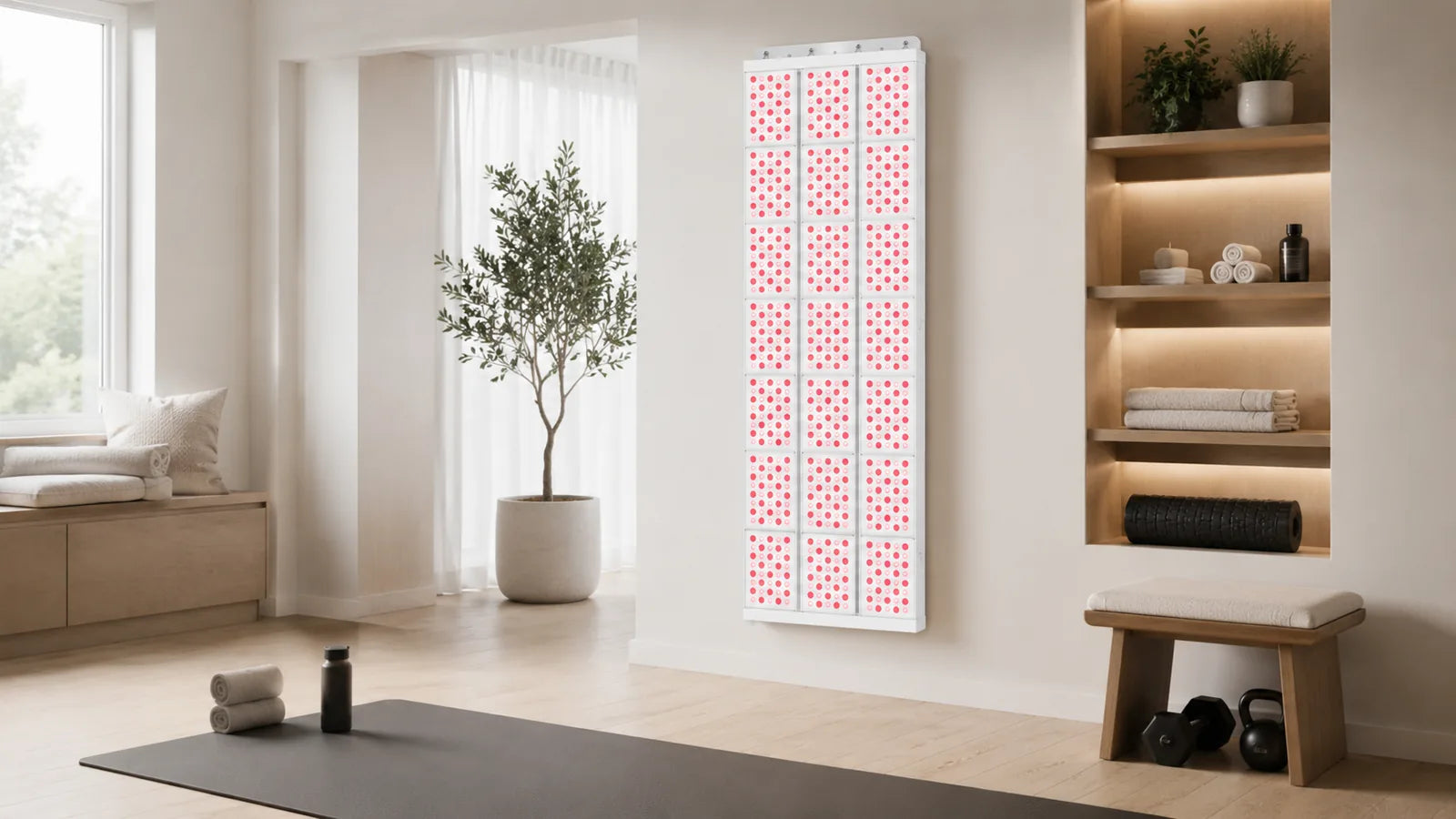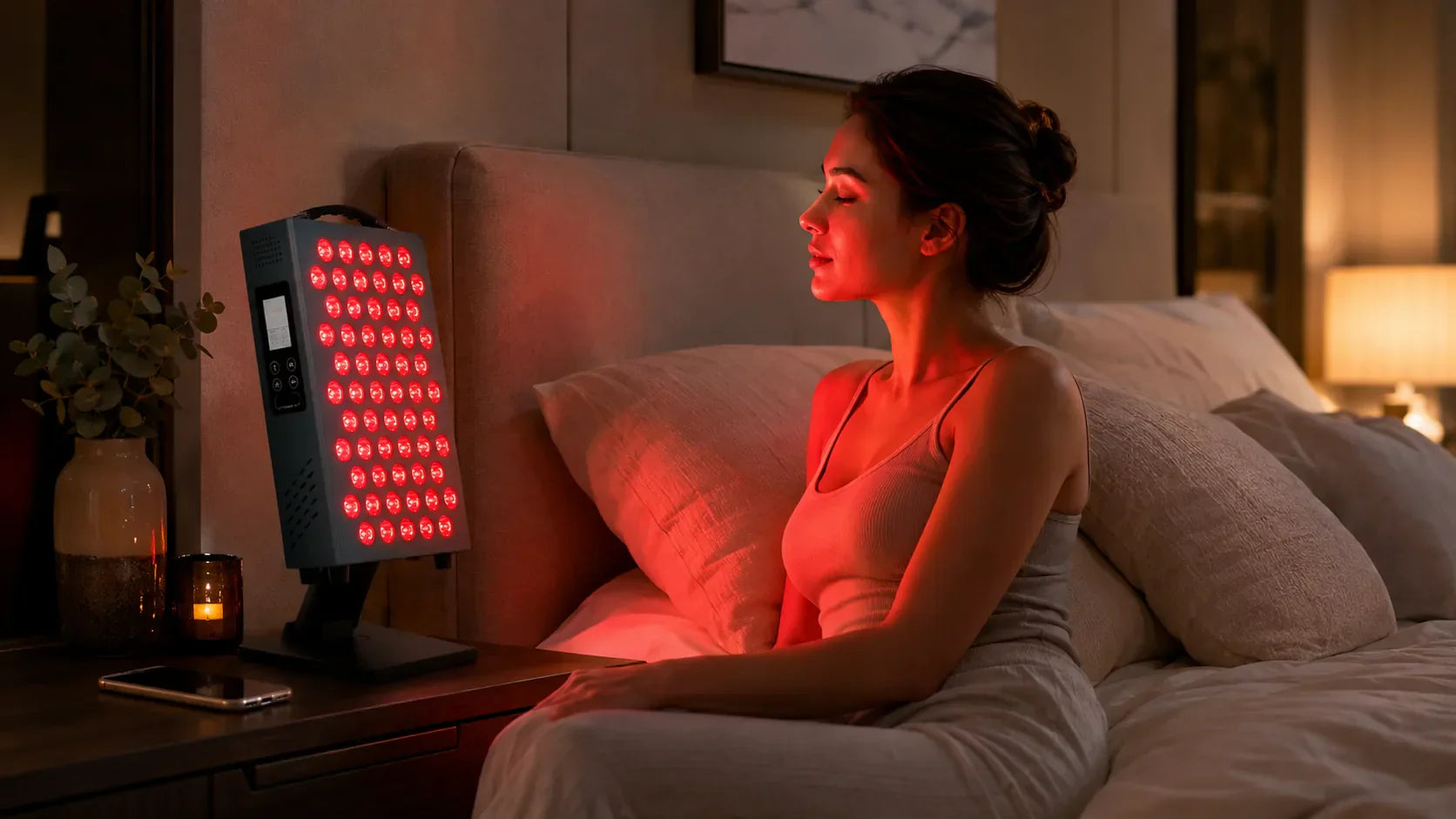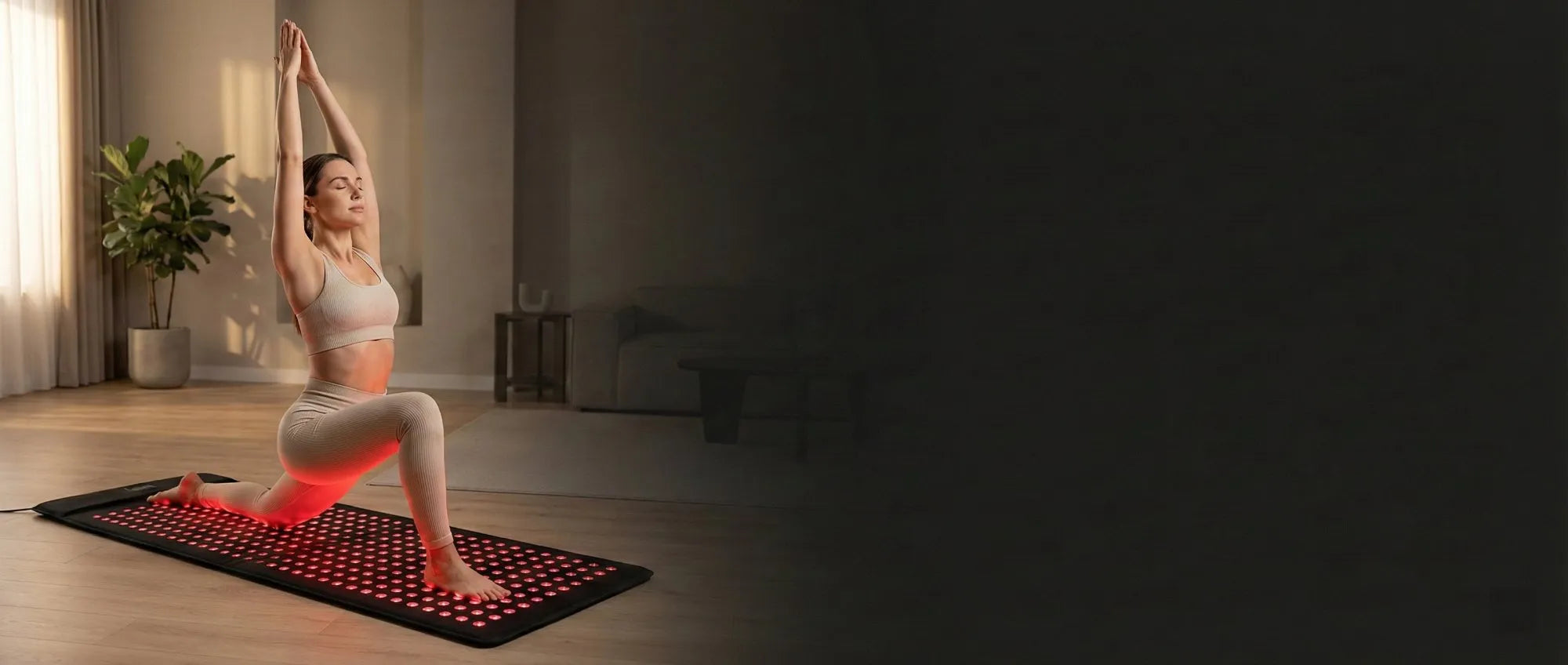
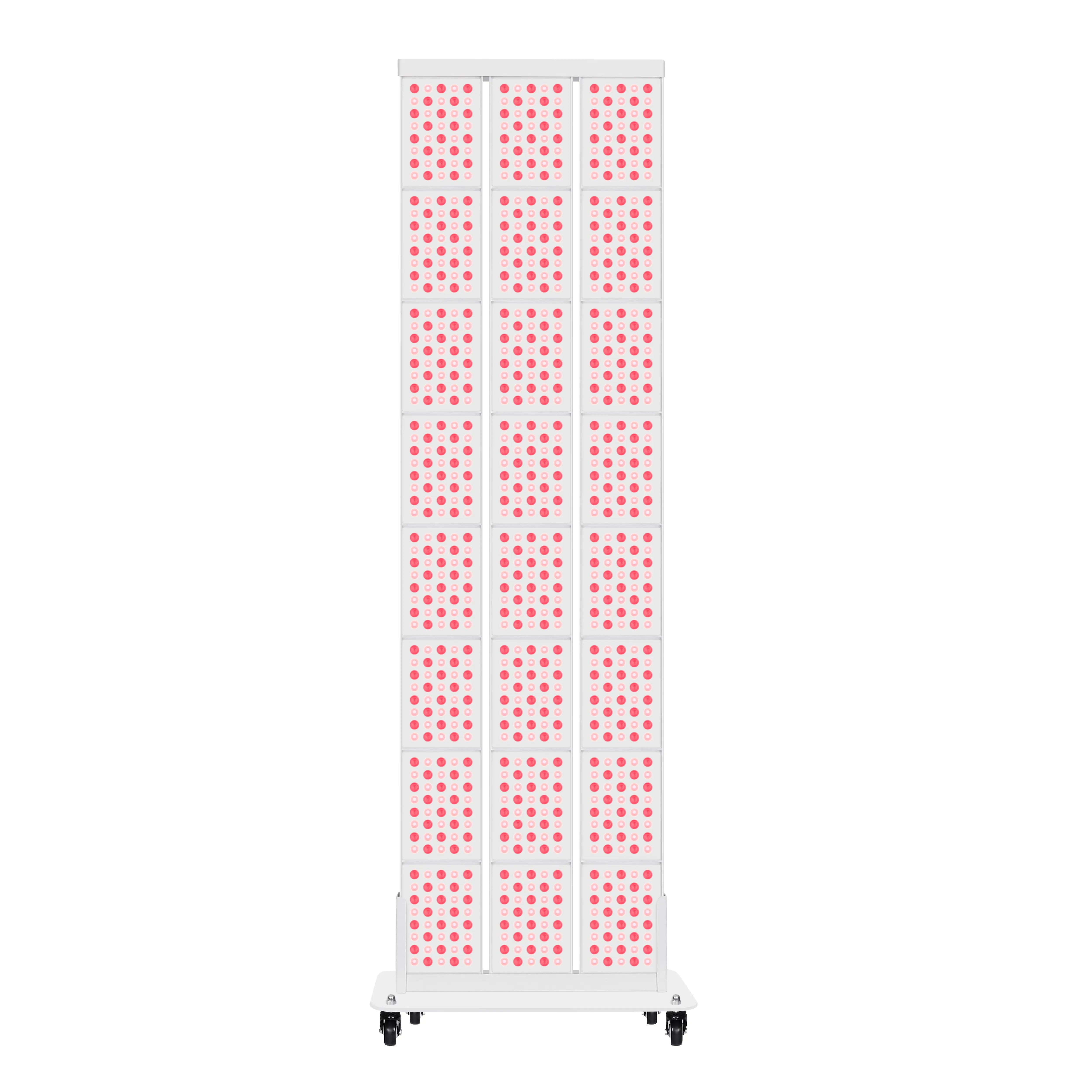

A full-body red light panel can be a smart addition to a home wellness routine, but the setup matters as much as the device itself. If the panel is hard to move, awkward to position, or unsafe in a busy room, daily use becomes less realistic. A rolling stand is useful for large panels, shared spaces, seated sessions, and users who need flexible placement. A fixed mount can still work well when the room and routine are simple.
Why a Fixed Red Light Therapy Panel Setup May Not Work in Every Room

A fixed setup can look clean and organized. The panel stays in one place, floor space stays open, and the room feels less cluttered. For a small red light therapy panel or a dedicated wellness area, that may be enough.
The problem is that many homes do not have a perfect wall or door position. Beds, desks, closets, mirrors, workout gear, outlets, and walking paths all affect where the panel can go. Once the panel is mounted in one spot, the user has to adjust to the panel. That can feel fine for one type of session, then less convenient for another.
Wall Mounts Fit Dedicated Spaces Best
A wall mount works well when the panel will stay in the same room and serve the same routine every day. It can be a good fit for a home gym, wellness corner, or open wall area.
The limitation is a fixed height. A position that feels right for the torso may not line up well for the legs, shoulders, or seated use. If several people use the same red light therapy panel, one wall height may not suit everyone.
Door Setups Depend on Clearance
A door setup can help renters or users with limited wall space. It keeps the floor clear and avoids drilling into a wall.
Still, it depends on the room. The door must open safely, the cord must reach an outlet, and the panel should not block privacy or normal movement. If that door is used often, the setup may feel inconvenient after the first few sessions.
Distance Can Be Harder to Keep Consistent
A full-body red light panel usually works best when the user can keep a steady distance from the light source. Many home routines place the body several inches away from the panel, with the exact range based on the product manual.
A fixed setup may make that easy while standing, then harder while sitting or lying down. This is where a red light panel stand becomes useful. It gives the panel more freedom without forcing the whole room to revolve around one fixed position.
How a Rolling Red Light Panel Stand Makes Positioning Easier

A rolling red light panel stand solves a practical problem: large panels are not easy to lift, lean, or reposition by hand. Once the panel is mounted on a stable rolling base, the setup can move with the routine.
This matters most when one panel serves several needs. You may want to stand in front of it after exercise, sit near it in the evening, or roll it beside a yoga mat, chair, or bed.
It Helps With Height
Different body areas need different panel positions. Face, chest, back, hips, and legs do not all line up at the same height.
An adjustable red light therapy panel stand makes those changes much easier. For a full body panel, this is especially helpful because the device is too large to move casually by hand. Some adjustable stands include gas lift height control, which makes it easier to align the panel with different body areas during home use.
It Helps With Angle
Tilt and swivel functions make the panel easier to aim. This is useful when switching between front body, back body, side body, seated, and lying sessions.
The stand does not change the light output. It simply helps place the panel in a better position for the session.
It Helps With Movement
A rolling base lets the panel move between rooms or zones in the same room. Locking casters then keep the stand steady during use.
For red light therapy panels for home, this can be the difference between a device that feels simple and one that feels like extra work. A panel that rolls into place is easier to keep in a daily or weekly routine.
Why Stability Matters More for a Full Body Red Light Therapy Panel

Small panels are easier to manage. A compact device can sit on a table or shelf with little effort. A full-body red light therapy panel has a taller frame, greater weight, and a larger surface area. That changes the support requirements.
As the panel gets larger, the stand becomes part of the safety setup. It must support the panel securely during adjustment, movement, and use. A weak base or poor bracket fit can make the whole experience feel unstable.
A good red light therapy panel stand should help the panel stay upright, balanced, and easy to control.
| Stand Feature | Why It Matters |
| Wide, Low Base | Helps keep the panel balanced |
| Locking Wheels | Keeps the stand still during use |
| Strong Frame | Supports the weight of a larger panel |
| Correct Bracket Fit | Connects securely to the panel |
| Tilt and Swivel Control | Helps aim the panel without unsafe leaning |
| Suitable Height Range | Makes standing and seated sessions easier |
Compatibility is especially important. A stand should match the panel model, bracket type, mounting holes, and weight range. Similar-looking accessories may not fit safely. For example, the YouLumi Red Light Therapy Panel Stand is designed for compatible IRP010 panels, which is a useful reminder that model fit matters. A full body panel should not be paired with a random support system. A secure fit reduces wobble and makes adjustments feel smoother.
Safety habits also matter. Lock the wheels before each session. Place the stand on a level surface. Keep cords away from walking paths. Use two people during assembly when the panel is large or difficult to hold. These habits reduce tipping, cord pulling, and awkward handling.
How Your Home Layout Decides Whether a Red Light Panel Stand Is Worth It
The value of a stand depends on the room. A red light panel stand may be very useful in one home and unnecessary in another. The key factors are floor space, mounting options, session posture, and how often the panel needs to move.
| Home Setup | Is a Rolling Stand Useful? | Why |
| Small apartment or rental | Often useful | It avoids permanent wall installation and allows the panel to move out only during use. |
| Home gym | Very useful | The panel can move near a mat, treadmill, bike, bench, or recovery area. |
| Bedroom | Depends on posture | Standing sessions may work with a fixed wall position, while seated or lying sessions are easier with a movable stand. |
| Shared family space | Usually useful | Different users may need different heights, angles, and distances. |
| Very tight room | Less useful | The stand base may take up floor space and create clutter. |
| Dedicated wellness corner | Optional | A fixed mount may be enough if the panel stays in one position. |
A stand is most useful when the panel needs to serve more than one position, room, or user. It is less necessary when the panel is small, the wall position already works well, and the floor space is limited.
Choosing the Right Stand Can Make a Full Body Panel Easier to Use Every Day
A full-body red light panel is easier to use when the stand matches the panel and the room. The goal is simple: keep the panel stable, easy to adjust, and safe to move.
Before choosing a red light therapy panel stand, check the practical details:
- Panel size and weight
- Mounting hole compatibility
- Height adjustment range
- Base stability
- Locking wheels
- Tilt or swivel function
- Cord placement
- Storage space
A stand does not change the light output or make the wavelengths stronger. Its value is convenience and safety. It helps users place the panel at a comfortable height, move it with less effort, and keep it steady during a session.
For a small panel in a fixed corner, a rolling stand may not be necessary. For a large full-body panel used in different positions or shared spaces, it can make daily use much easier.
FAQs about Red Light Therapy Panels
Q1. How Far Should You Stand From a Red Light Therapy Panel?
Most users stand about 6 to 18 inches from a red light therapy panel, but the best distance depends on the panel’s power, session goal, and manufacturer instructions. A larger full-body panel may allow a slightly farther distance for broader coverage.
Q2. How Long Should a Full Body Red Light Therapy Session Last?
Most home sessions last about 10 to 20 minutes. Shorter sessions may work for targeted areas, while full-body use often takes longer. The safest approach is to follow the device manual and increase time gradually only if your skin feels comfortable.
Q3. Can You Use a Red Light Therapy Panel Every Day?
Yes, some users can use a red light therapy panel daily, but daily use is not always necessary. Many home routines use several sessions per week. Skin sensitivity, treatment area, session length, and device intensity should guide the schedule.
Q4. Should You Wear Eye Protection With a Red Light Therapy Panel?
Yes, eye protection is recommended, especially when the panel is close to the face or includes near-infrared light. Do not stare directly into the LEDs. If your eyes feel strained or sensitive, increase the distance or shorten the session.
Q5. Can You Use Red Light Therapy Through Clothes?
Not effectively. Clothing blocks or reduces much of the light before it reaches the skin. Red light therapy works best when the target area is uncovered, clean, and free of thick fabric. Thin clothing may still reduce exposure.