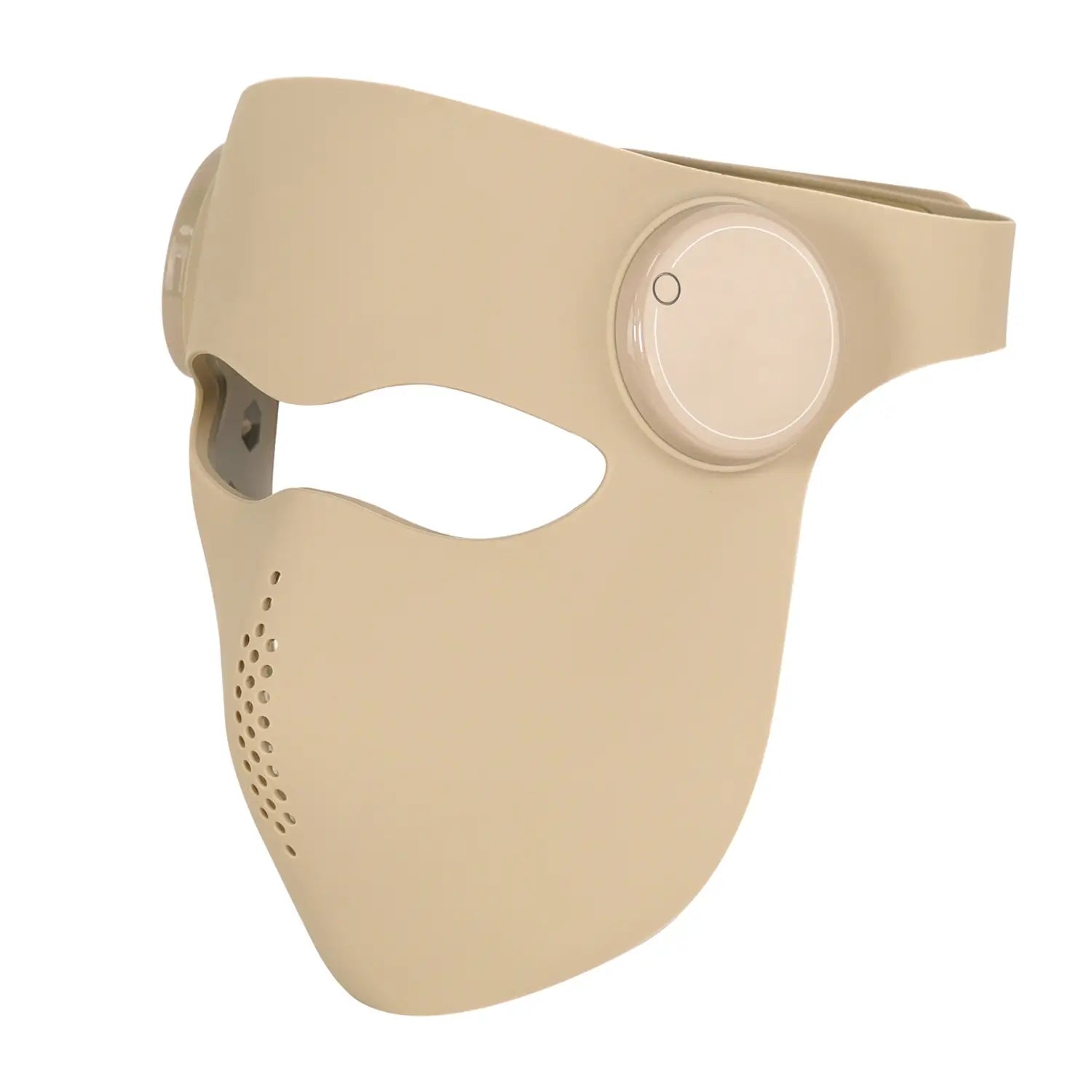
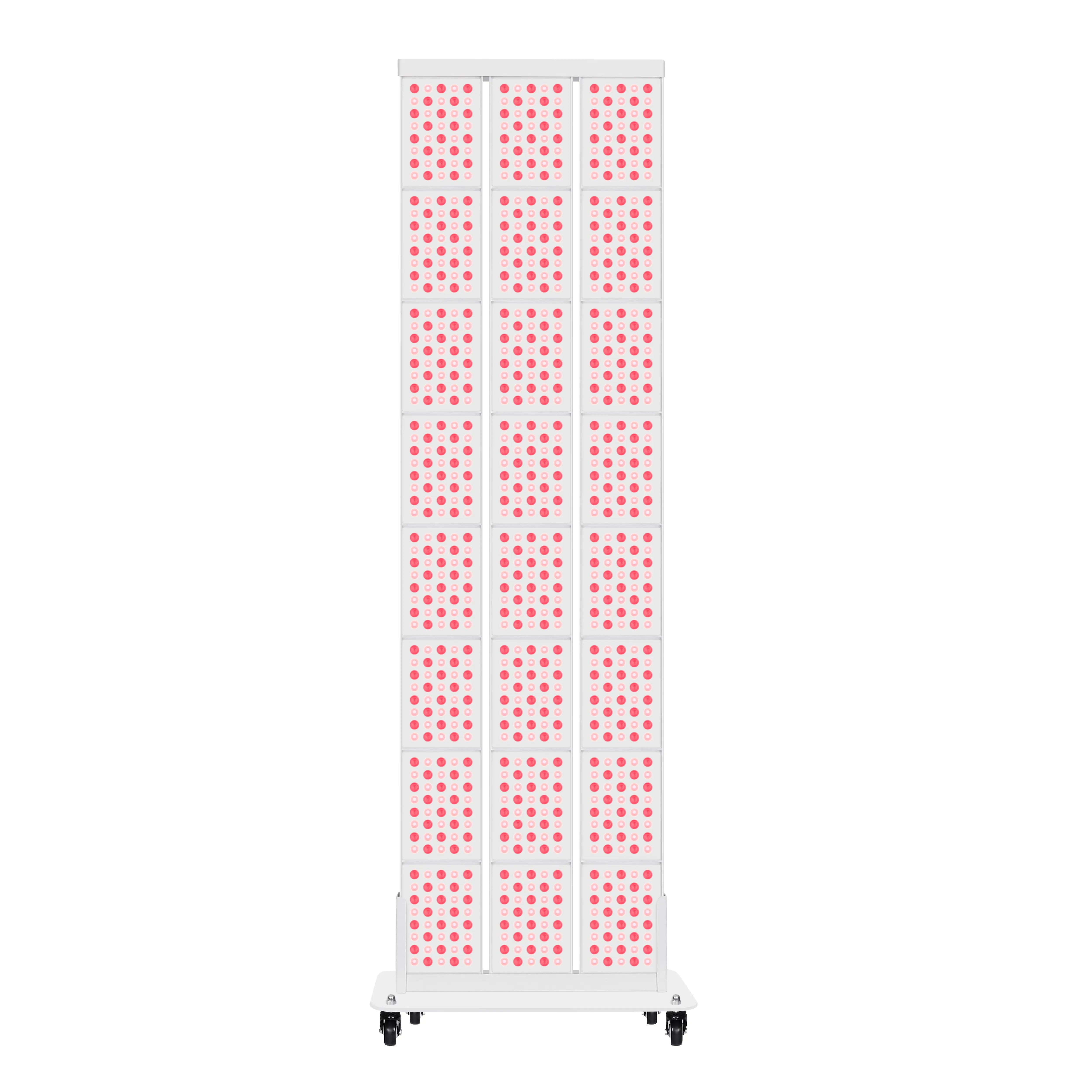
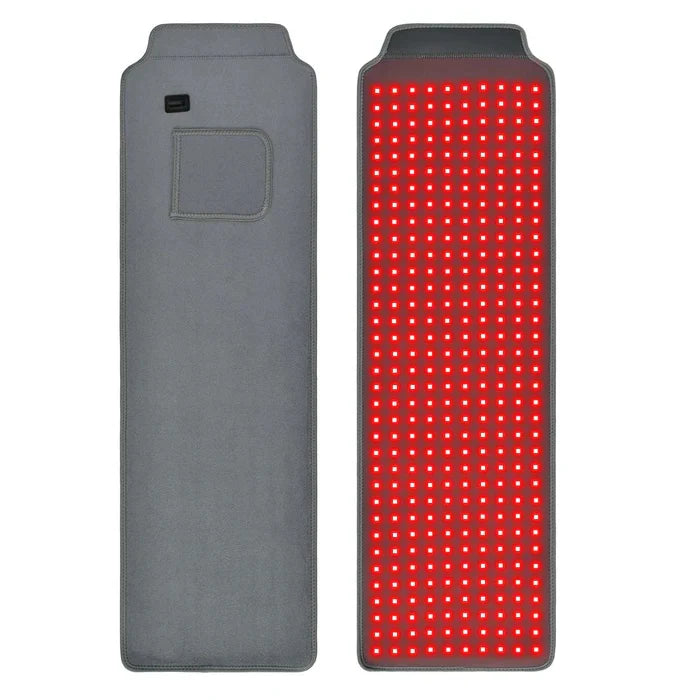
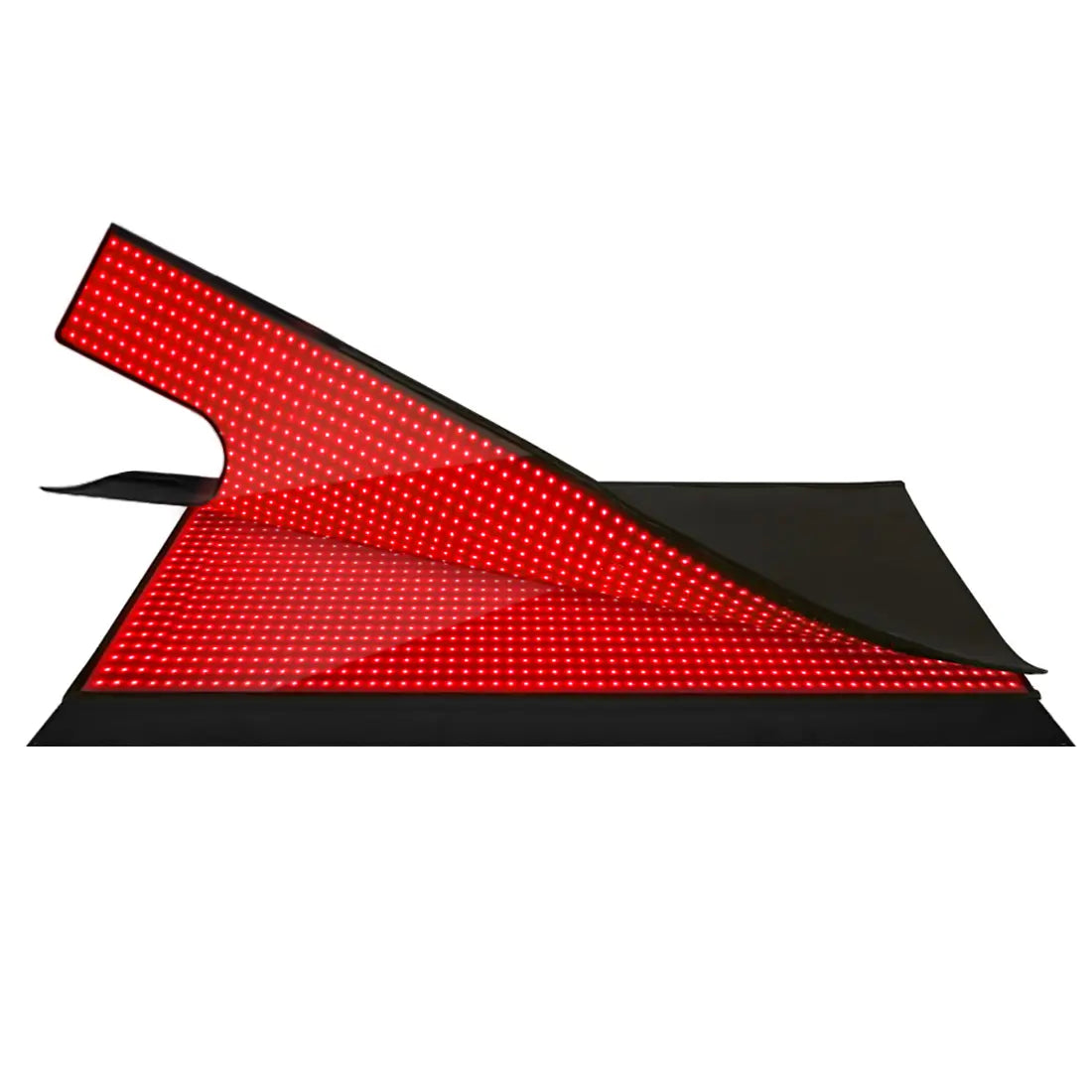
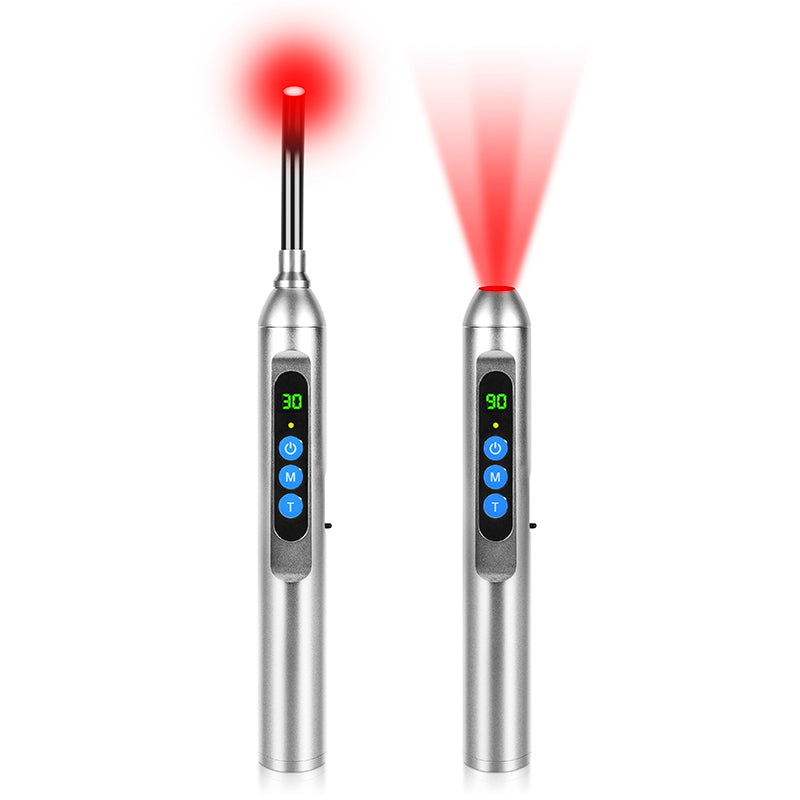

A simple 15-minute red light therapy evening routine can serve as a low-stimulation wind-down ritual that many biohackers and recovery-focused adults find helpful for transitioning from a busy day. While evidence for dramatic improvements in deep REM sleep remains mixed and individual results vary, using dim red or amber light at night is less likely to suppress melatonin than bright blue-rich screens, according to public health guidance. This protocol emphasizes conservative timing, modest intensity, and easy self-tracking so you can test whether it fits your sleep hygiene without creating new friction.

The routine works best as a complementary habit rather than a standalone fix. Morning bright light remains the stronger circadian anchor for most people, while evening red light primarily helps protect the natural wind-down window. When used thoughtfully after screens are reduced, it can become part of a repeatable pre-bed sequence that supports relaxation for athletes, remote workers, and those managing irregular schedules.
Why Red Light in the Evening May Support Wind-Down
Dim red light in the evening is generally considered one of the least disruptive options for nighttime use. As this Harvard Health explanation of blue light effects notes, warm or red wavelengths interfere less with circadian signaling than blue-enriched light from phones, tablets, or overhead fixtures. The key hours between sunset and bedtime matter most for preserving sleepiness, making a short, intentional red light session a practical way to replace stimulating light exposure.
However, red light therapy for sleep does not replace the need for consistent sleep timing or good sleep hygiene. A structured evening protocol can feel calming for many users, but clinical evidence is bounded. One small study on elite female basketball players reported improved sleep quality and higher melatonin levels after red light exposure, yet a systematic review found mixed results, with red light sometimes increasing alertness or negative arousal in certain contexts. These findings underscore that outcomes depend heavily on individual biology, device characteristics, room conditions, and overall evening habits.
This article outlines a conservative 15-minute routine grounded in available circadian research and practical testing heuristics. It is not medical advice and does not treat insomnia or clinical sleep disorders. If you experience persistent sleep difficulties, consult a qualified healthcare professional.
How Red Light Therapy Interacts with Circadian Rhythm and Cortisol
Morning light is the primary cue that helps set the body's internal clock and supports healthy cortisol patterns for daytime energy. Evening light management, by contrast, mainly protects the natural rise in melatonin and the onset of sleepiness. As Johns Hopkins public health guidance on daylight saving time explains, morning light helps anchor circadian rhythm while reducing bright light in the evening helps protect the sleep signal.
Red and near-infrared wavelengths (typically 660 nm and 850 nm) are studied for their potential effects on cellular energy and relaxation. In the context of evening use, the goal is not bright illumination but a gentle, non-suppressive light environment. The PLOS Biology consensus on indoor light exposure recommends structuring light by time of day rather than guessing, which supports turning a vague “dim the lights” suggestion into a repeatable 15-minute window.
For athletes and high-training individuals, evening red light sometimes appears in recovery protocols. Internal analysis of photobiomodulation in athletes suggests possible support for deeper rest after intense sessions, but the same evidence cautions against expecting universal REM gains. The routine should therefore stay modest: finish well before bedtime and pair it with other wind-down behaviors such as reduced screen time, consistent temperature, and a dark sleeping environment.

The 15-Minute Evening Red Light Therapy Routine
Perform this sequence 30–60 minutes before your target lights-out time, after you have already reduced bright overhead lights and screens. The total active light exposure stays at 10–15 minutes to keep the session low-risk and easy to repeat.
-
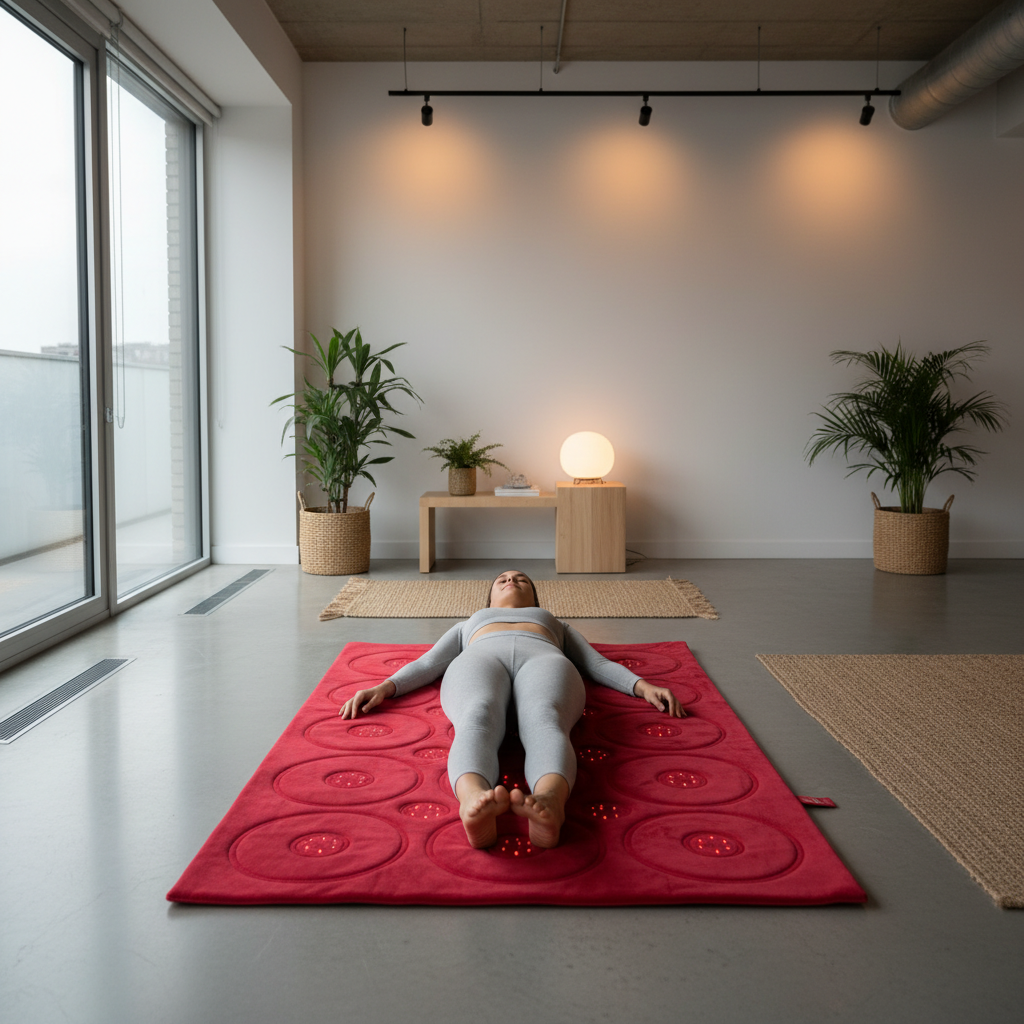
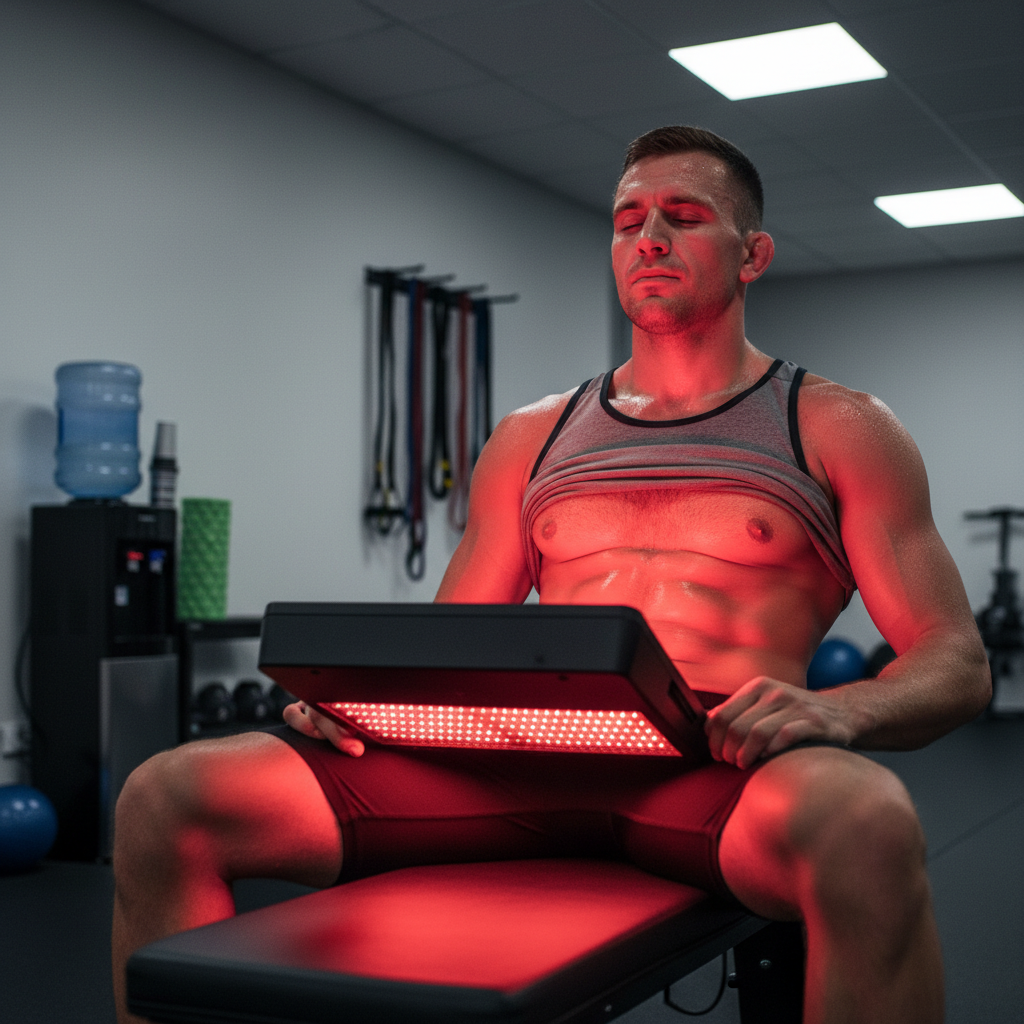
Prepare the space (2 minutes): Dim room lights or switch to warm amber bulbs. Place your red light therapy device at a comfortable distance—typically 12–24 inches for panels or mats, or as recommended by your specific model. The goal is gentle exposure without glare or visual strain.
-
Position yourself (1 minute): Sit or lie in a relaxed posture. Many users prefer reclining on a bed or yoga mat with eyes closed or softly gazing away from the brightest part of the panel. Avoid staring directly into the lights.
-
Run the session (10–15 minutes): Activate the device using primarily 660 nm red wavelengths or a balanced 660/850 nm setting at moderate irradiance. Set a timer to prevent overrun. Focus on slow breathing or light stretching—treat this as a transition ritual rather than additional screen time.
-
Transition to bed (2 minutes): Turn off the device, maintain the dim environment, and move directly into your final pre-sleep steps such as reading on paper, journaling, or gentle mobility work. Keep total evening light exposure structured rather than open-ended.
This protocol draws on the principle that the hours before bed are the most relevant window for managing light to support sleep timing. Conservative use—short duration, modest brightness, and sufficient buffer before sleep—aligns with expert recommendations for healthy adults.
Comparing Morning Light vs Evening Red Light Therapy
Morning light protocols and evening red light routines serve different roles and are not interchangeable. Morning exposure, especially bright blue-enriched or full-spectrum light shortly after waking, helps advance circadian phase, reduce grogginess, and support daytime alertness. Evening red light, when kept dim and brief, primarily acts as a low-disruption wind-down cue.
The scenario matrix below summarizes when each approach tends to fit best:
Morning light is usually the stronger choice when your primary goal is earlier wake times, faster jet lag adjustment, or correcting delayed sleep phase. Evening red light fits better when you want a calming ritual after a stressful workday, post-workout recovery wind-down, or a structured cue to replace late-night screens.
They work best together in a paired approach: morning bright light for anchoring and evening dim red for protection. Clinical trials are still exploring combined blue-morning and red-evening protocols, indicating the strategy is plausible but not yet definitively established for broad populations.
Here is an illustrative comparison of common evening and timing choices. The radar chart uses conservative heuristic scores (0–6 scale) synthesized from circadian consensus, bounded athlete findings, and reviews of arousal effects. Higher values are generally better except that “Risk of disruption” is framed positively (higher = lower risk of pushing sleep later).
When a 15-Minute Evening Red Light Routine Fits Best
Use this to compare timing trade-offs and judge when evening red light is a reasonable fit.
View chart data
| Series | Circadian alignment | Relaxation benefit | Evidence strength | Ease of implementation | Risk of disruption |
|---|---|---|---|---|---|
| Evening red light (15 min) | 3.0 | 3.0 | 3.0 | 4.0 | 4.0 |
| Morning bright light | 5.0 | 2.0 | 5.0 | 3.0 | 2.0 |
| No routine | 1.0 | 1.0 | 2.0 | 5.0 | 5.0 |
| Bright screens at night | 1.0 | 1.0 | 2.0 | 4.0 | 1.0 |
Illustrative heuristic scores based on the writer's evidence synthesis: circadian timing consensus, bounded athlete-study findings on evening red light, and mixed reviews on arousal/disruption from bright screens. Scores are conservative planning aids rather than measured outcomes; higher values indicate more of the named attribute, except 'Risk of disruption' where higher means lower disruption risk.
Source note: This radar chart is an illustrative heuristic to aid decision-making. It does not represent measured clinical data and should not be used to predict personal sleep outcomes. Actual results depend on your specific device irradiance, total light history, and lifestyle factors.
Practical Thresholds and Safety Guidelines for Nighttime Use
Safe evening use follows conservative boundaries that prioritize minimizing disruption over maximizing dose. Aim to finish the session at least 30–60 minutes before your intended sleep time. Keep irradiance modest—many home panels deliver effective levels at 12–24 inches, but if the light feels activating or creates noticeable glare, increase distance or shorten duration.
Duration of 10–15 minutes per session aligns with common protocol guidance for general wellness. Longer exposure close to bedtime can inadvertently delay sleep onset in sensitive individuals. Intensity should feel gentle rather than like bright task lighting; if the room appears fully illuminated, the setup is likely too strong for pre-sleep use.
The American Academy of Sleep Medicine clinical practice guideline for circadian rhythm sleep-wake disorders notes that light therapy timing must match the desired phase shift and that evidence strength for evening use in certain conditions remains low-certainty. Therefore, treat this routine as a personal experiment rather than a clinical intervention.
Self-check thresholds to watch:
- If average time to fall asleep increases by more than 15 minutes across several nights, shift the routine earlier.
- Track morning grogginess or night awakenings; an increase may indicate the session is too close to bedtime or too stimulating for your biology.
- Use a wearable or simple journal for at least 10–14 nights to observe trends rather than single-night results.
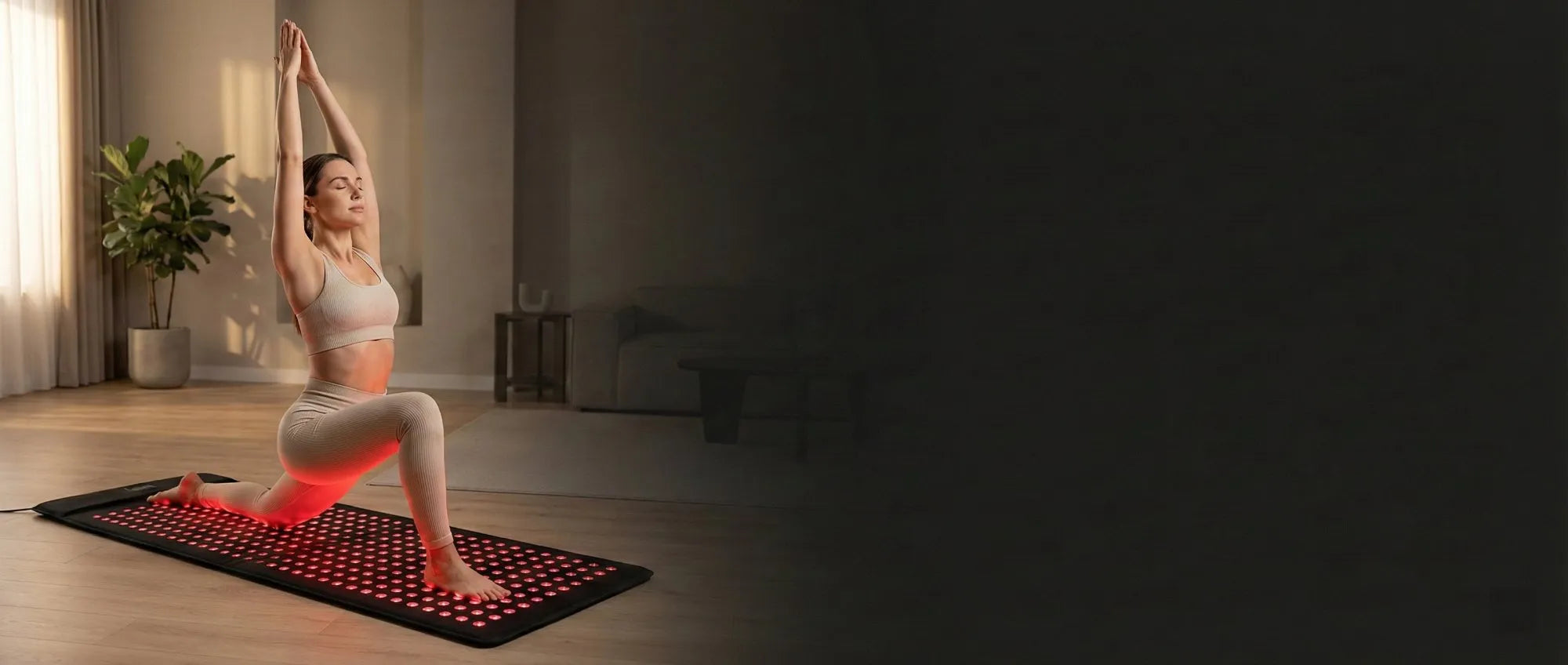
For device selection, prioritize panels or mats with accurate irradiance specifications, low EMF, and flicker-free operation. The Youlumi Red Light Therapy Sleep Bag or full-body red light therapy mats can support comfortable positioning for evening recovery. Smaller portable panels also work well for targeted upper-body wind-down.
How to Measure Improvements in Deep Sleep and REM
The most reliable way to evaluate any evening routine is consistent tracking over multiple weeks. Log the exact start and end time of your red light session, lights-out time, and rough categories for sleep onset (under 15 min, 15–30 min, over 30 min). Note awakenings, morning alertness, and whether the ritual itself felt easy or added friction.
Keep the routine only if you see favorable trends in at least two of these areas across 10–14 nights: shorter sleep onset, fewer awakenings, steadier wake time, or subjectively better next-day energy. If the habit consistently pushes bedtime later or increases mental alertness near lights-out, it may be better reserved for earlier in the evening or replaced with non-light wind-down methods.
Remember that wearables estimate REM and deep sleep rather than measure it precisely. Improvements in subjective restfulness or consistency often matter more than small percentage changes on a device report. This approach avoids over-reliance on any single metric while respecting the bounded nature of current red light sleep research.
Who Should Approach This Routine Cautiously
A 15-minute pre-bed red light ritual is not suitable for everyone. Avoid relying on it as a primary strategy if your main issue is delayed sleep phase, significant jet lag, or diagnosed circadian rhythm disorders—morning light protocols are generally the more evidence-supported first step for phase advancement.
Do not use it as a substitute for addressing late-night screen exposure; the routine cannot fully offset hours of bright blue light immediately beforehand. Athletes should view it as a possible recovery-adjacent habit rather than a guaranteed performance enhancer, given the limited sample sizes in existing studies.
If you have light sensitivity, existing eye conditions, or take medications that increase photosensitivity, consult a healthcare provider before beginning. This article discusses comfort and setup practices only. It does not constitute medical advice, diagnosis, or treatment. Persistent sleep problems or discomfort warrant professional evaluation.
Building Your Long-Term Evening Recovery Protocol
Integrate the 15-minute red light session into a broader wind-down stack for better repeatability. Combine it with consistent bedtime, cooler bedroom temperature, and minimal blue light after sunset. Many users pair evening red light with morning circadian reset practices for balanced daily light hygiene.
Explore related protocols in our Biohacker’s Protocol Hub or the Optimal Times to Use Red Light Therapy for timing guidance across goals. For full-body options, consider the YOULUMI 1700W Red/NIR Panel or the Red Light Therapy Sleep Bag collection.
Additional reading on athlete sleep findings is available in Impact of Red Light Therapy on Athletes’ Deep Sleep Quality. For device standards and safety, review our Photobiomodulation Standards guide.
Consistency over intensity produces the best long-term data. Start with the conservative thresholds outlined, track honestly for two weeks, and adjust based on your own trends rather than marketing claims. When used this way, the routine can become a sustainable part of an evidence-aware recovery lifestyle.
Disclaimer: This content is for informational purposes only and reflects general wellness practices. Individual responses to light exposure vary widely. The article does not diagnose, treat, or claim to cure sleep disorders. For personalized advice, especially regarding eye health, circadian conditions, or ongoing sleep issues, please consult a qualified medical professional.