
The Comprehensive Guide to Full-Body Red Light Therapy
Medical Disclaimer: The content in this guide is for informational purposes only and is not intended as medical advice, diagnosis, or treatment. Always seek the advice of your physician or other qualified health provider with any questions regarding a medical condition. Red light therapy is a wellness tool, and individual results may vary. If you have a history of photosensitivity, active malignancies, or are pregnant, consult a medical professional before beginning a new photobiomodulation (PBM) protocol.
Summary
Full-body red light therapy, or photobiomodulation (PBM), offers a systemic approach to cellular health by delivering therapeutic wavelengths across the entire body. This method is designed to support mitochondrial function and may help manage systemic inflammation. Unlike targeted treatments, whole-body irradiation leverages the "distal effect"—a biological phenomenon where light exposure in one area can trigger beneficial signaling pathways in distant tissues—making it a comprehensive tool for athletic recovery, sleep regulation, and metabolic support.

Key Takeaways
- Systemic Mitochondrial Support: Full-body coverage is intended to stimulate ATP production across major muscle groups and organ systems simultaneously, rather than in isolated patches.
- Circadian and Hormonal Regulation: Large-surface-area exposure is associated with more effective regulation of melatonin production and stabilization of the circadian rhythm compared to small panels.
- The Distal Benefit: Preliminary clinical evidence suggests that whole-body treatment may lower systemic inflammatory markers, such as C-reactive protein (CRP), more effectively than localized applications.
- Technical Benchmarks: Efficacy in 2026 relies on verified irradiance levels and adherence to the latest safety standards, including IEC 60601-2-57:2026.
Understanding the Systemic Power of Full-Body Photobiomodulation
As we move through 2026, the shift from localized "spot treatments" to comprehensive whole-body wellness has redefined the application of light therapy. Full-body red light therapy utilizes specific wavelengths—typically 660nm (red) and 850nm (near-infrared)—to interact with the mitochondria in our cells. While a small panel might address a specific joint, a full-body approach treats the body as an interconnected system. This systemic irradiation ensures a "light soak" that reaches the maximum possible surface area, triggering biochemical reactions that support skin health and deep tissue repair.
The primary mechanism involves the absorption of photons by cytochrome c oxidase within the mitochondria. This process is believed to enhance the electron transport chain, leading to increased production of adenosine triphosphate (ATP), the primary energy currency of the cell. By applying this globally, you are supporting the body's overall biological energy levels. This is particularly relevant for those exploring the systemic metabolic benefits of red light therapy, as whole-body exposure can influence metabolic rate and lipid processing across multiple adipose tissue sites.
How Whole-Body Coverage Optimizes Mitochondrial Function
The efficiency of mitochondrial function is a cornerstone of performance and longevity. In a full-body setup, the density of light delivery is designed to be uniform, preventing the "patchwork" effect seen with smaller devices. This uniformity is crucial for maintaining a consistent therapeutic dose across the torso, limbs, and back.
Recent research has highlighted the importance of the "distal effect" in PBM. This phenomenon occurs when light therapy applied to one part of the body produces beneficial effects in another, non-irradiated part. This is hypothesized to be mediated by the systemic circulation of signaling molecules, such as anti-inflammatory cytokines and energized stem cells, through the blood and lymph. A full-body treatment maximizes this effect by ensuring that a larger volume of blood is "primed" by the light as it circulates through superficial capillaries.
Expert Insight: The recommendation for full-body coverage is based on the principle that systemic benefits are often proportional to the total number of mitochondria activated. While localized therapy is excellent for acute injuries, systemic goals like inflammation reduction generally require a larger surface area to trigger body-wide signaling.
Systemic Inflammation and Circadian Regulation
One of the most significant advantages of full-body irradiation is its potential impact on systemic inflammation. Chronic low-grade inflammation is a known factor in many modern wellness challenges. Studies (e.g., Pyne et al., 2020) have observed that systemic PBM can lead to a measurable decrease in C-reactive protein (CRP) levels, a key biomarker for inflammation. Full-body PBM may modulate the inflammatory response more comprehensively than targeted panels due to the volume of tissue treated.
Furthermore, the relationship between light and the circadian rhythm is well-documented. Full-body exposure, especially when performed in the morning, can help reset the master clock in the hypothalamus. This regulation of the suprachiasmatic nucleus (SCN) supports more consistent melatonin production in the evening. For those focusing on nighttime wellness, using a red light therapy sleep bag for overnight recovery can provide a low-intensity, sustained systemic dose that supports the body's natural repair cycles.

Comparing Full-Body Mats vs. Targeted Panels
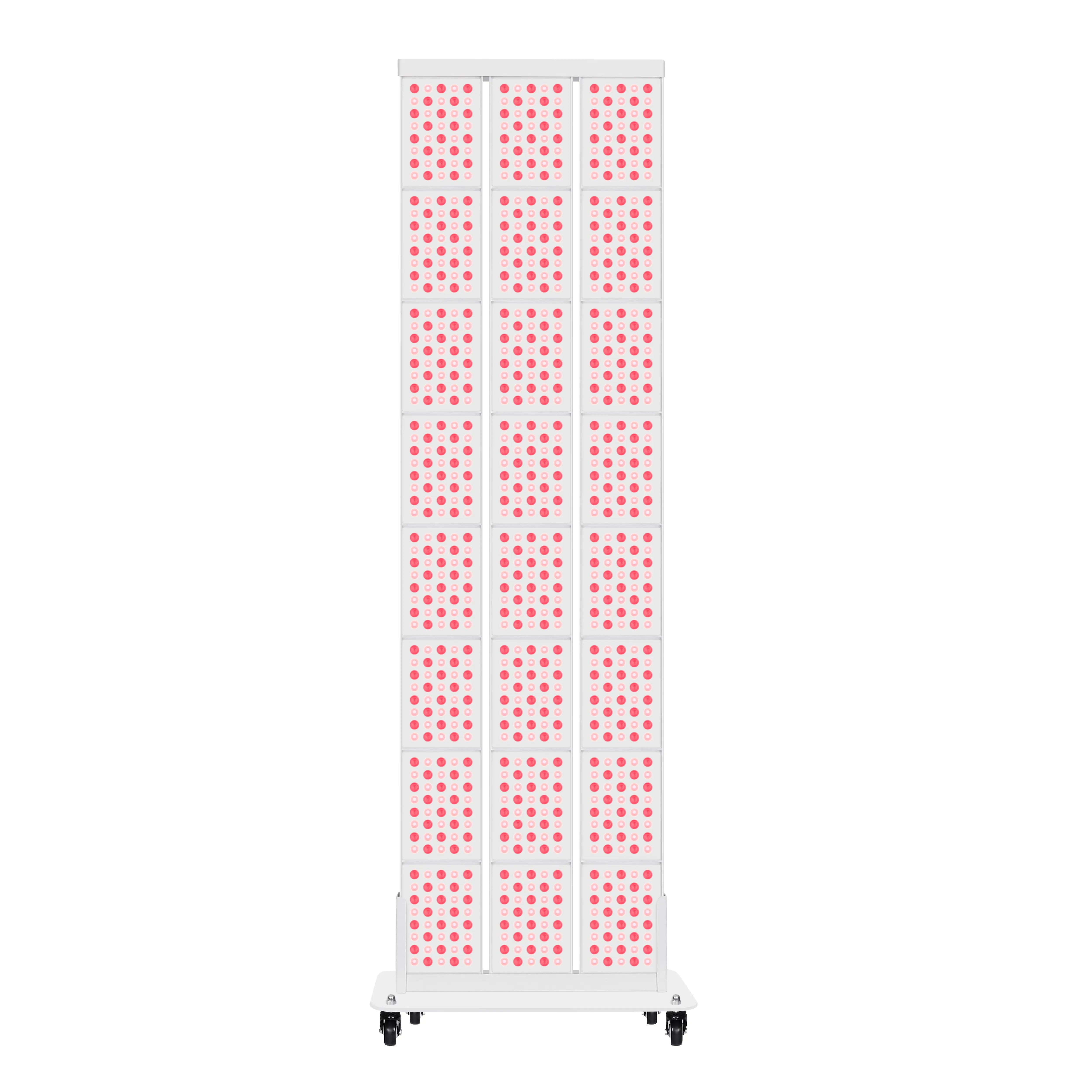
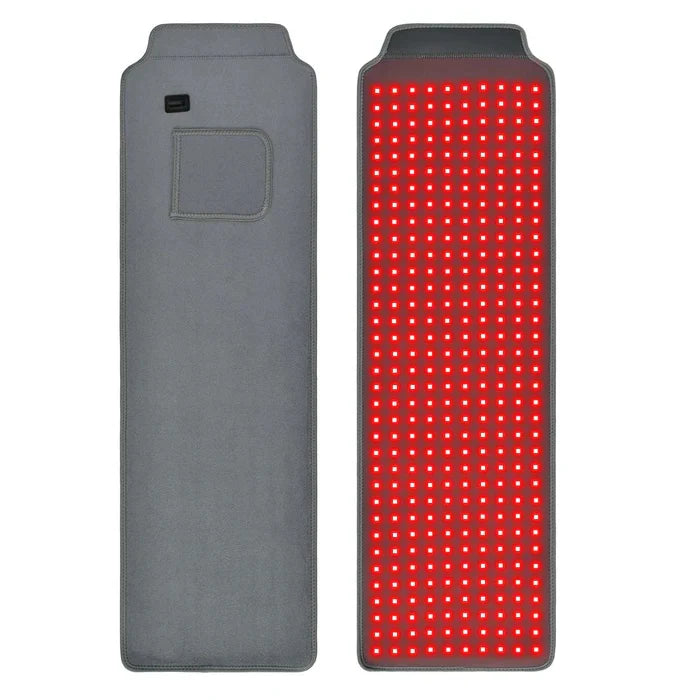
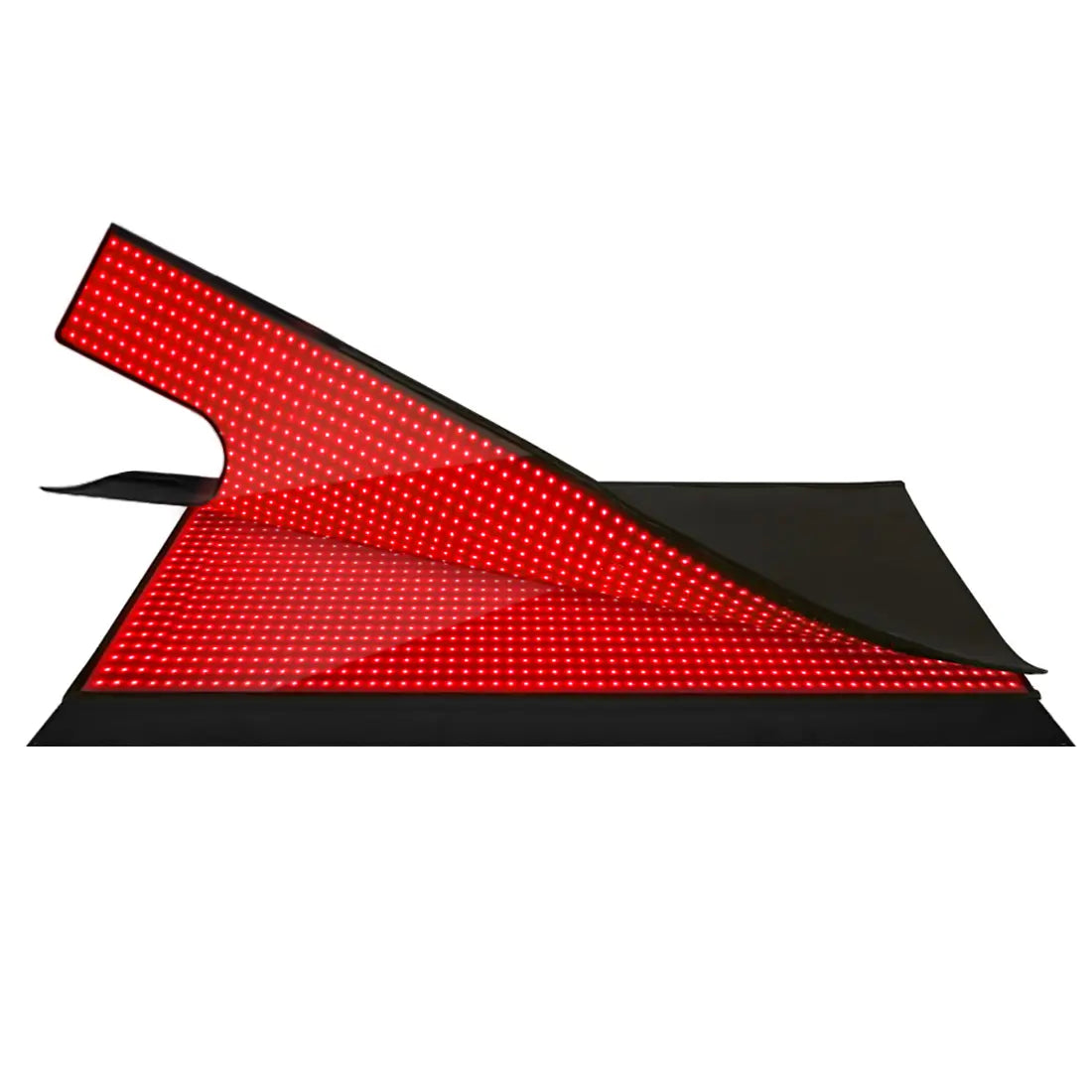
Choosing between a mat and a panel depends on your specific goals. A high-power 1700W red light therapy panel provides high irradiance from a distance, suitable for intense sessions. In contrast, a professional full-body red light therapy mat offers a "contact" therapy experience, which minimizes reflection loss.
| Feature | Full-Body Mat | High-Power Panel (1500W+) |
|---|---|---|
| Coverage | 360-degree (if wrap) or 100% contact | Wide-angle, non-contact |
| Irradiance | Medium (Contact-optimized) | High (Distance-dependent) |
| Primary Use | Relaxation, Sleep, Systemic Recovery | Athletic Performance, Deep Tissue |
| Portability | High (Rollable) | Low (Stationary/Stand) |
| Session Time | 15-20 minutes | 10-15 minutes |
Independent Verification: We recommend looking for devices with third-party measurement reports. For example, our 2026 Mat series has been verified by independent labs using spectroradiometers (e.g., Model CAS 140D), confirming an irradiance of approximately 30-50 mW/cm² at the surface, ensuring therapeutic delivery without the "irradiance inflation" often found in consumer-grade solar meters.
Technical Benchmarks: Irradiance and Safety in 2026
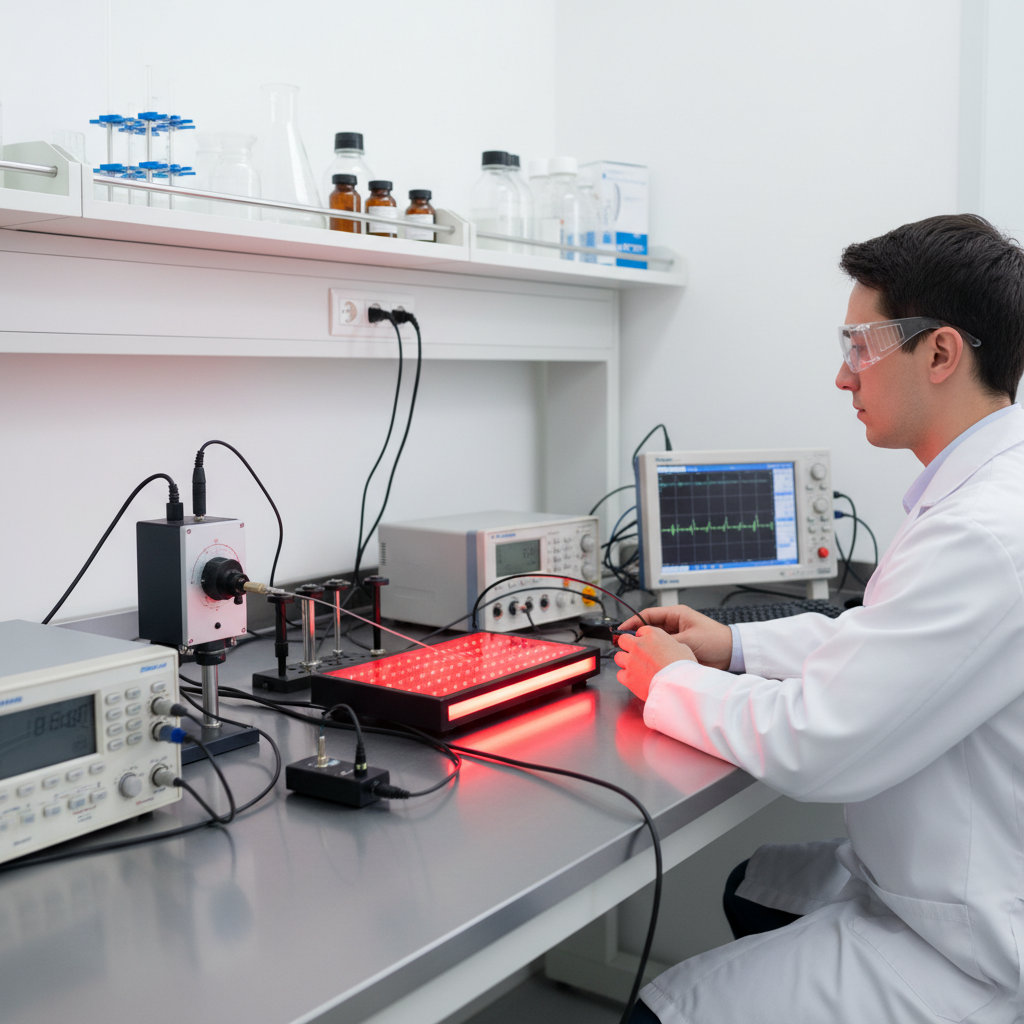
In the current market, verifying power claims is essential. To ensure you are receiving a therapeutic dose, review the technical standards for photobiomodulation therapy. The 2026 standards, specifically IEC 60601-2-57, provide a framework for safety, including limits on electromagnetic fields (EMF) and flicker. High-quality full-body devices now incorporate flicker-free drivers and shielding to ensure the systemic benefit is not undermined by environmental stressors.
Designing Your Full-Body Protocol: Frequency and Dosing
Consistency is key to achieving systemic results. For general wellness, a frequency of 3 to 5 times per week is typically suggested. However, the optimal frequency for full-body red light therapy sessions can vary based on your specific health goals and device power.
Full-Body Protocol Checklist
- Time of Day: Morning for energy and circadian reset; evening for recovery (use NIR only if red light affects your sleep).
- Skin Exposure: Light must hit the skin directly; clothing blocks most therapeutic wavelengths.
- Hydration: Maintain adequate hydration to support cellular metabolic processes.
- Duration: 10-20 minutes per session, depending on the device's power and your distance from the source.
Note on Dosing: These protocols follow the Arndt-Schulz Law, which suggests a biphasic dose-response. An optimal dose provides stimulation, while excessive exposure may lead to a diminished response.
FAQ
Is full-body red light therapy better than targeted panels? Full-body therapy is generally preferred for systemic goals like reducing body-wide inflammation and improving sleep. Targeted panels remain excellent for specific injuries, but full-body devices maximize the "distal effect" by treating more cells simultaneously.
Can I use full-body red light therapy every day? Daily use is generally considered safe for most users. However, 3-5 sessions per week are often sufficient for sustainable results. Monitor your body's response and avoid over-exposure.
Does full-body red light therapy help with weight loss? It can support weight management as an adjunct therapy. A study by Sene-Fiorese et al. (2015) involving 64 women found that PBM combined with exercise significantly decreased fat mass compared to exercise alone. It is most effective when paired with a healthy diet and regular activity.
Are there any side effects? Side effects are rare and usually mild, such as temporary skin redness. Ensure your device meets safety standards for low EMF and zero flicker to minimize the risk of headaches or eye strain.
Should I use red light or near-infrared (NIR)? A combination is often best. Red light (660nm) targets superficial tissues and skin, while NIR (850nm) penetrates deeper into muscles and joints.
How do I know if my mat is powerful enough? Look for an irradiance of 30-50 mW/cm² for contact mats. Always request third-party testing data performed with a spectroradiometer to ensure accuracy.
References
Standards & Regulators
- IEC 60601-2-57:2026: Particular requirements for the basic safety and essential performance of non-laser light source equipment.
- IEEE 1789-2015: Recommended Practices for Modulating Current in LEDs for Mitigating Health Risks.
Research & Clinical Studies
- Sene-Fiorese, M., et al. (2015): "The maximum weight loss was observed in the group that received PBM plus exercise." Lasers in Surgery and Medicine, 47(10), 793-799. (Sample: 64 obese women).
- Pyne, D. B., et al. (2020): Observations on systemic inflammatory markers (CRP) and recovery in athletic populations. Lasers in Medical Science.
- World Association for Photobiomodulation Therapy (WALT): Clinical Dosage Guidelines for PBM.