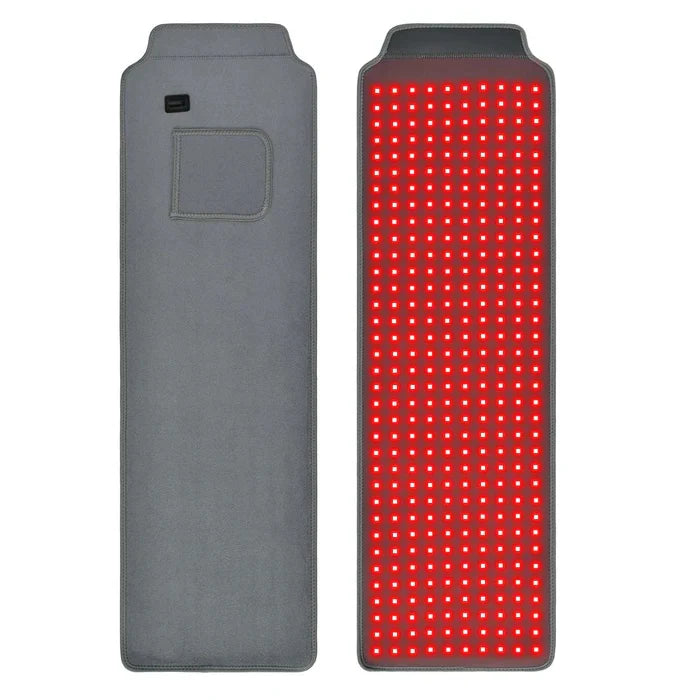

Finding the right red light therapy mat dosage protocol can feel overwhelming because most guidance is written for panel-style devices used at a distance. With mats, direct skin contact changes how irradiance reaches the skin and how heat builds up, so panel rules of thumb often lead to sessions that are either too short to matter or long enough to reduce comfort and potential benefits. The practical takeaway is to treat mats as a contact-based system that calls for shorter starting sessions, conservative frequency, and close attention to personal tolerance rather than chasing higher total exposure.

Direct contact means there is no distance loss, so the same device settings can deliver irradiance more efficiently than a panel held farther away. This makes session length the primary variable you can control safely, while frequency should follow tolerance and recovery goals. Published photobiomodulation research shows that dose is typically expressed in energy delivered per area (J/cm²) and that the response is not linear—more is not automatically better. One study noted a peak cellular response around 3 J/cm², after which benefits can plateau or reverse in line with the Arndt-Schulz law.
How Dosage Works for Red Light Therapy Mats
Photobiomodulation (PBM) outcomes depend on matching wavelength, irradiance, and treatment time to the specific use case. Session length only makes sense once you understand the device's irradiance at the point of skin contact. Because mats are used in direct contact, the effective irradiance is usually higher than a panel used at the common 6–12 inch distance. This changes the practical math: a 10-minute session on a mat may deliver a comparable or greater dose than a longer session on a distant panel.
As this Harvard comparison of 660 nm and 810 nm photoresponses explains, the dose-response relationship in PBM is not linear. Many applications fall into a low-J/cm² range, yet exact targets remain device- and tissue-specific. The FDA's Photobiomodulation Devices guidance reinforces that there is no single universal protocol; parameters must be varied according to the device, target, and individual response.
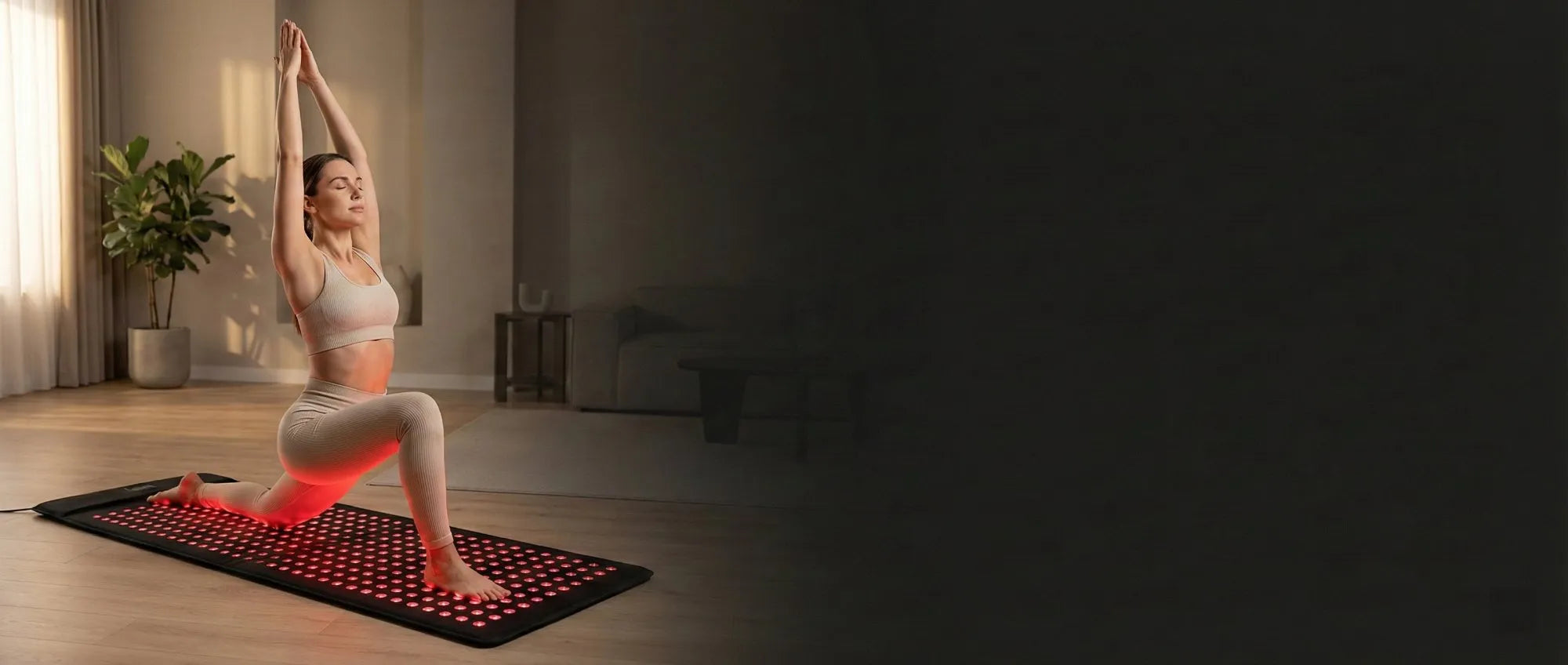
For full-body mats, whole-body application represents a distinct use case from localized panel treatment. Large-area exposure can produce cumulative effects that require more conservative per-session timing to avoid discomfort or diminishing returns.
Why Direct Contact Changes the Irradiance Math
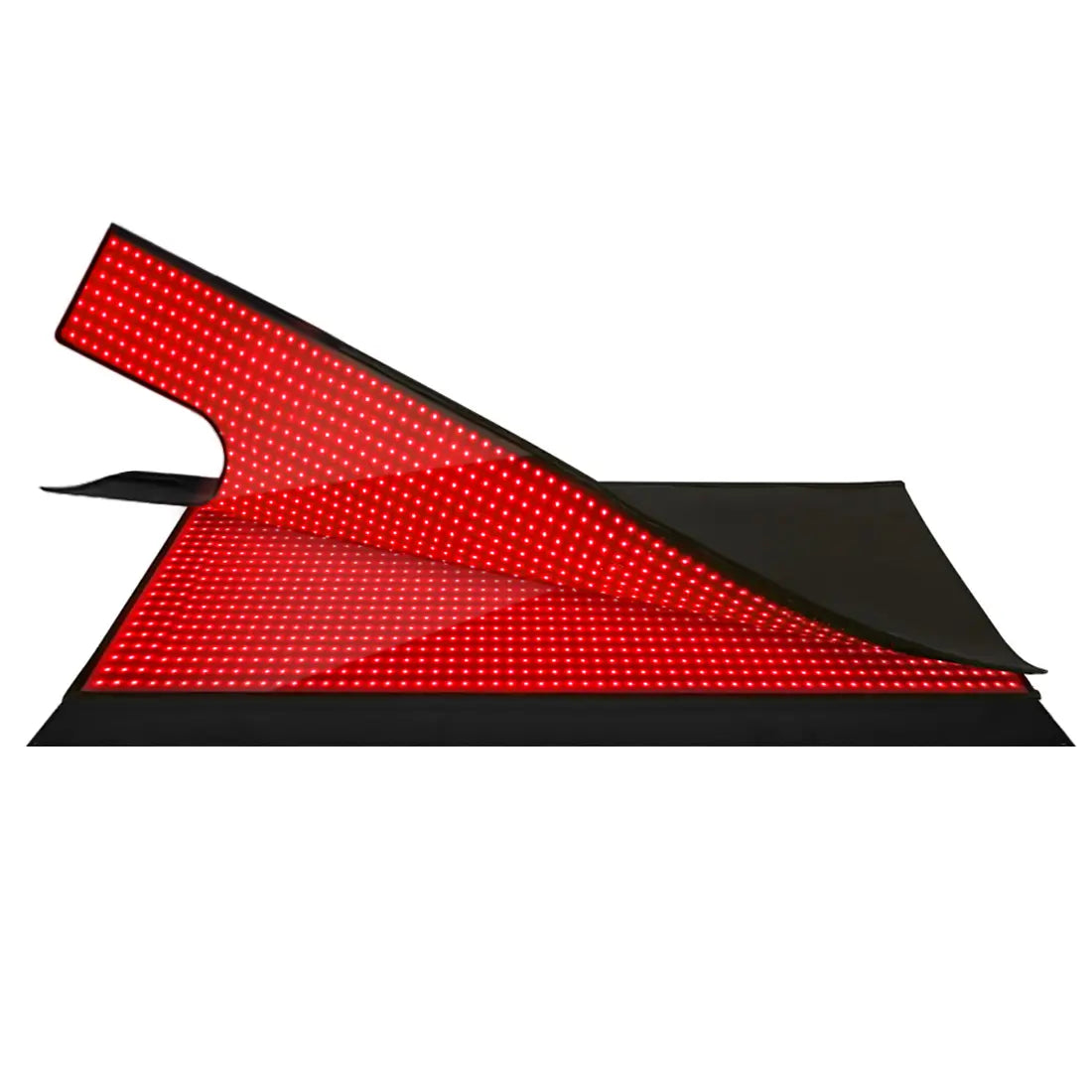
Distance is the biggest variable when using a panel. Move a panel farther away and irradiance drops rapidly, often requiring longer sessions to reach the same nominal dose. A mat eliminates that variable by placing the light source in direct contact with the skin. The result is more consistent delivery but also faster heat buildup, especially in higher-powered models.

This difference means panel-style dosage calculators or generic “10–20 minute” recommendations rarely translate cleanly to mats. The safer approach is to begin with shorter sessions while monitoring skin warmth and overall comfort. If the mat feels noticeably hot or the session becomes difficult to complete, reduce time before increasing frequency.
The FDA guidance on PBM devices highlights that treatment parameters vary significantly and that direct-contact designs require their own safety considerations. Manufacturer instructions should be followed first, then adjusted only within the published specification range for that specific device.
Practical Session Length Guidelines
Consumer guides and clinical patterns commonly describe short sessions rather than extended ones. For most full-body mats, a conservative starting range is 10–15 minutes per session. Experienced users who tolerate the mat comfortably may extend to 15–20 minutes, but there is little evidence that pushing beyond 20–25 minutes adds proportional benefit for general wellness use.
Because the dose-response curve is biphasic, extending time past the useful window can move you out of the optimal low-J/cm² zone. Without device-specific irradiance data at skin level, treat longer sessions as experimental rather than automatically superior. Always prioritize repeatable sessions over maximal duration.
How Often Should You Use a Red Light Therapy Mat?
Clinical trials frequently schedule multiple sessions per week rather than daily use for every indication. A common pattern is three sessions per week with at least 24 hours between applications, allowing recovery while maintaining consistency. Some studies explore daily exposure for specific recovery goals, yet frequency should still be matched to tolerance and the user's specific aims.
For beginners, starting with 3–4 sessions per week is a reasonable heuristic. Once comfort is established, some users move to 4–5 sessions per week or even daily use if the routine remains sustainable and no signs of irritation appear. The key is consistency over intensity: a shorter, repeatable schedule often outperforms sporadic longer sessions.
Comparison: Red Light Therapy Mats vs Panels
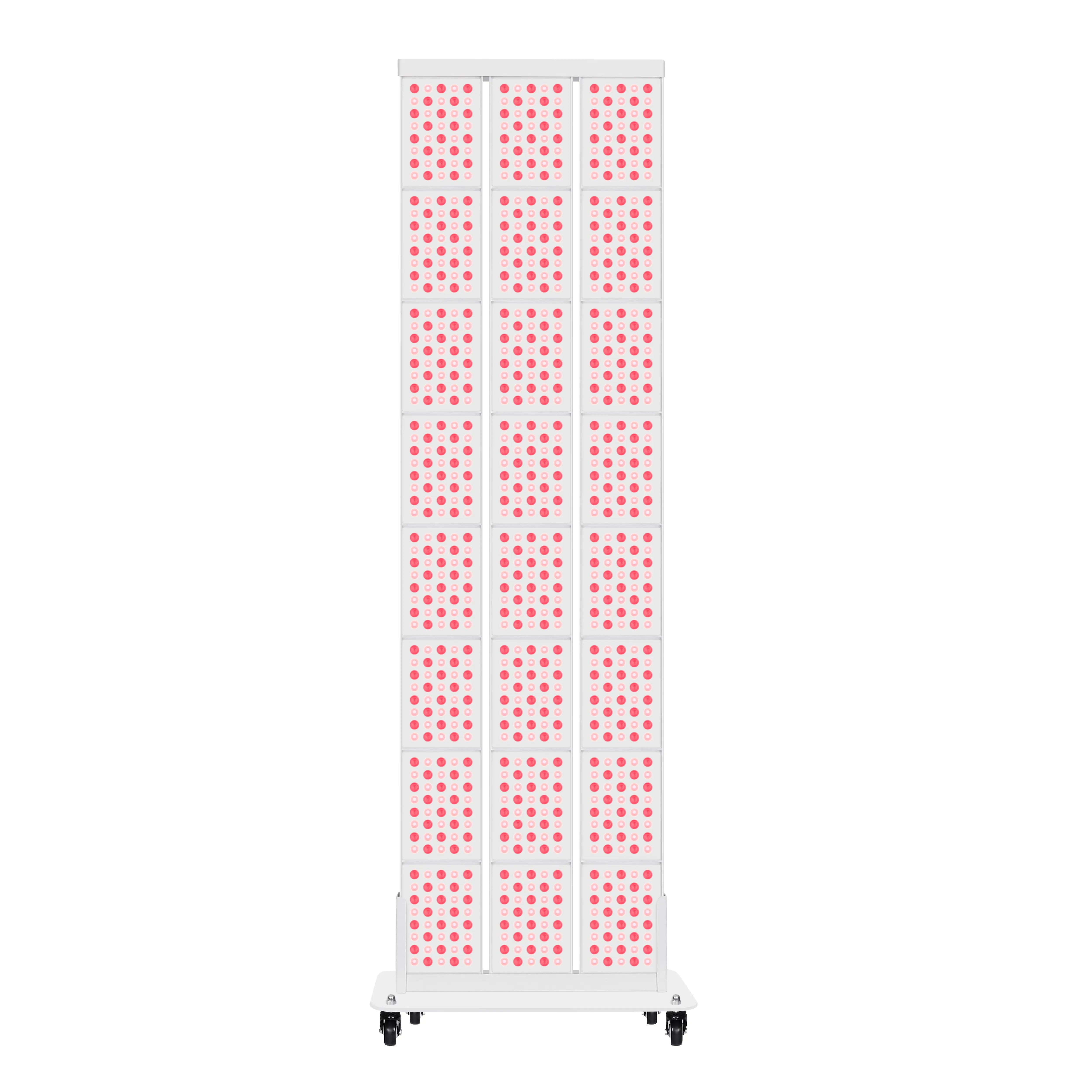
The correct framework for comparing mats and panels focuses on delivered dose rather than advertised wattage. Mats deliver light through direct contact, so session time becomes the main tuning knob. Panels rely on distance, making positioning the first variable to fix before adjusting minutes.
A typical adjustment order looks like this:
- Mat: Maintain consistent full-body contact → start with shorter sessions → increase frequency only after tolerance is confirmed.
- Panel: Fix distance first → estimate irradiance at that distance → set session time → adjust frequency last.
Whole-body mat protocols often favor shorter per-session times and moderate weekly frequency to manage cumulative exposure and heat. Panel protocols for targeted areas can sometimes tolerate longer individual sessions because distance reduces intensity.
Here is a visual heuristic of conservative starting points synthesized from literature patterns:
Heuristic Starting Points for Red Light Therapy Mats vs Panels
Illustrative comparison of conservative starting points; not a universal protocol.
View chart data
| Category | Session time | Weekly frequency | Relative dose per session |
|---|---|---|---|
| New user | 1.0 | 2.0 | 1.0 |
| Experienced user | 2.0 | 3.0 | 2.0 |
| Panel comparison | 2.0 | 3.0 | 3.0 |
Heuristic starting points and adjustment rules synthesized from literature patterns and guidance: non-linear/biphasic dose response (Arndt-Schulz), a study pattern peaking around ~3 J/cm2, FDA-style caution to start conservatively for contact mats, and common review/trial patterns of short sessions with about 3x/week and at least 24h between sessions. Values are relative/illustrative only, not universal protocols or measured dose prescriptions.
These relative values illustrate directional differences only. They are not measured clinical thresholds and should not replace manufacturer instructions for your specific mat.
Beginner-to-Advanced Protocol Structure
A safe progression usually follows this sequence:
- Week 1–2 (Beginner): 10–12 minutes per session, 3 times per week, with at least one rest day between uses. Monitor for warmth, skin comfort, and energy levels.
- Week 3–4 (Building Tolerance): If comfortable, increase to 15 minutes and consider adding a fourth session. Keep total weekly exposure moderate.
- Maintenance (Experienced): 15–20 minutes, 4–5 times per week or daily if the routine stays easy and beneficial. Reassess every 4–6 weeks.
Always cycle back to shorter sessions if you notice heat discomfort, skin irritation, or that sessions start feeling like a chore. Consistency matters more than intensity.
Signs of Underdosing, Overdoing, or Poor Fit
Underdosing often shows as no noticeable change in energy, recovery, or sleep after several consistent weeks. Overdoing can appear as skin warmth that lingers too long, mild irritation, fatigue with the routine, or diminishing returns despite increased time.
Heat or discomfort during a session is a practical signal to shorten the next one. Because red light devices are not cleared as treatments for disease, persistent issues should prompt consultation with a qualified professional rather than continued self-adjustment.
How to Choose the Right Protocol in Your Situation
Use this operational checklist before settling on a schedule:
- Confirm your mat's irradiance specification at skin contact and any manufacturer-recommended maximum session time.
- Start with the shortest reasonable session that still feels like a full exposure (usually 10 minutes).
- Schedule sessions with at least 24 hours between them for the first two weeks.
- Track subjective markers: sleep quality, muscle soreness, energy, and skin comfort.
- Adjust only one variable at a time—either session length or weekly frequency.
- If the mat feels too hot or the routine hard to maintain, reduce time before reducing frequency.
This checklist turns abstract dosage concepts into executable steps you can test in your own home setup.
Safety and Compliance Notes
Red light therapy mats are generally positioned as wellness or adjunctive tools rather than approved medical treatments for specific diseases. The Centers for Medicare & Medicaid Services decision memo on infrared therapy and FDA guidance both emphasize avoiding disease-treatment claims unless a device carries specific clearance.
This article discusses comfort, setup, and general wellness protocols only. It does not constitute medical advice, diagnosis, or treatment. Red and near-infrared light may feel more comfortable in some setups, but individual responses vary. If you experience persistent discomfort, have existing eye conditions, or any health concerns, consult qualified healthcare professionals before beginning or continuing use.
Final Thoughts on Red Light Therapy Mat Dosage
Effective mat protocols prioritize repeatable, comfortable sessions over chasing maximum exposure. Because direct contact alters irradiance delivery compared with panels, the safest starting point is conservative timing and moderate frequency, then gradual adjustment based on personal feedback. Focus on consistency within the low-J/cm² range suggested by literature patterns, monitor for heat or fatigue, and treat any specific device instructions as the primary reference.
When used thoughtfully, a full-body red light therapy mat can become a sustainable part of an at-home recovery or wellness routine. The key is letting evidence-based caution and your own body's signals guide the final dosage rather than generic “more is better” assumptions.