
If you hang out in the biohacking and home-wellness world long enough, you will hear a simple story: blue light wrecks melatonin, red light is “circadian safe.” As someone who has spent years experimenting with light panels, red goggles, and low-lux meters in real bedrooms and labs, I can tell you that the reality is far more nuanced.
Red light interacts with melatonin in ways that depend on wavelength, intensity, timing, and even species. In some settings, red light barely touches melatonin. In others, it shifts the circadian clock or even suppresses melatonin and disrupts metabolic health. And in several human studies, red light changes sleep and mood without dramatically altering melatonin at all.
In this article, I will unpack what the science actually says about red light and melatonin, using controlled trials in humans, animal data, and mechanistic work. Then I will translate that into practical guidance for using red light at home in a way that supports, rather than sabotages, your sleep and circadian health.
Melatonin, Circadian Clocks, and Why Color Matters
Melatonin is often described as the “sleep hormone,” but physiologically it is better understood as a darkness signal. The pineal gland, a small structure deep in the brain, synthesizes melatonin from serotonin. Under normal conditions, melatonin is almost undetectable during the day and rises sharply at night. Work from physiology groups at the University of Washington and classic endocrine reviews show that this rise and fall is strongly driven by signals originating in the suprachiasmatic nucleus (SCN), the master circadian clock in the hypothalamus.
Light information reaches the SCN through a dedicated retinal pathway. A subset of retinal ganglion cells, called intrinsically photosensitive retinal ganglion cells (ipRGCs), express the photopigment melanopsin. These ipRGCs respond directly to light and also receive input from rods and cones. They project to the SCN via the retinohypothalamic tract and to other regions controlling melatonin synthesis in the pineal gland. When light hits these cells at night, it suppresses melatonin production and can shift the timing of the clock.
Across many mammals, including humans, melatonin follows the same basic pattern: high at night, low during the day. Reviews of normal 24‑hour melatonin profiles emphasize that a single bright light exposure during the usual dark period can interrupt this rhythm. Age also matters: older individuals tend to produce less melatonin overall, which is one reason why circadian-friendly lighting becomes more important with age.
Blue Light vs Red Light in the Melatonin System
The circadian system is not equally sensitive to all colors of light. A systematic review of more than a hundred human light-exposure studies found that short-wavelength light in the blue range is by far the most potent for suppressing nocturnal melatonin and shifting circadian phase. Action spectrum studies in healthy adults, using carefully controlled monochromatic light, show that melatonin suppression peaks when the eye receives light in roughly the mid‑400‑to‑480‑nanometer range, aligned with melanopsin sensitivity.
A Harvard Medical School review on blue light illustrates this vividly. In one experiment, 6.5 hours of blue light at night suppressed melatonin about twice as long and shifted the circadian rhythm about twice as much as green light of similar brightness. The same review notes that even very dim light, around 8 lux, brighter than a typical night-light but dimmer than many table lamps, can measurably reduce melatonin secretion.
Red light sits at the other end of the visible spectrum, with longer wavelengths. A recent laboratory study compared three hours of evening exposure to narrowband blue LED light peaking at 464 nanometers versus red LED light peaking at 631 nanometers. Both were calibrated to 80 lux at the eye and delivered from 9:00 PM to midnight. After the first hour, melatonin dropped under both conditions. By the second hour, melatonin remained strongly suppressed under blue light, averaging about 7.5 picograms per milliliter, but had largely recovered under red light, averaging 26.0 picograms per milliliter, and this divergence persisted into the third hour.
Spectral modeling in that study showed why: at the same visual brightness, the blue LED produced very high melanopic and circadian stimulation, while the red LED was almost circadian-inactive, with melanopic equivalent daylight illuminance (mEDI) of about 1 lux. In other words, to the circadian system, that red light was effectively a tiny stimulus even though it looked reasonably bright to the naked eye.
International standards bodies now recommend that in the three hours before bedtime, melanopic light at the eye should generally be kept below about 10 mEDI, and during sleep, ideally below 1 mEDI. Because red light sources often have a melanopic ratio near 0.01 relative to daylight, very dim red or amber lights can deliver much less melanopic dose than white or blue-enriched light at the same lux level. That is the core reason red is often promoted as “sleep-friendly.”
However, color is only one part of the story. Intensity, timing, exposure duration, and individual sensitivity all matter, and red light is not always biologically inert. That becomes clear when you move from theory into actual experiments.

What Red Light Really Does to Melatonin: Evidence Across Species
Human Lab Studies: Gentle on Melatonin, But Not Invisible
The red versus blue LED study above tells us that red light is much weaker than blue for suppressing melatonin over several hours. That aligns with the melanopsin-driven action spectrum and with the intuition that warm-toned light is easier on the circadian system than icy blue.
But another human experiment shows that “weak melatonin effect” does not equal “no circadian effect.”
In a PLOS ONE study, healthy young adults spent six days in a time-free laboratory. Researchers exposed them for six hours near the onset of their evening melatonin rise to one of three conditions: continuous red light at 631 nanometers, intermittent red light (about one minute on, one minute off) at the same irradiance, or bright white light at 2,500 lux. Salivary melatonin, cortisol, core body temperature, forehead temperature, and heart rate were all tracked under constant routine conditions before and after the light.
Red light did not measurably suppress melatonin levels during exposure, in stark contrast to blue-rich bright white light. Yet both continuous and intermittent red light produced clear circadian phase-shifting: on average, the timing of melatonin and other physiological rhythms was delayed by almost an hour. In two individuals, the circadian response to red light was as large as that seen under bright white light.
The conclusion from that work is critical for anyone hacking their home lighting. The pathways for melatonin suppression, circadian phase resetting, and the pupillary light reflex have different sensitivity thresholds and different contributions from cones, rods, and melanopsin-containing ipRGCs. Red light can move your clock even when melatonin concentration looks largely unchanged. If you bathe your eyes in fairly bright red light for long stretches of the evening, you might end up shifting your biological night later, even if your melatonin lab test looks “normal.”
When Red Light Disrupts Sleep and Mood Without Crushing Melatonin
Several studies have looked at red light not just through the lens of hormone levels but through its impact on mood, alertness, and sleep architecture.
A randomized, single-blind trial published in Frontiers in Psychiatry recruited more than a hundred adults, half with insomnia disorder and half healthy sleepers. After screening and baseline polysomnography, participants were assigned to spend one hour before bedtime under one of three conditions: red LED light, white LED light, or near-darkness. The red light had a peak wavelength around 625 nanometers, with illuminance in the bedroom activity area set to about 75 lux, matching common interior lighting standards.
Across both healthy and insomnia groups, red light before bed increased negative emotions and anxiety relative to white light or darkness, as measured by standard anxiety and mood scales. Subjective sleepiness also shifted: after red light, participants reported feeling less sleepy and more alert compared with white light or darkness. That might be attractive at 3:00 PM but is the opposite of what you want just before trying to fall asleep.
Objective sleep recordings told a nuanced story. In healthy sleepers, red light shortened sleep onset latency compared with white light but led to lighter, more fragmented sleep than darkness. Total sleep time and sleep efficiency were reduced, the proportion of the lightest sleep stage (N1) increased, and microarousals became more frequent. In the insomnia group, red light improved some metrics versus white light, such as shorter sleep onset latency and higher sleep efficiency, but still produced worse continuity than darkness, with more time awake after sleep onset and more REM-related microarousals.
Crucially, these changes occurred without any report of extreme melatonin suppression under red light. Alongside the sleep inertia studies described below, and findings from groups such as the Light and Health Research Center, this supports the idea that saturated red light can increase alertness and alter sleep structure through pathways that are partly independent of melatonin.
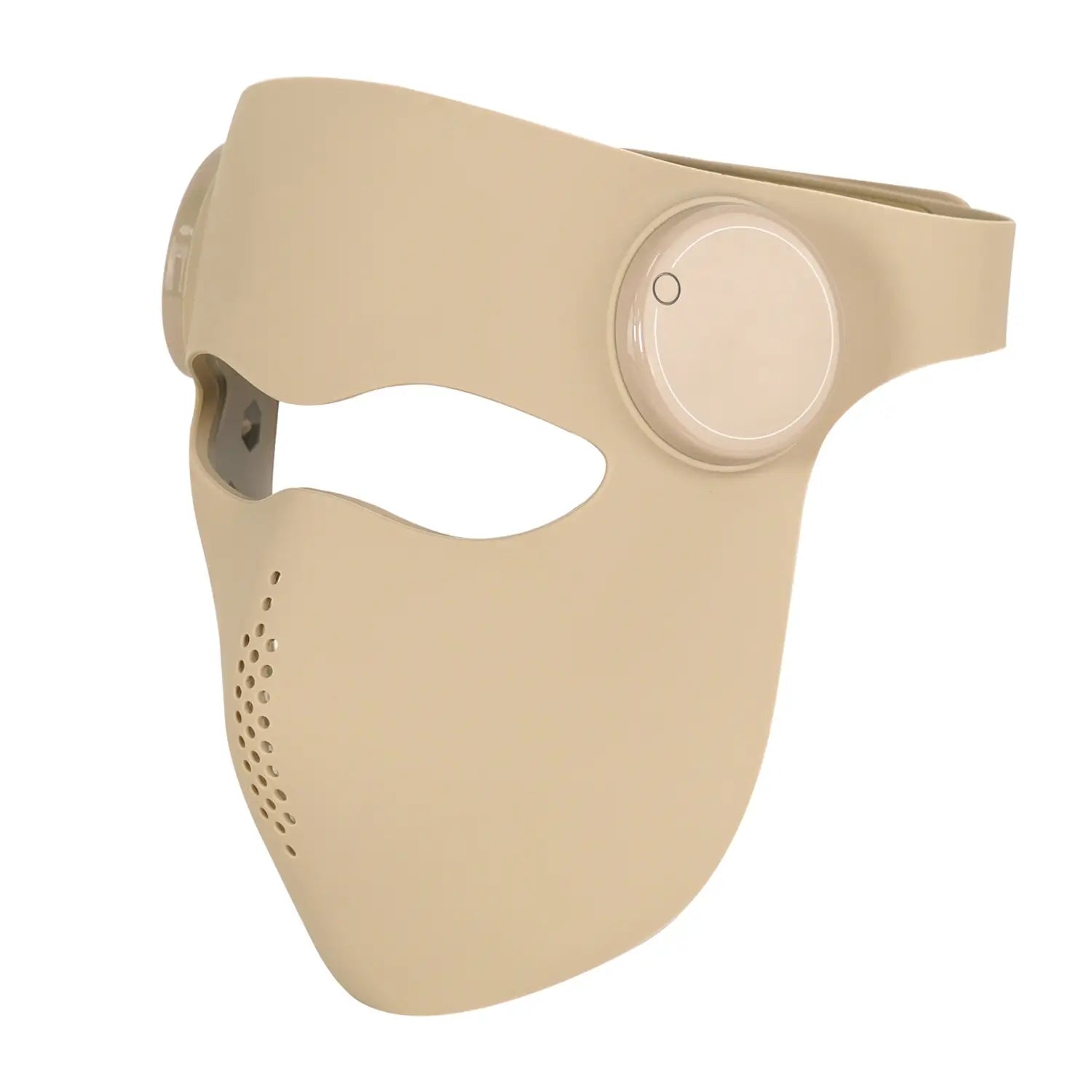
In another crossover study on sleep inertia, healthy adults came to the laboratory for three Friday nights. On different weeks, they either slept wearing a mask that delivered saturated red light through closed eyelids, wore red-light goggles after waking, or experienced dim control light. The red mask delivered about 688 lux at the eyelid, corresponding to roughly mid‑50‑lux at the cornea after eyelid transmission, while the goggles provided about 55 lux of red light directly to the eye. Across conditions, subjective sleepiness naturally declined over the 30 minutes after waking, but performance on auditory tasks improved more rapidly after red-light exposure than in dim light. Salivary melatonin was not significantly affected by the red exposures in the cohorts measured.
Taken together, the insomnia trial and the sleep inertia experiment demonstrate an important practical point. Around wake time, modest doses of red light can increase alertness and performance without necessarily crushing melatonin; around bedtime, similar or slightly lower doses can make you more alert and anxious, fragment your sleep, and worsen your subjective emotional state, even in the absence of dramatic melatonin suppression. From a real-world standpoint, that means red light is not automatically “sleep-promoting” just because it is not blue.
Animal Data: Red Is Not Automatically Safe
Some of the strongest warnings about red light and melatonin come from animal research where experimenters are free to control lighting for weeks at a time.
In a study on Sprague–Dawley rats, researchers compared a standard 12‑hour light, 12‑hour dark schedule with a schedule in which the dark phase was replaced by low-intensity red light derived from a red safelight. The red light intensity was only about 8.1 lux at eye level, composed of wavelengths above roughly 620 nanometers. Over several weeks, they collected thousands of blood samples to map 24‑hour profiles of melatonin and key metabolic markers.
Under normal light–dark conditions, rats showed a robust melatonin rhythm, with very low daytime levels around 2.6 picograms per milliliter and high nocturnal levels around 197.5 picograms per milliliter. Under chronic red-light-at-night conditions, melatonin concentrations were significantly lower at all times of day and night, and the usual nocturnal peak was flattened. Rhythms of glucose, fatty acids, lactic acid, oxygen and carbon dioxide in blood, insulin, leptin, and corticosterone were all significantly disrupted. The authors concluded that even low-intensity red light, of the sort commonly used as a “safe” observation light in animal facilities, markedly altered circadian neuroendocrine and metabolic physiology and should not be considered innocuous.
Mouse data add more nuance about intensity thresholds. In a Nature article titled “Red light at intensities above 10 lx alters sleep-wake behavior in mice,” investigators exposed nocturnal mice to one‑hour light, one‑hour dark cycles during their usual dark phase, using white or red light at 100, 30, 20, or 10 lux. At 100, 30, and 20 lux, both white and red light increased NREM and REM sleep compared with continuous darkness but significantly disrupted sleep–wake architecture: more REM episodes, more transitions between NREM, REM, and wakefulness, and shorter bouts of sustained wake. EEG analyses showed changes in NREM power spectra as well.
When the intensity was lowered to 10 lux, a clear difference emerged. Pulsed white light at 10 lux still increased NREM sleep, fragmented wakefulness, and altered NREM EEG power. Pulsed red light at 10 lux did not significantly change total NREM or REM sleep, episode structure, or stage transitions relative to darkness. During 12‑hour continuous exposures across the whole dark period, 10‑lux red light again left sleep amount and architecture essentially unchanged, whereas 10‑lux white light increased NREM and REM and disturbed architecture in the first hours after exposure. Both colors did modestly alter EEG power density, but the behavioral impact of low-intensity red was far smaller than that of equally dim white.
In contrast to rats and mice, horses appear to tolerate low-intensity red at night well, at least at the doses tested. A crossover study exposed six horses to either near-darkness below 0.5 lux or dim red light at 5 lux peaking at 625 nanometers during the night, with bright white light by day under both conditions. Blood samples every two hours showed robust nocturnal melatonin rises under both treatments, with no significant differences in peak level, area under the curve, onset and offset timing, or duration between red-light nights and dark nights. The authors concluded that 5‑lux red light at that wavelength is unlikely to disturb circadian or seasonal regulation in horses and may be suitable for night-time handling.
The message from these animal studies is not that we should extrapolate lux-for-lux to humans, but that the melatonin system can be sensitive to red light in some species, that intensity thresholds matter, and that calling any long-wavelength light “circadian safe” without specifying dose and context is misleading.
A Biochemical Curiosity: Red Light and Melatonin Synthesis in Plants
Melatonin is not just a mammalian hormone; it is a widespread signaling molecule found in microorganisms, plants, and animals. A recent paper in Nature examined how red light affects melatonin biosynthesis in tomato fruit. The researchers mapped out the key enzymes converting tryptophan to melatonin, including multiple acetyltransferases and methyltransferases, and showed that melatonin levels in tomato rise sharply around the onset of ripening.
When tomato plants were given supplemental red light during fruit development, expression of several melatonin biosynthetic genes increased, and fruit melatonin content rose. Genetic manipulation of key enzymes confirmed the pathway: overexpressing certain genes boosted melatonin, while silencing them reduced it, and red light mainly amplified the route that converts serotonin to N‑acetylserotonin and then to melatonin.
You cannot assume that what happens in tomatoes happens in human pineal glands, but this work does reinforce a bigger theme: red light can modulate melatonin not only by suppressing its production via the retina and brain but also by altering biosynthesis in peripheral tissues in some organisms. The melatonin system is deeply intertwined with light across biology.

Red Light Therapy and Sleep: What The Human Trials Actually Show
Red Light as an Active Sleep Aid: Small but Intriguing Signals
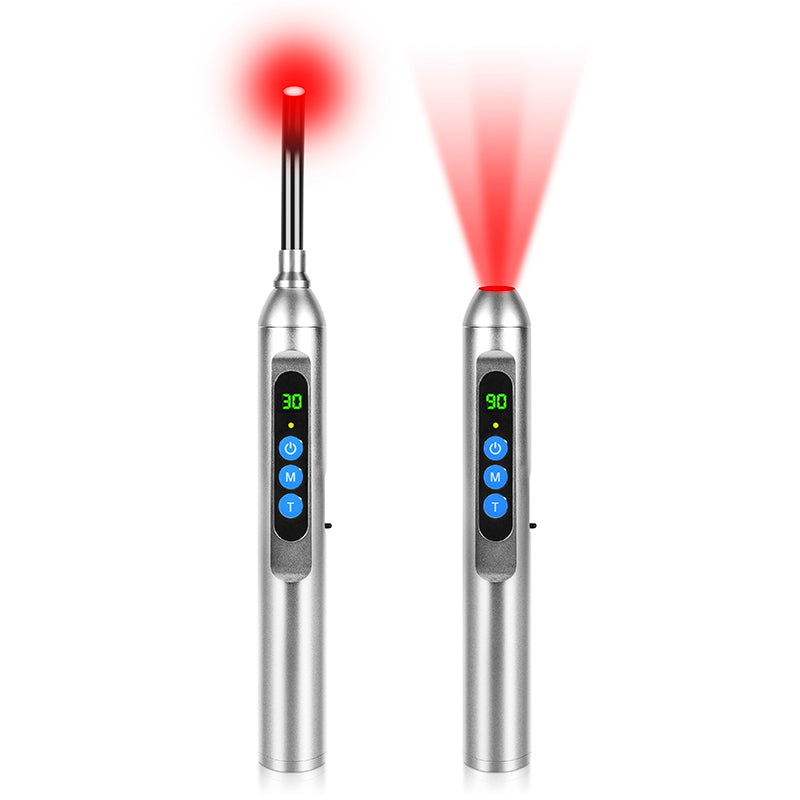
Beyond room lighting, red light therapy devices promise everything from better skin to deeper sleep. Mechanistically, these devices deliver red and near‑infrared wavelengths, roughly 600 to 1,000 nanometers, at intensities high enough to be absorbed by mitochondrial enzymes such as cytochrome c oxidase. Reviews from medical and photobiomodulation groups describe how this can increase cellular energy production, modulate reactive oxygen species, and increase nitric oxide and blood flow, which may explain benefits for wound healing, pain, and skin quality.
Sleep is a more complex endpoint. A small 2012 trial, described in popular summaries by outlets like Healthline, studied 20 female athletes. For 14 days, participants in the treatment group received 30 minutes of red light therapy at night, while a control group received a placebo intervention without active light. The red-light group showed improved subjective sleep quality, higher melatonin levels, and better endurance performance compared with controls. However, the sample was small, the population very specific, and the protocol tightly controlled.
Broader overviews in outlets such as News‑Medical, which reviewed red light therapy across sleep, skin, and recovery, are cautious. They note that evidence is most consistent for dermatologic applications and some pain and muscle-recovery indications. For sleep, the literature is limited and inconsistent, with heterogeneity in wavelengths, intensities, session lengths, and participant characteristics. It is entirely possible that timed red light therapy sessions help some individuals sleep better, but the field does not yet have clear, widely validated dosing rules.
The Sleep Foundation, summarizing light and bedroom environment research, similarly points out that red light’s main advantage is that it is among the least likely colors to disrupt melatonin compared with blue or cool white light. A few short-term studies suggest red or warm-toned light might modestly improve sleep onset or quality, but changing light color without addressing schedule regularity, late caffeine, stress, and screen use is unlikely to solve chronic insomnia.
Red Light, Melatonin, and Alertness Around Wake Time
The sleep inertia study mentioned earlier gives us one potential use case where red light’s properties align well with human needs. Sleep inertia is the groggy period after waking when reaction time, vigilance, and short-term memory are impaired. It can last from minutes to a couple of hours, and it is particularly problematic for people who must perform demanding tasks soon after waking.
In that within-subjects experiment, thirty healthy adults followed a consistent sleep schedule and were tested on three separate nights. One night they slept in dim conditions and woke under dim light. Another night they slept with a red light mask delivering red light through closed eyelids before wake time. On a third night, they woke and then donned red-light goggles while performing cognitive tasks. In both red-light conditions, performance on certain auditory tasks improved more quickly than under dim control light, suggesting that red light accelerated the dissipation of sleep inertia. Importantly, melatonin measurements in the first two cohorts did not show suppression from these red exposures.
These findings dovetail with laboratory work from light and circadian research centers showing that saturated red light can increase alertness in some contexts without strongly engaging the classical melanopsin–melatonin pathway. That is a highly attractive profile if you want to be sharper during a night shift or early-morning drive without blasting yourself with blue light at 2:00 AM.
The catch, as we saw in the insomnia trial, is timing. A red stimulus that is helpful right after waking could be counterproductive in the hour before intended sleep. The same alerting pathways that save you from grogginess at 6:00 AM can keep your brain too “wired” at 11:00 PM.

Practical Guidance: How To Use Red Light Without Wrecking Melatonin
Here is how I approach red light in the real world, combining personal experience as a veteran light-therapy user with the evidence summarized above.
Principle 1: Darkness Is Still the Gold Standard at Night
Every line of research converges on a simple truth: for melatonin and metabolic health, nothing beats a genuinely dark night. Human studies show that even very dim light around 8 lux can suppress melatonin. Cardiometabolic research cited by experts such as Andrew Huberman notes that dim light during sleep can impair insulin sensitivity and alter cardiovascular markers. In rats, low-intensity red light at night flattened melatonin rhythms and disrupted glucose, lipid, and hormone cycles.
So your first move should be to make your bedroom as dark as reasonably possible. That means blocking outdoor light with blackout shades, covering indicator LEDs, and avoiding overhead fixtures once you have started your wind‑down. If you never need to get out of bed at night, you do not need any night-light at all.
If you do need light to move safely, dim red or amber is clearly safer for melatonin than bright white or blue. Harvard’s guidance explicitly recommends dim red night lights when a night light is necessary. Huberman reports shifting to inexpensive red bulbs for night-time trips to the bathroom to protect melatonin and cortisol patterns, and then turning them off to sleep in darkness. In my own home, that is exactly how I use red: as a minimal, temporary tool layered onto a foundation of darkness, not as a permanent glow.
Principle 2: Keep Red Light Dim and Brief When You Genuinely Need It During Biological Night
The animal data give us a sense of scale. In mice, red light at 20 lux and above clearly disturbed sleep–wake behavior and EEG, while red at 10 lux left behavior intact, though it still nudged EEG power. In horses, 5 lux of red light at night left melatonin rhythms indistinguishable from those in near-total darkness. In humans, studies showing minimal circadian activation under red LEDs used moderate illuminances but spectrally very “melanopic-quiet” sources with tiny melanopic ratios.
Translated into home practice, this suggests a conservative rule: use as little red light as you can get away with at night, and keep exposures short. Instead of a bright red strip across the ceiling, choose a very low-wattage red bulb or purpose-built night-light and place it near the floor or behind furniture so the source is not in your direct line of sight. Let your eyes adapt to the dark rather than trying to make the room fully visible.
From a circadian-metric standpoint, you want to minimize melanopic dose during the last part of the evening and during any awakenings. The CIE S 026 framework recommends keeping melanopic light during sleep near 1 mEDI or below. Because many red LEDs have melanopic ratios near 0.01, a very dim red night-light can deliver far less melanopic stimulation than a bright white bedside lamp at the same visual brightness, but most consumers never see those numbers. The simplest practical test is qualitative: if the red light makes the room feel almost as bright as daytime, you are overshooting.
Marketing articles sometimes suggest sleeping with red light on all night to boost melatonin. The best evidence we have does not support that idea. As a review from the Sleep Foundation emphasizes and consumer-education pieces from companies in the red-light space echo, “less disruptive than blue” is not the same as “better than darkness.” There is no strong evidence that washing yourself in red light throughout the night improves sleep; there is ample evidence that any continuous light can fragment sleep in sensitive people. When in doubt, use red reluctantly and briefly, then go back to black.
Principle 3: Be Careful With Pre‑Sleep Red Light Therapy Sessions if You Have Insomnia or High Anxiety
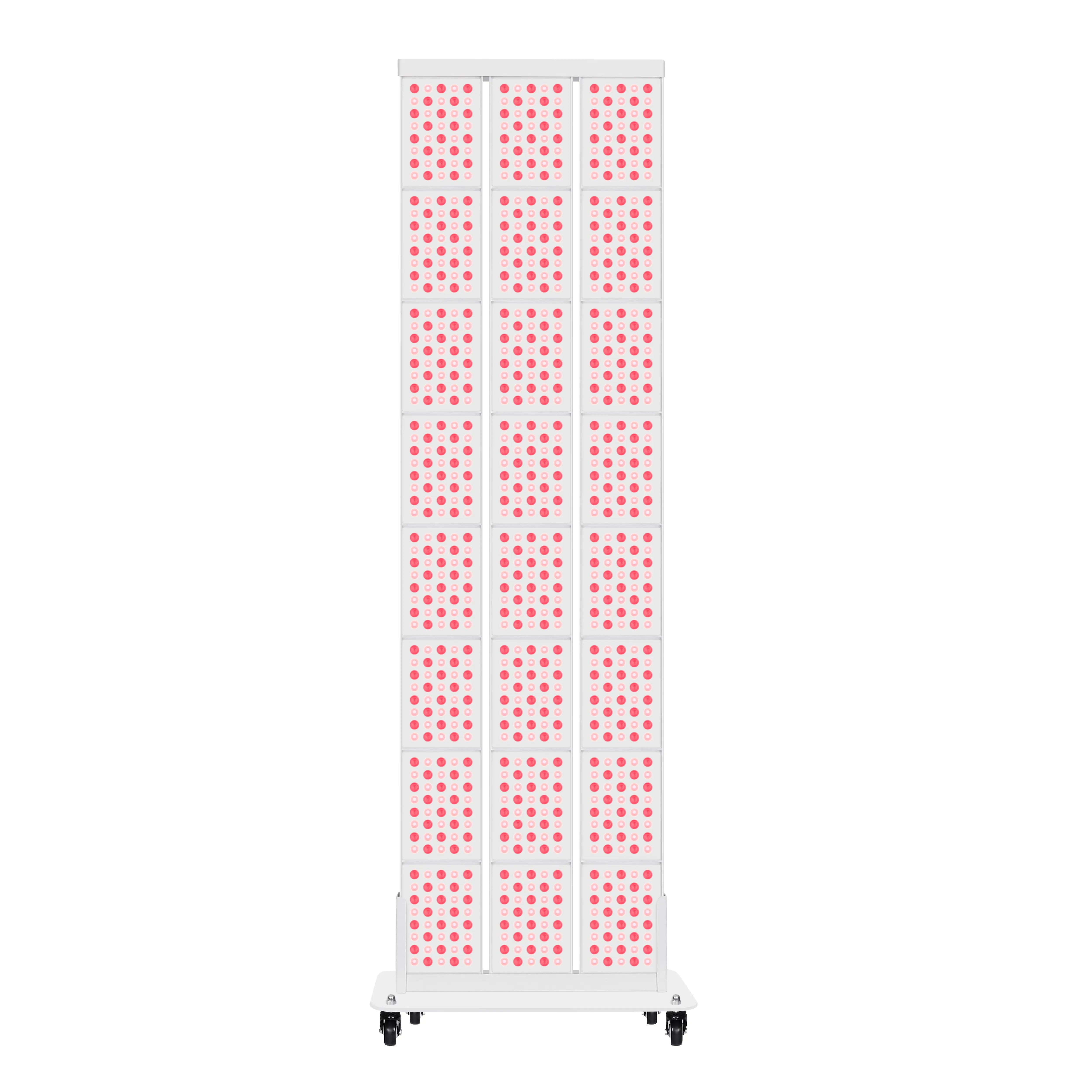
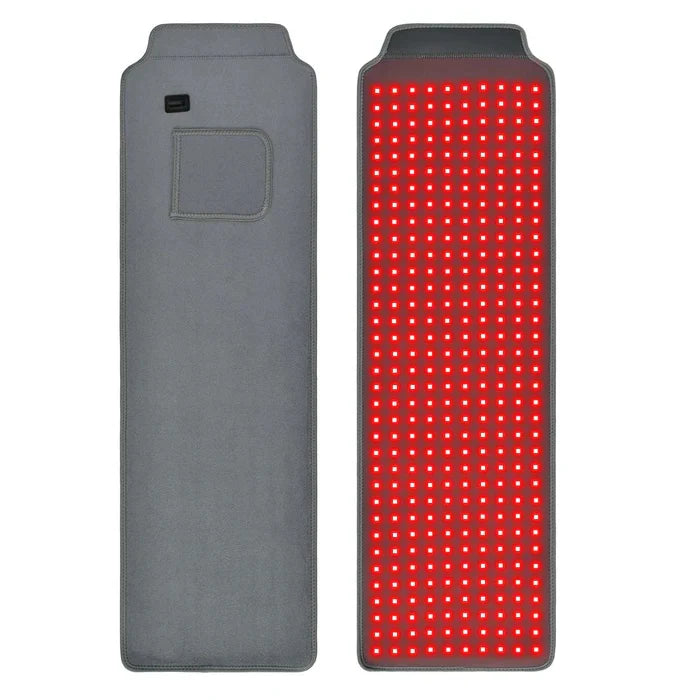
Many people now own red and near‑infrared panels aimed at skin or muscle recovery. These devices are much brighter than a simple night-light and are marketed aggressively for sleep enhancement. The scientific picture is mixed.
On the positive side, the small athlete study mentioned earlier suggests that a short nightly red-light session can improve sleep quality and raise melatonin in some contexts. On the cautionary side, the Frontiers in Psychiatry trial shows that an hour of red room lighting at around 75 lux immediately before bed can increase anxiety and alertness and fragment sleep compared with darkness, especially in people with insomnia.
When you put those strands together, a sensible approach emerges. If you want to use a red-light therapy device and you are prone to insomnia or nighttime anxiety, schedule your sessions earlier in the day: late morning, early afternoon, or at least enough hours before bed that the alerting effect has time to dissipate. Think of it more like a daytime or early-evening recovery tool than a bedside sedative. Overviews from News‑Medical and Sleep Foundation emphasize that protocols for sleep benefits are not standardized and that core sleep hygiene habits typically have larger effects.
Practically, I advise people to run their panel on skin or muscle targets during the daytime and to avoid shining it directly into their eyes at night. If you are determined to experiment with pre‑bed sessions, keep them short, end them at least an hour before your intended bedtime, and log your own data for a few weeks: how long it takes you to fall asleep, how often you wake up, and how you feel the next day. If your sleep worsens, stop or move the sessions earlier.
Principle 4: Use Red Strategically Around Wake-Up or During Night Work
The alerting properties of red light that are unwelcome at bedtime can be extremely useful when you are trying to shed sleep inertia or stay functional on a night shift.
The sleep inertia study using red light masks and goggles gives proof-of-principle that saturated red light can help accelerate performance recovery in the first half-hour after waking without measurably suppressing melatonin. Reports from groups studying red light in shift workers also show increased subjective and objective alertness during night work under red light in some protocols.
If you work nights or often have to wake for demanding tasks, one option is to rely on modest red light in the first minutes after waking, then transition to brighter white or daylight when appropriate. This lets you ramp up alertness gently and may be especially useful if you need to move around in the middle of a biological night but want to preserve as much melatonin as possible.
Again, intensity and timing are key. You do not need a stadium-level panel; goggles or low-to-moderate brightness directed toward the face for a limited period can be enough. And you should still prioritize correctly timed bright daylight or blue-enriched light during your biological day to anchor your circadian rhythm; red is a supplement, not a replacement.
Principle 5: Get Your Daytime Light Right First
The most powerful “light therapy” for melatonin regulation and sleep is still free: natural daylight. A systematic review of light exposure and circadian rhythms found that many experiments focused on evening or night light, but daytime light history substantially shapes how the circadian system responds. Morning light in particular is a dominant time cue for the SCN.
The Huberman Lab newsletter on using light for health ranks morning sunlight viewing among the top health behaviors, alongside sleep, movement, nutrition, and relationships. Spending even five to ten minutes outside in the morning on a sunny day, and longer on cloudy days, increases early-day cortisol at the right time, strengthens circadian alignment, and sets you up for better melatonin onset that night. Afternoon and early-evening outdoor light provide a second anchor by signaling that day is ending.
Harvard Health and Sleep Foundation both emphasize similar patterns: bright, preferably outdoor light during the day; dimmer, warmer light as evening progresses; minimal bright screens in the two to three hours before bed; and a dark bedroom at night. Once those fundamentals are in place, tuning the color and timing of red light becomes an intelligent fine-tuning step rather than a band-aid over bigger problems.

Pros and Cons of Red Light for Melatonin and Sleep
Because “red light” covers everything from a five‑lux barn light to a thousand‑dollar therapy panel, it helps to contrast scenarios side by side.
Scenario |
Melatonin / Circadian Findings |
Potential Benefit |
Key Risks or Unknowns |
Dim red night‑light for humans when a light is necessary |
Human lab data and Harvard review indicate red light is among the least effective visible wavelengths for suppressing melatonin; comparative LED study shows a red LED at 80 lux has almost negligible melanopic impact compared with blue. |
Provides safe navigation at night with minimal melatonin suppression compared with white or blue light. |
Any constant light can disturb sleep in sensitive people; intensity and placement still matter. |
One hour of pre‑sleep red room light around 75 lux |
Frontiers in Psychiatry trial: increased anxiety and negative affect, higher alertness, lighter and more fragmented sleep versus darkness; in insomnia patients, worse continuity versus dark but sometimes better than white light. |
May be less disruptive than bright white light in some insomnia cases. |
Can worsen pre‑sleep anxiety and fragment sleep, especially compared with darkness. |
Short nightly red light therapy sessions for specific groups (for example, athletes) |
Small 2012 athlete study reported higher melatonin and better sleep quality after 30 minutes of nightly red therapy versus placebo. |
Possible improvement in sleep quality and performance in some populations. |
Evidence is limited, protocols vary, and results may not generalize beyond specific groups and settings. |
Bright red exposure for several hours in the evening |
PLOS ONE study: six hours of red light at 631 nanometers produced circadian phase delays of almost an hour in average subjects, similar in some individuals to bright white light, without measurable melatonin suppression. |
Could be used therapeutically to shift circadian phase under expert guidance. |
Can unintentionally delay circadian timing if used casually at night, even when melatonin levels look normal. |
Low‑intensity red at night in animals |
Rats under about 8‑lux red at night showed strongly suppressed melatonin and disrupted metabolic rhythms; mice under red at 20 lux and above had altered sleep architecture; horses under 5‑lux red maintained normal melatonin rhythms. |
In some species and doses, red light may be an acceptable compromise between visibility and circadian preservation. |
Strong species and intensity dependence; what is “safe” in horses or mice is not necessarily safe in humans or other animals. |
Red light through eyelids or goggles at wake time |
Sleep inertia study: red mask and goggles at roughly mid‑50‑lux at the cornea improved early post‑waking performance without measurable melatonin suppression. |
Helps reduce sleep inertia and increase alertness upon waking without heavily engaging melatonin pathways. |
Long-term health impact of frequent use is not fully characterized; may not be suitable for everyone. |
The overall pattern is clear. Red light is generally less potent than blue or white for acutely suppressing melatonin, and dim red light is a smart choice when some nighttime illumination is genuinely needed. But bright or prolonged red exposures can still shift circadian timing, alter sleep structure, and change mood and alertness. Dose and timing make the difference between a helpful tool and a subtle saboteur.
FAQ: Common Questions I Get As a Red Light Geek
Does red light increase melatonin in humans?
In marketing copy you will often see the claim that red light “boosts melatonin.” The reality is more nuanced.
In one small trial with female athletes, nightly red light therapy for about thirty minutes over two weeks was associated with higher melatonin levels and better sleep quality compared with a placebo condition. That suggests that under some conditions, red light can support melatonin production or timing. At the same time, larger bodies of work show that the main circadian advantage of red light is that it suppresses melatonin far less than blue or white light at the same visual brightness, not that it automatically supercharges melatonin above what you would see in darkness.
Other studies, like the PLOS ONE experiment, show that red light can shift the phase of the melatonin rhythm without obviously changing melatonin amplitude during exposure. And the insomnia and sleep inertia studies demonstrate that red can alter sleep and alertness without directly measuring melatonin at all.
So the safest way to think about it is this: in reasonable doses and at the right times, red light is much less likely to blunt your natural melatonin rise than blue or bright white. A few early studies suggest it might increase melatonin levels or improve sleep in specific scenarios, but the evidence is not strong enough to promise that turning on a red lamp will raise everyone’s melatonin.
Is it safe to sleep with a red light on all night?
“Safe” has several layers. From a melatonin standpoint, dim red or amber light is clearly better than bright white or blue if you must have a night-light. Reviews from Harvard Health and the Sleep Foundation both recommend dim red lights over other colors for night-time visibility, because long wavelengths are least likely to shift circadian rhythms or suppress melatonin.
However, several points of caution apply. First, any continuous light can disturb sleep in some people, even if hormonal measures look fine. In the insomnia trial, red light before bed increased negative emotions and alertness. Animal work shows that even low-intensity light during the entire dark period can change EEG power density and, in some species, disrupt metabolic rhythms.
Second, consumer education pieces from companies in the red-light therapy space and neutral sources alike emphasize that leaving red therapy devices or bright red bulbs on all night does not improve skin outcomes or sleep and may fragment sleep, especially if the light is bright enough to significantly illuminate the room. Those devices are designed for short, targeted exposures of a few minutes, not as overnight room lights.
For most people, the best plan is to aim for a fully dark bedroom and, if a night-light is truly necessary for safety or caregiving, to use a very dim red or amber source placed low and away from the eyes, and to turn it off when it is not needed. Sleeping every night under a bright red glow is not something current evidence can endorse as benign, let alone beneficial.
How should I time red light therapy if I want better sleep?
There is no single evidence-backed timing protocol that guarantees better sleep for everyone. Based on available data and practical experience, a conservative, science-aligned approach looks like this.
First, treat red light therapy as a secondary tool, not a replacement for good sleep hygiene. Regular bed and wake times, morning daylight exposure, exercise, and caffeine and screen management will have larger and more reliable effects on your sleep than any panel.
Second, avoid strong red-light exposure right before bed if you are prone to insomnia or anxiety. The Frontiers in Psychiatry trial suggests that an hour of moderately bright red light in the hour before bedtime can raise anxiety and alertness and fragment sleep versus darkness, particularly in people with insomnia. If you want to use a red-light device for skin or muscle recovery, schedule sessions earlier: for example, during the day or late afternoon. At minimum, finish your session at least an hour before your intended bedtime and then switch to very dim, warm-toned room light.
Third, if you are curious about combining red light with sleep inertia management, consider using red exposure in the first minutes after waking rather than right before sleep. The sleep inertia study indicates that such use can improve early-morning performance without suppressing melatonin in the limited cohorts tested.
Above all, experiment cautiously, change one variable at a time, and keep a simple log of your sleep onset, awakenings, and next-day function. If your sleep gets worse, pull back. If you have chronic insomnia, heavy snoring, or serious mood issues, talk with a clinician rather than relying solely on lighting tweaks.
Red light is a powerful tool in the home-wellness and biohacking toolkit, but like any powerful tool, it demands respect. Used intelligently at low intensities, in short bursts, and at the right times of day, it can give you visibility at night and sharper mornings without stomping on melatonin. Used carelessly or as a cure-all, it can quietly tilt your circadian system off target. As a light therapy geek, my mantra is simple: master darkness and daylight first, then let red be a precise scalpel, not a blunt instrument.
References
- https://www.health.harvard.edu/staying-healthy/blue-light-has-a-dark-side
- https://pubmed.ncbi.nlm.nih.gov/31554596/
- https://newsroom.uw.edu/video-library/how-melatonin-regulates-bodys-sleep-wake-cycle
- https://proberlab.caltech.edu/documents/16366/underwood-pinealectomy-1989-1_L8UqM56.pdf
- https://pdxscholar.library.pdx.edu/open_access_etds/1317/
- https://scholars.uthscsa.edu/en/publications/normal-patterns-of-melatonin-levels-in-the-pineal-gland-and-body-/
- https://archive.cdc.gov/www_cdc_gov/niosh/emres/longhourstraining/color.html
- https://vivo.colostate.edu/hbooks/pathphys/endocrine/otherendo/pineal.html
- http://publish.illinois.edu/clockworks/files/2023/08/2004melatoninsleep.pdf
- https://pubs.lib.umn.edu/index.php/aisthesis/article/download/4726/3121/24727