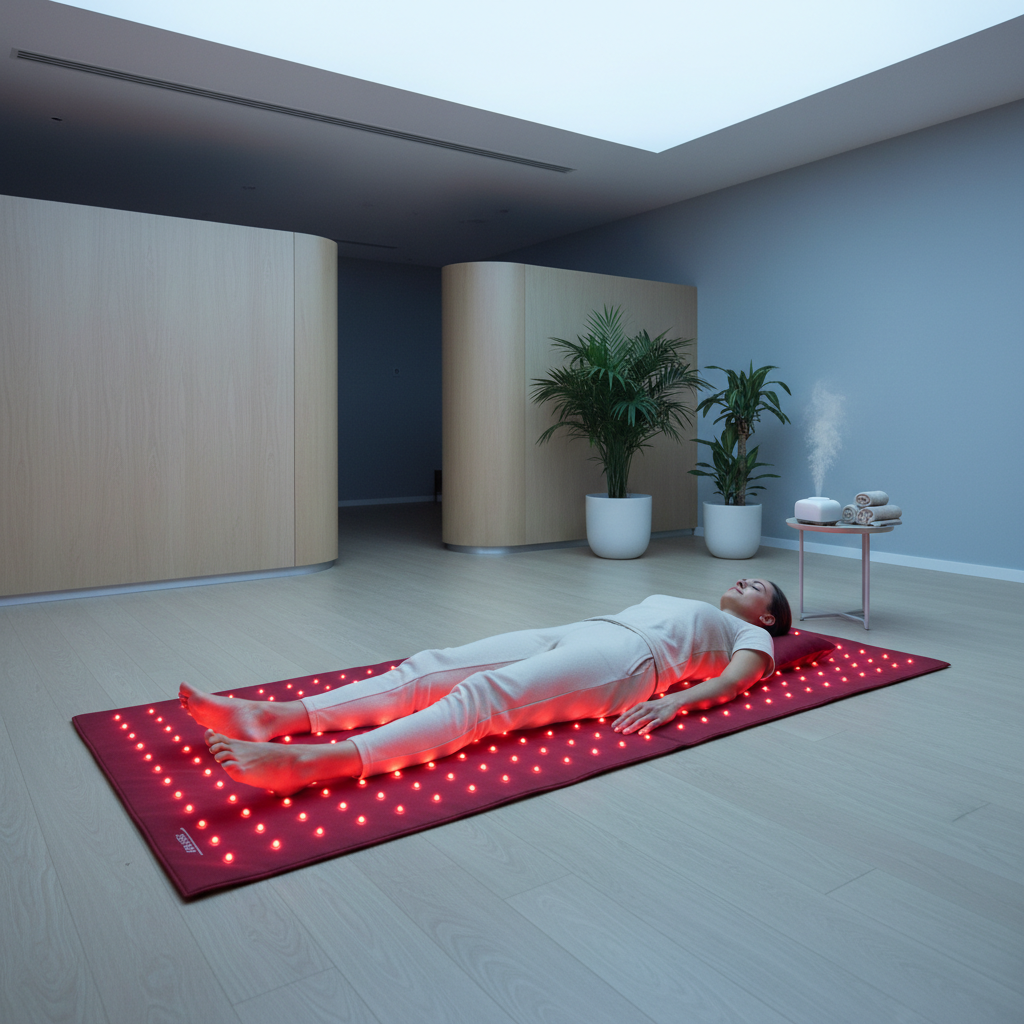
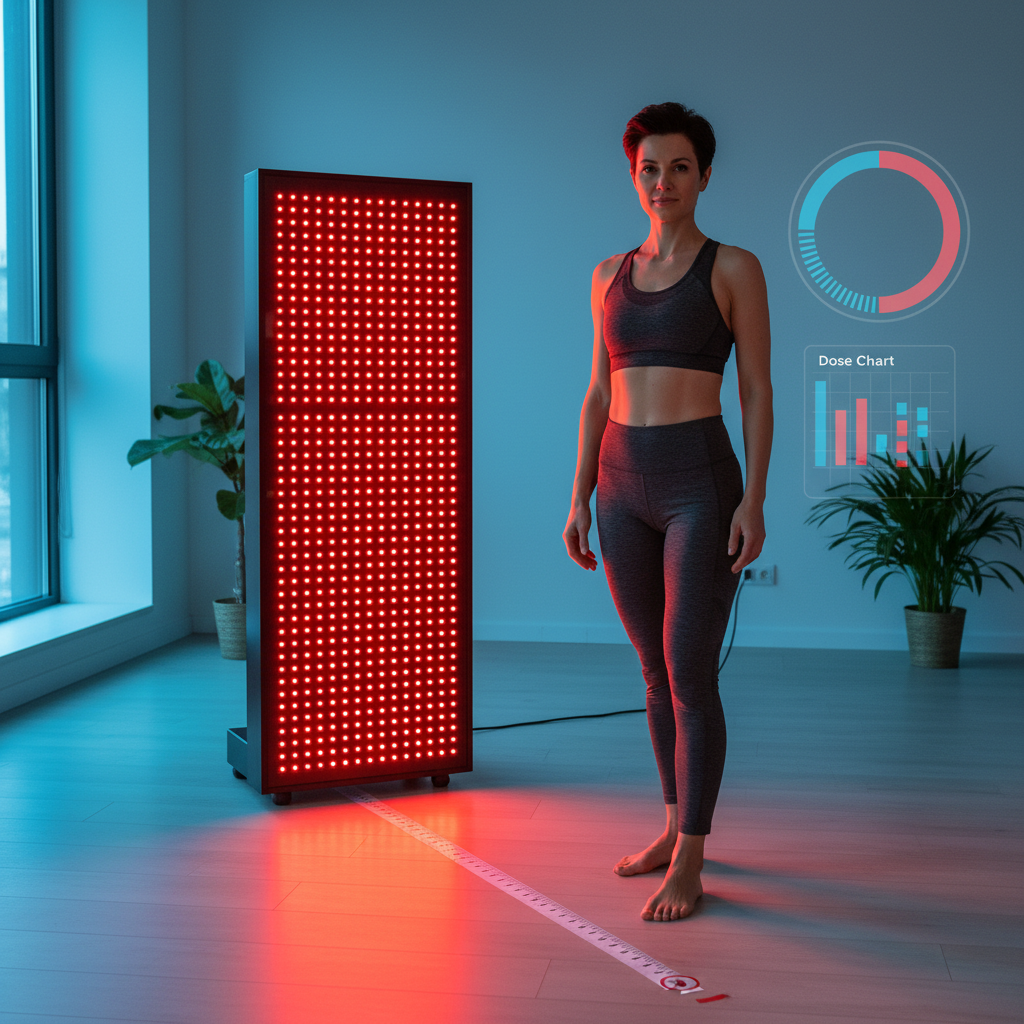
When comparing red light therapy panels, wavelength determines whether the light falls into the biologically relevant optical window, while irradiance tells you how much of that light actually reaches your skin at a usable distance. The most reliable buying decision comes from panels that clearly disclose both, measured under realistic conditions, rather than those relying on headline numbers or vague marketing claims.

Understanding these two specifications helps you avoid devices that deliver little more than a red glow and instead select ones capable of supporting the doses discussed in photobiomodulation research. This guide translates the core technical concepts into practical comparison rules so you can evaluate listings confidently.
What Wavelength and Irradiance Actually Mean
Wavelength is the color (or invisibility) of the light, measured in nanometers. Red light therapy panels most often use wavelengths in the 630–660 nm range for red light and 810–850 nm for near-infrared. These bands sit within the tissue optical window where light penetrates skin and underlying tissue more effectively than many other wavelengths, as outlined in reviews of photobiomodulation mechanisms.
Irradiance, sometimes called power density, measures how much light energy arrives per square centimeter per second, typically in milliwatts per square centimeter (mW/cm²). It is the instantaneous intensity at a given point. Fluence (or dose) is the total energy delivered over time, calculated by multiplying irradiance by exposure time in seconds and converting units to joules per square centimeter (J/cm²).
The two specifications work together. A panel emitting light at an optimal wavelength still needs sufficient irradiance at your actual treatment distance to deliver a meaningful dose within a practical session length. As this official guidance on optical measurement principles makes clear, what matters to the buyer is delivered irradiance at the skin, not simply the emitter output at the device face.
Why the Debate Between Irradiance and Wavelength Persists
Marketing often highlights one number while downplaying the other. Some listings emphasize precise-sounding wavelengths as proof of quality. Others advertise exceptionally high irradiance figures without stating the measurement distance or protocol. Both approaches create confusion because neither specification alone predicts real-world performance.
Primary literature shows that photobiomodulation outcomes depend on dose, power density, exposure time, and tissue context. Wavelength is necessary but not sufficient for buying decisions, according to a key paper on the topic. Similarly, irradiance claims become difficult to interpret unless the manufacturer reports the test distance and method, as noted in systematic reviews of dosage and measurement considerations.
Common Myths That Mislead Buyers
Several widely repeated claims distort how people evaluate panels. Here is a practical myth-versus-reality breakdown:
-
Myth: Higher irradiance is always better. Reality: Photobiomodulation often follows a biphasic dose response, meaning too little energy may be ineffective while too much can reduce benefits. The practical goal is a usable dose at your intended distance and session length rather than the absolute highest number.
-
Myth: The irradiance number on the listing tells you exactly what your skin receives. Reality: Many figures represent output measured right at the panel or under ideal lab conditions. Real delivered irradiance drops quickly with distance, beam angle, and scatter. Without a stated test distance, the number is hard to compare across products.
-
Myth: A specific wavelength (especially deeper NIR) automatically means superior quality. Reality: Wavelength influences penetration depth, but it does not guarantee results on its own. A panel using wavelengths inside the common optical window can still under-deliver if irradiance or dosing parameters are mismatched to the target tissue.
-
Myth: Two panels with the same wavelength are basically interchangeable. Reality: Differences in LED quality, thermal management, beam pattern, and actual delivered irradiance at distance create meaningful performance gaps. Wavelength gets you in the right range; irradiance and consistent delivery determine whether the panel supports clinical-style outcomes.
These myths explain why many buyers feel skeptical when comparing listings. Prioritizing full parameter disclosure helps cut through promotional language.
How to Read Red Light Therapy Panel Specifications
A trustworthy spec sheet should include more than just wavelength and a single irradiance figure. Look for clear statements about:
- Exact wavelengths used (for example 660 nm and 850 nm)
- Irradiance values at one or more realistic distances (such as 15 cm or 30 cm)
- Whether the irradiance is measured with a spectroradiometer rather than a generic solar power meter
- Session recommendations that align with typical fluence targets discussed in the literature
Consensus recommendations for photobiomodulation reporting emphasize that dose reporting must include wavelength, irradiance, exposure time, beam size, and energy density to be reproducible. When a listing omits the distance or measurement method, treat the irradiance claim as incomplete.
For most home users, an irradiance of roughly 50–100 mW/cm² at the planned treatment distance often supports practical sessions of 10–20 minutes while staying within ranges explored in many studies. Values significantly below this may require longer or closer sessions that become inconvenient. Values well above may require shorter exposures or greater distance to avoid overshooting the useful range due to the biphasic response.
Visualizing How Distance Affects Delivered Irradiance
The chart below uses illustrative profiles modeled from typical panel behavior described in the research context. It shows how irradiance falls off with distance for three representative device types and marks practical thresholds for a usable treatment range.
Delivered Irradiance Falls Quickly With Distance
Use this as a decision aid: compare how much irradiance actually reaches skin at different distances, not just emitter output or headline wattage.
View chart data
| Category | High-quality panel | Average panel | Hype/spec-heavy panel | Useful range threshold | Upper practical threshold |
|---|---|---|---|---|---|
| 0 cm | 180.0 | 120.0 | 90.0 | 20.0 | 100.0 |
| 5 cm | 160.0 | 105.0 | 80.0 | 20.0 | 100.0 |
| 10 cm | 145.0 | 90.0 | 70.0 | 20.0 | 100.0 |
| 15 cm | 120.0 | 75.0 | 55.0 | 20.0 | 100.0 |
| 20 cm | 95.0 | 58.0 | 40.0 | 20.0 | 100.0 |
| 30 cm | 40.0 | 25.0 | 18.0 | 20.0 | 100.0 |
| 40 cm | 25.0 | 15.0 | 10.0 | 20.0 | 100.0 |
| 50 cm | 18.0 | 10.0 | 6.0 | 20.0 | 100.0 |
| 60 cm | 12.0 | 7.0 | 4.0 | 20.0 | 100.0 |
Illustrative planning model built from the article context: delivered irradiance decreases with distance; wavelengths in the red and NIR optical window are the relevant bands for panels; biphasic response means higher irradiance is not always better. The three panel curves are bounded example profiles anchored to the provided reference points (e.g., high panel about 120 mW/cm² at 15 cm and about 40 mW/cm² at 30 cm).
The high-quality profile maintains stronger output at typical home-use distances of 15–30 cm. The hype-oriented profile starts lower and falls off faster, illustrating why a high headline number measured at zero distance can mislead. The horizontal lines represent conservative practical boundaries; staying between them for your chosen session length often aligns with ranges explored in the literature. These curves are illustrative models for comparison only and not measured data from any specific device.

Practical Checklist: What to Check Before Buying
Translate the concepts above into executable steps when comparing panels:
-
Confirm the wavelengths fall within the commonly supported optical window (630–660 nm red and/or 810–850 nm near-infrared). This provides biological plausibility but is only the first filter.
-
Look for irradiance values stated at a specific distance that matches your planned usage (for example 15 cm or 30 cm). If no distance is given, downgrade the claim.
-
Calculate rough fluence for your intended session: multiply irradiance (in mW/cm²) by time (in seconds) and divide by 1,000 to obtain J/cm². Typical home sessions often target 20–60 J/cm² depending on the goal, though exact needs vary.
-
Consider biphasic response: if a panel delivers very high irradiance at your distance, you may need shorter sessions or to stand farther back. Extremely low irradiance may require inconveniently long sessions.
-
Check for additional transparency indicators such as flicker rate, EMF levels at treatment distance, and LED binning or thermal management details. These support long-term performance and safety.
-
Cross-reference the full parameter set against the consensus reporting standards rather than relying on promotional language alone.
Applying this checklist helps you separate panels designed for clinical-style outcomes from those optimized mainly for visual appeal.
When One Panel May Be Better Than Another
Wavelength and irradiance needs can shift by use case. For superficial skin concerns, a panel with strong 660 nm output and solid irradiance at closer distances often suffices. For deeper muscle or joint support, 850 nm near-infrared combined with adequate irradiance at 20–30 cm becomes more relevant.
If two panels share similar wavelengths, the one that maintains higher delivered irradiance at your actual treatment distance while allowing convenient session lengths is generally the stronger practical choice. Conversely, a panel with slightly lower peak irradiance but better thermal stability, lower EMF, and clearer dosing guidance may be preferable for daily long-term use.
Panels that omit distance measurements or rely solely on “high power” language make objective comparison difficult. In those cases, the evidence-oriented buyer should favor manufacturers that publish third-party spectroradiometer data at multiple distances.
How to Choose in Your Own Setup
Before purchasing, perform a quick self-audit:
- Measure your intended treatment distance (most people use 15–45 cm).
- Decide on typical session duration (10–20 minutes is common for full-body or large-area panels).
- Estimate the minimum irradiance needed at that distance to reach a target fluence in your chosen time.
- Compare at least three listings using the same distance reference.
- Verify that the chosen wavelengths align with your primary goal (red for skin, near-infrared for deeper tissue, or dual for both).
If a listing cannot support this comparison, it carries higher uncertainty regardless of its wavelength claims. This approach reduces the chance of buyer’s remorse and helps you select a device that fits your actual routine.
Important comfort and safety note: This article discusses technical specifications and buying considerations for red light therapy devices. It is for informational purposes only and does not constitute medical advice, diagnosis, or treatment. Red light therapy results vary by individual, device quality, and usage. If you have existing eye conditions, photosensitivity, are pregnant, or experience persistent discomfort, consult a qualified healthcare professional before use. Always follow the manufacturer’s safety instructions and never stare directly into the lights.
The most valuable panels combine appropriate wavelengths, credible irradiance data at realistic distances, and transparent reporting. By focusing on delivered dose rather than isolated headline specifications, you can select a device that supports the outcomes you are seeking instead of simply producing a red glow. When comparing options, prioritize clear measurement conditions over marketing language. This evidence-based approach helps ensure your investment delivers meaningful results at home.