
Red Light Therapy for Dental Implants and Post-Op Healing: A Clinical Recovery Guide
Medical Disclaimer: This article is for informational purposes only and does not constitute professional medical advice, diagnosis, or treatment. Always seek the advice of your dentist, oral surgeon, or other qualified health provider with any questions regarding a medical condition or post-operative care. This guide is based on current clinical literature and the IEC 60601-2-57:2026 safety standards.
Reviewed by: Youlumi Clinical Advisory Team (Specializing in Photobiomodulation & Dental Technology)
Summary
Red light therapy, or photobiomodulation (PBM), is increasingly utilized to support dental implant recovery by potentially enhancing cellular energy production and modulating post-operative inflammation. By utilizing specific wavelengths—typically 660nm for soft tissue and 850nm for deeper bone penetration—preliminary clinical evidence suggests patients may experience improved osseointegration stability and a more comfortable recovery period.

Key Takeaways
- Support for Osseointegration: PBM may stimulate osteoblast activity. Some clinical reviews indicate higher Implant Stability Quotient (ISQ) values during the 2–8 week healing window compared to control groups.
- Inflammation Management: Clinical protocols using 660nm wavelengths are studied for their ability to modulate inflammatory markers, which may help reduce post-surgical edema and discomfort.
- Wavelength Synergy: A combination of 660nm (red) and 850nm (near-infrared) is often employed to address both the gingival surface and the underlying alveolar bone.
- High-Risk Considerations: Evidence suggests PBM may be particularly useful for patients with compromised healing, such as smokers or those with controlled diabetes, though more large-scale randomized trials are needed.
- Standardized Dosing: Effective recovery relies on specific irradiance (mW/cm²) and fluence (J/cm²) parameters rather than simple exposure time.
How Red Light Therapy Supports Dental Implant Healing
Dental implant success depends on osseointegration—the structural and functional connection between living bone and the implant surface. While success rates are generally high, the "stability dip" (the period where initial mechanical stability decreases before biological stability takes over) remains a critical phase for potential complications.
Photobiomodulation (PBM) has emerged as a supportive tool in regenerative dentistry. By delivering photons to the surgical site, PBM is thought to interact with cytochrome c oxidase in the mitochondria, potentially increasing adenosine triphosphate (ATP) production. This cellular energy boost is hypothesized to support faster tissue repair and bone remodeling.
When selecting equipment, it is essential to adhere to established safety benchmarks. Our guide on safety standards and irradiance guidelines details the technical validation required for effective PBM, including the IEC 60601-2-57:2026 standards. These standards ensure that devices provide a therapeutic dose while minimizing risks like excessive heat or EMF exposure.
The Science of Osseointegration and Wavelength Precision
The biological impact of light therapy is wavelength-dependent. In dental applications, the depth of the target tissue determines the required spectrum.
Visible red light (approx. 660nm) is primarily absorbed by the oral mucosa. It is often used to manage the immediate post-operative environment, focusing on incision healing and surface inflammation. You can learn more by comparing 660nm and 850nm wavelengths for tissue healing.
Near-infrared (NIR) light (approx. 850nm) has a deeper penetration profile, reaching the alveolar bone. A 2022 study in Lasers in Medical Science suggested that 850nm light can enhance the differentiation of mesenchymal stem cells into osteoblasts. By potentially increasing bone mineral density around the implant, NIR light may help stabilize the fixture more efficiently than natural healing alone.
Clinical Logic: A dual-wavelength approach is preferred because dental recovery involves two distinct layers: the superficial gingiva and the deep jawbone. Relying on a single wavelength may result in an incomplete therapeutic effect for the entire surgical site.
Clinical Protocols for Post-Operative Recovery
The most effective window for PBM begins immediately following surgery. Understanding the optimal timing for post-surgical red light therapy is vital. Early application is intended to manage the initial inflammatory surge, which typically peaks 48–72 hours post-op.
Recommended Clinical Protocol (Heuristic Guidelines)
Note: Parameters assume a device with a calibrated irradiance of 50–100 mW/cm² at the treatment distance.
| Phase | Frequency | Irradiance (mW/cm²) | Target Fluence (J/cm²) | Duration (per site) |
|---|---|---|---|---|
| Acute (Days 1-7) | 1-2x Daily | 50 - 75 | 4 - 6 | 1-2 Minutes |
| Sub-Acute (Weeks 2-4) | 3-4x Weekly | 75 - 100 | 6 - 9 | 2-3 Minutes |
| Integration (Weeks 5-12) | 2-3x Weekly | 100 | 9 - 12 | 3-5 Minutes |
| Maintenance (Month 4+) | 1-2x Weekly | 75 | 6 | 3 Minutes |
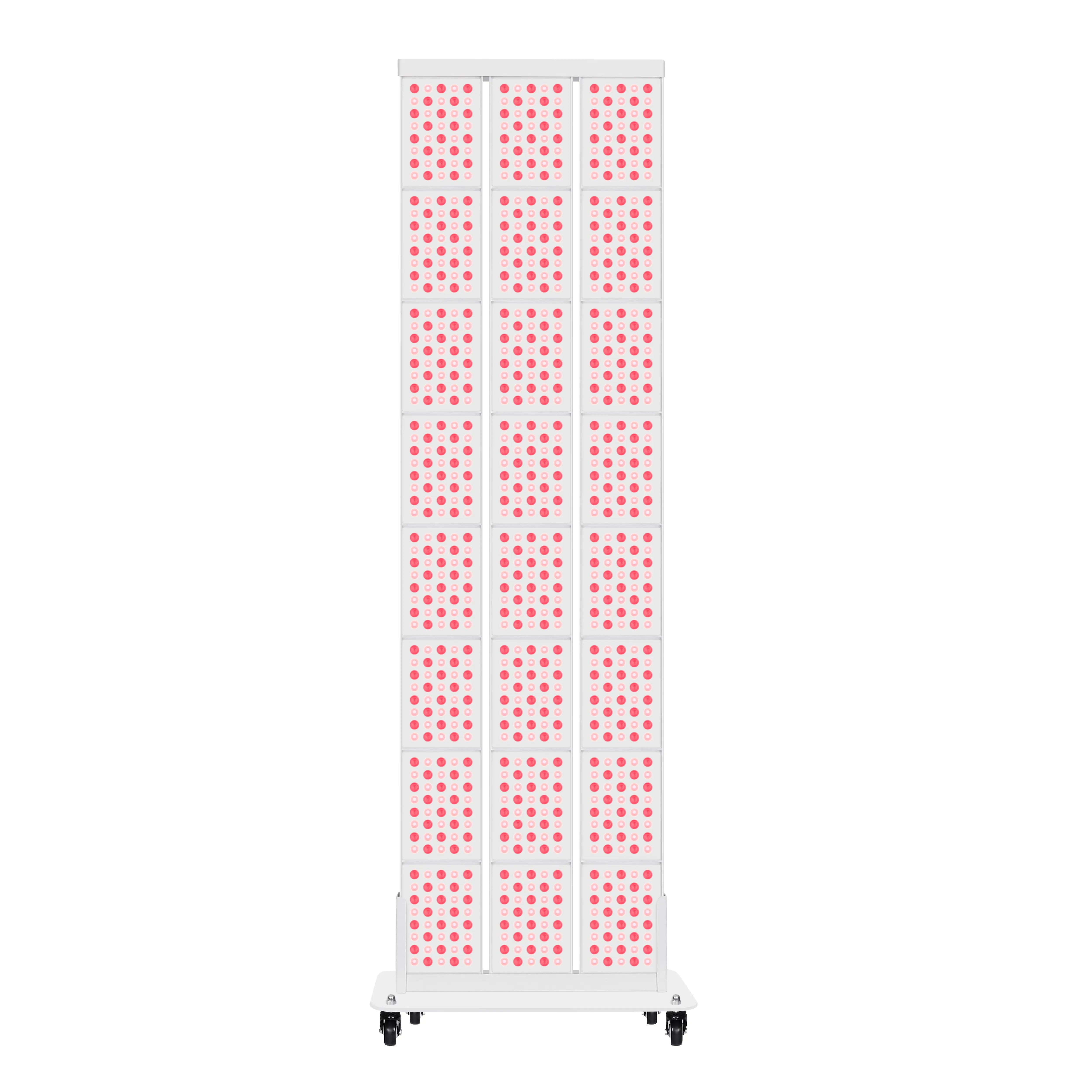
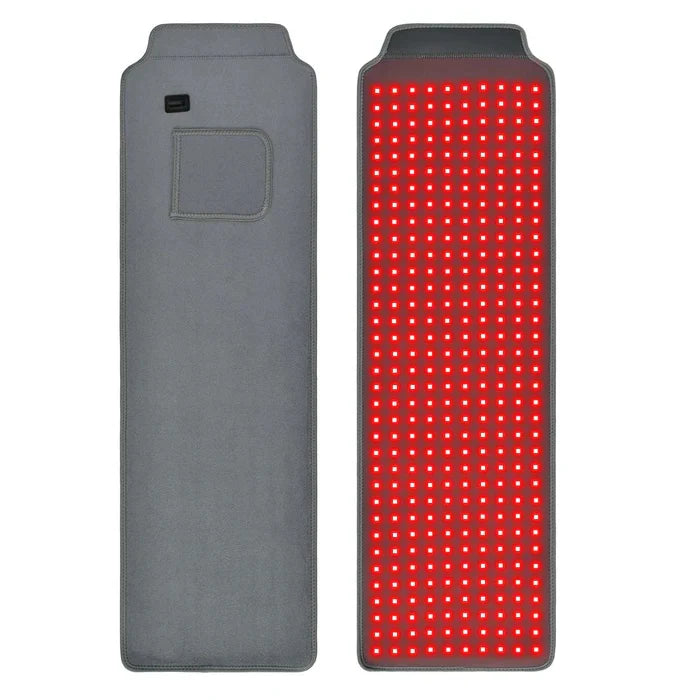
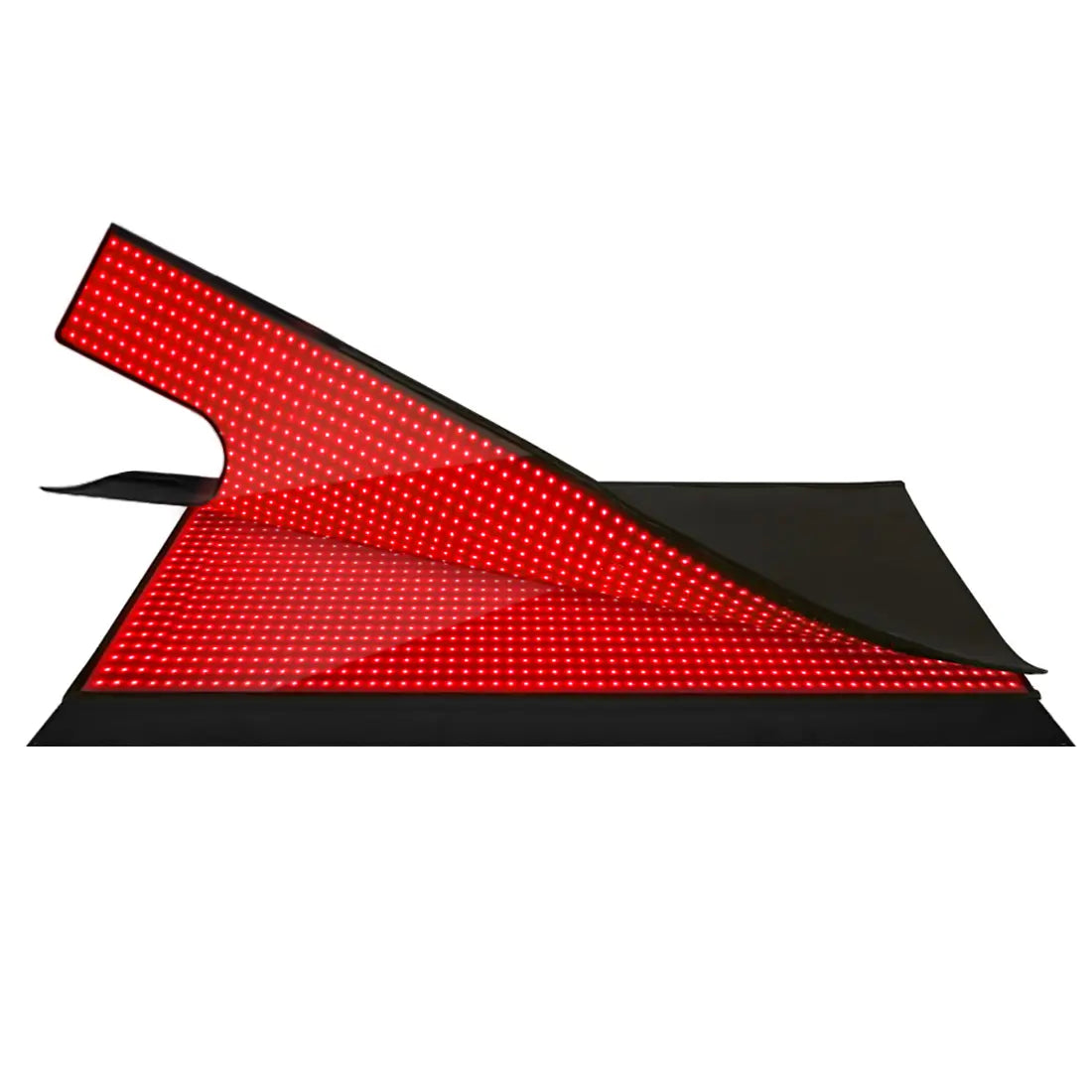
For home recovery, a dual-wavelength portable red light panel allows for the consistency required by these protocols. These devices should be used at a distance where the irradiance remains within the therapeutic range (typically 1–3 inches from the skin).
Optimizing Device Placement for Different Surgical Sites
Anatomical variations between the anterior (front) and posterior (back) regions of the jaw require different application techniques.
- Anterior Region: The bone is generally thinner. Extraoral application (through the lip) is usually sufficient.
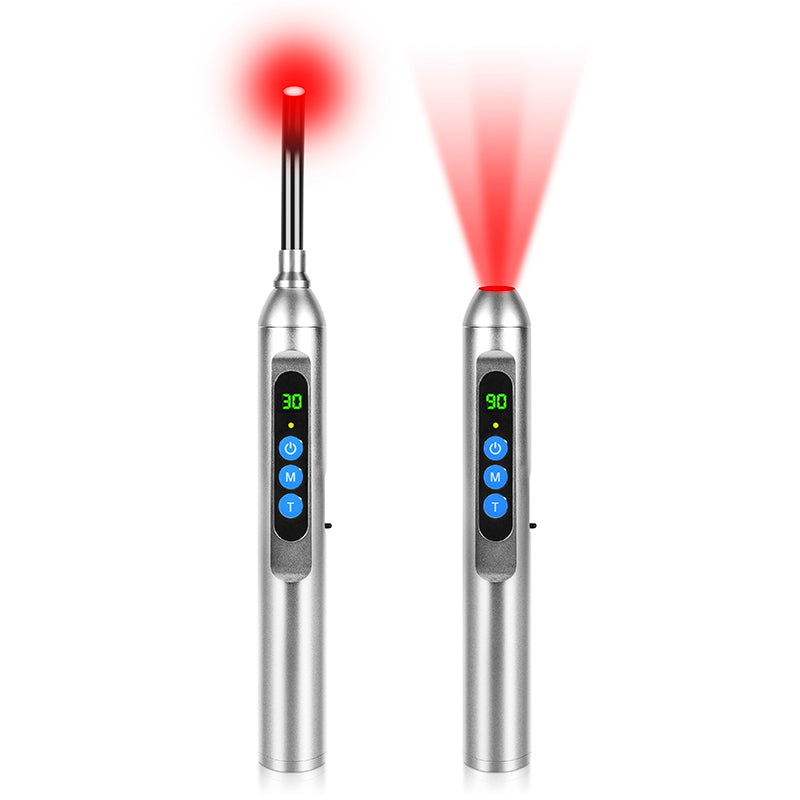
- Posterior Region: The bone is denser and the cheek tissue is thicker. While 850nm light has high penetration, an intraoral approach using a targeted oral treatment device may reduce the "distance to target," delivering a more concentrated dose to the molar area.

Technical Note: When applying light extraorally, the "Inverse Square Law" applies. Increasing the distance from the skin significantly reduces the irradiance (mW/cm²). For dental bone issues, keeping the device close to the cheek is necessary to ensure enough photons reach the alveolar bone.
Photobiomodulation and Bone Grafting
Bone grafts (allografts, xenografts, or synthetics) require revascularization to integrate. PBM is studied for its role in promoting angiogenesis—the formation of new blood vessels. A well-vascularized graft is more likely to be replaced by natural bone.
Research suggests that PBM does not interfere with common grafting materials. Instead, it may provide the metabolic support needed for the body to incorporate the graft. For complex cases, exploring dental-specific red light therapy techniques can help maximize the regenerative potential of the site.
Long-Term Maintenance and Safety
Maintaining the peri-implant environment is critical for preventing peri-implantitis, a leading cause of late-stage failure. A low-frequency maintenance dose (once or twice weekly) may help manage oxidative stress in the surrounding tissues.
Safety Guidelines & Contraindications:
- Eye Protection: Use safety goggles for all facial applications to prevent retinal strain from high-intensity NIR light.
- Active Bleeding: Wait until active bleeding has ceased (usually 2–4 hours post-op) before starting PBM, as vasodilation could theoretically prolong initial bleeding.
- Cancer Precautions: Avoid direct irradiation over known or suspected malignant lesions in the oral cavity.
- Consultation: Always verify your specific protocol with your surgeon, especially if you are undergoing radiation therapy or have underlying systemic conditions.
FAQ
How soon after dental implant surgery can I start? Most clinical observations suggest starting as soon as active bleeding stops. Early application within the first 24 hours is most effective for managing the peak inflammatory response.
Does red light therapy help with pain? Several studies, including those published in Lasers in Medical Science, indicate that PBM may have analgesic effects by reducing pro-inflammatory cytokines. While it may reduce reliance on over-the-counter medications, it should not replace prescribed pain management without a doctor's approval.
Can red light therapy cause implant failure? There is currently no clinical evidence suggesting PBM causes failure. Conversely, a 2023 systematic review in the Journal of Oral Implantology found that PBM-treated groups often showed a 5–8% increase in secondary stability (ISQ) during the first month compared to controls.
What wavelength is best? A combination of 660nm and 850nm is the current clinical standard. 660nm targets the gums, while 850nm is required to reach the bone-to-implant interface.
Is it safe for bone grafts? Yes, evidence suggests it supports the revascularization process necessary for graft success.
References
- IEC 60601-2-57:2026: Medical electrical equipment - Safety requirements for non-laser light source equipment.
- Journal of Oral Implantology: "Effect of Photobiomodulation on the Secondary Stability of Dental Implants: A Systematic Review" (2023).
- Lasers in Medical Science: "Impact of 850nm NIR light on osteoblast differentiation and bone mineral density" (2022).
- World Association for Photobiomodulation Therapy (WALT): Dosage guidelines for oral mucosa and bone healing.
- National Institutes of Health (NIH): Database of clinical trials regarding PBM in dental surgery.