
How to Use Red Light Therapy for Faster Cold Sore Healing
Medical Disclaimer: The information provided in this article is for educational and informational purposes only and is not intended as medical advice, diagnosis, or treatment. Red light therapy (RLT) is a complementary approach and should not replace consultation with a qualified healthcare provider. Always seek the advice of your physician or dermatologist before starting new treatments, especially if you are pregnant, nursing, have a history of skin cancer, or are taking photosensitizing medications (e.g., tetracycline, St. John’s Wort).
Conflict of Interest Disclosure: This guide is published by Youlumi, a manufacturer and retailer of red light therapy devices. While our content is based on peer-reviewed research and clinical principles, we have a commercial interest in the products linked within this article. Our recommendations are intended to help consumers make informed decisions based on available technology and safety standards.
Reviewed by: Youlumi Clinical Research Team | Updated: October 2023

Summary
Red light therapy (RLT) may help support the healing process for cold sores by utilizing specific wavelengths of light—primarily 660nm (red) and 850nm (near-infrared)—to assist with cellular repair and manage the inflammation associated with the herpes simplex virus (HSV-1). When applied during the early prodromal stage (the initial tingling sensation), evidence suggests this non-invasive method may reduce the severity of an outbreak or shorten the recovery window.
Key Takeaways
- Early Intervention: Applying RLT at the first sign of tingling (prodromal phase) offers the best opportunity to minimize the progression of a blister.
- Wavelength Synergy: 660nm red light targets surface-level inflammation, while 850nm near-infrared light is used to support deeper tissue recovery.
- Measured Dosing: Standard protocols typically involve 2–5 minute sessions, 1–2 times daily, until the lesion resolves.
- Targeted Application: Handheld devices are recommended for the lips to ensure precise delivery and avoid unnecessary exposure to surrounding facial skin.
- Integrative Care: RLT is most effective when used as a complement to, rather than a replacement for, physician-prescribed antiviral medications.
Understanding the Science: How 660nm and 850nm Wavelengths Target Cold Sores
The application of red light therapy for cold sores (fever blisters) is based on the principle of photobiomodulation (PBM). This process occurs when light photons are absorbed by chromophores within the mitochondria—specifically cytochrome c oxidase. This absorption can lead to an increase in adenosine triphosphate (ATP) production, providing cells with the energy needed for natural repair processes.
For HSV-1 management, the goal is to modulate the inflammatory response and support skin re-epithelialization:
- 660nm (Visible Red): This wavelength is absorbed by the superficial skin layers. It is primarily used to address the redness and swelling of an active lesion.
- 850nm (Near-Infrared): This wavelength penetrates deeper into the dermal layers. It supports the production of structural proteins like collagen.
- Evidence Note: While many users report success with dual-wavelength devices, most specific clinical trials for HSV-1 have focused on single wavelengths in the 630nm–680nm range. The use of 850nm for cold sores is currently a heuristic based on broader wound-healing research rather than direct HSV-1 clinical validation.
Choosing the right wavelength for cold sore treatment is a key factor in aligning the technology with your specific skin recovery goals.
How to Manage a Cold Sore with Red Light Therapy: The Prodromal Phase
The "prodromal phase" is the critical window—usually lasting a few hours—where you feel tingling, itching, or burning, but no blister is visible. Small-scale clinical studies and user reports suggest that applying RLT during this window may help "blunt" the outbreak.
By delivering concentrated light energy at the site of viral replication, you are supporting the local cellular environment. While results vary and are not guaranteed, early intervention is widely considered the most effective way to use RLT, potentially reducing the duration of a standard outbreak.
Step-by-Step Treatment Plan for Active Blisters
If a blister has already formed, the focus shifts to supporting the "crusting" and healing phases.
- Clean the Area: Gently pat the area with a clean cloth. Ensure the skin is free of heavy ointments or sunscreens, which can reflect or block light.
- Position the Device: Hold your handheld device approximately 1 to 4 inches away from the lesion.
- Duration: Set the timer for 2 to 5 minutes. (See the "Calculating Your Dose" section below for precision).
- Frequency: Repeat 1 to 2 times per day. Avoid excessive use (e.g., every hour), as over-treatment can lead to diminishing returns or skin irritation.
- Post-Treatment: Apply prescribed antiviral creams or protective balms after the light session.

| Treatment Phase | Goal | Frequency | Duration (Est.) |
|---|---|---|---|
| Prodromal (Tingling) | Minimize blister formation | 2x daily | 3–5 minutes |
| Active Blister | Support inflammation reduction | 1–2x daily | 2–3 minutes |
| Crusting/Scabbing | Accelerate skin repair | 1x daily | 2 minutes |
| Post-Healing | Support tissue integrity | 2–3x weekly | 2 minutes |
Optimal treatment frequency for cold sore healing helps ensure you provide sufficient energy without over-stimulating the tissue.
Calculating Your Dose: The Importance of J/cm²
In photobiomodulation, the "dose" is measured in Joules per square centimeter (J/cm²). For cold sores, research typically suggests a dose between 2 J/cm² and 10 J/cm² per session.
The Formula: $Energy (J/cm²) = \frac{Irradiance (mW/cm²) \times Time (seconds)}{1000}$
Example Calculation: If your device has an irradiance of 50 mW/cm² at 2 inches:
- To achieve a 6 J/cm² dose:
- $6 = \frac{50 \times Time}{1000} \rightarrow 6000 = 50 \times Time \rightarrow Time = 120 \text{ seconds (2 minutes)}.$
Choosing the Best Red Light Therapy Device for Cold Sores
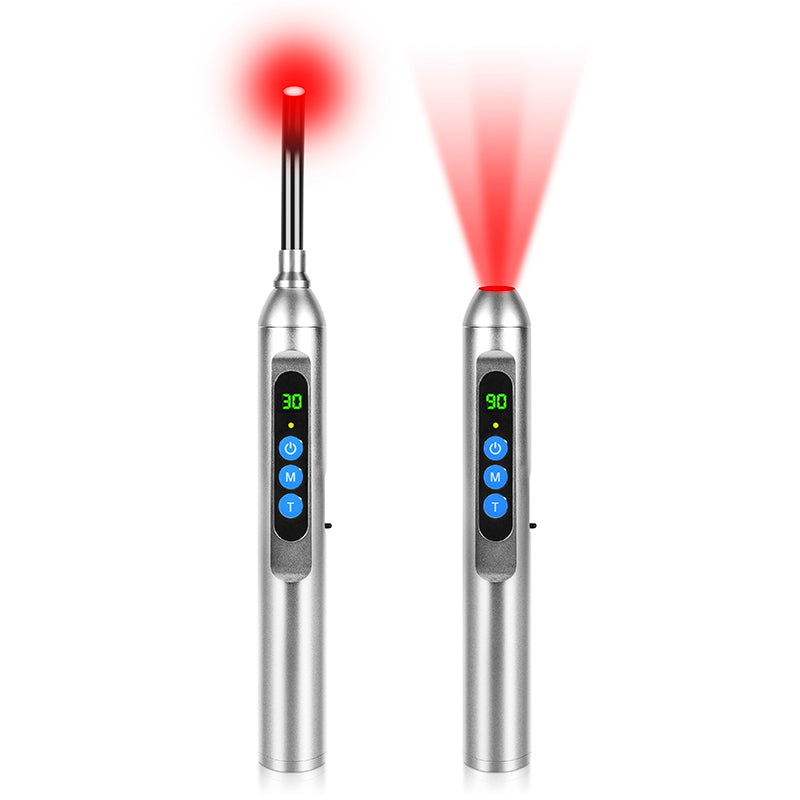
Treating the lips requires a targeted approach. The best red light therapy device for cold sores is typically a handheld "wand" or small oral-targeted unit.
Key Specifications to Verify:
- Wavelength: Look for 660nm and/or 850nm.
- Irradiance: A benchmark of at least 50mW/cm² at the treatment distance is recommended to keep session times efficient.
- Third-Party Verification: Always request a third-party irradiance report from the manufacturer. This ensures the device actually delivers the power claimed. Avoid brands that only list "LED wattage" without providing mW/cm² data at specific distances.
You can shop the H001 cold sore healing device or browse all cold sore therapy devices for portable, targeted options.
Safety, Contraindications, and Sensitivity
The skin on the lips is thin and lacks the thick protective layer (stratum corneum) found on the rest of the body. This makes it highly responsive but also more sensitive.
Important Safety Guidelines:
- Eye Protection: Never look directly into the LEDs. Use goggles if the light is within your field of vision.
- Contraindications: Do not use RLT if you have active skin cancer or suspicious lesions on the treatment area.
- Photosensitivity: Certain medications (e.g., Accutane, some antibiotics) increase light sensitivity. Consult your doctor first.
- When to Stop: If you experience increased pain, unusual redness, or blistering that seems unrelated to the virus, discontinue use and consult a professional.
Comparing Red Light Therapy to Traditional Antivirals
Red light therapy is not a cure for the herpes simplex virus; the virus remains latent in the body. Traditional antivirals like valacyclovir work by inhibiting viral replication. RLT acts as a physical support system that helps the skin recover from the damage caused by that replication. Combining these methods—antivirals to slow the virus and RLT to support tissue repair—is a common strategy for many patients. See before and after results of red light therapy healing to see how tissue regeneration is supported.
FAQ
Does red light therapy work for fever blisters? Red light therapy is an evidence-supported tool for managing symptoms. By stimulating mitochondrial activity, it helps reduce the inflammatory response and supports the repair of damaged labial tissue.
How often should I use it? For an active outbreak, 1 to 2 times per day for 2 to 5 minutes is a common protocol. Using it more frequently has not been shown to provide additional benefits and may cause mild irritation.
Can it prevent future outbreaks? While RLT cannot eliminate the virus, some users report a decrease in outbreak frequency. This may be due to improved skin resilience and localized immune support, though more large-scale clinical research is required to confirm long-term preventative efficacy.
How much faster will it heal? Individual results vary. While some small-scale clinical observations and user reports suggest that recovery time can be reduced by several days (for example, a 10-day outbreak resolving in 5 to 7 days), these results depend heavily on how early treatment begins.
Can I use it with cold sore cream? Yes. Use the light therapy on clean, dry skin first, then apply your cream. This prevents the cream from acting as a barrier to light penetration.
References
- National Institutes of Health (NIH): Photobiomodulation Therapy for Herpes Simplex Virus (Clinical study on PBM and viral lesions).
- FDA: Information on Light-Based Home Use Devices.
- World Association for Photobiomodulation Therapy (WALT): Dosage Recommendations for Skin Conditions.
- Journal of Clinical and Aesthetic Dermatology: The Use of LED Therapy in Dermatology.
- Photomedicine and Laser Surgery: Wavelength-dependent effects of PBM on wound healing.
Final Note: If your cold sore does not show signs of healing within 10 days, or if you have a weakened immune system, please consult a medical professional immediately.