
Summary
Medical Disclaimer: The information provided in this guide is for educational purposes only and does not constitute medical advice. Mastitis can progress rapidly into a serious systemic infection. Always consult a healthcare professional or an IBCLC (International Board Certified Lactation Consultant) before beginning new treatments, especially if you experience fever, chills, or worsening symptoms.
Red light therapy (photobiomodulation) offers a non-invasive, drug-free protocol for nursing mothers to manage mastitis symptoms by potentially reducing breast tissue inflammation and supporting the healing of damaged nipples. While clinical research continues to expand, current evidence suggests that specific wavelengths (660nm and 850nm) can support recovery processes. When used according to standardized safety benchmarks, this therapy is not currently known to negatively impact milk supply or infant safety, though users should maintain a cautious, evidence-based approach.
Key Takeaways
- Inflammation Management: Red light therapy (RLT) is utilized to help modulate inflammatory cytokines associated with mastitis-related swelling.
- Supportive Tissue Repair: Photobiomodulation (PBM) may stimulate cellular ATP production, potentially assisting in the repair of nipple fissures and internal tissue irritation.
- Measured Safety Profile: Based on current clinical observations, RLT is considered a low-risk adjunct therapy. There is no evidence to suggest it alters the biochemical composition of breast milk, though more large-scale randomized controlled trials (RCTs) are needed for definitive confirmation.
- Integrated Protocol: RLT should be viewed as a "relief protocol" used alongside established treatments like effective milk removal, rest, and medical consultation.
Understanding Mastitis and the Role of Photobiomodulation
Mastitis is characterized by localized breast inflammation which may or may not involve infection. While traditional management focuses on antibiotics and pain relief, many mothers seek supportive tools to manage the intense discomfort. Photobiomodulation (PBM) interacts with cytochrome c oxidase in the mitochondria to boost adenosine triphosphate (ATP) production and reduce oxidative stress (Source: Hamblin, M. R., 2017, "Mechanisms and applications of the anti-inflammatory effects of photobiomodulation").
For a nursing mother, this cellular energy boost may translate to a faster resolution of the inflammatory "clogged duct" sensation. However, it is critical to distinguish between inflammatory mastitis and bacterial mastitis; the latter requires medical intervention to prevent abscess formation.

How Red Light Therapy Supports Breastfeeding Relief Protocols
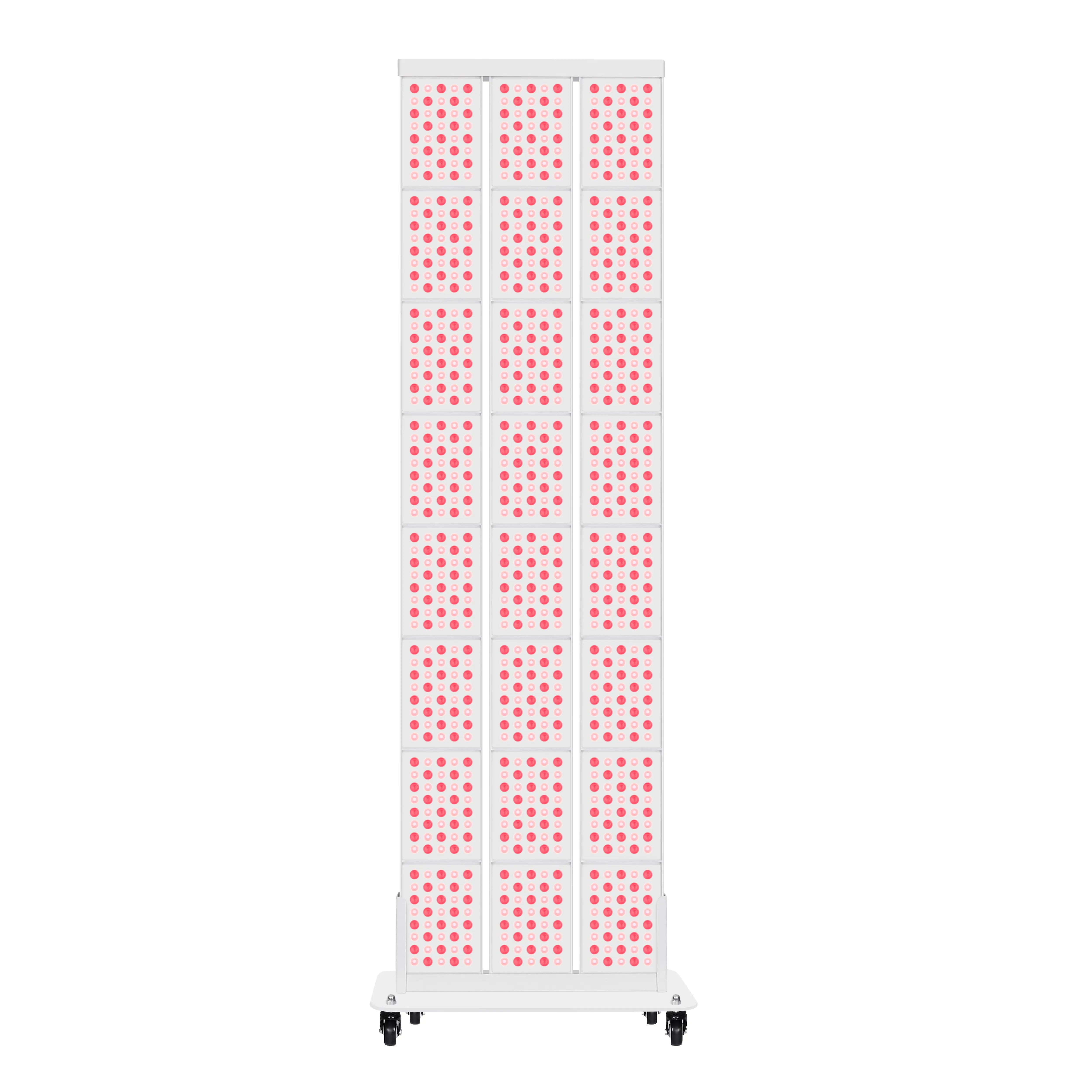
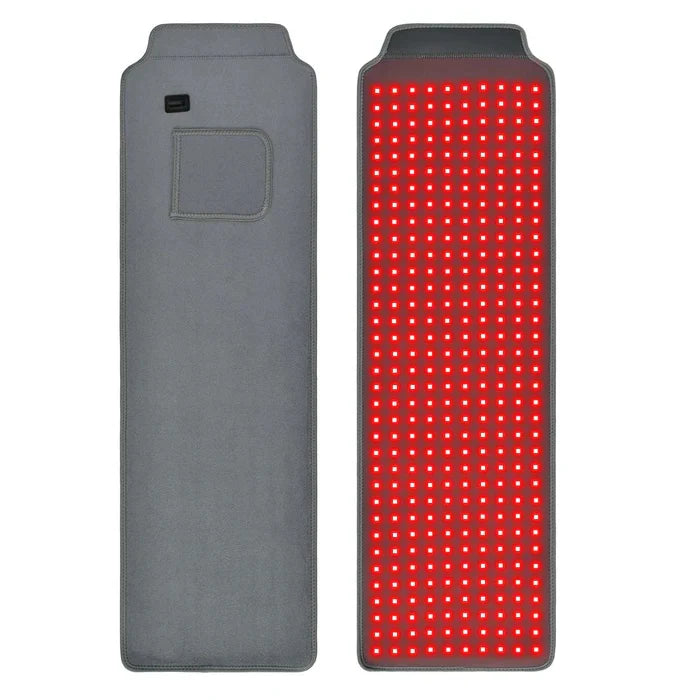
Effective RLT requires a dual-wavelength approach to address different tissue depths:
- Red Light (660nm): Primarily absorbed by the skin, making it suitable for treating surface-level nipple cracks or skin irritation.
- Near-Infrared Light (850nm): Penetrates deeper into the glandular tissue (up to 2-5cm) to address underlying ductal inflammation.
A key principle in PBM is the Arndt-Schulz Law (Biphasic Dose Response). This principle suggests that there is an optimal energy window for healing. Insufficient energy may yield no results, while excessive energy (over-treatment) can potentially inhibit the healing process or cause tissue fatigue.
Calculating the Correct Dosage (J/cm²)
To ensure the therapy is effective and safe, users must understand the relationship between device power (irradiance) and time. Most clinical studies for soft tissue inflammation suggest a dose of 4J/cm² to 10J/cm² per treatment area.
The Formula: $Energy (J/cm^2) = \frac{Irradiance (mW/cm^2) \times Time (seconds)}{1000}$
Example Calculation: If your device has a measured irradiance of 50 mW/cm² at a 6-inch distance:
- To achieve a target dose of 6 J/cm²:
- $6 = \frac{50 \times Time}{1000}$
- $6000 = 50 \times Time$
- Time = 120 seconds (2 minutes)
Note: Always verify your device's irradiance using a third-party solar meter or manufacturer-provided spectrometer reports, as "rated power" often differs from actual output.
Safety Standards and Wavelength Selection
Safety is paramount for any intervention during lactation. In 2026, industry leaders adhere to the IEC 60601-2-57:2026 standard, which governs the safety of non-laser light source equipment. When selecting a device, prioritize those with low-EMF (electromagnetic field) emissions and zero-flicker drivers to minimize unnecessary biological stress.
| Feature | Red Light (660nm) | Near-Infrared (850nm) |
|---|---|---|
| Primary Target | Nipple skin, surface lesions | Deep milk ducts, glandular tissue |
| Main Benefit | Wound healing support | Reduced deep inflammation |
| Penetration | Shallow (1-2mm) | Deep (2-5cm) |
| Usage Frequency | 1-2 times daily | 1 time daily during acute phase |
Step-by-Step Protocol for At-Home Relief
- Preparation: Ensure the breast is clean. Remove any topical lanolin or creams, as these can reflect or scatter the light, reducing effective dosage.
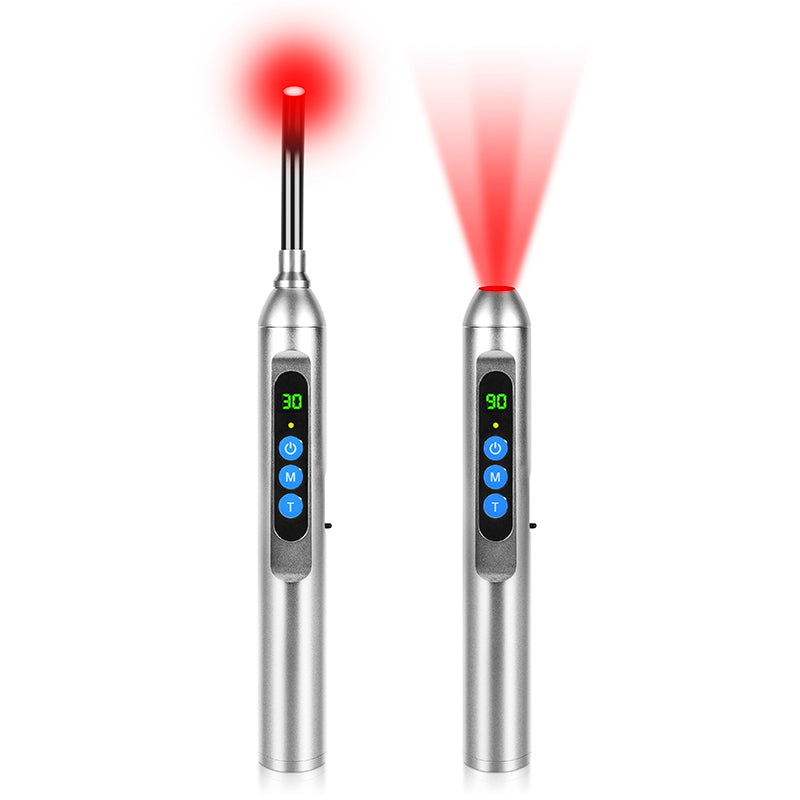
- Positioning: Maintain a distance of 2-6 inches. Use the calculation above to adjust time based on your specific device's power.
- Duration: Typically 5-10 minutes per session. Do not exceed 15 minutes on a single area to avoid the biphasic inhibitory effect.
- Timing: Using RLT after nursing or pumping is often most effective, as the reduced milk volume allows for better light penetration into the deeper tissues.
- Monitoring: If redness spreads or a "red streak" appears on the breast, stop use and contact a doctor immediately, as this may indicate spreading infection (cellulitis).

Common Mistakes and Medical Red Flags
While RLT is generally well-tolerated, avoid these common errors:
- Excessive Heat: Ensure the device does not get hot. Excessive thermal energy can exacerbate acute inflammation.
- Delaying Antibiotics: RLT is a supportive tool, not a replacement for antibiotics in bacterial mastitis.
Seek immediate medical attention if:
- Your fever exceeds 101.3°F (38.5°C).
- Symptoms do not improve within 24 hours of starting a relief protocol.
- You see pus or blood in the milk that does not resolve.
- You feel a hard, non-fluctuant lump that is extremely painful (potential abscess).
FAQ
Is red light therapy safe for my baby? Current evidence indicates that RLT is safe for breastfeeding mothers. The light does not leave residual radiation in the milk. However, you must protect your infant's eyes; never allow the baby to look directly into the LEDs, as their retinas are highly sensitive to high-intensity light.
Can red light therapy increase my milk supply? There is no direct evidence that RLT increases milk production. However, by reducing ductal inflammation and pain, it may improve the "let-down" reflex and milk flow, which can indirectly support supply maintenance during a mastitis flare.
How soon will I feel relief? Some users report a reduction in throbbing pain after 1-2 sessions. However, resolving deep-seated inflammation typically requires 3-5 days of consistent, correctly-dosed application.
Does the light need to touch my skin? No. While contact increases irradiance, holding the device 2-6 inches away is often more comfortable for tender, inflamed tissue and is more hygienic.
References
Government & Standards
- IEC 60601-2-57:2026: Medical electrical equipment - Particular requirements for the basic safety and essential performance of non-laser light source equipment.
- FDA: CFR Title 21, Part 890 - Physical Medicine Devices.
Clinical Research & Academic Sources
- Zhu et al. (2021): "The effects of photobiomodulation therapy on mastitis: A systematic review." Lasers in Medical Science. DOI: 10.1007/s10103-021-03321-x.
- Hamblin, M. R. (2017): "Mechanisms and applications of the anti-inflammatory effects of photobiomodulation." AIMS Biophysics. DOI: 10.3934/biophy.2017.3.337.
- Coca, K. P., et al. (2016): "Efficacy of low-level laser therapy at 660nm for the treatment of nipple trauma in breastfeeding women: A randomized controlled trial." Journal of Nursing Education and Practice.
Industry & Support
- World Association for Photobiomodulation Therapy (WALT): Dosage Guidelines.
- La Leche League International: Mastitis Management Resources.
Related
- photobiomodulation safety standards