
Why Breast Skin Firmness Meets Red Light
When people ask about “breast tightening,” they often imagine lifting the entire breast mound. From an illumination and skin-health standpoint, the reality is more nuanced. Firmness in the breast area depends heavily on the quality of the skin envelope over the breast and upper chest, not just the internal tissue.
As someone who spends a lot of time specifying LED wavelengths and panel layouts for aesthetic clinics and recovery rooms, I have seen red light move from a niche add‑on to a core tool for skin rejuvenation. Dermatology centers highlighted by Cleveland Clinic, WebMD, Harvard Health, MD Anderson Cancer Center, and Stanford all describe red light therapy as a non‑invasive way to support collagen, wound healing, and skin quality. The specific question for our purposes is how far that evidence can reasonably be extended to skin firmness in the breast and décolletage region.
The short answer is that red light therapy can meaningfully support the skin that frames the breasts, particularly in the upper chest and décolletage. It cannot restore stretched ligaments or fully undo multiple pregnancies or major weight changes. Think of it as tuning the “fabric and finish” of the breast area with precise, energy‑efficient LEDs, not rebuilding the underlying structure.

Red Light Therapy, In Plain Terms
Red light therapy, often called low‑level light therapy or photobiomodulation, uses low‑intensity red and near‑infrared LEDs to deliver specific wavelengths of light to tissue. A comprehensive review in PubMed Central describes red light in roughly the 620–700 nanometer range and near‑infrared up to about 1,440 nanometers as the typical therapeutic band. Cleveland Clinic and WebMD explain that this light does not contain UV, does not tan or burn the skin when used properly, and works instead by gently stimulating cellular activity.
At a microscopic level, the light is absorbed by cellular “photoreceptors,” especially in the mitochondria, which are the energy engines of your cells. The PubMed Central review notes that this interaction can increase ATP (cellular energy), modulate reactive oxygen species, and trigger signaling pathways that affect inflammation and tissue repair. Dermatology sources such as Stanford and Harvard Health summarize the downstream effects this way: improved blood flow, reduced inflammation, and stimulation of fibroblasts, the cells that produce collagen and elastin.
For skin, that combination is powerful. More collagen and elastin, plus better microcirculation, tend to translate into smoother texture, improved elasticity, and a modest plumping effect that softens fine lines and wrinkles.

What The Science Shows About Skin Firmness
Before talking about breasts specifically, it helps to look at areas where red light therapy is better studied.
A randomized controlled trial published in a dermatology journal (summarized in PubMed Central) followed more than one hundred people who completed thirty sessions of non‑thermal red and near‑infrared light on the face. The devices used a red‑dominant band around 611–650 nanometers with controlled total energy per session. Compared with untreated controls, participants showed:
- Statistically significant improvements in skin complexion and subjective skin “feel.”
- Objective reductions in skin roughness around the eyes.
- Increased collagen density measured by high‑frequency ultrasound.
- Blinded physician ratings confirming wrinkle improvement.
Importantly, this was achieved with non‑ablative light: no peeling, no wounding, and no downtime.
Cleveland Clinic, WebMD, and Baylor Scott & White Health all echo similar themes. They note that red light therapy can improve skin texture and firmness, reduce fine wrinkles, help scars and stretch marks, and support wound healing. WebMD and Cleveland Clinic emphasize that the evidence is promising but not definitive, and they repeatedly call for more large, controlled trials. Harvard Health also stresses that current LED studies tend to be small and preliminary.
Taken together, the best data say that red light can:
- Stimulate collagen I and III and elastin.
- Improve superficial firmness and elasticity.
- Support better scar and wound healing.
That is the foundation for any discussion of breast‑area firmness.
How Breast Skin Actually Bears The Load
An article from a specialist clinic focused on non‑surgical breast lifting highlights a crucial anatomical point: breast position and shape depend on the skin envelope and on Cooper’s ligaments, the fibrous bands that help suspend the breast. With age, pregnancies, breastfeeding, and weight changes, glandular tissue is often replaced by softer fat, the ligaments lengthen, and the skin stretches and thins.
The same clinic stresses several realities that align with what surgeons and dermatologists see every day. Breast exercises do not shorten Cooper’s ligaments. Non‑surgical treatments cannot restore lost glandular tissue. Energy‑based treatments, including red light and radiofrequency, primarily act on the skin and shallow support structures, not on the deep ligaments.
That means any realistic “lifting” effect from red light therapy is driven by skin tightening, especially in the upper breast and décolletage area. Tightening the upper chest skin can create a subtle upward support effect, similar to tailoring the top of a garment so it holds shape better.
Red Light Around The Breast: What We Actually Know
Postpartum And Breastfeeding Context
Several postpartum and breastfeeding resources describe red light therapy as a gentle, anti‑inflammatory option during recovery, particularly for C‑section wounds, perineal stitches, back pain, and stretch marks. A postpartum‑focused brand notes that red and near‑infrared light can stimulate fibroblasts and collagen, helping soften and flatten stretch marks and improving skin elasticity over the abdomen, hips, and thighs.
Infraredi’s postpartum guide and The Ribbon Box’s breastfeeding overview both point out potential benefits for postpartum wound healing and general skin changes, but they also highlight a key safety nuance. Research specifically on breastfeeding women is limited. While general phototherapy data suggest that red light is usually considered acceptable during lactation, these sources advise caution and recommend avoiding direct application on the breasts unless a healthcare provider explicitly approves it. One anecdotal report from a celebrity describing symptom relief for mastitis with a red light mask is framed clearly as personal experience, not proof.
A separate science‑backed postpartum article from Koze Health references laboratory research indicating that red light can influence hormones and may increase prolactin release in pituitary cells, potentially supporting lactation. However, this is early, largely in vitro data. Authors presenting this information emphasize that red light therapy should be seen as a complementary tool, not a primary medical treatment, and that breastfeeding and hormonal concerns should always be managed with a healthcare team.
The practical takeaway for breast skin firmness after childbirth is that red light therapy is a promising adjunct for:
- C‑section and perineal scar quality.
- Stretch marks on the torso, hips, and possibly the upper chest.
- General skin rejuvenation during postpartum recovery.
But direct exposure on the breasts, especially around the nipple and areola while breastfeeding, should be approached cautiously and under medical guidance.
Breast Surgery And Recovery
In the plastic surgery world, red light therapy is increasingly woven into structured recovery programs. Azouz Plastic and Cosmetic Surgery describes using low‑level red and near‑infrared light after procedures such as breast surgery, gynecomastia surgery, abdominoplasty, lipedema surgery, facial plastic surgery, and rhinoplasty.
Based on their clinical experience, they report that red light therapy can:
- Decrease post‑operative inflammation and swelling.
- Support faster healing of surgical incisions.
- Improve scar texture by enhancing collagen regeneration.
- Reduce pain and the need for some medications.
- Enhance lymphatic drainage, which is especially relevant after chest and trunk procedures.
These claims are presented qualitatively rather than as quantified trial results, but they align with the broader medical literature on photobiomodulation and wound healing summarized in the PubMed Central review and by institutions such as MD Anderson Cancer Center. MD Anderson notes that low‑level red laser therapy can improve healing and reduce inflammation in skin and soft tissue, and is being actively studied for treatment‑related mouth sores, pain, and other complications.
For breast firmness, this matters because better scar quality and healthier surrounding skin after breast lift, reduction, augmentation, or reconstruction can subtly improve the overall contour and support of the area. Red light therapy will not change the surgical lift itself, yet it can help the skin envelope heal stronger and smoother.
Neck, Chest, And Décolletage Tightening
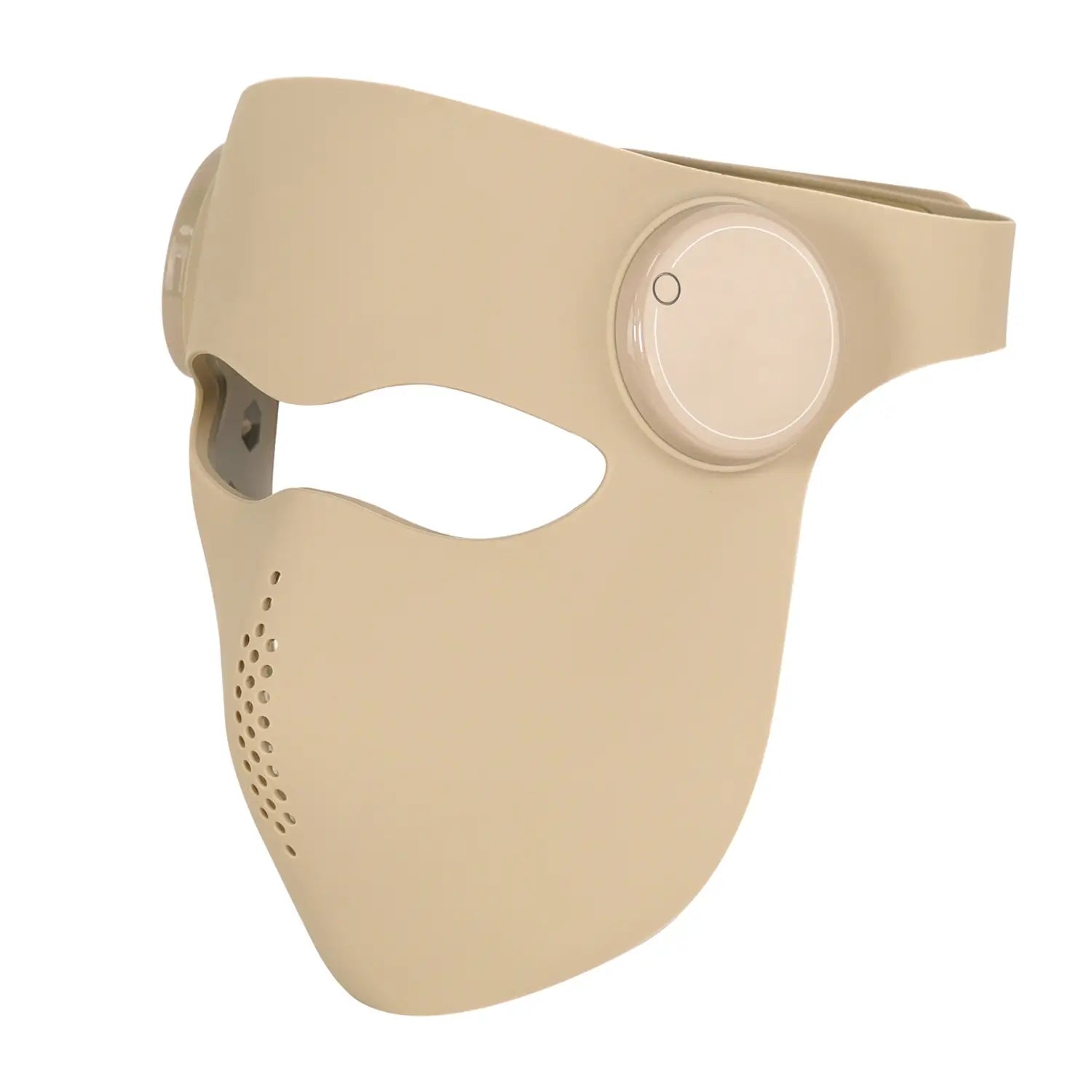
The neck and upper chest (décolletage) are closer cousins to facial skin than to deep breast tissue, and they are an important focus for non‑surgical tightening. An at‑home LED brand that targets neck and chest tightening describes red and near‑infrared light in the typical ~620–700 nanometer and nearby ranges as tools to stimulate collagen, improve circulation, and reduce inflammation in these zones. Users commonly report smoother texture and improved firmness along the neck and chest when they use a multi‑wavelength mask or panel consistently for about twenty minutes per session.
That same brand recommends protocols that look much like those suggested by dermatology resources, including cleansing the skin, positioning the light a modest distance away, and using it frequently over many weeks. They note that outcomes vary by age, baseline skin condition, and lifestyle, and they do not present hard numbers, which is consistent with the broader state of the evidence.
Returning to the specialist breast‑lift clinic, there is a key strategic insight. They argue that most non‑surgical practitioners make a mistake when they treat the entire breast, especially the lower half. Tightening the lower breast skin alone can actually pull the upper, looser skin downward and visually worsen sagging. Instead, they advocate focusing on the upper breast and décolletage, where shortening the skin envelope can create an upward lifting effect. In their practice, they deliver high‑power radiofrequency to the dermis and often pair it with high‑power red and infrared LED phototherapy to accelerate collagen remodeling and enhance results.
For someone considering red light therapy at home or in a clinic, this maps nicely onto a safe, anatomy‑informed strategy. Treating the upper chest and décolletage with red light to improve skin quality and firmness is reasonable and aligned with both LED evidence and breast mechanics.
How Strong Is The Evidence For Breast‑Area Firmness?
Across all of these sources, there is a clear pattern.
Red light therapy has meaningful human data for:
- Facial rejuvenation and fine‑line reduction.
- Some types of scar and wound healing.
- Stretch marks and texture changes.
- Post‑surgical healing and pain in various regions.
There is strong supportive evidence for photobiomodulation in oncology‑related skin issues, such as radiation dermatitis and postmastectomy lymphedema, with meta‑analyses reaching high levels of evidence for certain indications.
However, none of the sources in this research set report a large, controlled clinical trial that looks specifically at red light therapy for breast skin firmness as a primary outcome. Breast‑adjacent uses—post‑surgical breast scars, chest lymphatic drainage, postpartum stretch marks, and décolletage rejuvenation—are extrapolated from general skin data and from clinical experience rather than dedicated breast firmness trials.
That does not mean red light has no effect; it means expectations should be calibrated. You can reasonably treat it as a scientifically plausible, skin‑focused adjunct for the upper breast and chest, not as a stand‑alone breast lift.

A Quick Evidence Map
A concise way to see the landscape is to compare where the science is strongest with how it maps to the breast area.
Target area or goal |
Evidence type described in sources |
Plausible link to breast-area firmness |
Facial skin rejuvenation, wrinkles |
Randomized trials, ultrasound collagen data, physician ratings |
Supports concept of dermal collagen increase via red light |
General skin firmness, stretch marks |
Clinical reports, reviews, postpartum resources |
Similar dermal biology in torso and upper chest |
Scar and wound healing (including surgery) |
Controlled studies, oncology and surgical recovery reports |
Directly relevant to breast surgery incisions and scars |
Radiation dermatitis, postmastectomy issues |
Meta‑analyses and level IA evidence for certain skin conditions |
Confirms safety and efficacy of PBM on chest skin under medical care |
Breast firmness specifically |
Not directly studied in the provided sources |
Inferred only from adjacent skin data and anatomy |

What Red Light Therapy Can And Cannot Do For Breast Firmness
From a skin‑illumination standpoint, the likely benefits in the breast area look like this.
Red light therapy can help the skin over and above the breasts look and behave more like healthy, well‑supported fabric. By enhancing collagen production, it may improve elasticity and resistance to fine creasing, especially in the upper chest and cleavage area that is often sun‑exposed. In postoperative and postpartum settings, it can support more orderly collagen laying down, potentially leading to smoother scars and stretch marks. Some plastic surgery and postpartum clinicians also leverage its anti‑inflammatory and analgesic effects to make recovery more comfortable.
What it cannot do is change the deeper architecture. It will not restore glandular tissue that has been replaced by fat, and it will not shorten stretched Cooper’s ligaments. As the non‑surgical breast‑lift article stresses, those deeper changes are the reason surgical lifts and augmentations are sometimes the only way to produce dramatic elevation, particularly after large weight loss or many pregnancies.
A realistic way to frame red light therapy is as a fine‑tuning tool. It refines the quality of the covering material, but it does not rebuild the scaffolding underneath. For many people, that is still valuable: subtle improvements in skin tone, density, and elasticity across the upper breast and chest can make the whole area look more supported and youthful, especially when combined with good bras, posture, and lifestyle habits.

Practical Guidance For Using Red Light Around The Breast Area
Translating the research into a real routine means balancing opportunity with safety.
Dermatology sources such as Cleveland Clinic, WebMD, Harvard Health, Baylor Scott & White Health, and MD Anderson Cancer Center all converge on similar usage patterns. They describe treatments where the skin is exposed to red or red‑plus‑near‑infrared LEDs for roughly ten to twenty minutes per session, usually several times per week over many weeks. Baylor Scott & White and Rouge‑style home‑use guides emphasize consistency over intensity: scattered short sessions do not perform as well as regular, moderate‑length sessions.
For breast‑area skin, a sensible, safety‑first approach usually looks like the following, guided by your own physician or dermatologist.
Begin with a conversation with a qualified professional, especially if you have a history of breast cancer, chest radiation, autoimmune disease, implants, or any ongoing breast symptoms. Major medical sources warn that red light therapy devices are often cleared for safety rather than proven for every advertised benefit, and they recommend professional input before using them as treatment for any medical concern.
Clarify your goal. Post‑surgical scar quality, postpartum stretch marks, sun‑damaged décolletage, and general skin aging each call for slightly different parameters and expectations. Your provider may prioritize scar lines after surgery, the upper chest if mild lift is the goal, or the abdomen and hips postpartum.
Select the right setting. Clinical panels in dermatology or plastic‑surgery offices are generally more powerful and better characterized than consumer devices. WebMD, Harvard Health, and AARP encourage people buying at‑home devices to look for brands that cite clinical testing and to verify that devices are cleared by the Food and Drug Administration as low‑risk. For cosmetic breast‑area firmness, high‑quality at‑home masks or panels that cover the neck and chest can be appropriate, especially as a follow‑up to in‑office treatments.
Prepare the skin. Several home‑use guides, including Rouge and EvenSkyn, point out that physical barriers such as clothing, sunscreen, or thick makeup can block or scatter red and near‑infrared light. Clean skin on the upper chest and décolletage is ideal. This is also a good time to perform a patch test on a small area, as dermatologists quoted by AARP recommend, to check for sensitivity.
Pay attention to distance and dose. Home devices vary, but many manufacturers suggest placing panels at a modest, comfortable distance from the skin rather than pressing them directly on the chest. Guides frequently describe distances within about a foot or so, and session lengths of roughly ten to twenty minutes per treatment area. The clinical facial rejuvenation trial used an energy density in the range of 8.5–9.6 joules per square centimeter in the red band, delivered repeatedly over thirty sessions, which is a useful reference point even though consumer devices rarely publish exact fluence.
Be thoughtful about where you aim. Given the lack of breastfeeding‑specific safety data and the cautious advice from postpartum and breastfeeding resources, a conservative default is to aim the light at the upper chest and décolletage rather than directly over the breast mound and nipple, unless your physician explicitly directs otherwise. This respects both anatomy and the principle—supported by the non‑surgical breast‑lift clinic—that tightening the upper envelope is where non‑surgical treatments have the most lifting leverage anyway.
Protect your eyes and watch for irritation. Harvard Health, WebMD, and MD Anderson all stress the importance of eye protection during LED or laser treatments, especially with high‑intensity panels. Short‑term side effects, when they occur, are usually described as mild redness, warmth, or tightness that fades quickly. If you see persistent redness, blistering, new pigmentation, or any unusual breast changes, stop and contact your provider.
Finally, commit to consistency and patience. Multiple sources emphasize that collagen remodeling is slow. People often notice changes in surface glow and slight softening of fine lines after a few weeks, while firmer changes in texture and scars typically evolve over months of regular sessions. Many benefits recede if treatments stop completely.
Design Details That Matter: A Lighting Specialist’s View
From the perspective of someone who spec‑sheets LEDs all day, not all “red light” devices are created equal.
Medical and research institutions describe red light therapy in fairly specific terms. The PubMed Central review and MD Anderson Cancer Center discuss red in the approximate 630–700 nanometer range and near‑infrared just beyond that. AARP notes that wrinkle‑focused red light devices often operate around 625–670 nanometers. Postpartum and home‑use brands mention combinations such as 630 and 660 nanometers for red, and around 830–850 nanometers for near‑infrared.
What you want, ideally, is a device that clearly states its wavelengths in this neighborhood and can deliver enough power to reach the dermis without overheating the skin. The facial rejuvenation trial shows that non‑thermal, relatively modest power densities can be effective when exposure is repeated and uniform. Clinics that combine radiofrequency with red and infrared LED phototherapy for breast and body skin tightening also use relatively high irradiance, but always within carefully controlled safety margins.
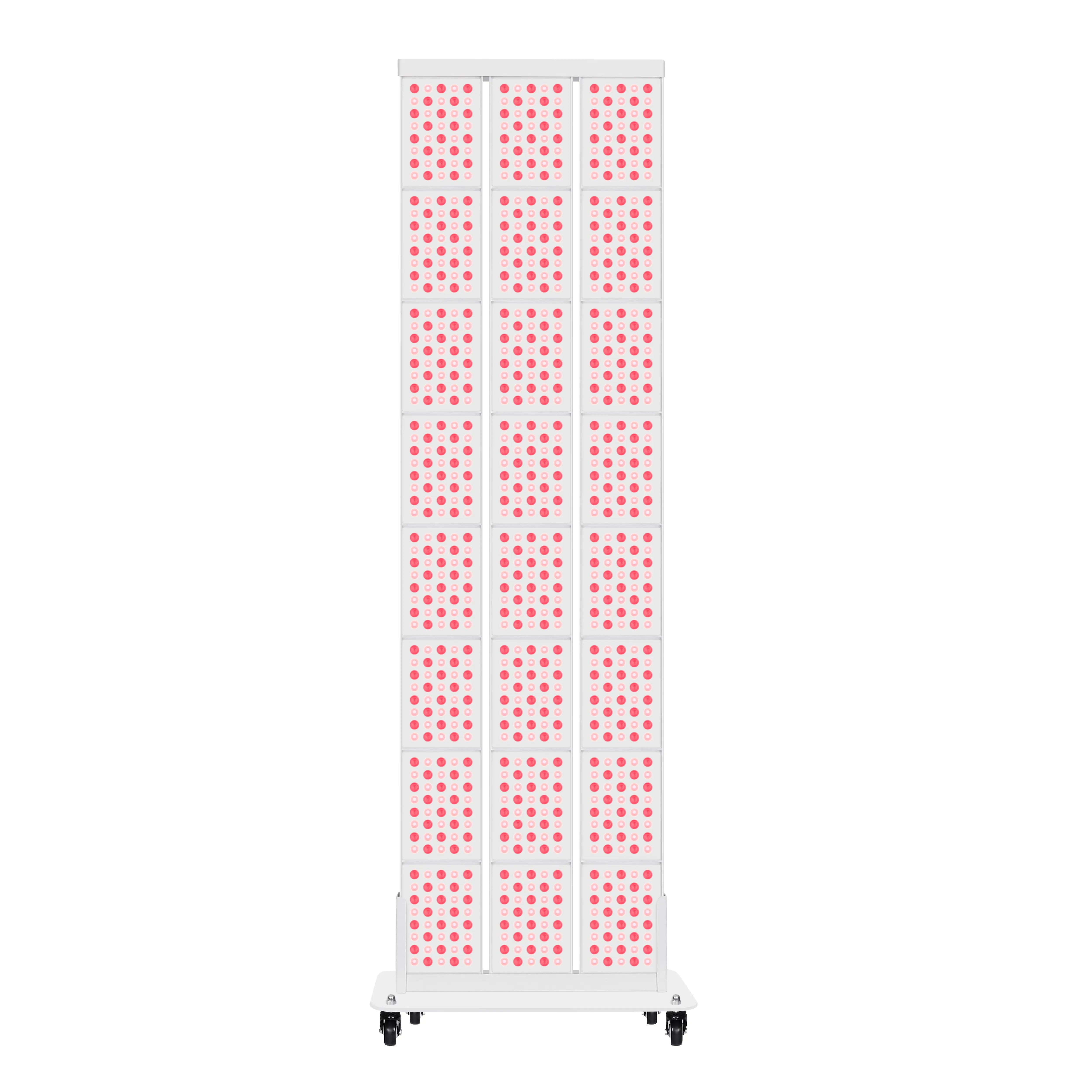
The other crucial design factor is geometry. Skin benefits depend on even illumination. Large panels or masks that wrap the neck and chest reduce the risk of hot spots and shadows. That is one reason why some clinics prefer full‑body cabins or vertical towers that evenly bathe the torso in light. Applied correctly, this is a beautiful example of energy‑efficient illumination: precisely tuned photons, delivered only where they matter, with no wasted heat.
FAQ: Breast Skin Firmness And Red Light Therapy
Is red light therapy safe directly on the breasts?
General dermatology sources from Cleveland Clinic, WebMD, Harvard Health, and MD Anderson present red light therapy as non‑invasive and usually safe when used correctly, with no UV and a good short‑term safety profile. However, breastfeeding‑focused resources note that there are very few studies looking specifically at direct breast exposure in nursing mothers. They advise avoiding direct treatment of the breast and nipple area during lactation unless a healthcare provider approves it.
If you are not breastfeeding but have a history of breast cancer, chest radiation, or implants, it is still wise to involve your oncologist, surgeon, or dermatologist before you shine any energy‑based device onto the breast tissue itself.
Can red light therapy lift sagging breasts?
The non‑surgical breast‑lift clinic summarized in the research is very clear: no external device can rebuild internal breast tissue or shorten stretched Cooper’s ligaments. Red light therapy works mainly on the skin and very superficial tissues.
That means it can help tighten the skin envelope, especially in the upper chest and décolletage, and may subtly enhance the visual lift when combined with good support garments and, where needed, other energy‑based treatments. It will not replicate the results of a surgical lift or augmentation.
How long before I see firmer skin in the breast area?
Most skin‑focused sources describe red light therapy as a slow‑build modality. Baylor Scott & White, Cleveland Clinic, and Rouge‑style home guidelines all mention that noticeable improvements in texture and radiance often take several weeks of consistent sessions, typically two to five times per week, with each session lasting around ten to twenty minutes per area.
For deeper changes such as stretch marks, surgical scars, or mild laxity in the upper chest, it is more realistic to think in terms of months rather than days. Treatment plans in non‑surgical tightening clinics often span six to twelve sessions or more when radiofrequency and LED are combined. The same patience mindset helps with red light therapy alone.
Can I use red light therapy over breast implants or after breast cancer?
The sources in this research set do not provide direct data on red light therapy over implants or in breast cancer survivors. MD Anderson and other major centers do, however, integrate low‑level laser and red light therapy into certain aspects of cancer‑related supportive care, and they emphasize good safety protocols, especially around the eyes and skin.
Because implants and prior cancer treatments introduce unique considerations, your plastic surgeon or oncology team is the right partner here. They can tell you whether light‑based therapies are acceptable in your specific case and, if so, how to position the device and structure sessions.
Closing Thoughts From A Space Illumination Curator
When you strip away the hype, red light therapy is best understood as precision lighting for living tissue. It uses carefully chosen wavelengths, delivered through efficient LEDs, to coax cells toward better performance. For the breast area, that means focusing less on dramatic lifting promises and more on what the science actually supports: healthier, more resilient skin across the upper chest and around surgical or postpartum changes.
Used thoughtfully—anchored in medical guidance, tuned to realistic goals, and integrated into a broader skin and breast‑health plan—red light can be a quiet but powerful part of how you illuminate and support this important part of your body.

References
- https://www.health.harvard.edu/diseases-and-conditions/led-lights-are-they-a-cure-for-your-skin-woes
- https://pmc.ncbi.nlm.nih.gov/articles/PMC11049838/
- https://med.stanford.edu/news/insights/2025/02/red-light-therapy-skin-hair-medical-clinics.html
- https://www.mdanderson.org/cancerwise/what-is-red-light-therapy.h00-159701490.html
- https://my.clevelandclinic.org/health/articles/22114-red-light-therapy
- https://www.aad.org/public/cosmetic/safety/red-light-therapy
- https://www.aarp.org/health/healthy-living/red-light-therapy-for-wrinkles/
- https://lansdaleplasticsurgery.com/red-light-therapy-benefits
- https://www.bswhealth.com/blog/5-benefits-of-red-light-therapy
- https://www.lipotherapeia.com/the-peach-factor-blog/for-non-surgical-breast-lift-it-is-the-dcolletage-area-that-must-be-treated-with-rf