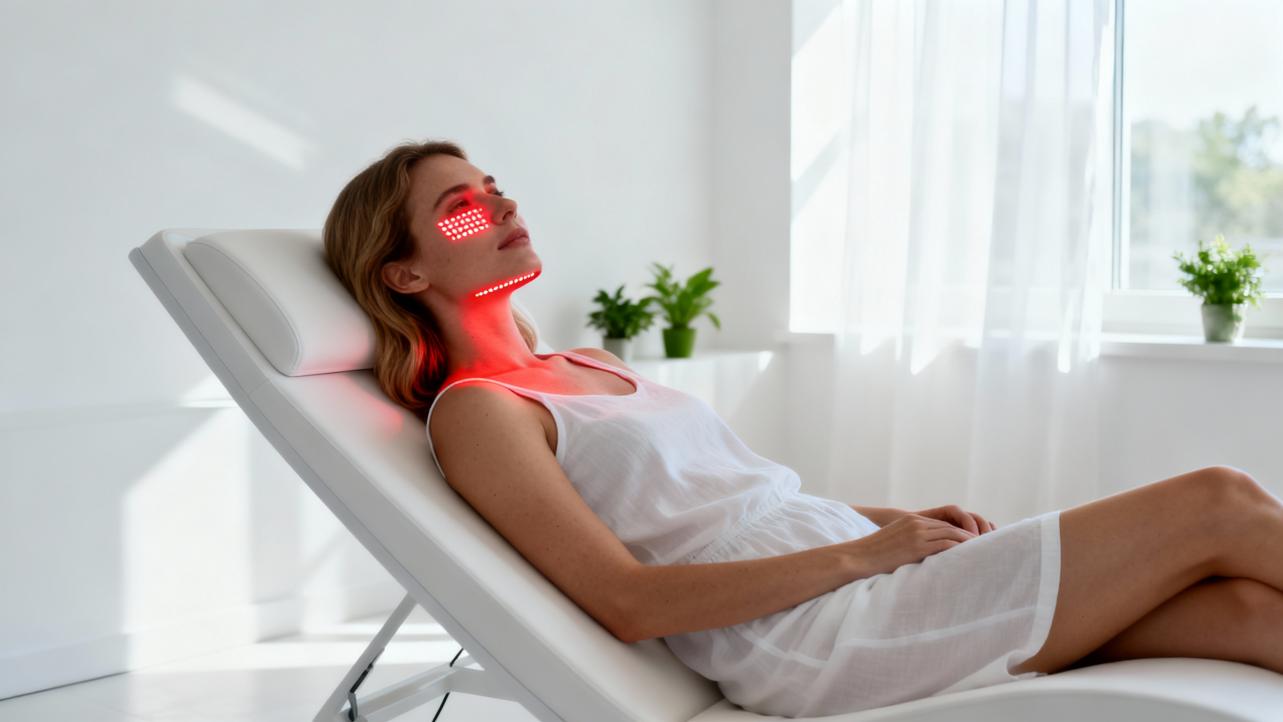
Scars are one of the toughest tests for any skin biohack. You are not just dealing with a surface blemish; you are dealing with remodeled tissue, altered blood flow, and a nervous system that remembers injury. Over the last decade, I have spent a lot of time in front of LED panels, testing masks, and tracking scars with photos and measurement apps. Red light therapy has earned a place in my toolkit for scars, but not as a magic eraser. It is a biologically active, low-risk input that can nudge scar color and texture in the right direction when you use it strategically and realistically.
In this article, I will walk you through what the evidence actually says about red light therapy for scars, how it may change scar color and feel, where the data are weak, and how I would integrate it into a science-backed scar routine.
Scars 101: Why Color and Texture Are So Stubborn
A scar is not just “normal skin with a line.” It is fibrous repair tissue laid down after burns, surgery, trauma, acne, or radiation. Researchers describe scarring and skin fibrosis as an overgrowth of fibroblasts and collagen in the dermis. More than 100 million people every year in developed countries develop scars significant enough to affect function or appearance, and the scar-treatment market in the United States alone is estimated at roughly twelve billion dollars annually according to phase II trial authors at SUNY Downstate.
Color and texture are the two features people notice most. Fresh scars often look red or pink because blood vessels proliferate in healing tissue. Later, scars can look darker than the surrounding skin due to excess melanin, or lighter because melanocytes never fully repopulated the area. Texture problems range from raised hypertrophic scars and thick burn scars to tight, stiff tissue that does not move like the surrounding skin. These are not simply surface issues; the collagen architecture, water content, and vascular pattern in the scar are different from normal skin.
Environmental factors also matter. An article from a scar-focused LED manufacturer notes that scars often look more pronounced in winter because cold, dry air and indoor heating strip moisture, making scar tissue flakier and rougher. This is a good reminder that color and texture are dynamic and can be nudged in both better and worse directions.
Red Light Therapy 101 (Without the Hype)
Red light therapy, often called photobiomodulation or low-level light therapy, uses low-intensity red and near-infrared light to trigger biological processes in cells. Cleveland Clinic defines it as noninvasive use of red or near-infrared wavelengths delivered by LEDs or low-level lasers to improve skin appearance and support certain medical conditions. Unlike ultraviolet light, which can damage DNA, red and near-infrared wavelengths act mainly on mitochondria and do not cause sunburn.
Common treatment bands for skin are visible red light around 630–660 nanometers and near-infrared in the 800–850 nanometer range. Dermatology sources and wellness brands alike highlight red light’s role in stimulating fibroblasts, increasing collagen and elastin, improving microcirculation, and calming inflammation. NASA originally explored similar technologies for plant growth and wound healing in space, and several medical centers now use related protocols for hair growth, some skin conditions, and supportive care in oncology.
Session structure is relatively consistent across reputable sources. Dermatology clinics, dental practices, and wellness centers commonly use exposures around ten to twenty minutes per session, a few times per week, with results building gradually over weeks to months. At-home devices tend to be less powerful than clinic equipment but can still fall into research-used ranges. Cleveland Clinic and Stanford Medicine both emphasize that dose matters deeply: wavelength, intensity, distance from the skin, exposure time, and frequency all interact, and there is no universally agreed “best protocol” yet.

How Red Light Can Influence Scar Biology
If you strip away marketing, red light therapy is about gently shifting the biology of healing and remodeling. Cleveland Clinic and Stanford experts describe a core mechanism: red or near-infrared photons are absorbed by mitochondrial chromophores, which increases cellular energy production and triggers downstream changes in signaling molecules, growth factors, and gene expression.
For scars specifically, several pathways are relevant.
First, fibroblasts. These are the connective tissue cells that build and remodel collagen. Multiple dermatology sources note that red light stimulates fibroblasts. A large randomized trial of polychromatic red and near-infrared photobiomodulation in over one hundred adults found increased intradermal collagen density and smoother skin texture after thirty sessions, with improved wrinkle scores compared to controls. If red light can thicken and reorganize collagen in photoaged skin without injuring it, it is plausible that it can also influence the collagen architecture in scars, which is a big part of texture.
Second, blood flow. Several sources, including hospital and dermatology articles, report that red light increases local circulation. More blood flow means better oxygen and nutrient delivery and more efficient removal of inflammatory byproducts. For scars, that can translate into faster maturation of a fresh scar and potentially less persistent redness. The University at Buffalo research team showed that photobiomodulation improved blood perfusion in radiation-damaged skin and helped wounds close faster in an animal model.
Third, inflammation and fibrosis. Chronic, misregulated inflammation is one reason scars become thick and stiff. Dental and wound-healing sources consistently describe red light therapy as anti-inflammatory, with reductions in swelling, pain, and inflammatory markers. In vitro work compiled by the SUNY Downstate group demonstrates that high-fluence red LED exposure can reduce fibroblast proliferation and collagen production, suggesting an anti-fibrotic effect at certain doses. A recent mouse study in Communications Biology showed that visible light accelerated wound healing and reduced scar formation by fine-tuning STAT3 signaling, a key transcription factor linking inflammation, cell proliferation, angiogenesis, and fibrosis. That work supports the concept that light can adjust signaling networks that decide how much scar you form.
Fourth, pigment regulation. Hyperpigmentation articles from brands that cite peer-reviewed research describe red and near-infrared light reaching melanocytes in the deepest epidermal layers and helping downregulate overactive melanin production. Solawave’s science overview notes that red light modulates melanocyte activity and can help fade dark spots from sun damage or post-acne marks. While these sources focus on dark spots rather than classic raised scars, the biology overlaps with post-inflammatory hyperpigmentation that often accompanies acne scars and some surgical scars.
Putting this together: red light therapy does not “erase” a scar. Instead, it can increase cellular energy, nudge fibroblasts to remodel collagen more normally, improve blood flow, calm prolonged inflammation, and potentially rebalance pigment cells. Those are exactly the levers that control scar color and texture.
Here is a concise way to visualize the mechanisms:
|
Mechanism |
What changes in skin |
Possible impact on scars |
|
Mitochondrial energy boost |
Cells make more ATP and handle stress better |
More efficient repair and remodeling |
|
Fibroblast and collagen effects |
Collagen and elastin synthesis and organization are modulated |
Softer, smoother, less rigid scar tissue |
|
Microcirculation |
Blood flow and oxygen delivery increase |
Faster resolution of redness, better nutrient supply |
|
Anti-inflammatory signaling |
Inflammatory mediators and edema decrease |
Less swelling, discomfort, and excessive fibrosis |
|
Melanocyte modulation |
Pigment-producing cells are downregulated when overactive |
Fading of dark marks and more even tone around scars |
|
STAT3 and signaling pathways |
Wound-healing genes are subtly rebalanced |
Speedier closure with less long-term scarring in models |
What the Evidence Says About Red Light and Scars
The key question is not whether red light does something biologically. That is well established. The question is how much it actually improves scar color and texture in real humans, and under what conditions. The answer is encouraging but nuanced.
Early Post‑Surgical Scars
The cleanest data for classic surgical scars comes from the CURES trial at SUNY Downstate. This was a randomized, mock-controlled, split-face phase II trial in thirty women undergoing elective mini-facelifts. Starting about one week after surgery, one side of each patient’s face was treated with visible red LED light at around 633 nanometers three times per week for three weeks; the other side received a temperature-matched mock treatment so patients could not tell which was which. Fluence varied from about 160 to 480 joules per square centimeter depending on the group, and the team followed patients for up to a year.
Primary measurements focused on scar pliability using a device that quantifies induration, along with patient and observer scar scales and spectroscopy of dermal collagen and water content. Overall, the trial did not find statistically significant differences in pliability between treated and control scars across the full cohort. However, at certain doses and time points, observer ratings and induration shifts favored the red-light-treated scars, suggesting a dose-dependent benefit that the small sample was underpowered to confirm. Adverse effects were rare and mild, with a couple of blistering episodes and one swelling episode that resolved without lasting issues.
This is exactly the kind of study that keeps me cautiously optimistic. It tells us that properly dosed red LED therapy initiated about a week after surgery appears safe and may modestly improve scar softness and appearance, but it is not a dramatic, guaranteed difference and optimal dosing is still unclear.
Clinically, some dental and maxillofacial practices report that initiating red light therapy shortly after surgery leads to softer, flatter scars and quicker comfort. A Phoenix dental therapy clinic, for example, integrates red light into post-surgical care, reporting smoother scars and reduced pain, with typical sessions around ten to twenty minutes conducted weekly for several weeks. An aesthetic technology provider cites a clinical study suggesting that red LED therapy is safe in the early postoperative period and may reduce post-surgical scarring. These are not randomized trials at the scale of drug approvals, but they line up with the biological plausibility and the CURES safety data.
Existing Surgical and Traumatic Scars
What about scars that are already established? An experimental trial in Portugal looked at low-level laser therapy with an infrared 808-nanometer diode on scars that were at least three weeks old in seventeen young adults. Participants were randomized to active or placebo treatments three times per week for five weeks, with energy density around four joules per square centimeter delivered point by point along the scar.
When the researchers compared the active and placebo groups, they did not find statistically significant differences in thickness, length, width, or overall Vancouver Scar Scale scores after five weeks. However, within the active-treatment group, total scar scores improved significantly, driven by better color and elasticity, and more than half of those participants exceeded the minimal detectable change in pigmentation. Scar thickness decreased in both groups, suggesting that time or non-specific effects also played a role. Older scars in the active group tended to thin more than comparable scars in the placebo group, although this observation did not reach statistical significance in such a small sample.
This study underscores an important point that aligns with my own experience. Red and near-infrared light can make established scars look and feel somewhat better, particularly in color and suppleness, but results are often modest and slow, and the placebo effect plus natural remodeling are powerful. Larger, rigorously controlled trials are still needed before anyone can claim strong, predictable changes in old scars.
Burn Scars and High‑Risk Wounds
The evidence gets stronger when you look at burns and acute wounds, where improved healing often translates into better eventual scar outcomes. A 2015 systematic review of forty studies in plastic surgery, summarized by a clinical wellness provider, concluded that low-level laser and LED red light therapy supports acute wound healing and improves burn scars in both animal and human studies. Another review of twenty-two burn studies over seventeen years found that red and near-infrared light consistently accelerated burn healing, though ideal dosing parameters remained unsettled.
Individual studies within those reviews are striking. In children with hypertrophic scars, a three-month red-light protocol applied to part of the scar significantly reduced scar prominence compared with untreated areas. A 2004 burn-scar study reported roughly twice the decrease in visible scarring among patients who received red light therapy compared with those who did not, with no reported adverse effects. Case series in diabetic patients with severe third-degree burns who received combined red and near-infrared therapy alongside skin grafts reported complete healing within eight weeks in participants who otherwise were at high risk for amputation.
These are not perfect randomized trials in every case, but the pattern across many burn and wound studies is consistent: faster closure, stronger healed tissue, less inflammation, and better cosmetic outcomes. It is reasonable to infer that anything which reliably improves early burn healing and collagen organization will also improve the final scar’s color and texture.
Radiation‑Induced Skin Damage
The University at Buffalo team recently led a controlled animal study on photobiomodulation for skin damaged by brachytherapy, a form of internal radiation used in cancer treatment. Radionecrosis from radiation resembles burn injury, with inflammation, impaired blood flow, and tissue breakdown that can lead to scarring.
In this study, red and near-infrared LED light reduced the severity of skin damage, lowered inflammation, improved blood flow, and accelerated healing by up to about fifty percent. Wounds without light therapy took an average of sixty-one days to close; near-infrared treated wounds healed in about forty-nine days, and red-light-treated wounds healed in about forty-two days. Prior work from the same lab suggests that photobiomodulation activates TGF-beta 1, a growth factor that coordinates fibroblasts and macrophages in tissue repair, and importantly, available evidence indicates these beneficial effects do not extend to tumor cells because of their altered signaling.
Although this is an animal model and not a human cosmetic scar trial, it adds weight to the idea that red light can significantly improve healing quality in high-stress skin injuries. Better healing usually means less severe scarring, so this line of research supports using red light as a supportive therapy in complex wound care under medical supervision.
Skin Texture, Tone, and Hyperpigmentation
Even when researchers are not explicitly studying “scars,” their findings on wrinkles, texture, and pigment are extremely relevant. In the large randomized trial of polychromatic red and near-infrared photobiomodulation mentioned earlier, participants received full- or partial-body light treatments twice weekly for thirty sessions. Compared with untreated controls, they reported better skin complexion and skin feel, and objective measures showed reduced skin roughness and increased collagen density. Blinded physicians also rated wrinkles as more improved in treated subjects. Interestingly, more complex broadband devices offered no advantage over red-focused devices once doses in the key red range were matched, suggesting that the red band itself is the main driver.
From a scar perspective, this matters because scars and wrinkles both reflect how collagen is laid down and remodeled. If red light can visibly soften wrinkles and smooth texture without injuring the skin, it is credible that it can also moderately soften scar borders and blend them with surrounding tissue over time.
Hyperpigmentation is another piece. An article from a light-therapy brand that cites dermatology research explains that red and near-infrared light can reach pigment cells and help normalize overactive melanin production. Users often see a glow after the first session, initial changes in pigment in one to two weeks, and more significant improvement in deeper discoloration after about four to twelve weeks of regular use. Another science-backed overview notes that red light can help fade dark spots and post-inflammatory hyperpigmentation while boosting hydration and hyaluronic acid, which makes skin look smoother and more even.
For acne-related scarring and brown or red marks around healed injuries, these pigment effects are more important than collagen changes. Red light is also commonly paired with blue light in acne protocols. Blue light targets acne-causing bacteria, while red light calms inflammation, supports healing, and may reduce both active lesions and the lingering color changes they leave behind.
Reality Check: Mixed Data and Limitations
Now for the part most marketing completely skips. The evidence for red light therapy and scarring is promising but mixed and not definitive.
Stanford Medicine’s review of red light therapy highlights that wound healing and scar improvement data are inconsistent. In blepharoplasty (eyelid surgery) studies, one trial found only a slight, statistically insignificant advantage for red-light-treated scars, while another reported faster early healing that faded to no visible difference by six weeks. The CURES facelift trial did not show strong, across-the-board benefits; improvements were dose- and time-dependent and modest. The Portuguese scar trial, as noted, failed to show clear superiority of active treatment over placebo at the group level.
Harvard Health points out that many LED skin studies are small, short, and lack rigorous controls, and that long-term safety of frequent at-home LED use is not fully understood. Cleveland Clinic echoes that most claimed uses are still in the “promising but not strongly proven” category. Both emphasize that FDA clearance of a device primarily speaks to basic safety, not to high-level evidence of effectiveness.
As someone who lives in this space, my take is straightforward. Red light therapy clearly does real biological work and can improve certain skin parameters. For scars, it looks like a useful adjunct that can modestly improve color and texture, especially when used early and consistently, but it is not yet a stand-alone, clinically proven treatment that replaces established scar procedures.

How I Actually Use Red Light for Scars
In practice, I treat red light as a gentle, repeatable input that stacks well with conventional scar care. When a client or friend comes to me with a new surgical scar or a stubborn old mark, I usually walk them through several steps rather than handing them a panel and hoping for the best.
The first step is always medical clearance. If a scar is from surgery, radiation, severe burns, or there is any chance that a “scar” could actually be a skin cancer or an unhealed wound, I want a dermatologist or surgeon guiding the overall plan. Cleveland Clinic and the American Academy of Dermatology both stress that red light should complement, not replace, standard care and that a correct diagnosis matters. Many clinical trials in this space exclude people with diabetes, lupus, active fibrotic skin diseases, or those on photosensitizing medications, which tells you that professional screening is important.
The second step is choosing the right target. Red light seems most helpful for fresh, still-remodeling scars: pink surgical lines after stitches are removed, new hypertrophic scars that are a few months old, or lingering red and brown marks from acne. Once a scar is fully pale and several years old, the biology is quieter and expectations have to be more modest. That does not mean there is no benefit, but most of the “big wins” I have seen are in scars still within their natural remodeling window of roughly six to twenty-four months described in scar research.
The third step is matching the device to the job. For a small facial scar, a high-density LED face mask or small panel in the 630–670 nanometer red range, sometimes paired with near-infrared around 830 nanometers, is usually enough. Many at-home masks and panels with those specifications are also used in clinical studies cited by dermatologists and wellness clinics. For larger body scars or burn areas, flexible panels and medical-grade systems can bathe a bigger region in uniform light, which is how some of the burn and radiation studies were structured. I look for devices that clearly specify wavelength and irradiance, and ideally have FDA clearance for skin-related indications, while remembering that clearance mainly indicates safety.
The fourth step is building a realistic protocol. Most of the reputable sources converge on short, frequent sessions rather than rare marathon exposures. Dermatology and wellness articles recommend about ten to twenty minutes per session, two to three times per week, with some providers suggesting three to five times per week for more intense protocols early in healing. A scar-focused device brand, for example, suggests at least ten minutes per session three to five times weekly for facial hyperpigmentation. Dental therapy practices using red light for post-surgery scars often schedule weekly sessions in the clinic for several weeks, with each session lasting ten to twenty minutes.
In my own experimentation, I typically start at the low end of that dose range, then adjust based on skin response. I insist on clean, dry skin with no sunscreen or heavy occlusive products over the scar because those can block or scatter light. For hyperpigmented scars, pairing red light with a well-tolerated vitamin C serum or other brightening formula, as suggested by hyperpigmentation experts, can speed results, but I avoid strong retinoids directly on very fresh scars unless a dermatologist has cleared them.
The fifth step is stacking good habits around the light. Every major expert group agrees on rigorous sun protection. Daily broad-spectrum sunscreen at SPF 30 or higher, plus hats and shade for exposed scars, is non-negotiable if you care about color. Hyperpigmentation sources stress that without sun protection, you are essentially undoing your own progress between sessions. I also coach people to leave scars alone; picking at scabs or squeezing acne around a scar is a very efficient way to make pigment and texture worse. Hydration and barrier support matter too, especially in winter. Keeping the scar and surrounding skin moisturized with a simple, fragrance-free cream helps counter the drying effect that makes scars stand out in cold weather.

Pros and Cons of Red Light Therapy for Scars
From a veteran light-therapy geek’s perspective, the pros of red light for scars are compelling. It is noninvasive, generally painless, and does not require downtime. Unlike ablative lasers or deep chemical peels, it does not intentionally injure the skin to trigger remodeling, which is why it is so attractive early after surgery or in fragile patients, such as those with radiation damage or diabetes, where you cannot afford aggressive treatments. Clinical and wellness sources consistently report reductions in pain, swelling, and inflammation when red light is added to standard wound care, as in sternotomy patients with less pain and fewer wound complications, or burn patients with quicker closure and better cosmetic outcomes. When used properly, red light therapy has not been linked to skin cancer, and University at Buffalo researchers specifically note that its pro-healing effects seem not to energize tumor cells.
The flip side is real. The evidence base for scars is still patchy and heterogeneous. Stanford Medicine, Cleveland Clinic, and Harvard Health all emphasize that many trials are small, use different devices and doses, and do not always include strong control groups. Some controlled trials show minimal or no advantage over placebo, especially for long-standing scars. At-home devices range widely in quality and output; some are little more than expensive red night-lights. Treatment requires patience and consistency, often several sessions per week for weeks or months, and visible changes in scars are usually gradual rather than dramatic.
Cost is another consideration. Cleveland Clinic points out that red light therapy is typically not covered by insurance, and Harvard notes that professional sessions can be expensive, especially when multiple treatments are needed. Home devices span from under one hundred dollars to several hundred or more, and while the primary medical risk is low, the financial risk is significant if you expect unrealistic results.

Safety and Who Should Be Cautious
Short-term safety data for red light therapy are reassuring when devices are used as directed. Side effects tend to be mild and transient, such as slight redness, warmth, or temporary irritation. In the surgical scar CURES trial, a few treatment sites developed blistering or swelling that resolved without lasting problems. Full-body photobiomodulation studies reported negligible ultraviolet emissions and no erythema even after long exposures.
That said, there are clear reasons to get medical input before pointing a device at your scars. Clinical trials frequently exclude people on photosensitizing medications, such as some antibiotics, psychiatric drugs, and anti-inflammatory drugs, as well as those with light-sensitive conditions, coagulation disorders, or certain autoimmune diseases. UCLA Health and other sources advise extra caution in people with darker skin tones because any intervention that changes inflammation or pigment signaling can theoretically increase the risk of hyperpigmentation if it is misused.
Eye safety matters too. Harvard Health notes that an at-home acne mask was recalled over concerns about potential eye damage in susceptible users. Even though red light is visible and less energetic than ultraviolet, concentrated exposure at close range warrants protective eyewear, especially with high-powered panels or when treating areas near the eyes.
I also avoid using red light directly over any suspicious mole, nonhealing lesion, or area with a history of skin cancer unless a dermatologist has explicitly approved it. While current evidence suggests red light does not drive tumor growth, caution is appropriate until more long-term data accumulate.
What Results Look Like in Real Life
When I set expectations for someone using red light on scars, I anchor them in both the studies and what I have seen in meticulous photo follow-ups. Most people do not see a meaningful difference from a handful of sessions. In line with hyperpigmentation reports, some notice a general glow or reduction in redness after a week or two of consistent use. For fresh surgical scars, I often see the treated area look calmer and slightly less raised after a month compared with older photos, especially when therapy started soon after stitches were removed and was combined with good sun protection.
For older scars, especially those a year or more out, changes are subtler. Texture may soften a bit, the border may look less sharp, and surrounding redness or post-inflammatory pigment may gradually fade over eight to twelve weeks, similar to the timeframes in several burn and scar studies. Occasionally, someone sees almost no change despite excellent adherence, which is consistent with the mixed trial results.
The throughline is this: red light therapy is a great tool if you treat it as a long-term, adjunctive practice, not a single-procedure fix. It shines most when paired with smart wound care, healthy lifestyle habits, and realistic goals.

FAQ: Red Light Therapy and Scars
Will red light therapy make my scar disappear?
No. Based on clinical trials and expert reviews, red light therapy is best viewed as a way to optimize how a scar matures, not erase it. Studies in surgical scars, burns, and radiation wounds show faster healing, softer tissue, and better color or texture in some cases, but they do not show scars vanishing. In my experience, the best outcomes are scars that blend more smoothly into surrounding skin and attract less attention, not perfectly blank skin.
How long does it take to see changes in scar color or texture?
Most of the clinical scar and wound protocols run for several weeks. Trials in scars and burns often span five to twelve weeks, and hyperpigmentation reports suggest initial visible changes in pigment in one to two weeks, with deeper improvements over four to twelve weeks. For a fresh surgical scar, I generally tell people to commit to at least a month of consistent sessions before judging anything, and to expect continued gradual changes over several months as the scar naturally remodels.
Can I use my anti‑aging red light mask on scars?
Often yes, as long as the mask’s wavelengths and power are appropriate and you can get the LEDs close enough to the scar. Many face masks use red around 633 nanometers and near-infrared around 830 nanometers, which are the same ballpark wavelengths used for both anti-aging and scar-focused protocols in the literature. I advise checking the device instructions for any contraindications and avoiding use directly over open wounds or stitches. For small, localized scars in hard-to-reach spots, a handheld wand or small panel may deliver light more precisely than a full-face mask.
Is red light therapy better than lasers or peels for scar appearance?
They do different jobs. Laser treatments and strong chemical peels intentionally damage layers of skin to force a more dramatic remodeling response. Hyperpigmentation experts note that these can be very effective for dark spots and some scars but carry risks of irritation, swelling, infection, and even worsening scarring, especially in sensitive or darker skin. Red light therapy is gentler and non-destructive, with a lower risk profile but also more modest, slower changes. I think of red light as a foundational support therapy that can be combined with, and sometimes used between, more aggressive procedures under a dermatologist’s guidance.
Closing Thoughts
From one light-therapy geek to another, red light is one of the rare wellness tools that is both biologically meaningful and realistically safe enough for long-term use. For scars, the science says it can tilt the odds toward softer, better-colored, better-feeling tissue, especially when you start early and stay consistent, but it is not a magic delete button. If you pair it with smart medical care, disciplined sun protection, and a little patience, it can be a powerful way to help your skin write a better healing story.
References
- https://lms-dev.api.berkeley.edu/red-light-skin-treatment
- https://www.academia.edu/143615675/Efficacy_of_low_level_laser_therapy_on_scar_tissue
- https://digitalcommons.cedarville.edu/cgi/viewcontent.cgi?article=1013&context=education_theses
- https://www.health.harvard.edu/diseases-and-conditions/led-lights-are-they-a-cure-for-your-skin-woes
- https://pmc.ncbi.nlm.nih.gov/articles/PMC3926176/
- https://www.buffalo.edu/news/releases/2022/01/029.html
- https://med.stanford.edu/news/insights/2025/02/red-light-therapy-skin-hair-medical-clinics.html
- https://my.clevelandclinic.org/health/articles/22114-red-light-therapy
- https://www.gundersenhealth.org/health-wellness/aging-well/exploring-the-benefits-of-red-light-therapy
- https://www.uclahealth.org/news/article/5-health-benefits-red-light-therapy