
If you hang out in the biohacking corner of skincare, you have probably seen the promise: sit under a red LED panel, do nothing, and watch your tired, grayish skin transform into a lit‑from‑within glow. As someone who has spent years testing light devices and combing through the research, I can tell you this: red light therapy can absolutely help dull skin look brighter. The more important question is how fast that happens, and for whom.
This article walks through the science, the timelines seen in real studies, and the practical protocols that actually move the needle on brightness, not just fine lines. Think of it as the glow‑seeker’s roadmap, grounded in dermatology and medical literature rather than marketing.
What “Dull Skin” Really Is (And Why It Matters for Light Therapy)
“Dull” is not a diagnosis. It is a visual summary of several underlying issues happening at once.
Research and clinical experience from dermatology practices and wellness clinics describe complexion as a combination of texture, tone, hydration, circulation, and pigmentation. When these are off, the skin stops reflecting light evenly. According to explanations from Solawave’s complexion overview and LED phototherapy practices such as Metropolis Dermatology and Signals Skin Science, key drivers of dullness include slower cell turnover with age, accumulated sun damage, low‑grade inflammation from acne or sensitivity, and uneven melanin distribution that creates patchy dark areas or lingering post‑acne marks.
In simple terms, dull skin is usually a mix of micro‑roughness, micro‑redness, and micro‑discoloration, often sitting on top of mildly dehydrated tissue. That is important because red light therapy does not bleach pigment like a chemical peel, and it does not buff away dead cells like an exfoliant. Instead, it nudges underlying biology: energy production, collagen remodeling, circulation, inflammation, and melanin regulation. Those are slower levers, but they are also more foundational and potentially longer lasting.

Red Light Therapy 101: What It Actually Does
Red light therapy, also called low‑level light therapy or photobiomodulation, uses specific red and near‑infrared wavelengths (typically around 630–670 nm for red and 800–850 nm for near‑infrared) to stimulate biological processes without the damaging heat or ultraviolet (UV) component of sunlight. Medical centers such as Cleveland Clinic and Elevate Health describe the core mechanism this way: photons are absorbed by mitochondrial components inside cells, boosting production of adenosine triphosphate (ATP), the cell’s energy currency.
When skin cells have more ATP, they tend to repair damage faster, synthesize more collagen and elastin, and normalize inflammatory signaling. Multiple sources, including Elevate Health, Lansdale Plastic Surgery, and Venus Rising, highlight downstream effects that are very relevant for brightness: improved microcirculation, increased dermal collagen density, enhanced hyaluronic acid production, and reduced oxidative stress.
Stanford dermatology experts categorize all of this under photobiomodulation. The term was formally added to medical indexing in 2015, and since then hundreds of cellular and clinical studies have been published, particularly around skin rejuvenation, wound healing, and musculoskeletal pain. At the same time, institutions such as Harvard Health and Cleveland Clinic emphasize that many trials are still small and varied in design, so expectations must stay realistic and evidence‑based.

How Red Light Makes Skin Look Brighter, Not Just Younger
If you are chasing radiance, you care less about crow’s feet measurements and more about how fast your skin stops looking flat. The research gives several plausible pathways from photons to glow.
Better Microcirculation and Oxygen Delivery
Multiple articles, including those from Elevate Health, Vital Red Light, and Signals Skin Science, describe red light’s ability to stimulate nitric oxide release and vasodilation. That means local blood vessels open slightly and blood flow increases. More blood flow means more oxygen and nutrients delivered to the skin, which tends to produce that subtle, freshly‑worked‑out brightness even before structural changes in collagen appear.
Clinics such as Greentoes and Well Room also report that clients perceive a healthier, more radiant look as circulation and cell turnover improve. This kind of “instant” brightness is usually mild but can be noticeable within the first few weeks of regular sessions.
Collagen, Elastin, and Hyaluronic Acid Remodeling
The deeper, longer‑term brightening comes from structural repair. Studies reviewed by Elevate Health and Lansdale Plastic Surgery, as well as the red LED mask trials summarized by Vital Red Light and the Dior × Lucibel publication, show that red light stimulates fibroblasts to increase production of collagen and elastin. Venus Rising and Vital Red Light also note increases in hyaluronic acid, the water‑binding molecule that plumps the skin.
As dermal collagen density rises and the skin becomes firmer, the surface tends to look smoother and more even. That smoother micro‑topography reflects light more uniformly, which translates visually into clarity and luminosity. In the 20‑person mask study discussed by Vital Red Light, twice‑weekly red LED sessions over three months increased firmness and dermal density while reducing facial sagging, structural shifts that often correlate with a more vibrant complexion.
Melanin Regulation and Dark Spot Softening
For dull skin with hyperpigmentation or lingering acne marks, melanin plays a central role. Several sources, including Vital Red Light, Greentoes, Metropolis Dermatology, and Solawave, describe red and near‑infrared light modulating melanocyte activity and reducing the activity of tyrosinase, a key enzyme in melanin production. A 12‑week LED study in melasma patients summarized by Vital Red Light reported a marked drop in pigmentation, and both Greentoes and Signals Skin Science highlight data where over 90% of patients saw lightening of dark spots after a short course of facials.
Mechanistically, red light appears to normalize overactive pigment cells and accelerate cell turnover so pigmented cells shed more quickly. The net effect is not overnight “bleaching” but a gradual evening out of tone.
Calming Redness and Low‑Grade Inflammation
Redness and invisible inflammation can make skin look blotchy and tired. Dermatology sources such as The Well by Northwell Health, Metropolis Dermatology, and BSW Health describe red light’s anti‑inflammatory action, which reduces redness in conditions like mild rosacea, acne, and eczema. By lowering inflammatory markers and oxidative stress, as noted in Elevate Health’s review, red light can make the skin tone appear more even even before pigment itself has changed.
Put together, better circulation, smoother texture, calmer redness, and more uniform melanin distribution are exactly the levers you would design if your goal were to brighten dull skin from the inside out.
What the Science Actually Shows About Brightening Speed
Marketers often gloss over the timeline, but several studies and clinic reports do give us concrete numbers on how quickly visible changes show up.
The table below summarizes key findings from sources in the research notes, focusing on radiance, tone, and hyperpigmentation rather than only wrinkle depth.
Source / Setting |
Protocol |
Time to Visible Complexion Changes |
Brightening‑Related Outcomes |
Dior × Lucibel home‑use mask (peer‑reviewed study) |
630 nm red LED mask, about 12 minutes per session, two sessions per week for 3 months; fluence around 15–15.6 J/cm², spaced about 72 hours apart |
Progressive improvements over 1, 2, and 3 months; effects maintained for about 2–4 weeks after stopping |
Reduced wrinkles and sagging, increased firmness and dermal density, and improved complexion homogeneity based on L* color measurements; all volunteers reported overall skin quality improvement. |
Anti‑aging mask study summarized by Vital Red Light |
Twenty women, twice‑weekly facial sessions with a red LED mask for 3 months |
Quantified changes at roughly 4 weeks (28 days) and 12 weeks (84 days) |
Facial sagging decreased about 5.4% at 28 days and 24.8% at 84 days; firmness improved 13.6% then 23.6%; dermal density rose 26.4% then 47.7%, changes that typically correlate with smoother, more radiant skin. |
Facial LED study summarized by Signals Skin Science |
Ninety patients received eight facial red LED treatments over 4 weeks |
Reported changes after about 1 month |
Over 90% reported softer and smoother skin, reduced redness, and lightening of hyperpigmented spots, supporting visible tone and texture improvement in roughly 4 weeks. |
Spa‑based facials summarized by Greentoes |
Red light facials over 4–6 weeks; session frequency not fully specified but described as “regular” |
First visible changes around weeks 4–6; larger changes over 2–3 months |
In one cited study, over 90% of patients reported improvements in softness, smoothness, and tone after 4 weeks; in another, more than 90% saw lightening of dark spots and more even tone in the same timeframe. |
Melasma LED study described by Vital Red Light |
LED treatment for melasma over 12 weeks |
Noticeable pigmentation change over approximately 3 months |
Marked drop in pigmentation, suggesting that more stubborn discoloration often needs several months of consistent light exposure. |
These data, combined with qualitative reports from clinics like Lansdale Plastic Surgery, Metropolis Dermatology, Well Room, and Restore Hyper Wellness, support a realistic timeline: early improvements in overall skin feel and mild glow can appear within the first month for many people, while more obvious brightening of hyperpigmentation and deeper textural refinement often require 2–3 months of disciplined use.
Hospitals and medical organizations add an important layer of nuance. Cleveland Clinic points out that many red light studies are small, short‑term, or lack strong placebo controls, so although the direction of change is promising, the evidence base is not as robust as for long‑established treatments. Harvard Health echoes this, noting that LED benefits are “unproven overall” in large, rigorous trials and that results are generally modest rather than miraculous. Stanford dermatologists emphasize that real outcomes depend heavily on wavelength, intensity, and treatment schedule, and that consumer devices vary widely in all three.
So while the numbers in the table are encouraging, they should be read as what is possible under well‑designed protocols, not as guaranteed results for every at‑home gadget.
What Actually Speeds Up Brightening (And What Slows It Down)
When people feel disappointed with their red light results, it is usually because one of four variables was working against them: dose, consistency, starting point, or supporting habits. The research notes allow a fairly clear picture of how each factor influences brightening speed.
Dose and Device Power
The Dior × Lucibel mask paper is unusually transparent about dosing. The mask delivers an average irradiance around 21.7 mW/cm² and a session dose near 15.6 J/cm² over 12 minutes, using 40 diodes tuned around 630 nm. The authors compare this to other marketed LED masks that deliver only about 0.1–0.5 W total optical power and ≤1.2 mW/cm², with a dose under 0.7 J/cm² per session. In other words, many consumer masks are an order of magnitude weaker.
This matters for speed. If your device delivers a small fraction of the energy used in positive studies, you can still benefit, but you will likely need many more sessions and more time to accumulate a biologically meaningful dose. This is why professional clinics, from Dp Dermaceuticals to general dermatology practices, favor higher‑power, carefully calibrated panels and masks: they can safely deliver an effective dose in 10–20 minutes.
That does not mean more is always better. The Dior × Lucibel design deliberately spaces sessions at least 72 hours apart, citing the Arndt–Schulz principle that very high or overly frequent dosing can blunt the cellular response. So dose and spacing both matter; more minutes every single day is not automatically faster.
Frequency and Consistency
Across medical and aesthetic sources, recommended protocols cluster tightly. Cleveland Clinic, BSW Health, and several device manufacturers describe typical cosmetic regimens as about 10–20 minutes per session, two to three times per week, often for 4–12 weeks before shifting to weekly or bi‑weekly maintenance.
Solawave and Signals Skin Science suggest that three to five sessions per week can be appropriate for some home devices, which are often weaker than in‑office panels. Vital Red Light emphasizes three or four sessions per week for at least four weeks before judging results, particularly for acne and general complexion.
The pattern is clear: red light therapy is not a one‑and‑done treatment. For brightening dull skin, early changes in glow and hydration may appear within a few weeks, but meaningful evening of tone and softening of long‑standing discoloration almost always require consistent use over two or more months, followed by ongoing maintenance.
Your Starting Point: Pigment, Age, and Damage Load
Not all dullness responds on the same timetable. The melasma study summarized by Vital Red Light needed a full 12 weeks to see marked pigmentation reduction, and that fits what many clinics report: deep, hormonally driven or long‑standing sun‑induced pigment tends to be slower and more stubborn.
Greentoes and Signals Skin Science describe much faster subjective improvements in “spots” and tone over four weeks in general aging and sun‑damage cases, especially when the goal is softening rather than completely erasing dark patches. If your main issue is textural dullness with mild redness and superficial sun damage, you are more likely to see noticeable brightening in that earlier 4–6 week window described by spa‑based and clinic studies. If you have deeper melasma or long‑standing post‑inflammatory hyperpigmentation, three months is a more realistic horizon.
Age and baseline collagen status also matter. The Dior × Lucibel mask trial enrolled volunteers aged 45–70 years with established wrinkles and roughness, and still demonstrated progressive structural and complexion improvements over three months. That is encouraging for midlife and beyond, but it also suggests that older, more damaged skin is unlikely to “snap back” in a few weeks; it simply needs more cycles of controlled stimulation and repair.
Supporting Habits: Are You Working With the Light or Against It?
Several sources are blunt about this: red light therapy is an adjunct, not a substitute for core skincare and lifestyle habits. Articles from Skin Science, Greentoes, and Solawave all recommend pairing red light with daily broad‑spectrum sunscreen, gentle cleansing, non‑irritating actives, adequate sleep, a nutrient‑dense diet, and stress management.
From a brightness standpoint, that means two things. First, you need to stop new damage. Continuing unprotected sun exposure will keep triggering melanin and oxidative stress, which can easily outpace the modest pigment‑normalizing signal from red light. Second, you want a healthy repair environment. Skin that is chronically stripped by harsh exfoliants or dehydrated by alcohol‑heavy products will not respond as quickly as skin supported with hydrating serums, barrier‑strengthening moisturizers, and a sane exfoliation routine.
When I build light‑based protocols, I treat lifestyle and topical care as the “amplifier.” Keep them aligned with your goal and you tend to see faster and more stable gains in radiance.

A Practical Brightening Protocol for Dull Skin
The research does not give a single perfect recipe, but it does frame a range that works. Here is how to translate that range into a pragmatic, science‑aligned plan.
Choosing the Right Type of Device
In‑office panels and masks used by dermatologists and medical spas are usually stronger than consumer devices and more tightly controlled in wavelength and dose. Stanford dermatology sources and Harvard Health both note that professional systems are typically better characterized, while home devices vary widely in power and specifications.
If your priority is speed and you have access and budget, a short course of in‑office treatments may give you faster complexion changes. Signals Skin Science reports significant tone and texture improvements after eight facial treatments over four weeks, and Greentoes cites studies where over 90% of patients noticed smoother skin and lighter dark spots in that same window.
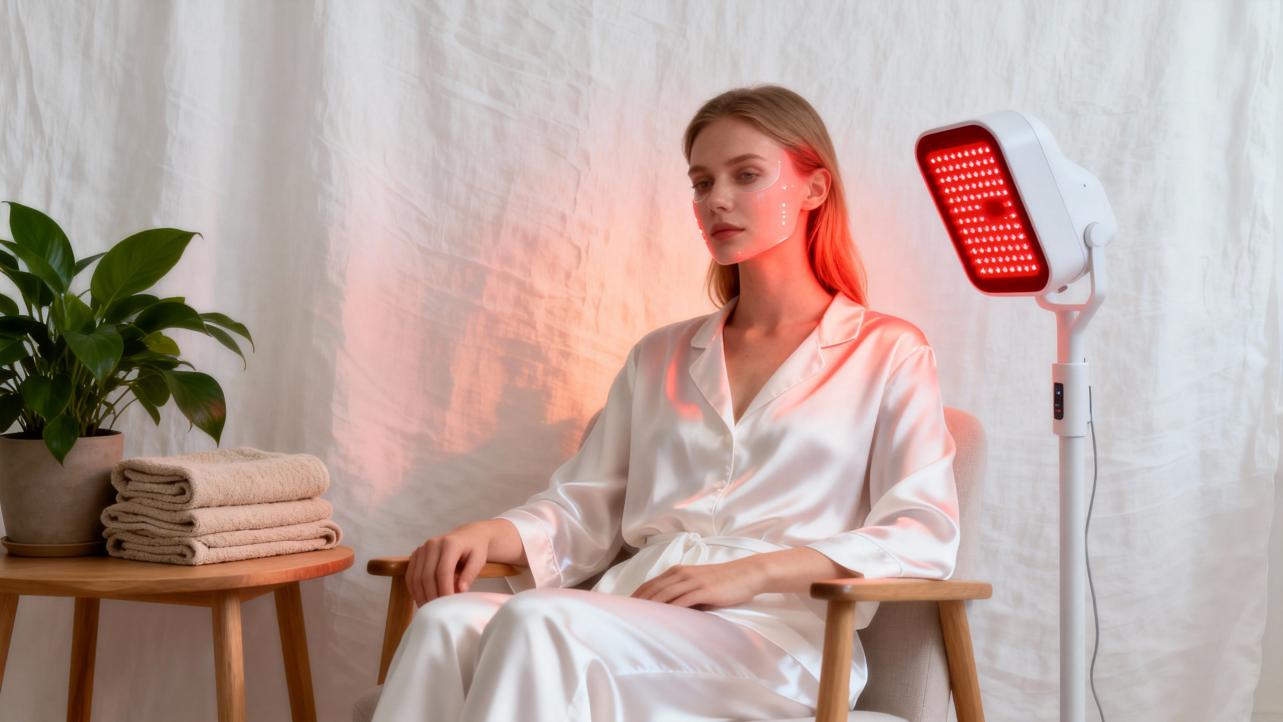
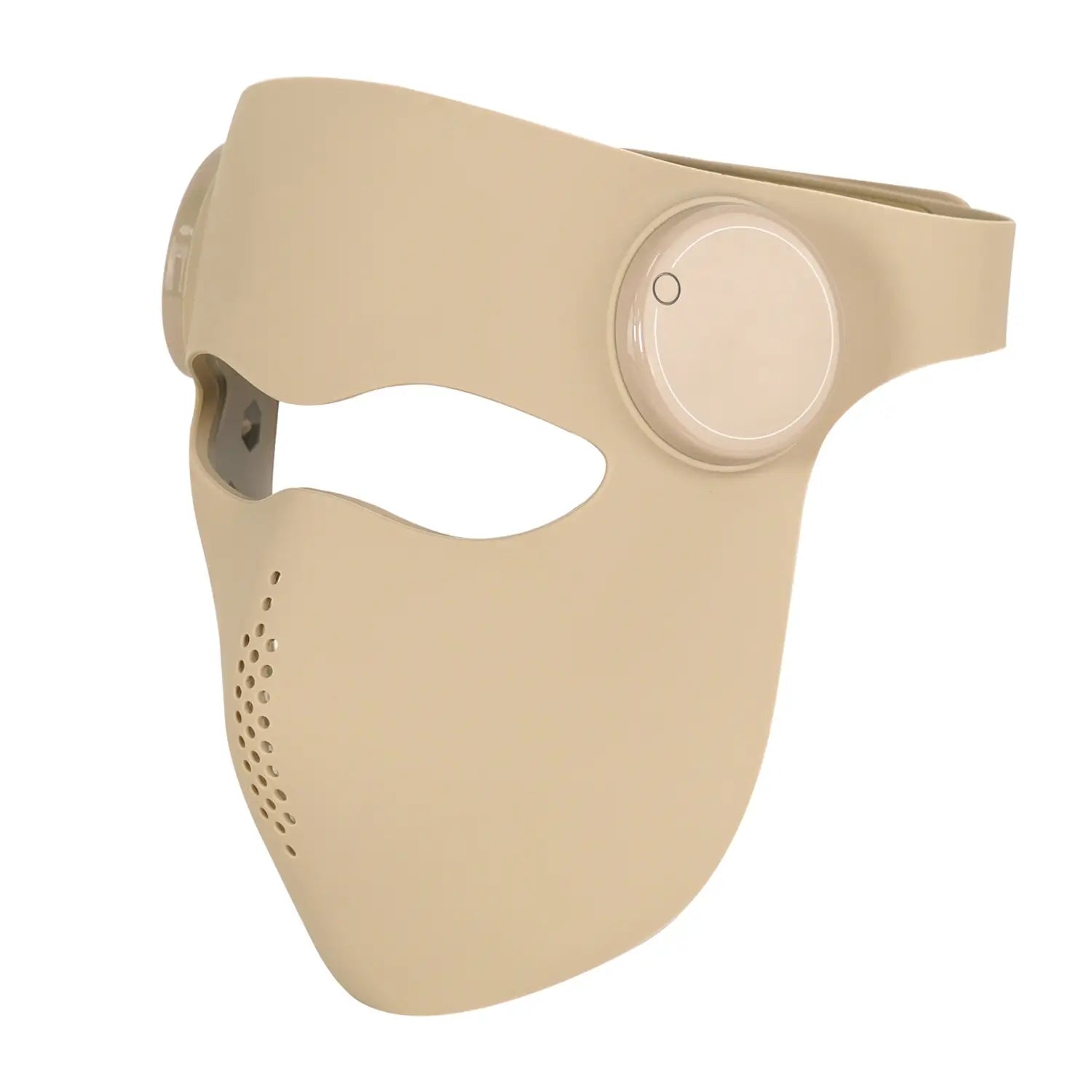
For at‑home use, look for devices that clearly list their wavelengths (around 630–670 nm for red, optionally 800–850 nm for near‑infrared) and have been cleared by the FDA for skin use. BSW Health notes that home devices typically range from about $100 to $1,000 and are generally less powerful than in‑office systems, which often cost around $50 to $80 per session according to Vital Red Light and Harvard Health. Masks offer hands‑free, full‑face coverage, while handheld wands, like those described by Solawave, are best for targeted areas but require more manual time and attention.
Building a Four‑ to Twelve‑Week Starter Plan
Clinical and manufacturer protocols converge on sessions of roughly 10–20 minutes, two to five times per week in the first phase, with visible changes often noted after 4–6 weeks and deeper changes accumulating by 12 weeks.
A practical approach that fits within this evidence is to plan about three sessions per week, leaving at least a day between sessions, and aim for around 10–15 minutes per session if your device’s manufacturer supports that range. That keeps you within the “sweet spot” used by many clinics and avoids overshooting into daily, high‑dose territory that might cause diminishing returns.
Lansdale Plastic Surgery, BSW Health, and multiple spa providers consistently emphasize that long‑term benefits depend on ongoing sessions. After the first 8–12 weeks, you can often shift to once or twice weekly maintenance without losing your gains, especially if you continue to protect your skin from UV and use supportive skincare.
Maximizing Each Session
How you set up each session can change how much light actually reaches your cells.
Most sources advise starting with clean skin. Solawave and several dermatology practices recommend washing off makeup, sunscreen, and occlusive creams before treatment, because pigments and reflective particles can block or scatter light. In particular, mineral filters containing zinc oxide or titanium dioxide are designed to reflect light and will compete with your LEDs.
During treatment, follow your device’s recommended distance and eye‑protection guidelines. Cleveland Clinic, Harvard Health, and BSW Health all stress eye safety and careful adherence to manufacturer instructions, especially for devices used close to the face.
After treatment, you can apply hydrating serums, barrier‑supporting moisturizers, or other gentle actives that play well with light therapy. Venus Rising mentions hyaluronic acid’s synergy with red light–induced plumping, while Solawave suggests pairing treatments with hydrating and collagen‑supporting ingredients such as hyaluronic acid, glycerin, ceramides, vitamin C, or retinoids used appropriately. Then, in the daytime, use a broad‑spectrum sunscreen to prevent new sun‑induced dullness and dark spots.
When to Reassess
Based on the timelines in clinical and spa studies, it is reasonable to look for subtle changes in softness, hydration, and overall “freshness” after about 3–4 weeks of consistent use. Greentoes, Signals Skin Science, and several mask studies suggest that this is when many people start to see and feel a difference.
If you see nothing at all by 6–8 weeks, ask a few hard questions. Are you using a device with adequate power and proven wavelengths? Are you actually hitting the recommended session counts and durations? Are you still introducing new sun damage, irritation, or harsh products that might be canceling the benefits? At that point, it may be worth consulting a dermatologist to rule out underlying issues and, if appropriate, pivot to an in‑office series for a more controlled trial.
Solawave recommends tracking progress with photos or a simple skin journal, which is wise. Human memory is terrible at gradual changes; objective comparisons make it easier to see whether your dullness is genuinely improving.
Pros and Cons of Red Light Therapy for Dull Skin Brightening
Red light therapy occupies a unique niche: more powerful than basic skincare, but gentler and more gradual than lasers or deep peels. For dull skin specifically, that comes with clear upsides and trade‑offs.
Upsides |
Trade‑offs and Risks |
Non‑invasive, painless, and free of UV, described as generally safe for most skin types in reviews from Cleveland Clinic, BSW Health, and multiple dermatology clinics. |
Evidence base is still limited; Harvard Health and Cleveland Clinic both emphasize that many uses remain unproven in large, rigorous trials and outcomes are modest and variable. |
Addresses multiple contributors to dullness at once: circulation, collagen, inflammation, and pigment regulation, as described by Elevate Health, Vital Red Light, Greentoes, and Signals Skin Science. |
Requires consistent use over weeks to months; typical regimens involve 10–20 minutes, several times per week, often indefinitely for maintenance, which many people underestimate. |
Typically well tolerated even by sensitive or redness‑prone skin, with clinics using it to support conditions such as rosacea, mild eczema, and post‑procedure healing. |
Device quality and dosing vary widely, especially for home gadgets; Stanford dermatologists and Harvard Health warn that many consumer tools are underpowered, poorly characterized, or marketed with exaggerated claims. |
Can be combined with other treatments such as microneedling, chemical peels, or topical brighteners to enhance healing and outcomes, according to Metropolis Dermatology and Signals Skin Science. |
Cost can add up over time: professional sessions often range from about $50 to $80 each, and at‑home devices usually cost between about $100 and $1,000, with results not guaranteed. |
May offer more durable structural changes than topical brighteners alone, as suggested by the Dior × Lucibel study where improvements persisted for about a month after stopping. |
Long‑term safety of repeated LED exposure is not fully known; Harvard Health notes that while short‑term safety appears good, cumulative effects on skin and eyes remain under‑studied, and a recalled acne mask illustrates the importance of eye protection and medical oversight for photosensitive users. |
The big picture: red light therapy is a powerful adjunct for brightening dull skin, but it is not magic. It works best as part of a holistic program, used with sober expectations and grounded in doses that match what has actually been studied.
FAQ
How long until my dull skin looks brighter with red light therapy?
Across the studies and clinic reports in the research notes, many people notice early improvements in softness, hydration, and a subtle glow within about 3–4 weeks of consistent treatment. Spa and clinic data summarized by Greentoes and Signals Skin Science show that over 90% of patients reported smoother skin and lighter dark spots after about four weeks of regular facials.
For more stubborn hyperpigmentation and deeper textural dullness, timelines are longer. The melasma LED study referenced by Vital Red Light and the Dior × Lucibel mask trial both point toward roughly 12 weeks of twice‑weekly sessions for more substantial tone and structure changes. If you think in terms of one to three months of disciplined use before judging, you will be much closer to the timelines seen in the evidence.
Can red light therapy replace exfoliants and vitamin C for brightening?
Red light works differently from topical brighteners. It does not directly dissolve pigment or physically remove dead cells. Instead, it energizes cells, supports collagen and hyaluronic acid production, improves microcirculation, and normalizes inflammatory and pigment activity over time. Clinics and educational sites such as Skin Science, Greentoes, and Solawave consistently frame red light as an adjunct, not a replacement, for evidence‑based skincare.
For most people, the best brightening strategy is layered: gentle exfoliation, daily antioxidant and barrier support, strict sun protection, and red light therapy to enhance repair and resilience. If you have sensitive or easily irritated skin, red light can sometimes let you dial back aggressive acids while still moving your complexion in a brighter direction, but it is rarely the only tool in the kit.
Is red light therapy safe and effective for darker skin tones?
The Dior × Lucibel study specifically notes that using a red‑only wavelength around 630 nm, without added near‑infrared heat, was chosen to minimize pigmentation risk and allow safe use even in deeper phototypes. Metropolis Dermatology and BSW Health also describe LED phototherapy as generally compatible with all Fitzpatrick skin types when protocols are customized.
That said, darker skin is more prone to hyperpigmentation if irritated or overheated, so dosing and intensity matter. Starting with shorter sessions, respecting rest days, and working with a knowledgeable clinician if you have a history of pigment issues is a prudent approach. As always, any new or changing dark spots should be evaluated by a dermatologist rather than self‑treated with light devices.
Red light therapy is one of my favorite tools for upgrading skin vitality, not because it gives instant, dramatic before‑and‑after photos, but because it steadily improves the underlying biology that makes skin look alive. If you respect the timelines from the research, pair your sessions with smart skincare and lifestyle habits, and choose a device and protocol grounded in real data, you can expect your dullness to give way to a quieter but very real glow over the coming weeks and months.

References
- https://www.health.harvard.edu/diseases-and-conditions/led-lights-are-they-a-cure-for-your-skin-woes
- https://thewell.northwell.edu/skin-health/red-light-therapy-skincare
- https://pmc.ncbi.nlm.nih.gov/articles/PMC10311288/
- https://med.stanford.edu/news/insights/2025/02/red-light-therapy-skin-hair-medical-clinics.html
- https://my.clevelandclinic.org/health/articles/22114-red-light-therapy
- https://www.aad.org/public/cosmetic/safety/red-light-therapy
- https://santabarbaraskincare.org/2025/03/06/the-power-of-red-light-therapy-for-healthier-skin/
- https://www.foreo.com/red-light-therapy?srsltid=AfmBOoq_b4LmEM8VPDZJfPELFqe4hl1q3qlz-UA8jY7PD_gvUIMRPmsF
- https://lansdaleplasticsurgery.com/red-light-therapy-benefits
- https://www.signalskinscience.com/how-led-light-therapy-enhances-skin-vitality