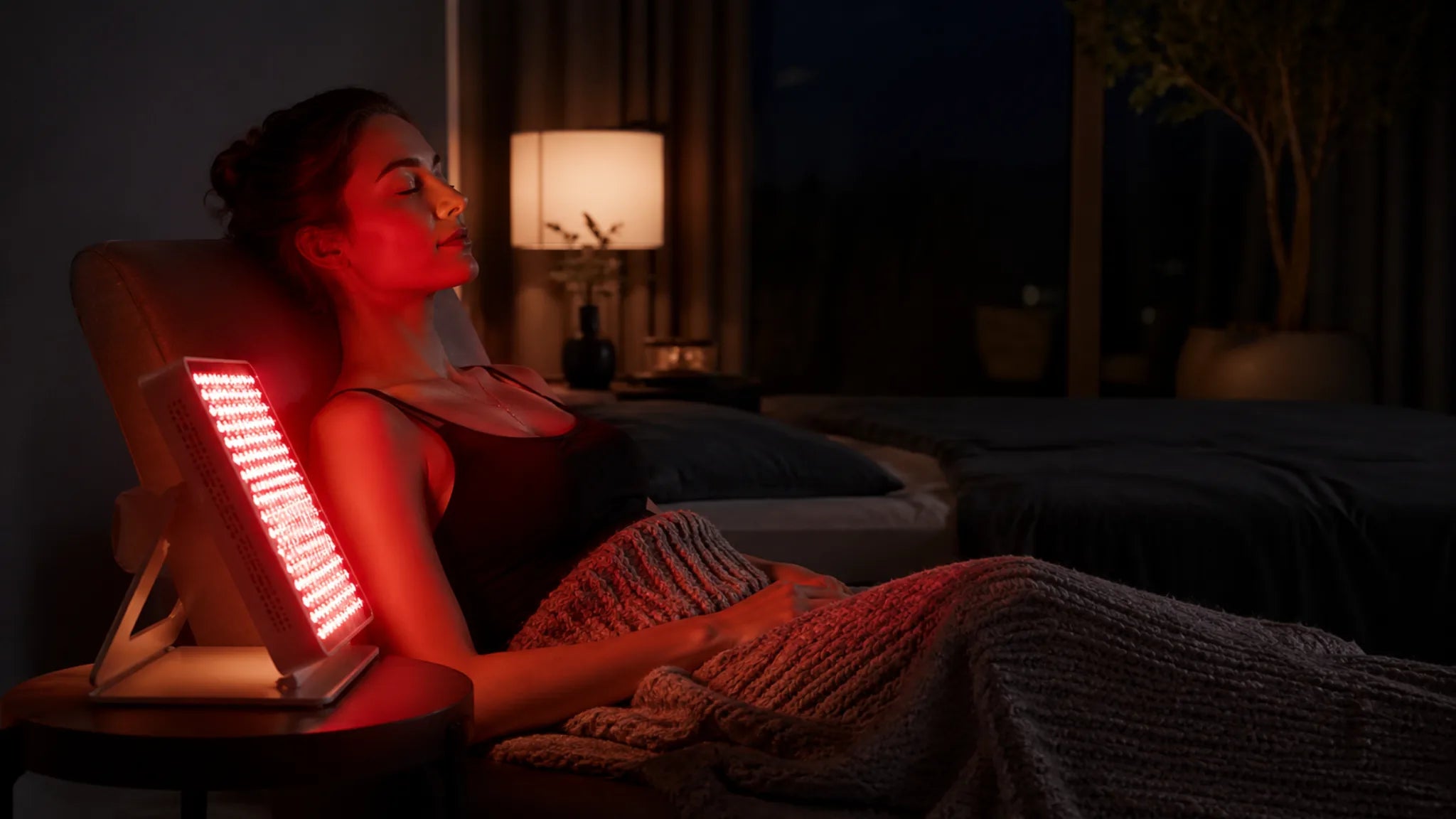
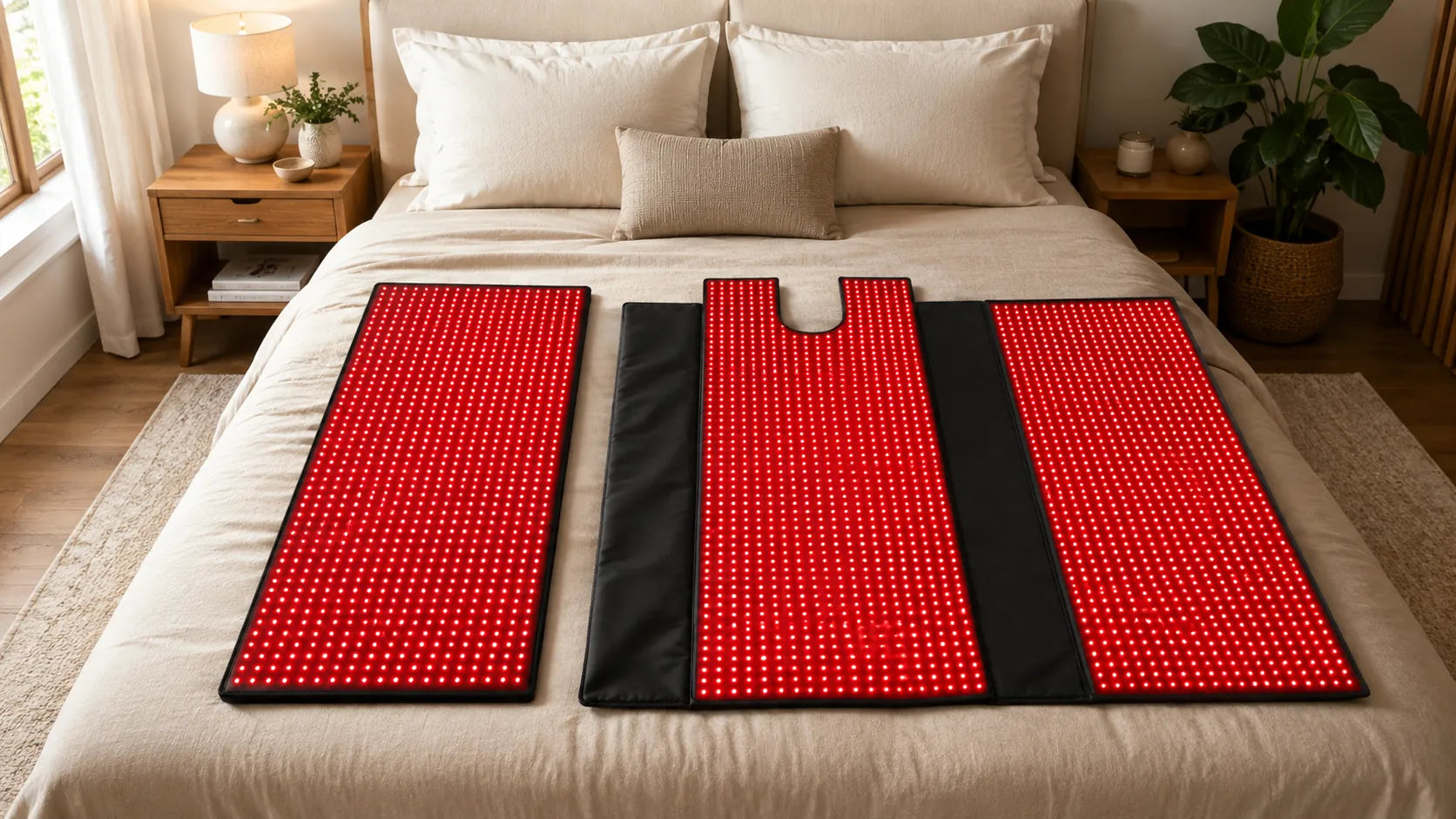
A full-body red light therapy mat fits people who want broad coverage, low setup effort, and a calmer way to build a wellness routine at home. Many buyers feel interested in red light therapy, then hesitate because panels, masks, belts, and handheld devices all serve different needs. A mat is usually the right choice when the goal is simple: lie down, cover larger body areas, and make the session easy enough to repeat.
What Is a Full-Body Red Light Therapy Mat Best For?

A full-body red light therapy mat is best for large-area sessions. It can cover the back, legs, hips, shoulders, and core in a single routine, which makes it useful for people who do not want to reposition a smaller device across several body parts.
Red and near-infrared light are commonly used in photobiomodulation. Red light is usually linked with surface-level skin and tissue support. Near-infrared light uses longer wavelengths that can reach deeper tissue layers. The result depends on the wavelength, power output, session time, body position, and how consistently the device is used.
For most home users, the format matters as much as the technology. A standing panel may work well for someone with a dedicated wellness corner, a fixed schedule, and the patience to position the body correctly. A mat works better for people who want the session to feel easier from the first use.
A full body mat is especially useful for:
- People who want broad back and leg coverage
- Fitness users building a recovery routine
- Desk workers who feel tight after long sitting hours
- Older adults who prefer lying down during sessions
- Evening users who want a quieter self-care habit
- Busy people who need a simple device with fewer steps
A red light therapy mat is less suitable for someone who only wants facial skincare, scalp-focused use, or a small targeted area. In those cases, a mask, cap, belt, wrap, or compact panel may be a better match.
Who Gets the Most Red Light Therapy Mat Benefits?
The people who get the most red light therapy mat benefits are usually those who need broad coverage and an easy routine. Many users stop using wellness devices because the process feels awkward. A mat removes common barriers such as standing still, adjusting angles, holding a device, or treating one area at a time.
Active Adults Who Want Easier Recovery Support

Active adults are a strong fit because post-workout soreness often affects several areas at once, including the legs, hips, lower back, and shoulders. A full body red light therapy mat gives larger muscle groups one comfortable session.
Photobiomodulation has stronger support for targeted muscle recovery and soreness support than for broad performance claims, so a mat should be seen as a supportive recovery tool. It fits best alongside stretching, hydration, sleep, and consistent training habits.
Desk Workers Who Feel Tight After Sitting
Desk workers also match this format well. Long sitting can leave the lower back, hips, hamstrings, neck, and shoulders feeling stiff. A mat will not correct posture or replace movement, but it can fit into an after-work routine with walking breaks, stretching, and better ergonomics.
The main advantage is simplicity. Instead of treating one tight area at a time, users can lie down and cover several common tension zones in one session.
People Who Want a Simple Skin and Wellness Routine
People who want skin and general wellness support may also benefit, especially if they prefer a whole-body format. Red light is associated with collagen-related activity, skin texture support, and visible tone improvement over time.
At-home results are usually gradual and depend on device quality, dose, skin condition, and consistency. If the goal is only facial skincare, a mask or compact panel may be more focused. If the goal is broader body coverage and a calmer routine, a mat makes more sense.
Is a Red Light Therapy Mat Better Than a Standing Panel?
A red light therapy mat is better for people who want a relaxed, full-body session. A standing panel is better for people who want more control over distance, angles, and targeted exposure. The better choice depends on how you plan to use the device at home.
A red light therapy panel works well for upright sessions and focused areas such as the face, chest, knees, or shoulders. It also suits users who have a fixed space where the device can stay mounted or positioned.
A mat fits users who want to lie down and cover the back, legs, hips, and larger muscle groups with less setup. It feels closer to a recovery or wind-down routine, which can make regular use easier.
| If You Want... | Better Fit |
| Targeted exposure for one area | Standing panel |
| Broad back and leg coverage | Mat |
| Face or chest-focused sessions | Standing panel |
| Relaxed evening use | Mat |
| More control over distance and angle | Standing panel |
| A lower-effort home routine | Mat |
The simplest way to decide is to think about your real routine. Choose a panel if you want precision and upright use. Choose a mat if comfort, coverage, and consistency matter most.
Is a Full Body Red Light Therapy Mat Good for Recovery and Relaxation?

Yes. A full body red light therapy mat is a strong fit for recovery and relaxation routines, especially for people who want a calm, repeatable way to care for larger areas of the body after exercise, work, or long hours on their feet.
For recovery, the main value is ease. After workouts, long shifts, or active days, the body often feels tired in several places at once. A mat gives users a simple way to lie down, stay still, and create a dedicated recovery window without holding a device or changing positions repeatedly.
For relaxation, the benefit comes from both the light session and the routine around it. A timed session can help users step away from screens, slow down, and build a calmer evening pattern. This makes the mat especially appealing for people who want their wellness routine to feel restful, quiet, and easy to repeat.
Safety is still part of a good routine. Users should follow the recommended session time, protect the eyes when needed, avoid overuse, and take extra care if they have photosensitivity or use light-sensitive medications. People managing a specific health condition can ask a qualified professional how red light therapy may fit into their broader care plan.
Choose a Red Light Therapy Mat That Fits Your Real Routine
Before choosing a red light therapy mat, think about how it will fit into your actual day: where you will use it, which body areas you care about most, and how much setup you are willing to repeat. Clear wavelength information, full-body coverage, timer controls, eye-safety guidance, and easy storage all matter.
Youlumi’s full body mat is designed for users who want red and near-infrared light in a calmer home format. For broad coverage, recovery support, and low-effort sessions, it helps make red light therapy feel easier to maintain at home.
FAQs about Red Light Therapy Mats
Q1. Can You Use a Red Light Therapy Mat Every Day?
Yes, many users can use a red light therapy mat daily when they follow the device instructions and keep sessions within the recommended time. For most home routines, 3 to 5 sessions per week is already a practical starting point. Daily use should feel comfortable, not irritating, tiring, or excessive.
Q2. How Long Should You Use a Red Light Therapy Mat Per Session?
Most users should keep each session around 10 to 20 minutes, unless the product instructions recommend a different time. Longer sessions do not automatically create better results. A mat with timer controls is helpful because it keeps exposure consistent and reduces the chance of overuse, especially during evening or recovery routines.
Q3. Should You Wear Clothes on a Red Light Therapy Mat?
No, direct skin exposure is usually better. Fabric can absorb, scatter, or block part of the red and near-infrared light, which reduces the amount that reaches the skin. Thin, light fabric may interfere less than thick or dark clothing, but bare skin gives the most consistent exposure for the target area.
Q4. What Wavelengths Should a Red Light Therapy Mat Have?
A quality mat should clearly list its wavelengths. Common options include red light around 630 to 660 nm and near-infrared light around 810 to 850 nm. Red light is commonly used for surface-level skin and tissue support, while near-infrared light is chosen for deeper tissue reach. Clear wavelength labeling is more trustworthy than vague “LED therapy” claims.
Q5. How Soon Can You Expect Results From a Red Light Therapy Mat?
Results are usually gradual. Some users notice comfort and routine benefits earlier, while visible skin or recovery-related changes often take several weeks of consistent use. A fair evaluation window is about 4 to 8 weeks, especially for at-home devices. Session quality, dose, device design, and consistency all affect the timeline.