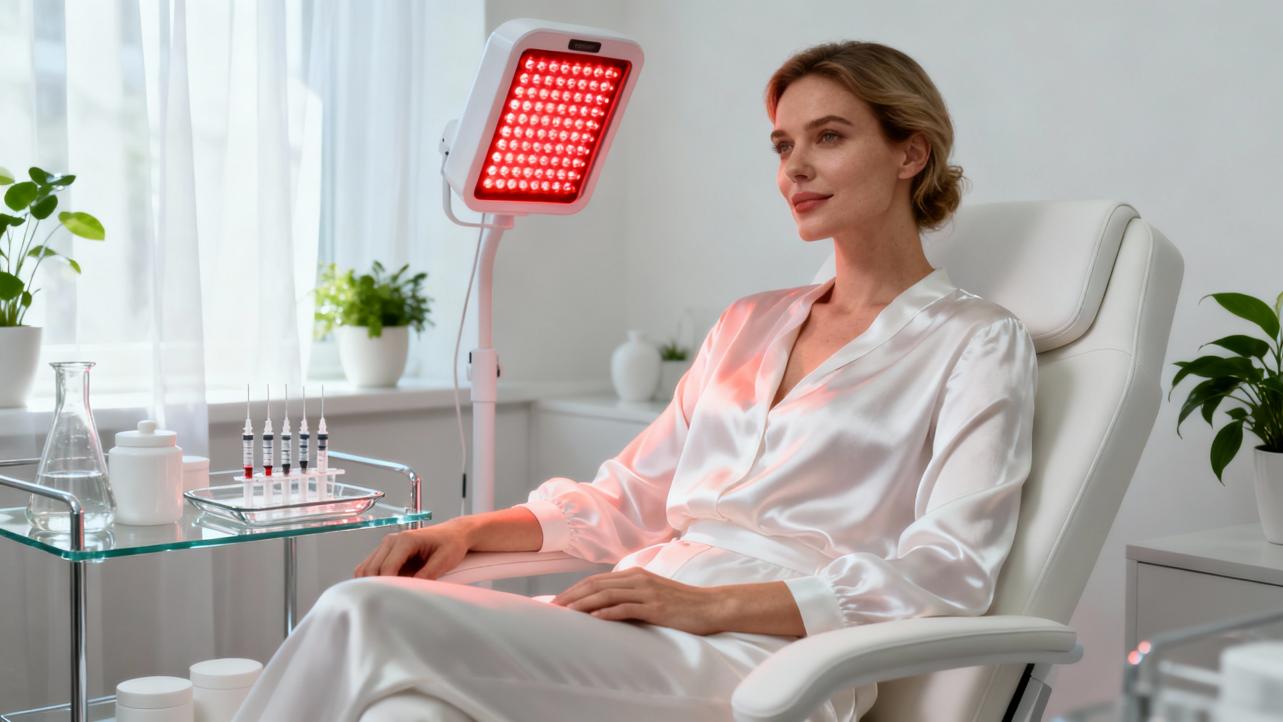
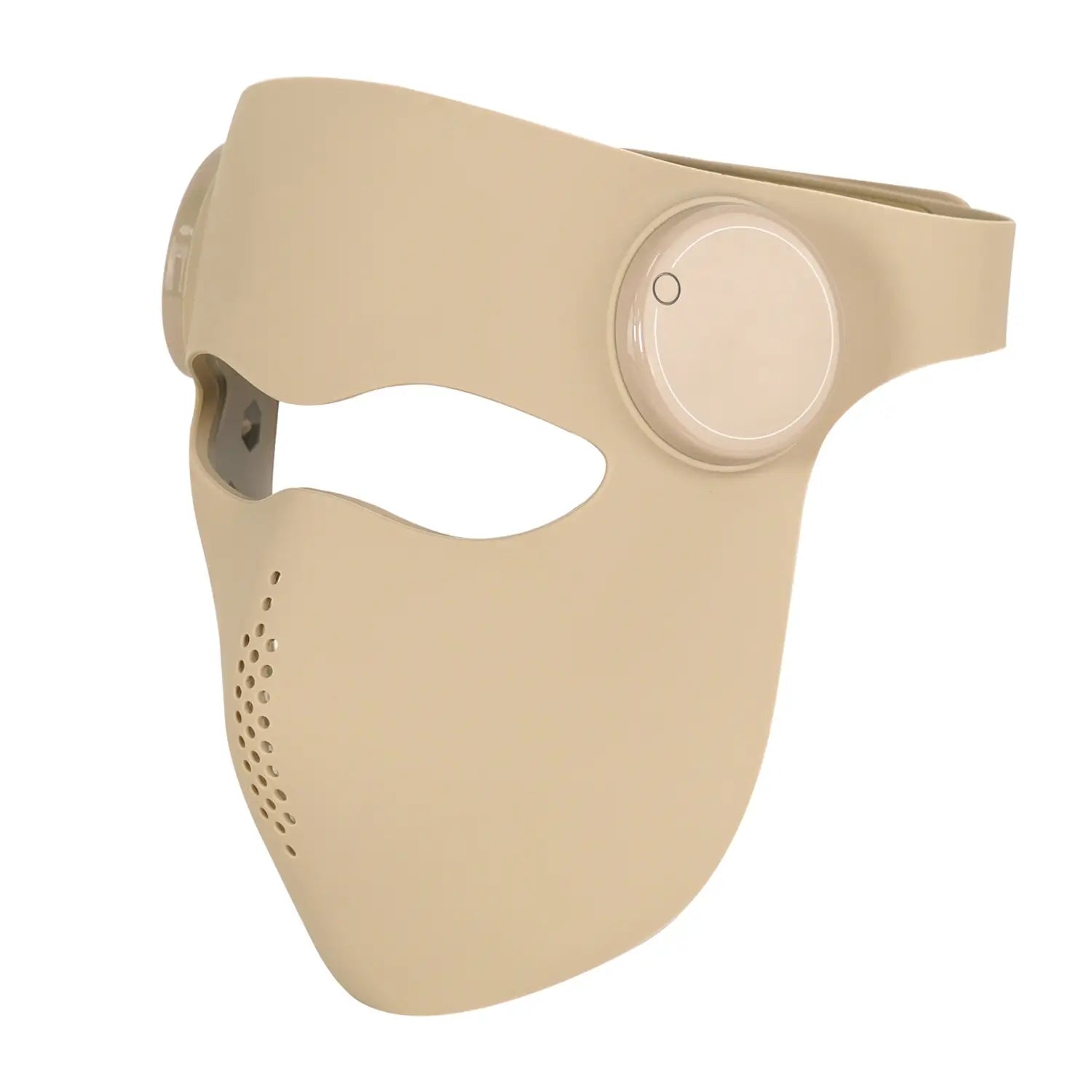

Why This Combo Matters
When you love both advanced skincare and hard data as much as I do, combining chemical peels with red light therapy is one of those protocols that makes intuitive sense and has a decent amount of science behind it. A peel intentionally irritates and sheds the top layers of skin so you can reveal fresher tissue underneath. Red light therapy, on the other hand, is all about calming inflammation, boosting cellular energy, and nudging fibroblasts to build better collagen and elastin.
The question I get constantly is simple: does red light therapy actually help you recover faster and better after a chemical peel, or is it just another wellness gadget gimmick? Drawing on dermatology sources such as Cleveland Clinic, academic reviews of photobiomodulation, and clinical practice patterns where peels and LED are routinely combined, the answer is that red light therapy can meaningfully support recovery after peels when it is timed and dosed correctly. It is not a magic eraser, and it absolutely can be overdone, but used intelligently it tends to mean less redness, quicker comfort, and better long-term texture for many people.
Let’s walk through what is happening in your skin, how red light changes that biology, and how to put it together into a practical, safe post-peel plan.

What Chemical Peels Really Do To Your Skin
A chemical peel is controlled damage. An acid solution is applied to your skin to dissolve bonds between cells and trigger a healing response. Different formulas and strengths determine how deep that controlled injury goes.
Superficial peels use milder acids such as glycolic, lactic, or other alpha hydroxy acids to work on the outermost layer. Sources like Bontanny and Vellgus describe these as peels for fine lines, mild acne, and uneven texture, with redness that usually settles in a few hours to a few days. Medium-depth peels use stronger agents such as trichloroacetic acid (TCA) to reach into the upper to mid dermis, targeting deeper wrinkles, sun damage, and acne scars. Recovery typically involves several days of redness and visible peeling, often around a week as summarized by multiple peel guides and clinics. Deep peels, often using phenol or high-strength TCA, deliberately reach much deeper to treat severe sun damage and precancerous changes, and they come with weeks of redness, swelling, and extended downtime.
Facial aesthetics clinics that focus on peels, such as those highlighted in the research from Facelogic Dallas and Iconic Laser, describe the healing arc in three phases. There is an initial reaction with intense redness and sensitivity, often over one to two days, followed by a visible peeling phase where dead layers shed over about three to seven days, and then deeper regeneration that continues for a week or two as new collagen and a more organized epidermis form. The deeper the peel, the longer each of those stages tends to last.
During this entire period, your skin barrier is compromised. Water loss increases, inflammation is elevated, and the risk of pigmentation changes and infection goes up if you push too hard or skip protection. That is exactly the environment where a well-designed light protocol can either be your best friend or an unnecessary irritant, depending on how you use it.
Peel Types, Downtime, And Sensitivity
Here is a simple way to visualize what different peels do and how long the skin tends to stay angry before it starts to settle. These are generalized patterns drawn from Bontanny, Vellgus, Clinica Lase, and combination-treatment practices described by Iconic Laser and others.
Peel type |
Typical depth and purpose |
Common acids |
Typical visible healing window |
Post-peel sensitivity profile |
Superficial |
Outer epidermis; targets dullness, mild acne, fine lines |
Glycolic, lactic, other AHAs |
Redness hours to a few days |
Stinging, tightness, light peeling; barrier mildly compromised |
Medium |
Epidermis and upper to mid dermis; wrinkles, sun damage, acne scars |
TCA at moderate strength |
About one week of peeling/redness |
More pronounced swelling, crusting, and sensitivity |
Deep |
Deeper dermis; severe sun damage and precancerous lesions |
Phenol or high-strength TCA |
Several weeks of redness/swelling |
Heavy barrier disruption, high risk of pigment shifts |
The more intense the peel, the more careful you must be about anything else you add, including red light.
Red Light Therapy 101: What The Science Actually Shows
Red light therapy is not just a beauty gadget trend; it is an evolution of a medical concept called photobiomodulation. Cleveland Clinic describes it as using low levels of red or near‑infrared light to influence cellular behavior, particularly in the mitochondria. Academic reviews in photobiology note that these wavelengths, typically in the visible red around 600 to 650 nanometers and near‑infrared around 800 to 880 nanometers, are absorbed by chromophores such as mitochondrial cytochrome c oxidase. That absorption increases cellular energy (ATP), shifts redox signaling, and influences inflammation and tissue repair.
Unlike ultraviolet, these wavelengths are non-ionizing and, at appropriate doses, do not damage DNA. That is why institutions such as Cleveland Clinic and Stanford dermatology groups describe red light as generally safe and noninvasive when used correctly, although they emphasize that long-term safety data and precise protocols are still being refined.
Skin-Specific Effects Relevant To Peels
Several lines of evidence speak directly to the kind of healing you want after a chemical peel.
Research reviewed by Franklin Dermatology highlights studies in journals such as Photomedicine and Laser Surgery and Lasers in Medical Science demonstrating that low-level red and near‑infrared light can increase collagen and elastin production by fibroblasts, sometimes by several hundred percent in cell studies, and improve skin texture, elasticity, and pigmentation in human trials. Clinical studies reported in Dermatologic Surgery and the Journal of Clinical and Aesthetic Dermatology found visible reductions in fine lines and improved firmness after several weeks of consistent red light therapy.
A comprehensive review of photobiomodulation published in a dermatology-focused medical journal reports benefits across wound healing and scar modulation. The authors describe how red and near‑infrared light can modulate all phases of wound repair, from early inflammation through proliferation and remodeling, while upregulating types I and III collagen and elastin. They also note improvements in scar quality and potential reductions in hypertrophic scar and keloid risk, although they call for more standardized protocols.
At the same time, Stanford dermatology experts point out that wound-healing data are mixed in some settings, such as eyelid surgery scars, where early differences in healing time did not always translate into visible long-term differences by six weeks. That nuance matters: red light therapy appears capable of speeding certain aspects of healing and reducing early inflammation, but it is not a guaranteed way to transform every scar or procedure outcome.
When you connect those dots to the stress a chemical peel puts on the skin, you can see why clinicians and med spas have leaned into combining peels with LED systems. The biology lines up: increased ATP for stressed cells, more collagen, better microcirculation, and less inflammation, all of which are exactly what you want while the barrier is recovering.
How It Feels And How It Is Used
From a user perspective, red light therapy is straightforward. Devices range from in-office panels and beds to at-home masks and tabletop units. Cleveland Clinic notes that sessions often run around 10 to 20 minutes, repeated several times per week, and that results are cumulative rather than immediate. Aesthetic practices described in the research, including The Wellness Club Tampa and Serotonin Centers, commonly use these wavelengths for anti-aging, acne support, and post-procedure recovery, emphasizing that consistent use over weeks to months is what delivers visible changes in texture and tone.
In a study summarized by Barrett Plastic Surgery, all 67 participants reported measurable improvement in skin quality after several weeks of red light treatment, with reductions in wrinkles and improved elasticity. While that study was not specific to chemical peels, it is one more brick in the evidence wall that these wavelengths can tilt skin biology toward better repair.
Why Combine Red Light Therapy With Chemical Peels?
The logic for pairing the two comes down to synergy. A peel strips, inflames, and provokes regeneration. Red light therapy energizes, soothes, and guides that regeneration.
Multiple aesthetic and dermatology sources in the research notes describe using LED light directly after peels or in the early healing window. Clinica Lase, for example, offers an express lactic acid peel combined with LED light therapy in a single thirty‑minute visit, with minimal downtime. They describe lactic acid to exfoliate and hydrate, followed by red and infrared LED to boost cell regeneration and collagen with a soothing, anti‑inflammatory effect. Iconic Laser and Nouveau Aesthetics similarly present LED light, particularly red, as a gentle complement to peels that can calm redness, reduce swelling, and enhance long-term rejuvenation.
Consumer-focused brands such as Bontanny and Vellgus frame red light therapy as a way to reduce post‑peel inflammation, accelerate healing, and amplify collagen production. They emphasize decreased downtime, less redness, and improved texture when red light is added thoughtfully into post‑peel care. While these pieces are not randomized clinical trials, their recommendations line up with the better-studied uses of red light in wound healing and post-surgical recovery.
Outside the peel world, plastic surgery practices such as those highlighted by Dr. Azouz and Shah Facial Plastics incorporate red light therapy after procedures ranging from rhinoplasty to tummy tuck. They report reductions in postoperative inflammation and pain, faster wound healing, and better scar quality when low‑level red and near‑infrared light are added two to three times per week in the early recovery window. Again, these are not peel-specific, but they support the general concept that photobiomodulation can nudge healing tissues in a favorable direction.
As someone who has watched clients move through everything from light lactic peels to aggressive resurfacing, the pattern I see is consistent with what the literature suggests. When red light is started at the right time and dose, people usually feel more comfortable sooner and often look less inflamed at each follow‑up, without compromising the peel’s resurfacing benefits. When it is started too early, used too aggressively, or combined with other strong actives, irritation can spike instead of dropping.

When To Start Red Light Therapy After A Chemical Peel
This is the question that makes or breaks your results: not “if” but “when.” The truth, backed by the sources in the brief, is that there is no single universal timing. Protocols vary because peels vary. Still, several consistent patterns emerge from the research.
Bontanny advises waiting about three to five days after a superficial peel, seven to ten days after a medium peel, and two to three weeks after a deep peel before starting red light therapy. That guidance reflects a cautious approach and likely assumes peels that are on the stronger side of each category.
Vellgus, Iconic Laser, and some clinical combination protocols describe introducing red light earlier for milder peels. For light or superficial peels, they often suggest starting within about twelve to twenty‑four hours once the skin feels more warm and pink rather than actively stinging. For medium-depth work, they describe a window around two to three days, sometimes expressed as forty‑eight to seventy‑two hours, after which the initial acute redness settles but the skin is still clearly healing. For deep peels, there is agreement that you should wait at least a week, and some sources lean closer to two or three weeks, depending on how long heavy redness and swelling persist.
Clinica Lase’s express lactic peel shows the other end of the spectrum: they apply LED immediately after a very gentle lactic acid peel with no downtime expected. The peel is light enough, and the LED parameters controlled enough, that the two can be performed in one session.
Putting this together, a practical, evidence-aligned way to think about timing is that the stronger the peel, the more your red light plan should look like Bontanny’s conservative calendar. The milder the peel and the more controlled the setting, the more you can lean toward earlier LED, like the protocols used by Iconic Laser and Clinica Lase.
Timing At A Glance
This table summarizes what different sources suggest, while acknowledging that your dermatologist’s instructions always win over any generic guideline.
Peel depth and setting |
Example guidance from sources |
Practical interpretation |
Superficial, mild lactic or glycolic in-clinic |
Clinica Lase combines lactic peel plus LED in one visit with no downtime |
Under professional supervision, very gentle peels can be paired with low-level LED same day |
Superficial at home or stronger clinic peels |
Bontanny suggests waiting about three to five days |
For non-lunchtime peels, consider waiting until stinging subsides and skin is pink, not raw |
Medium-depth |
Vellgus and Iconic Laser describe starting red light around two to three days after, while Bontanny recommends seven to ten days |
A realistic range is several days to about a week, depending on how your skin looks and feels |
Deep |
Bontanny advises two to three weeks; other guidance emphasizes at least one week |
Expect to wait at least one to three weeks and get explicit clearance from your dermatologist |
How To Know Your Skin Is Actually Ready
Calendars help, but your skin’s behavior matters more. Common-sense readiness markers, echoed by Bontanny and combination-treatment clinics, include much less swelling, a shift from hot, throbbing redness to a more diffuse pink tone, no actively weeping or cracked areas, and comfort at rest without burning. If your skin is still tight, glossy, and acutely sore, it is too early to introduce even gentle light at home.
A good rule I use in practice is that your skin should look like it wants soothing, not like it is screaming. At that point, red light can act like a biochemical calming signal rather than another stressor.
How To Use Red Light Therapy Safely After A Peel
Once your dermatologist clears you to start, the how matters as much as the when.
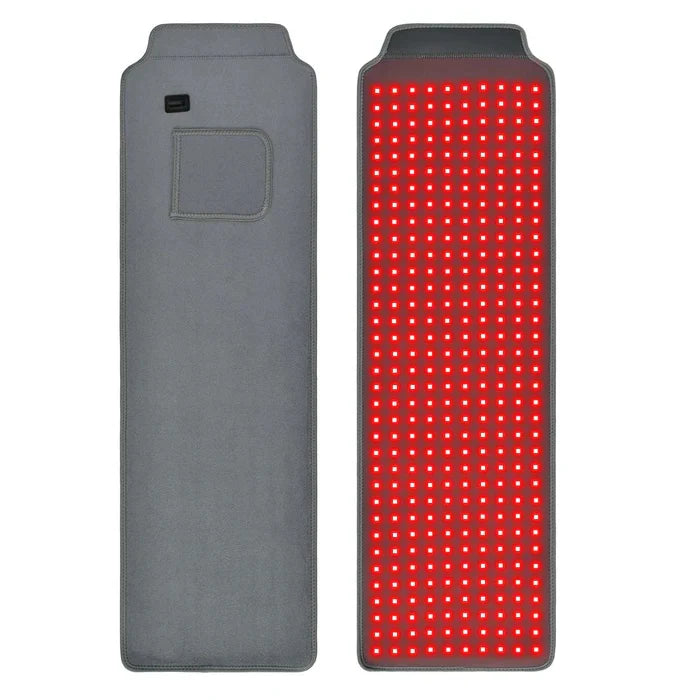
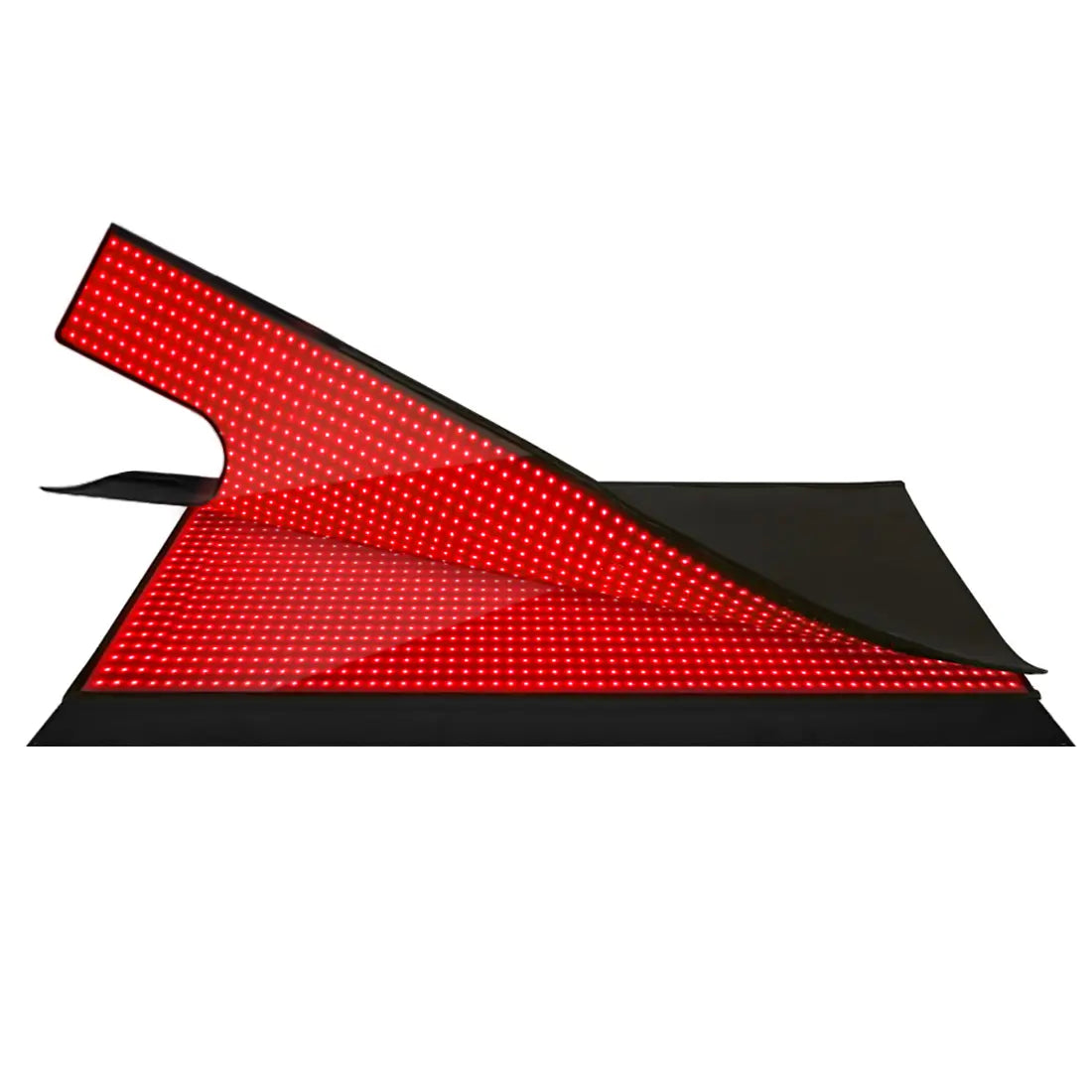
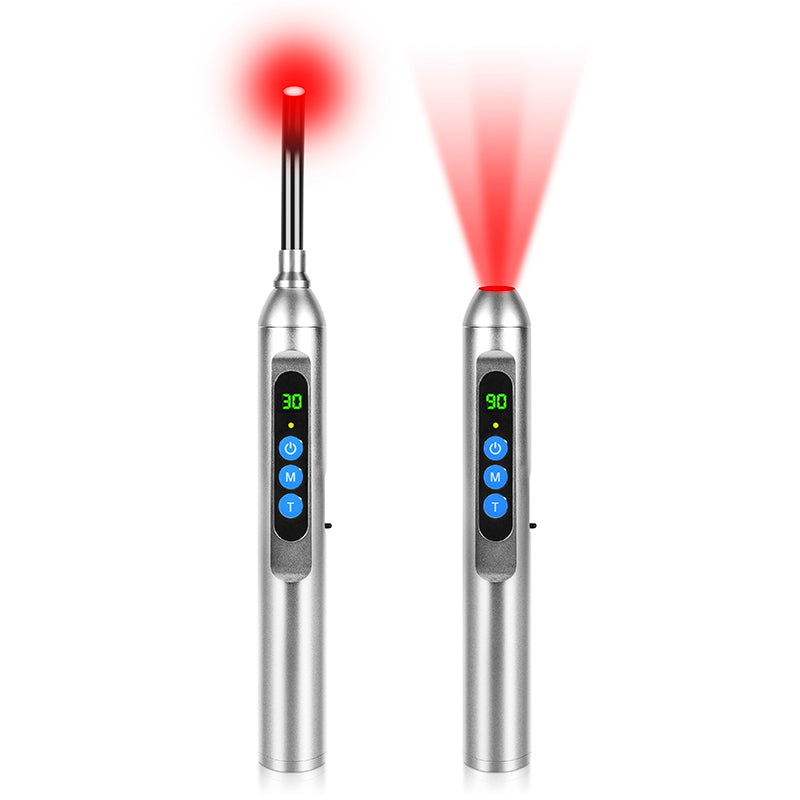
In practical terms, post-peel red light therapy should feel almost boring. Begin with clean, dry skin using a very gentle cleanser. Apply any post-procedure moisturizer your provider recommended, typically something fragrance‑free and formulated for sensitive or post‑treatment skin, then allow it to absorb so there is no slick film on the surface. Position your device at the manufacturer’s recommended distance, usually several inches away for panels and masks, and start with shorter exposures.
Multiple sources, including Cleveland Clinic and The Wellness Club in Tampa, describe typical cosmetic protocols in the 10 to 20 minute range, several times per week, but this is the end goal rather than the starting point. Post‑peel, I favor a ramp. First exposures are often around five minutes, watching for any excessive warmth, prickling, or delayed redness over the next day. If your skin tolerates that well, you can extend toward ten minutes, then eventually toward twenty if your device’s power output and your dermatologist’s plan support that.
Consumer guides from Vellgus and Bontanny echo this ramp: start with shorter sessions of about five minutes, then gradually move to 10 to 20 minutes, about three to four times per week, while monitoring skin response. Iconic Laser also emphasizes beginning with low-intensity sessions of roughly five minutes after peels and only increasing duration once it is clear your skin is comfortable.
The type of device and its heat output also matter. Vellgus stresses favoring cool or low‑heat LED systems and avoiding very hot devices early after a peel. Stanford experts and Cleveland Clinic both note that overuse or misuse can lead to redness, irritation, and even burns. In the peel context, that means you should be especially cautious about high-power, unvetted panels pressed too close to a freshly resurfaced face.
Between sessions, keep your routine minimal. Use gentle cleansers, non‑comedogenic moisturizers, and broad-spectrum sunscreen of at least SPF 30 as highlighted in several post‑procedure guides, and avoid strong actives such as retinoids and additional acids until your provider says otherwise. Hydration and ultraviolet protection are as critical to your outcome as any advanced device.

Safety, Risks, And Who Should Be Cautious
Cleveland Clinic and other mainstream medical sources describe red light therapy as generally safe, non‑toxic, and noninvasive when used as directed, with side effects usually limited to mild, temporary redness or irritation. However, they also emphasize that many studies are small, long‑term safety is not fully established, and improper use can absolutely injure skin or eyes.
There are specific groups who should be careful or avoid red light therapy altogether. LED therapy guidance from Cleveland Clinic warns that people taking photosensitizing medications, including drugs such as isotretinoin and certain mood stabilizers like lithium, should not use these devices without specialist input. Accutane users are specifically cautioned against red light therapy in the Barrett Plastic Surgery article. People with a history of skin cancer or inherited eye diseases are also advised to be cautious, and pregnant individuals are often advised to avoid red light therapy pending more safety data.
UCLA Health notes that people with darker skin tones need to be particularly careful with red light for aesthetic purposes because of the risk of hyperpigmentation or dark spots. After a peel, when the risk of post-inflammatory pigmentation is already elevated, that caution becomes even more important. Lower intensity, longer intervals between sessions, and close dermatologist supervision are smart moves in that setting.
Stanford dermatology experts and Cleveland Clinic both stress another important nuance: when consumer devices are described as “FDA-cleared,” the clearance typically relates to safety, not to robust proof of effectiveness for every marketed claim. Device power (often called irradiance), wavelength mix, and treatment schedule vary widely across home gadgets, and those parameters are not always well documented. That is why working with a dermatologist to choose and calibrate your setup, especially in the sensitive post‑peel window, is so valuable.
Eye protection is non‑negotiable. Multiple medical sources underscore that shining light directly into the eyes can be dangerous. In clinic, goggles are used routinely; at home, masks with protective cutouts or separate goggles provide similar safety.
Pros And Cons Of Adding Red Light To Post-Peel Care
Used thoughtfully, red light therapy fits neatly into an evidence-informed, skin-respecting recovery plan. It is not risk‑free and not a cure‑all, though, so it is worth weighing both sides.
Aspect |
Potential benefit |
Limitations and risks |
Healing speed |
Photobiomodulation review data show support for faster wound closure and remodeling in many settings |
Results are not uniform; some surgical-scar data show only modest or short‑lived advantages |
Inflammation and comfort |
Multiple dermatology and aesthetic sources report reduced redness, swelling, and discomfort |
Overuse or excessive heat can worsen irritation or cause burns |
Collagen and long-term texture |
Studies summarized by Franklin Dermatology report increased collagen and improved texture and elasticity |
Gains are modest, require weeks of consistency, and do not replace deeper resurfacing when needed |
Pigmentation and scarring |
Reviews suggest improved scar quality and possibly reduced risk of hypertrophic scarring or keloids |
Darker skin tones may be more prone to hyperpigmentation if parameters are poorly chosen |
Convenience and access |
Available in clinics and through at‑home devices; noninvasive and painless |
Quality, power, and wavelength documentation vary widely; good devices can be expensive |
Overall safety profile |
Generally safe with low risk when used correctly according to Cleveland Clinic and Stanford experts |
Long‑term safety and optimal dosing are still under study; not appropriate for everyone |
From the perspective of someone who has watched a lot of skin heal under a lot of different conditions, the upside-to-downside ratio is favorable when you build red light into a conservative, dermatologist-approved protocol instead of trying to hack your way into faster results by cranking up power and frequency.
A Practical Post-Peel Red Light Roadmap
To make this concrete, here is how an evidence-informed, light-therapy‑geek approach might look when layered on top of your dermatologist’s instructions.
You start by clarifying your peel type and depth before the procedure. Superficial glycolic touch‑up is a very different animal from a medium TCA peel for acne scarring or a deep phenol peel for precancerous lesions, and your timing and intensity will follow that. During the peel consultation, you explicitly ask whether red or near‑infrared light therapy fits into the plan, whether the clinic offers in‑office LED, and when they would want you to start or resume any at‑home device.
Immediately after the peel and for the first twenty‑four to forty‑eight hours, your only job is barrier protection: gentle cleanser, approved moisturizer, and strict sunscreen. If your peel is the kind of light lactic treatment that clinics like Clinica Lase pair with LED in the same appointment, your provider will run a controlled, low‑intensity session for you while monitoring your response. At home, you resist the urge to improvise with your own panel until you are clearly past the peak of heat and sting.
Once your skin has transitioned from “angry red” to “healing pink,” typically somewhere between a day and several days for a superficial peel and longer for deeper work, you introduce short, low‑intensity red light sessions. In practical terms, that might mean five minutes in front of a mask or panel three times per week, keeping the device at the specified distance and using proper eye protection. You watch closely for any surge in redness or discomfort over the next twenty‑four hours. If that happens, you back off and wait longer. If your skin feels calmer or unchanged, you continue at that level for a week before gradually moving toward ten to twenty minutes, always in harmony with your dermatologist’s plan.
Throughout this period, you keep everything else simple. You do not stack on new active serums, you avoid heat exposures such as saunas and hot yoga for the first day after each peel or LED session as advised by clinics like Clinica Lase, and you keep sunscreen application non‑negotiable. If you have darker skin or a history of pigment issues, you err toward shorter sessions and less frequent treatments and ensure that your dermatologist is supervising your progress.
If at any point you notice unusual warmth, blistering, increased swelling, or new dark spots, you stop, document what happened, and contact your provider rather than trying to fix it yourself. Combining peels and red light is about intelligent optimization, not aggressive experimentation.
FAQ: Red Light Therapy And Chemical Peels
Can red light therapy replace good basic aftercare like moisturizer and sunscreen after a peel?
No. Every credible medical source in the research, from Cleveland Clinic to professional peel practices, emphasizes that gentle hydration and broad-spectrum sun protection are non‑negotiable after a chemical peel. Red light therapy can support healing, but it cannot prevent ultraviolet damage or compensate for a compromised barrier left unprotected. Think of it as a smart add‑on, not a substitute for the fundamentals.
Is red light therapy safe for darker skin after chemical peels?
It can be, but there is more nuance. UCLA Health notes that people with darker skin tones may be more susceptible to hyperpigmentation from red light if it is not used correctly. Chemical peels already raise the risk of pigment shifts, especially in darker skin. That means you should only combine the two under the guidance of a dermatologist who understands your skin type, choose conservative settings, and monitor for any early darkening. In many cases, the protocol will lean toward longer waiting periods after the peel and milder, less frequent light sessions.
Do I need an in‑office device, or are at‑home panels and masks enough?
Both can be useful, but they are not interchangeable. Stanford and Cleveland Clinic point out that in‑clinic systems are usually more powerful and better characterized in terms of wavelength and output, which makes them ideal right around procedures like peels. At‑home devices tend to be less powerful and may deliver more subtle, gradual benefits. For post‑peel recovery, in‑office red light supervised by your dermatologist is an excellent starting point. Once your skin is fully healed, a well‑chosen, reputable home device can be a good way to maintain those gains.
What if my dermatologist does not mention red light therapy at all?
That is your cue to ask, not to assume it is either essential or unsafe. As Cleveland Clinic and the American Academy of Dermatology emphasize for cosmetic treatments, the best move is to have an open conversation about your goals, existing conditions, and current medications. Some clinicians will have well‑defined LED protocols built into their peels; others may prefer to keep your regimen simple. Both approaches can be reasonable. High‑level care is not about doing every possible treatment; it is about using the right tools for your specific skin at the right time.
Closing Thoughts
If you love skin optimization and you respect the science, red light therapy after a chemical peel is one of those “small hinges that swing big doors” when it is done right. The mechanisms, clinical data, and real‑world protocols all point in the same direction: properly dosed red light can help your skin heal faster, feel better, and ultimately look smoother and more resilient after a peel. Pair that with disciplined post‑peel basics and a dermatologist who knows your skin, and you have a recovery stack that is not just trendy, but genuinely well‑engineered.
References
- https://pmc.ncbi.nlm.nih.gov/articles/PMC11049838/
- https://med.stanford.edu/news/insights/2025/02/red-light-therapy-skin-hair-medical-clinics.html
- https://my.clevelandclinic.org/health/articles/22114-red-light-therapy
- https://www.uclahealth.org/news/article/5-health-benefits-red-light-therapy
- https://www.aad.org/public/cosmetic/safety/red-light-therapy
- https://franklinderm.net/anti-aging/red-light-therapy-for-skin-health-and-anti-aging-what-the-research-shows/
- https://nouveauaesthetics.net/2025/09/10/fall-skincare-essentials-combining-led-light-therapy-with-chemical-peels/
- https://www.inshapewellnesscenter.com/copy-of-chemical-peels
- https://www.clinicalase.com.au/pages/express-lactic-acid-peel-led-light-therapy-facial?srsltid=AfmBOorMfeHETMrNn_FxaFu5pI8hbaxlacMDxi9N0p2Y7a0Pf8Wko8w5
- https://www.drdanielbarrett.com/blog/benefits-of-red-light-therapy