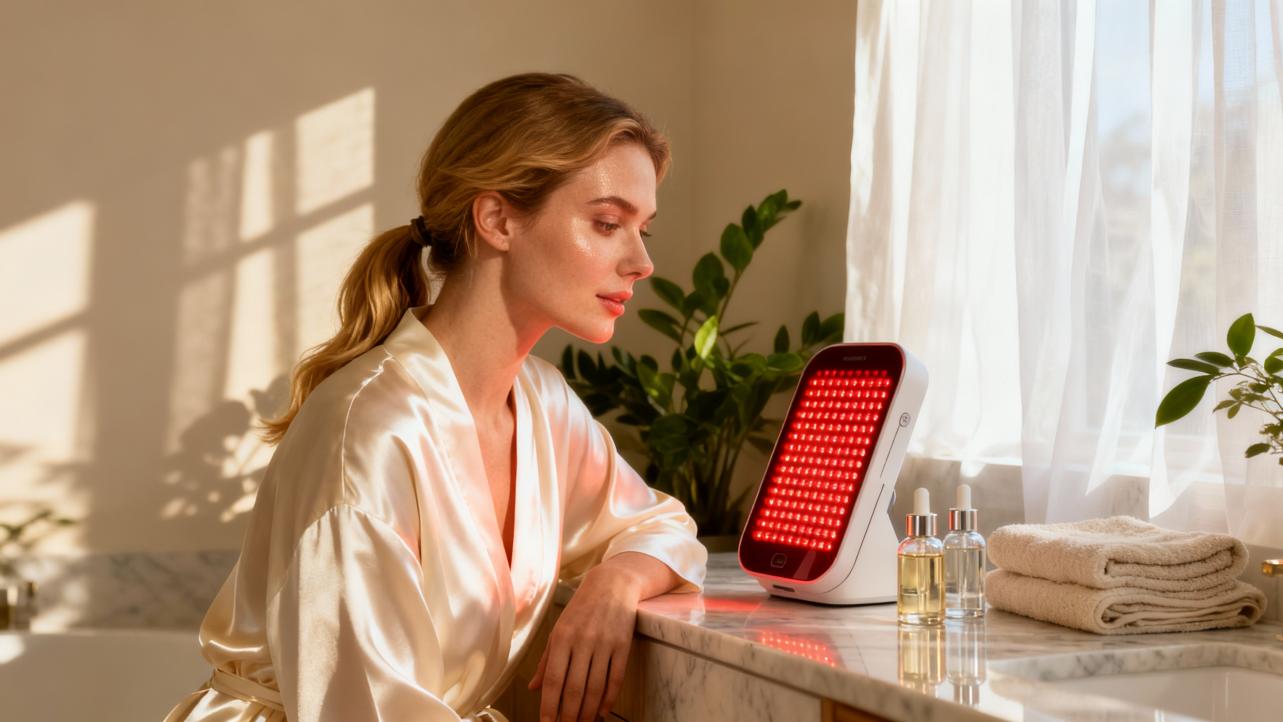
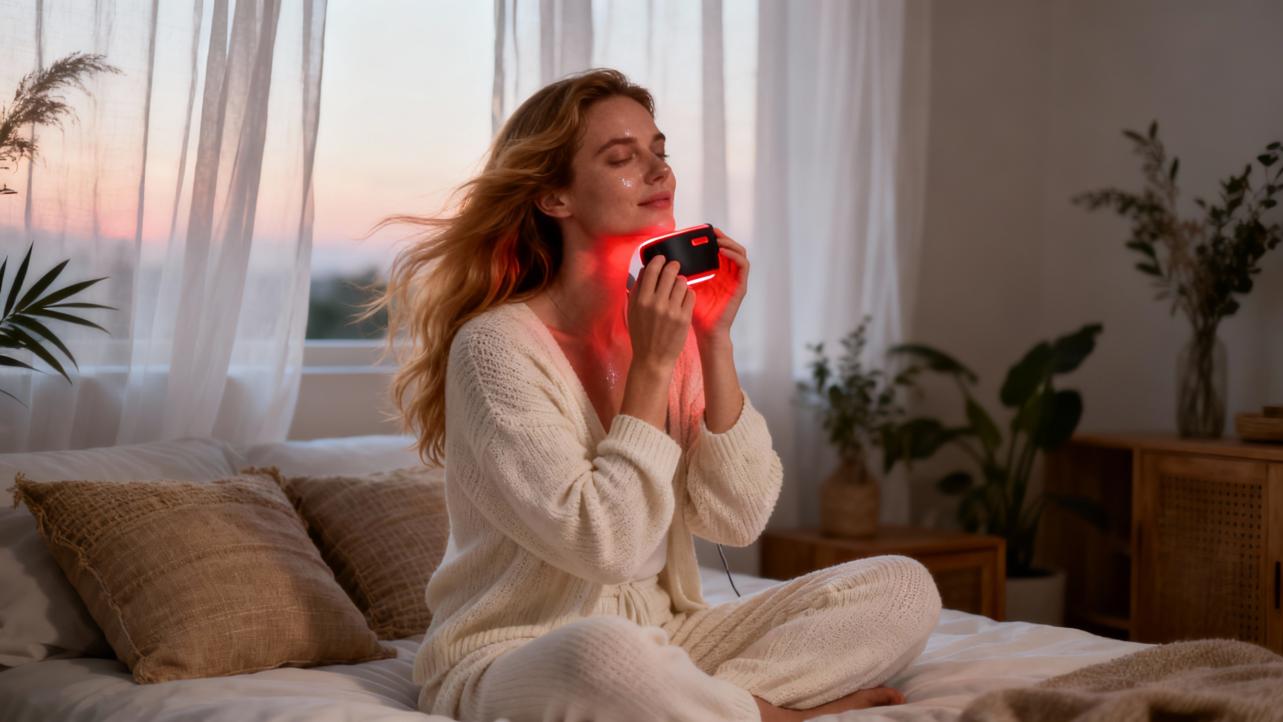
When people hit 35, I see the same pattern over and over in my practice and among fellow biohackers: sunscreen finally gets serious, eye-cream spending creeps up, and late nights start to show in the mirror faster than they used to. The good news is that this is a perfect age to bring in true “cell-level” tools, not just prettier moisturizers. Red light therapy sits right at the top of that list.
As a long-time light-therapy geek, I’ve tested panels, masks, caps, and full-body units on my own skin and on countless wellness clients. I love the tech, but I also love the data. In this guide, I’ll walk you through what the science actually says about red light therapy for skin, how it works, and how a 35‑year‑old can use it intelligently for a more youthful face—without falling for hype.
Why Age 35 Is Such A Strategic Moment
By your mid‑30s, your skin has usually shifted from “resilient no matter what” to “keeps score.” Collagen production naturally slows, elastin fibers get less springy, and you may notice the first fine lines around the eyes, subtle forehead lines, or early changes in jawline definition. Dermatology sources like Franklin Dermatology and Harvard Health emphasize that collagen loss and cumulative sun exposure are central drivers of this process.
The upside is that at 35 you’re still early in the aging curve. You likely have more “declining function” than true structural collapse. That is exactly where red light therapy (also called photobiomodulation) tends to shine: not as a magic eraser for very deep wrinkles, but as a nudge to your biology to produce more collagen, improve microcirculation, and calm chronic low‑grade inflammation before it snowballs.
Clinically, studies and expert groups from Cleveland Clinic, Harvard Health, and the American Academy of Dermatology describe red light as a noninvasive, low‑risk adjunct that can modestly improve fine lines, texture, and skin tone when used correctly and consistently. For someone at 35, that combination of safety and subtle but real benefit is precisely what you want.

What Exactly Is Red Light Therapy?
Red light therapy is a noninvasive treatment that exposes skin to low‑level visible red and near‑infrared light. It is also referred to as low-level light therapy, low-level laser therapy, photobiomodulation, or soft laser therapy in the medical literature.
According to sources like Atria Health and Research Institute, Cleveland Clinic, and Harvard Health, the most commonly studied wavelengths for skin and anti‑aging fall roughly into these bands:
Wavelength range |
Region of spectrum |
Main target and effect on skin |
About 620–700 nm |
Visible red light |
Superficial to mid‑dermis; collagen, elastin, texture |
About 800–1000 nm |
Near‑infrared (NIR) |
Deeper dermis and subcutaneous tissue; circulation, repair |
Devices deliver these wavelengths using LEDs or low‑level lasers. Consumer gear comes as facial masks, flexible silicone wearables, handheld wands, caps, and panels. Dermatology clinics may use more powerful panels or full‑body beds that bathe large areas of the skin.
Critically, this is not ultraviolet light. Multiple medical centers, including Cleveland Clinic and Harvard Health, note that red and near‑infrared light at therapeutic doses do not tan the skin and are not linked with UV‑type DNA damage.

How Red Light Therapy Rejuvenates Skin Cells
The core mechanism is surprisingly elegant. Several independent reviews and articles from Franklin Dermatology, Cleveland Clinic, Atria, and peer‑reviewed journals describe the same cascade.
Light photons in the red and near‑infrared range penetrate into the skin and are absorbed by a mitochondrial enzyme called cytochrome c oxidase. Mitochondria are the power plants of your cells, and this absorption nudges them to produce more ATP, the energy currency of the cell.
With this mild energy boost, several things happen:
Mitochondria ramp up ATP production so skin cells have more fuel for repair, turnover, and synthesis of structural proteins. Fibroblasts in the dermis increase collagen and elastin production, which directly supports firmer, more elastic skin. Nitric oxide is released, which widens blood vessels (vasodilation), improves microcirculation, and helps deliver more oxygen and nutrients to the skin. Antioxidant defenses are activated and oxidative stress is reduced, which means less cellular damage from day-to-day metabolic activity and environmental stressors. Inflammatory signaling tends to shift toward a calmer profile, which is relevant for acne, rosacea, and post‑procedure redness.
This combination of increased energy, better blood flow, and a more regenerative gene expression pattern is what we are really biohacking when we sit in front of a red light panel.
What The Research Actually Shows For Skin And Aging
The question I care about most is not “Does red light change cells in a dish?” but “Does it give visible, measurable benefits on real faces?” Several clinical studies give us useful answers.
Collagen, Elasticity, And Wrinkle Depth
A controlled trial published in Photomedicine and Laser Surgery in 2014 looked at red light therapy for skin aging. After several weeks of treatment, participants showed significant improvements in collagen production and skin tone. Another study in Lasers in Medical Science in 2016 found that red light could increase collagen synthesis in human skin fibroblasts by up to about 400 percent in vitro, which supports the mechanistic rationale.
A separate randomized, controlled, full‑body study of 136 volunteers, summarized in PubMed Central, compared polychromatic red and near‑infrared light against no treatment. Participants received 30 sessions over about 15 weeks. The treated groups experienced significant improvement in skin feeling and complexion, reduced skin roughness, and increased intradermal collagen density on ultrasound. Importantly, broadband light showed no advantage over red‑heavy light when dosing in the red band was matched, suggesting that well‑chosen red wavelengths are sufficient for skin rejuvenation.
A home‑use mask study is particularly relevant if you are considering an at‑home device. In a single‑arm study with a facial LED mask emitting red light around 630 nm at an average irradiance of about 21.7 mW/cm², twenty participants aged 45–70 used the mask twice weekly for 12-minute sessions. After one month, researchers documented about a 15.6 percent decrease in crow’s‑feet wrinkle depth, a 13.6 percent increase in firmness, a 26.4 percent increase in dermal density, and a 6.8 percent reduction in cheek roughness. Improvements continued at two and three months and were still detectable up to a month after stopping treatments. Tolerance was described as excellent.
For a 35‑year‑old with early fine lines, you are essentially starting at a better baseline than these study cohorts, which suggests a realistic goal of subtle smoothing, preserved firmness, and a slower progression of visible aging rather than extreme before‑and‑after transformations.
Texture, Tone, And Pores
The same mask study reported a roughly 28.5 percent reduction in pore diameter and over 30 percent improvement in skin‑tone homogeneity after two months. Clinical trials summarized by Franklin Dermatology and Cleveland Clinic also show improved texture, fewer visible lines, and better tone.
These findings line up with what I see when someone in their mid‑30s commits to a routine: skin often looks more “evenly lit” and less dull, with a gentle refining of texture over a period of weeks to months. It is not as dramatic as a resurfacing laser, but it is also not destructive, and there is essentially no downtime.
Acne, Redness, And Inflammation
Red light is not just about wrinkles. Multiple dermatology sources, including Cleveland Clinic, Harvard Health, and academic dermatology departments, note that red light therapy can help reduce active acne lesions and post‑inflammatory redness by decreasing inflammation and supporting faster healing.
Some devices combine red with blue light. Blue light is effective against acne‑causing bacteria and oil production, while red calms inflammation and promotes repair. However, Atria’s preventive medicine guidance notes that if your device includes blue light, you should use it earlier in the day, because blue wavelengths are more likely to disrupt circadian rhythm if used near bedtime.
For a 35‑year‑old with both early aging and occasional breakouts, a combined red‑plus‑blue protocol supervised by a dermatologist can be very strategic: blue to kill bacteria and reduce oil, red to calm and repair.
Benefits At 35: What You Can Realistically Expect
When you strip away marketing claims and stick to what clinics and controlled trials actually show, a clear picture emerges. Red light therapy can provide modest but meaningful improvements in several domains that matter at 35.
You can expect a gradual softening of fine lines rather than the instant “airbrushed” look that injectable fillers or aggressive resurfacing might give. Studies from Franklin Dermatology and the randomized trials indicate that with consistent use, skin can appear smoother, with reduced wrinkle depth and better elasticity over a few weeks to a few months.
Texture and tone often improve. Clinical data from masks and panels show reduced roughness, smaller‑appearing pores, and more even pigmentation. For someone who spends a lot of time outdoors or under office lighting, this can translate to a more rested, “well‑slept” appearance even when life is hectic.
Red light can support better skin recovery. Research from Atria, Cleveland Clinic, and dermatology practices points to faster wound healing, improved recovery after procedures like microneedling or lasers, and reduced risk of pronounced scarring. That matters if you are layering in more active treatments in your 30s.
Inflammatory skin issues may be easier to manage. Early data and clinical experience suggest benefit for mild acne, rosacea, and post‑procedure redness—largely via anti‑inflammatory effects and improved microcirculation.
Hair and beyond are also relevant at this age. Stanford Medicine and UCLA Health note that red light is FDA‑cleared and supported by studies for pattern hair loss, with improvements in hair density and thickness when used consistently. That is not the main focus of this article, but it is a useful bonus if you choose a cap or helmet device.
What you should not expect is a complete reversal of deeply etched lines, dramatic lifting of heavy jowls, or permanent changes from a short burst of treatment. University of Utah Health and Harvard Health both stress that red light is an adjunct, not a replacement for foundational lifestyle habits or clinically proven interventions when needed.

Dose Matters: The “Goldilocks Zone” For Your Skin
One of the biggest mistakes I see with 35‑year‑olds who buy a device is overdoing it. Atria’s preventive medicine experts describe a biphasic dose response for red light therapy: too little light does almost nothing, but too much can actually reduce or negate the benefit.
Their recommended practical ranges are:
Parameter |
Typical range for skin |
Notes from clinical and expert sources |
Power density |
About 20–100+ mW/cm² |
Panels and some masks fall here at recommended distances |
Session length |
About 5–20 minutes |
Per treatment area; trials often use this range |
Distance |
About 6–24 inches |
Closer means stronger, but smaller area; follow device chart |
Weekly frequency |
About 3–5 days per week |
Consistency for 2–4 weeks before judging response |
For home masks like the studied 630 nm device, the light is already calibrated at skin contact, so you simply follow the manufacturer’s timing. For panels, you often get a chart indicating how much power you receive at six, twelve, or twenty‑four inches. At six inches, a panel might deliver around 100 mW/cm²; at thirty‑six inches the intensity may drop steeply.
For a 35‑year‑old new to red light, starting at the lower end of intensity and time—around ten minutes three or four times per week on the face—is a reasonable place to begin. After several weeks, you can adjust based on how your skin responds, always keeping in mind that doubling the time does not double the benefit and can even backfire.
Timing in the day can matter for comfort and sleep. Atria’s guidance and my own experience echo this: if red light feels energizing, use it at least a couple of hours before bedtime. If you find it relaxing, an evening session can work well. Any device with blue light, however, should be kept to morning and early afternoon use.
Choosing The Right Device At 35 (Without Getting Burned Financially)
The market is full of red light devices ranging from about $100 for small at‑home masks to several hundred dollars or more for higher‑end units. Podcast discussions from University of Utah Health noted facial masks in the roughly $110 to $600 range, some devices above $3,500, and full‑body beds reaching around $110,000. So you want to choose wisely.
A few features are consistently emphasized by sources such as Atria, Cleveland Clinic, Harvard Health, and Stanford Medicine:
The wavelengths need to be in therapeutically studied ranges. Devices that provide red light near about 620–700 nm, sometimes combined with near‑infrared around 800–880 or up to about 1,000 nm, align best with the research on skin rejuvenation and hair health. Atria explicitly recommends products that cover both red and near‑infrared bands for broader tissue effects, while noting that the red band alone can be very effective for skin.
Output power and coverage area must match your goals. If your main target is facial skin at 35, a high‑quality mask or small panel is typically sufficient. If you want body‑wide benefits such as joint or muscle support, you need a larger panel or full‑body system, which is a much bigger investment.
Regulatory status matters. Multiple medical sources recommend prioritizing devices that are cleared by the U.S. Food and Drug Administration for specific indications, acknowledging that clearance generally focuses on safety and basic performance rather than guaranteeing efficacy for every claim.
Clinic devices are usually stronger. Stanford dermatologists point out that in‑office systems deliver more predictable dosing and are typically more powerful than at‑home devices. At home, you trade some speed of results for the convenience and lower per‑session cost.
Realistically, a 35‑year‑old focused on facial aging usually does best starting with either a dermatologist‑delivered series of red light facials, a well‑vetted at‑home mask evaluated with their input, or both. Always compare the device’s stated wavelengths and power to what you see in reputable medical sources rather than buying whatever is trending on social media.
How To Use Red Light Therapy Safely And Effectively At Home
Once you have a solid device, technique is your next lever. Medical centers like Cleveland Clinic, Atria, and Harvard Health emphasize similar basics.
Expose bare skin. Even very light fabric blunts the effect, so clean your face, remove makeup, and skip heavy, reflective products before a session.
Protect your eyes when needed. Light‑therapy experts strongly recommend proper eye protection when you are directly facing bright red or near‑infrared light, especially high‑powered panels or full‑body units. When the light is to the side or behind you and is noncoherent LED light, the risk is lower, but caution is still wise.
Follow manufacturer and clinical guidelines. Most studies used about 5–20 minutes per area, two to five times per week. When in doubt, start on the conservative side and treat for a shorter time, then build slowly.
Be patient and consistent. Harvard Health and UCLA Health note that red light devices generally need multiple sessions per week for several months to see maximum benefit. The home‑mask study saw statistically significant changes after one month, with further gains at two and three months. Think in terms of a season, not a weekend.
Integrate it with, rather than replace, smart skin care. Red light is not a stand‑alone anti‑aging plan. Use it alongside daily broad‑spectrum sunscreen, a sensible topical routine (for example, a gentle retinoid and antioxidant serum if tolerated), quality sleep, and nutrition. University of Utah Health frames red light as an “add‑on” after core pillars like diet, movement, mental health, and sleep are in place, which is an excellent way to think about it.
A practical pattern I often recommend for a 35‑year‑old with a busy life is a red light session paired with another anchored habit: meditation, journaling, or a short mobility routine. That way you are stacking benefits and less likely to abandon the device after a few weeks.
Risks, Limitations, And Who Should Be Cautious
Compared with many aesthetic treatments, red light therapy has a remarkably favorable safety profile when used correctly. Cleveland Clinic, Harvard Health, and WebMD all describe it as noninvasive and generally safe, with short‑term side effects usually limited to mild temporary redness, irritation, or dryness.
That said, no intervention is completely risk‑free, and there are important caveats.
Evidence is still evolving. The American Academy of Dermatology and independent reviews emphasize that many trials are small, sometimes lack strong control groups, and vary in device parameters. The signal is clearly positive for mild to moderate photoaging and certain hair‑loss indications, but it is not the same level of evidence that we have for, say, sunscreen preventing skin cancer.
Dosing is not fully standardized. Optimal session length, power, and frequency for specific conditions remain an active research question. That is one reason I favor devices and protocols that borrow directly from published clinical trials rather than ad‑hoc influencer routines.
Long‑term safety data are limited. So far, there is no evidence linking red light therapy with skin cancer, and it does not use DNA‑damaging ultraviolet wavelengths. Still, Harvard Health and Cleveland Clinic note that long‑term, high‑frequency use has not been studied as extensively as we might like, so the sensible move is to aim for effective minimum dosing rather than marathon sessions.
Certain people should talk to a doctor first. If you have a history of skin cancer, are taking photosensitizing medications, have light‑sensitive conditions, significant eye disease, very dark skin tones prone to hyperpigmentation, or are pregnant, you should bring a dermatologist or qualified physician into the decision. Some sources specifically recommend that people with more pigmented skin start with lower doses, as visible light can occasionally trigger dark spots.
Finally, the biggest risk at 35 may be opportunity cost. Spending thousands of dollars on a full‑body device when you have not yet nailed basics like sleep, nutrition, or daily sunscreen is not great biohacking. University of Utah Health’s “Core Four” framing is spot‑on: get your fundamentals in order first, then layer in red light as a smart extra.

FAQ: Red Light Therapy For Youthful Skin At 35
How soon will I see results?
In the home‑mask study using twice‑weekly red light sessions, measurable changes in wrinkles, firmness, and pore size appeared after about one month, with continued improvement at two and three months. Clinical trials summarized by Franklin Dermatology and Harvard Health also report visible changes after several weeks. For a 35‑year‑old with early signs of aging, it is reasonable to look for subtle improvements within a month and more noticeable changes over two to three months of consistent use.
Is red light strong enough to replace retinoids or in‑office treatments?
No single modality should carry your entire anti‑aging strategy. Retinoids, procedural dermatology, and lifestyle all play distinct roles. The current literature and expert guidance place red light therapy as a low‑risk adjunct: it can enhance collagen production, refine texture, and support healing, but it is not a direct substitute for a well‑designed topical routine, sun protection, or, when appropriate, in‑office procedures.
Does red light therapy thin the skin or cause damage over time?
Available data from Cleveland Clinic, Harvard Health, and controlled trials indicate that properly dosed red light therapy tends to increase dermal collagen density and improve skin structure rather than thin it. It is non‑ablative and does not work by wounding the skin. As long as you are not massively overdosing or using untested devices beyond their guidelines, the risk of structural damage appears low.
From one light‑therapy geek to another: at 35, you are in a phenomenal position to leverage red light therapy as a quiet, science‑backed amplifier of everything else you do for your skin. Treat it like what it is—a gentle mitochondrial nudge, not a miracle—and use it consistently, safely, and in partnership with smart dermatologic care. That is how you buy yourself the most youthful version of your future face.

References
- https://lms-dev.api.berkeley.edu/studies-on-red-light-therapy
- https://brillarebeautyinstitute.edu/which-esthetician-facial-treatment-should-i-use-for-my-client/
- https://www.health.harvard.edu/diseases-and-conditions/led-lights-are-they-a-cure-for-your-skin-woes
- https://healthsciences.arizona.edu/news/stories/exploring-phototherapy-new-option-manage-chronic-pain
- https://www.cortiva.edu/blog/red-light-therapy-vs-other-treatments-a-comparative-analysis-for-estheticians/
- https://daytonacollege.edu/blog/everything-about-led-facials/
- https://pmc.ncbi.nlm.nih.gov/articles/PMC10311288/
- https://sites.rutgers.edu/centerfordermalresearch/wp-content/uploads/sites/271/2024/07/Lieve-DECLERCQ_abstract-2024.pdf
- https://med.stanford.edu/news/insights/2025/02/red-light-therapy-skin-hair-medical-clinics.html
- https://healthcare.utah.edu/the-scope/mens-health/all/2024/06/176-red-light-therapy-just-fad