
Summary: Red and near‑infrared light “whispers” to stem cells through their mitochondria, shifting energy and signaling pathways that can boost repair—when the wavelength and dose are in the right window. This article walks through the core mechanisms and what they realistically mean for therapies and home biohacking.
From Photons to Mitochondria
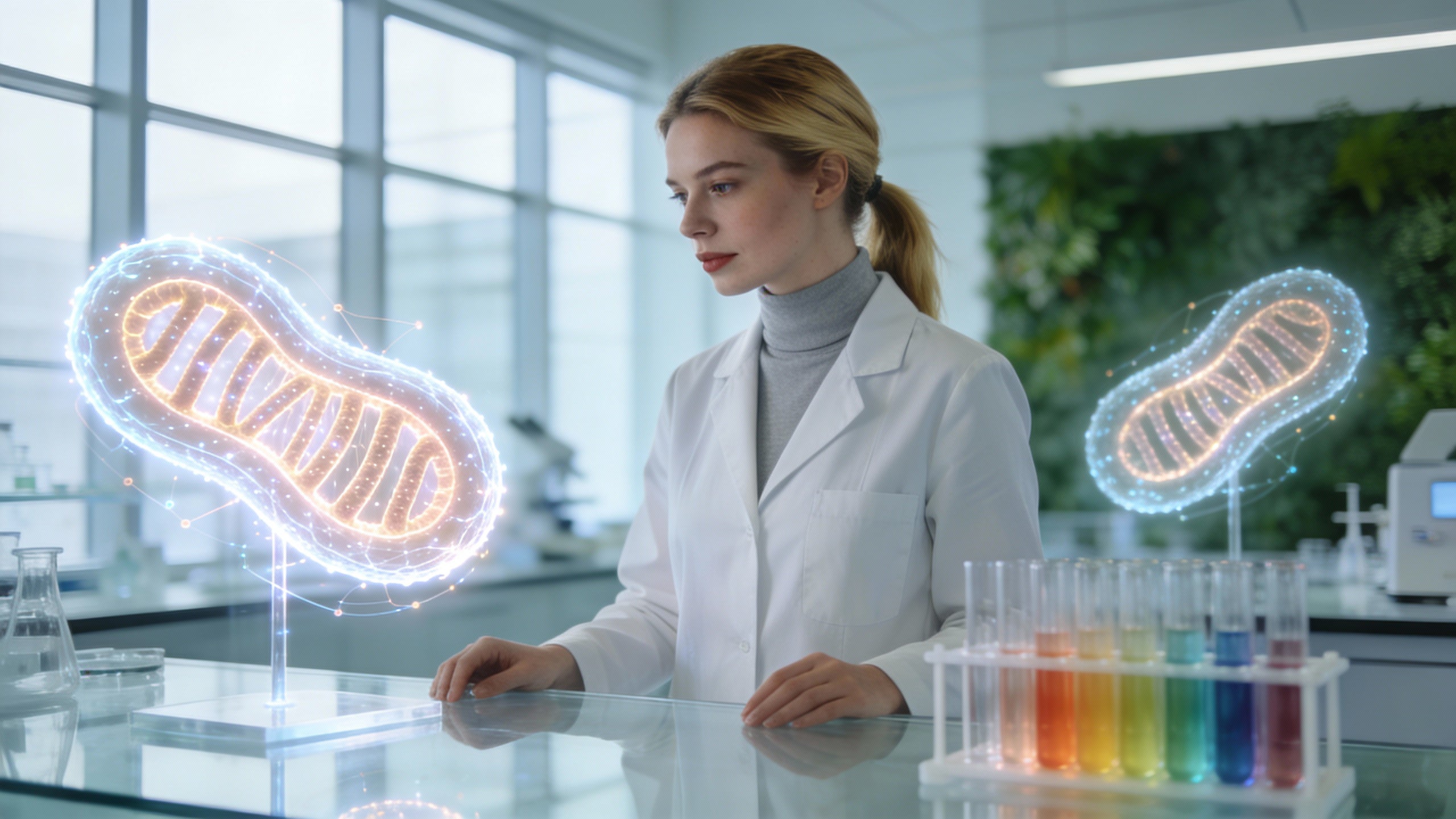
Red light therapy, or photobiomodulation, typically uses red and near‑infrared wavelengths around 600–900 nanometers. In stem cells, these photons are mainly absorbed by cytochrome c oxidase in mitochondrial complex IV, identified in multiple reviews on mesenchymal stem cells published in Wiley and PubMed‑indexed journals.
Once that enzyme is excited, electron transport speeds up. Mitochondria push out more ATP, the energy currency every repair process runs on. At the same time, low‑level reactive oxygen species (ROS), nitric oxide (NO), and messenger molecules like cAMP rise just enough to act as signals—not as damage.
Those signals ripple outward. Studies summarized by Cleveland Clinic and academic PBM reviews show downstream effects on calcium flux, gene expression, and local blood flow. In plain language: a few minutes of the right red light nudge stem cells into a more energetic, “ready to repair” state without burning them out—if you stay in the therapeutic window.

From Energy Boost to Stemness and Repair Signals
In controlled lab work on human and animal mesenchymal stem cells, red LED light (roughly 620–800 nanometers) consistently increases viability and proliferation. Colony‑forming assays, ATP measurements, and total cell counts all move in the right direction in the majority of studies.
One systematic review reported that red LED exposure not only boosted metabolism but also upregulated classic stemness genes like NANOG, OCT4, and SOX2 at specific doses. That means the cells maintained their “master builder” identity while becoming more metabolically active.
Equally important, red light reshapes the stem cell secretome. Research teams have shown elevated VEGF, FGF, HGF, NO, and other growth factors after PBM. In an OLED‑based experiment on human adipose‑derived stem cells, pre‑irradiated cells produced stronger angiogenesis, adhesion, and migration and closed wounds faster in mice. That is a big deal: even when transplanted cells don’t live forever, their boosted signaling can orchestrate better repair by the host’s own tissues.

Dose Windows, Wavelengths, and When Light Backfires
If you geek out on protocols, this is where it gets interesting—and where most marketing falls flat. Stem cells show a clear hormetic response to light: low doses help, higher doses can stall or harm.
In an epithelial stem‑cell study, an 810‑nanometer laser at about 1 J/cm² expanded colony‑forming units more than a 3 J/cm² dose. A broad LED‑MSC review found many “sweet spots” around a few joules per square centimeter, while one red‑light study reported increased DNA fragmentation at higher doses such as 32 J/cm².
Wavelength also matters. Across multiple experiments, red and near‑infrared (roughly 630, 660, 810 nanometers) enhanced MSC survival and differentiation. In contrast, a blue‑light protocol reduced MSC viability even as it nudged bone markers up. That is why serious researchers emphasize careful dosimetry, while Stanford dermatology experts and Harvard Health warn that consumer devices vary wildly in intensity and exposure time.
Nuance: despite promising lab signals, oversized “stem cell activation” claims—especially from patches or unregulated devices—are way ahead of what controlled human data can support.
From Lab Bench to Therapies and Smart Biohacking
Two main use‑cases are emerging. First is stem cell preconditioning: hitting cells with red light before transplantation. In a neonatal brain‑injury rat model, 660‑nanometer LED exposure significantly increased bone marrow stem cell migration and improved cognitive recovery versus stem cells alone. OLED‑primed fat‑derived stem cells similarly outperformed regular cells in mouse wound healing.
Second is local in‑tissue activation. Clinicians combining red light with platelet‑rich plasma, stem cell injections, or peptide protocols (as described by regenerative physicians and groups like Kineon) report faster healing and less pain, likely because PBM improves mitochondrial energy and local microcirculation around the treated zone. Major centers such as MD Anderson and academic hospitals are also piloting red light for pain and mucosal healing—but they still label it investigational.
For biohackers and patients, the smartest play is to treat red light as a precision adjunct, not magic stem cell fertilizer:
- Work with a qualified practitioner if you are stacking red light with PRP, stem cell injections, or cancer‑related care.
- Favor consistent, moderate, local sessions over rare, marathon exposures.
- Target specific problem areas (joint, wound, surgical site) rather than “whole‑body activation” hype.
- Stay within device guidelines, protect your eyes, and stop if you see irritation or burns.
The bottom line: red light can meaningfully tune stem cell behavior—via mitochondria, ROS, NO, and gene programs—but the benefits live inside a narrow window of wavelength, dose, and context. Respect that biology, and you have a genuinely powerful, science‑backed tool in your regenerative toolkit.

References
- https://www.health.harvard.edu/staying-healthy/red-light-therapy-for-skin-care
- https://pubmed.ncbi.nlm.nih.gov/32013851/
- https://med.stanford.edu/news/insights/2025/02/red-light-therapy-skin-hair-medical-clinics.html
- https://www.brownhealth.org/be-well/red-light-therapy-benefits-safety-and-things-know
- https://www.mdanderson.org/cancerwise/what-is-red-light-therapy.h00-159701490.html