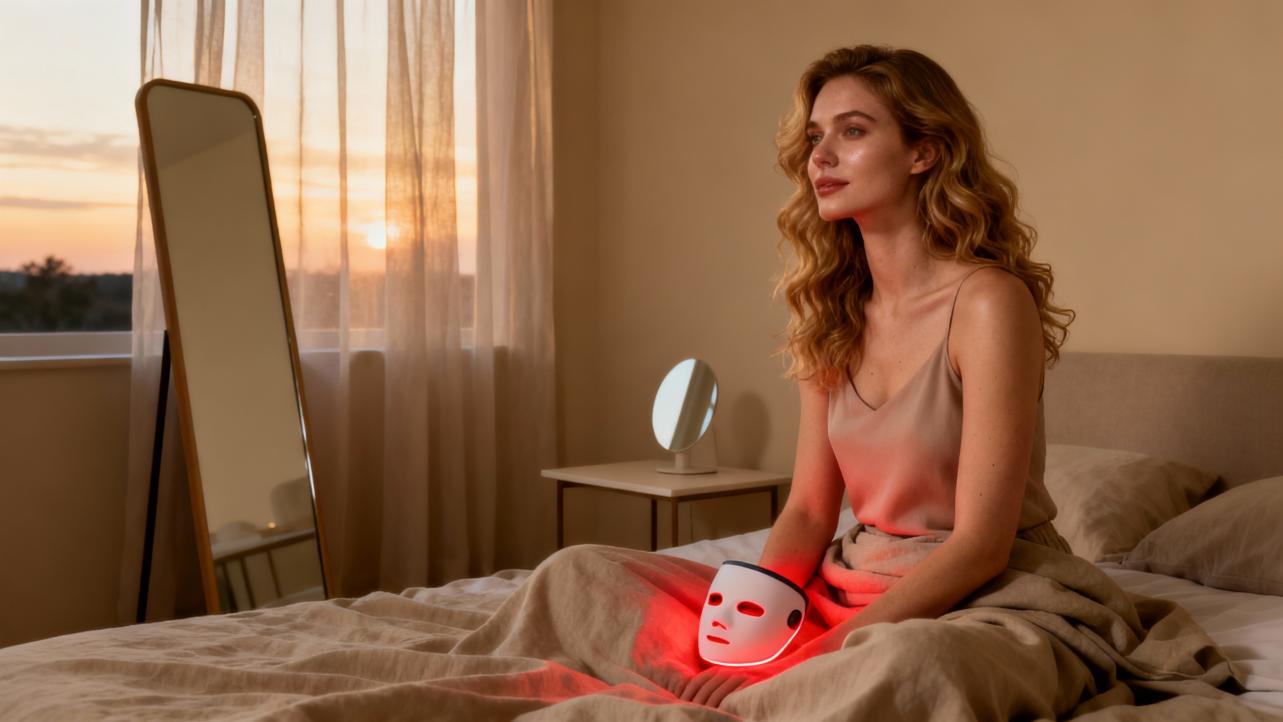
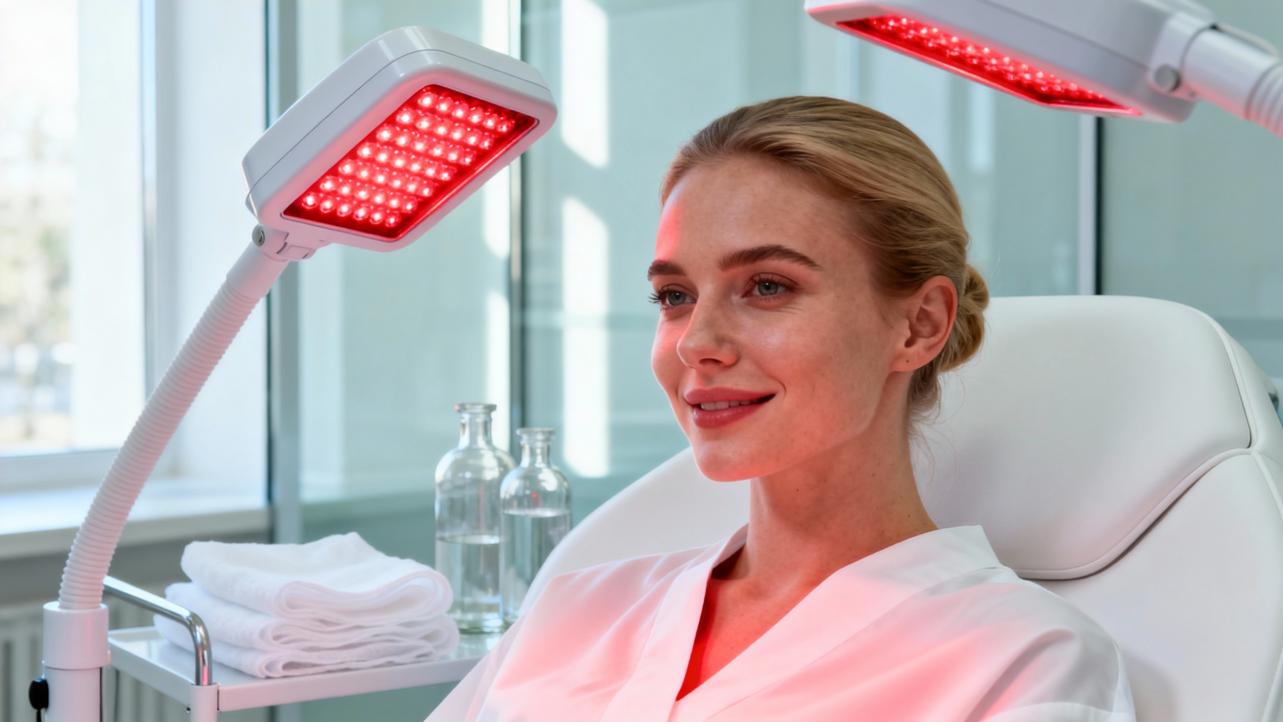
I have stood between light panels, worn the masks, and tested the handhelds so you do not have to. Red light therapy is one of the few “biohacks” that consistently makes it back into my routine year after year. But I keep it there because of data, not hype.
If you are considering red light therapy as a home preventive health tool, you are really asking three questions: what does this light actually do in my cells, where is the evidence strongest, and how do I use it without wasting money or risking my skin and eyes. Let’s walk through those, grounded in what major medical centers and careful reviewers actually say.
How Red Light Therapy Works In Your Cells
Red light therapy sits under an umbrella term you will see in medical literature: photobiomodulation, also called low level light or low level laser therapy. Cleveland Clinic and other academic sources describe it as exposing tissue to low levels of visible red and near infrared light, usually via LEDs or low energy lasers, with the goal of nudging cellular processes rather than burning or destroying tissue.
Mechanistically, several independent sources converge on the same story. Integris Health and Laguna Heights Dental describe how red and near infrared wavelengths between roughly 600 and 900 nanometers are absorbed by mitochondria, the energy factories in your cells. This absorption appears to boost production of ATP, the molecule your cells use for energy, while also increasing blood flow and nitric oxide and reducing inflammatory signaling. Truemed, which focuses on device selection and reimbursement, frames this as reducing oxidative stress and supporting tissue repair.
Red wavelengths around 600 to 700 nanometers mostly act on more superficial tissues, such as the skin, where they can stimulate fibroblasts and collagen production and improve microcirculation. Near infrared wavelengths around 700 to 850 nanometers reach deeper, into muscle, joints, and connective tissue, where they can influence pain, recovery, and inflammation, as described by Laguna Heights Dental and integrative pain resources like Celluma’s photobiomodulation material.
Historically, this is not just wellness folklore. HigherDOSE notes that light was used therapeutically as far back as ancient Greece and that Dr. Niels Finsen received a Nobel Prize in the early 1900s for medical applications of artificial light. Cleveland Clinic points to NASA’s experiments on plant growth and astronaut wound healing as a key modern spark that drove research into red and near infrared light in medicine.
At a systems level, UCLA Health and Integris Health summarize the downstream effects in similar terms: modest improvements in blood flow, less inflammation, more efficient cellular metabolism, and in some cases enhanced tissue regeneration. That is why you see such a wide spread of claimed benefits, from skin quality and hair density to tendon pain and delayed muscle soreness.
A concrete way to think about it is this. Blood flow and mitochondrial efficiency are like the power and plumbing in your house. Red light does not build you a new house, but it may help the existing system run more efficiently in a few targeted rooms.

Skin And Hair: The Most Evidence‑Backed Home Uses
If you care about preventive health, your skin and hair are not just cosmetic. They are long term markers of cumulative inflammation, UV exposure, and hormonal shifts. For at home red light therapy, this is where the evidence is strongest.
Antiaging And Skin Quality
Multiple medical and consumer health publishers converge on skin rejuvenation as one of the most supported uses of red light. Stanford Medicine notes that hundreds of clinical studies, including blinded trials, report that certain red light regimens can increase collagen, plump the skin, and soften wrinkles. UCLA Health similarly reports that FDA cleared devices and in office treatments can reduce dark spots, fine lines, and loose skin, especially when combined with other treatments like microneedling or chemical peels.
HigherDOSE and Baylor Scott & White Health both highlight that low wavelength red light stimulates collagen and elastin, improves circulation, and can smooth fine lines and improve skin texture over time. An article from Baltimore Magazine, drawing on a clinical provider’s experience, describes visible smoothing of wrinkles and improvement in elasticity as a frequent outcome.
There are caveats. Cleveland Clinic and Healthline both emphasize that most trials are small, many lack ideal controls, and devices vary widely in power and wavelength. ZOE’s review of red light therapy for antiaging concludes that lab and small human studies are encouraging but call for larger, independent trials, noting that some studies were authored or funded by device makers.
From a home user standpoint, this translates to realistic expectations. You are unlikely to erase decades of sun damage, but with consistent use you may see subtler changes: a little more radiance, slightly smoother fine lines, and more even tone.
Consider a practical example. Baylor Scott & White Health notes that many at home devices recommend sessions of ten to twenty minutes, two or three times per week. Suppose you bought a midrange device for about three hundred dollars and used it three times weekly for a year. That gives you roughly one hundred fifty sessions, which works out to about two dollars per session, not counting electricity. Compared with clinic visits often costing around eighty dollars or more per session, as WebMD notes, the home approach becomes cost effective if you actually use the device consistently.
Acne, Redness, And Inflammation
Red light’s anti inflammatory and wound healing effects make it appealing for acne and reactive skin. HigherDOSE cites a study where acne lesions continued to decline for at least ten weeks after starting therapy. Baylor Scott & White Health describes how red light’s anti inflammatory effects and improved circulation can reduce redness and swelling and help with acne control, especially in combination with other treatments.
Cleveland Clinic lists acne, rosacea, psoriasis, and eczema among the skin issues being studied or promoted for red light therapy, but is careful to say that effectiveness is uncertain for many of them because the studies are small and often not rigorously controlled. ZOE goes further for acne, noting that while a review of thirteen randomized trials suggested red light therapy performed roughly comparable to standard treatments like antibiotics, a recent Cochrane review found no high certainty evidence that red or other light therapies reliably treat acne.
What I take from this as a veteran user is that red light for acne and redness is potentially helpful but not a stand alone strategy. It makes the most sense if you already have a dermatologist approved regimen and you want to gently nudge inflammation down without adding more topical irritation.
Wound Healing And Scars
Red and near infrared light’s effects on tissue repair are biologically plausible and supported by some clinical findings, especially for superficial wounds. Integris Health reports that infrared and red light can accelerate wound healing by enhancing cell proliferation, collagen production, and formation of new blood vessels. WebMD notes reviews showing that low level light therapy may improve tendon pain and function and can shorten healing time for some soft tissue injuries. UCLA Health describes improved healing and scar appearance in some post procedure settings, although the benefits may be more pronounced in the early healing phase and diminish by about six weeks, as Stanford’s dermatologists point out.
On the anecdotal side, Infraredi’s Slim Lite testimonial describes daily at home use helping an active wound heal while making the user’s overall skin look better. That kind of n equals one story does not carry the weight of a randomized trial, but it aligns with the cellular mechanisms and early clinical findings.
For preventive health, this matters if you are prone to slow healing or scarring after procedures or injuries. A reasonable use case is stacking red light sessions during the weeks after a minor surgery or injury, with your surgeon’s blessing, to potentially support faster initial repair, while recognizing that long term scar appearance may not be dramatically altered.
Hair Growth And Thickness
Hair is often where expectations and reality collide. Stanford Medicine traces red light’s hair story back to the nineteen sixties, when low level red light unexpectedly thickened hair in mice. Subsequent human studies have shown that red light can stimulate hair follicles, widen blood vessels around them, and improve hair density in some people with pattern hair loss. Stanford emphasizes a key limitation: benefits stop when treatment stops and do not revive dead follicles in fully bald areas.
UCLA Health echoes this, noting that FDA cleared combs, caps, and helmets using near infrared light can stimulate follicles and increase hair thickness and length. ZOE points to trials where people using a red laser or LED “helmet” for sixteen weeks experienced about thirty five percent more hair growth than those using placebo helmets, with similar benefits seen in women in a separate study. WebMD also cites reviews showing improvement in androgenic alopecia, including increases in hair count and sometimes thickness.
Across these sources, two themes are consistent. First, hair responses are gradual and modest rather than miraculous. You are growing hair in millimeters over months, not days. Second, the routine has to be ironclad. Many protocols in the trials involved near daily or several times per week use for three to four months before meaningful differences showed up.
A practical way to integrate this at home is to treat hair focused helmets or caps as a long term habit. For example, if you commit to sixteen weeks of sessions around ten to twenty minutes each, four or five times per week, you can decide at the three or four month mark whether density changes are worth maintaining that habit. For many people, that beats paying for repeated clinic visits as long as they are realistic about what “hair regrowth” looks like in the data.

Pain, Recovery, And Performance: Where The Science Is Mixed
This is where my inner light therapy geek gets the most questions and where the evidence is most nuanced. Can a panel on your garage wall really protect your joints, boost your lifts, and calm your chronic pain?
Joint And Tendon Pain
Several medical sources agree that red and near infrared light can help certain pain conditions, particularly when inflammation and superficial structures are involved.
Integris Health lists arthritis, joint pain, muscle strains, and injuries as conditions where infrared and red light have shown pain relief and better joint function in some patients. WebMD cites reviews showing mostly positive results in reducing pain related to inflammation, including temporomandibular dysfunction and some forms of arthritis, and a review of seventeen clinical trials suggesting that tendinopathy pain and function can improve with red light therapy.
University Hospitals’ sports medicine article notes that red light therapy has shown early promise for tendinopathies and problems close to the skin that tend to be inflammatory. A two thousand twenty one review they cite suggests benefits for acute and chronic musculoskeletal pain and fibromyalgia. At the same time, that article is clear that red light will not repair mechanical issues like significant ligament tears or advanced osteoarthritis; those still require mechanical or surgical solutions.
Celluma and LED based pain device manufacturers describe temporary relief of muscle and joint pain, stiffness, and spasms, especially in arthritis, when panels are applied closely for repeated thirty minute sessions. A handheld device like the dpl Clinical model described by TENSPros uses red and infrared LEDs for about twenty minutes per session, up to three times per day, for conditions ranging from back pain and muscle spasms to tendinitis and neuropathic pain.
Balancing those more optimistic reports, the New York Times’ Wirecutter review looked specifically at pain devices and concluded that they could not recommend any consumer product for pain relief based on current evidence. They point out that trials differ wildly in wavelength, dose, and timing, are often small and methodologically weak, and sometimes use professional laser systems rather than the LED devices sold for home use. For common issues like lower back pain, evidence is especially thin or inconsistent.
Pulling these threads together, my stance is cautious optimism with tight targeting. If you have a well defined, relatively superficial pain issue such as Achilles tendinopathy or mild knee osteoarthritis, integrating red or near infrared light might be reasonable adjunctive therapy, especially when supervised by a clinician. If your goal is broad, systemic pain relief from a single at home panel, the evidence is not there yet.
Workout Recovery And Performance
Athletes and trainers have been early adopters of light therapy beds and panels, hoping to reduce soreness, shorten recovery, and maybe even squeeze out performance gains.
Laguna Heights Dental and Integris Health describe how near infrared light can decrease post exercise inflammation, improve blood flow and oxygenation, and support muscle recovery. University Hospitals notes that some strength trainers and athletes are experimenting with red light before or after workouts to improve performance, grip strength, endurance, and speed, with small studies suggesting that combining red light with exercise can help muscles grow and get stronger. They also mention research indicating that red light might reduce levels of enzymes associated with muscle damage and soreness, especially when used before activity.
ZOE’s review of exercise recovery research references a two thousand thirteen review of thirteen small, heterogeneous studies where red or infrared light used before exercise produced the most consistent benefits. At the same time, more recent reviews remain cautious; some see clearer benefits, while others conclude low level phototherapy may have little impact on muscle injury or exercise induced pain. Integris Health adds that infrared can support muscle recovery but positions this as an adjunct within broader rehabilitation and training programs.
Given that context, how would you use it at home. A pattern that makes sense based on these findings is to treat red light as a warm up for your cellular machinery. If you train, say, three days per week, standing in front of a red and near infrared panel for ten to fifteen minutes before sessions may modestly support recovery and soreness management without interfering with training stimulus. But I would not count on it to transform performance in the way that sleep, intelligent programming, and nutrition can.
Brain, Mood, And Systemic Effects
This is the frontier that generates the loudest marketing claims and the harshest academic pushback.
Integris Health and Baltimore Magazine mention mood and sleep improvements, including possible help with seasonal affective disorder, anxiety, and depression, often in the context of general wellness users who report feeling calmer and sleeping better when sessions are integrated into spa routines. UCLA Health discusses transcranial and intranasal photobiomodulation for dementia, noting small studies where daily six minute sessions over eight weeks led to cognitive improvements without major adverse effects. WebMD echoes this, citing a review of ten dementia studies that reported benefits but also highlighting their small sample sizes and lack of rigorous controls.
On the other side, Stanford’s dermatology experts and ZOE both emphasize that claims about red light improving athletic performance, sleep, erectile function, chronic pain, depression, and other systemic conditions currently lack solid, reproducible clinical evidence. Cleveland Clinic makes a similar point, stating that there is no good evidence supporting red light therapy for weight loss, cellulite, or mental health conditions like depression or seasonal affective disorder, despite widespread online promotion.
My translation as a long time user is simple. If you feel more relaxed and sleepier after a warm, dim light session in the evening, that may be a mix of circadian friendly lighting and placebo, and there is nothing wrong with that. But I would not bypass evidence based treatments for insomnia, mood disorders, or cognitive decline in favor of a home red light helmet.
Choosing A Home Device Without Getting Burned
When you search for red light devices, you are hit with everything from ten dollar gadgets to full body beds rivaling used cars in price. Device choice is not trivial; the wrong format can make you give up before you ever see whether the therapy works for you.
Panels, Masks, Handhelds, And Wraps
Different devices are built for different targets. Truemed and Good Trade both lay out the main categories, and they line up well with what I have seen in practice.
Here is a simple way to think about it:
Device type |
Best home use focus |
Key advantages |
Main limitations |
Face mask |
Fine lines, wrinkles, acne, redness |
Hands free, good coverage of face and sometimes neck, easy to build into evening routine |
Limited to face and nearby areas, can feel claustrophobic, hair and joints untouched |
Panel (wall or stand) |
Whole body skin, generalized soreness, larger joints and muscle groups |
Large coverage, allows standing or sitting, can hit multiple areas at once |
Requires dedicated space, higher upfront cost, dosing harder to standardize across different distances |
Handheld wand |
Spot treating joints, scars, small skin patches |
Precise targeting, portable, relatively affordable |
Time consuming to cover large areas, easy to underdose or forget areas |
Wrap, belt, or mat |
Back, knees, shoulders, tendons, full body recovery |
Good contact with contoured areas, comfortable lying or sitting use, hands free once positioned |
May have lower intensity due to comfort constraints, usually targets fewer wavelengths |
Good Trade reports that most at home devices they reviewed use red wavelengths in the six hundred twenty to seven hundred fifty nanometer range and aim for ten to twenty minute daily sessions. Truemed recommends choosing formats based on your primary goal: masks for face focused antiaging and acne, handhelds and wraps for joints and localized pain, and panels or mats for whole body recovery.
In my own setup, I lean on a panel for flexibility. It lets me treat my face, chest, and knees in one block of time, and I can stand in front of it while listening to an audiobook instead of carving out a separate slot for each area.
Specs That Actually Matter
Marketing copy loves jargon. To cut through it, I pay attention to a few parameters many of the evidence oriented sources highlight.
Wavelengths come first. Truemed, Laguna Heights Dental, and others emphasize that pairing red wavelengths around six hundred thirty to six hundred eighty nanometers with near infrared around eight hundred ten to eight hundred fifty nanometers hits both superficial skin and deeper tissues. Many professional and consumer devices use combinations like six hundred sixty and eight hundred fifty nanometers, similar to the home lamp described in the Amazon product notes.
Dose is trickier, because most consumer materials do not give clean power density numbers. Truemed suggests looking for devices that specify irradiance at realistic distances like six to twelve inches and that recommend five to twenty minute sessions per area, up to several times per week. WebMD and Baylor Scott & White Health both describe typical at home protocols of ten to twenty minutes, two or three times weekly, for many skin devices. Restore’s service description mentions ten to fifteen minute sessions in a panel room.
Features that improve adherence matter in the real world. The Infraredi Slim Lite user, for example, highlights quiet operation, a built in fan that eliminates long cool down times, multiple intensity settings, and an adjustable timer. Good Trade and Truemed both call out built in timers, adjustable brightness, independent control of red and near infrared channels, quality eye protection, and multi year warranties as markers of better thought out products.
Finally, quality and safety certification are non negotiable. Cleveland Clinic, WebMD, UCLA Health, and Laguna Heights Dental all recommend choosing FDA cleared or clinically validated devices for your intended use and understanding that “cleared” generally speaks to safety, not guaranteed effectiveness. Truemed encourages looking for third party safety and efficacy testing, low flicker and low electromagnetic fields, and solid build quality.
Cost, Insurance, And HSA Or FSA Dollars
Cost is the stealth risk of red light therapy. University Hospitals notes that home devices can start just under one hundred dollars and climb into the hundreds or thousands, and they emphasize that insurance rarely covers them. WebMD reports that in office sessions often cost eighty dollars or more, and significant benefits may require many sessions over weeks or months.
Baylor Scott & White Health gives a rough home device range of one hundred to one thousand dollars. Conscious consumer guides like Good Trade describe handhelds starting around the low one hundred dollar range and full body mats upwards of one thousand dollars. Truemed adds an important financial hack: many red light devices qualify for HSA or FSA spending when prescribed for a recognized medical need such as acne, chronic musculoskeletal pain, or wound healing. They describe the need for a letter of medical necessity documenting your diagnosis, the device type, and usage recommendations so the expense passes Internal Revenue Service criteria.
From a preventive health perspective, I use simple math to decide whether a purchase squares with reality. If a clinic charges eighty dollars per session for a red light bed and you plan to go ten times, that is eight hundred dollars. If a home panel costing four hundred or five hundred dollars would replace or reduce those visits and still get used consistently for skincare and occasional pain management, it becomes easier to justify. If it is going to become an expensive coat rack, it does not matter how good the specs look.
Safety, Side Effects, And Smart Precautions
The encouraging news is that across major medical sites, red light therapy is consistently described as low risk when used appropriately. Cleveland Clinic notes that it does not rely on ultraviolet light, which is the cancer causing portion of the spectrum, and that directed short term use appears generally safe, non toxic, and non invasive. WebMD similarly states that research does not indicate it causes cancer and that adverse effects are rare with proper dosing.
That said, the absence of catastrophe does not mean the absence of risk. Cleveland Clinic, WebMD, and UCLA Health all caution that overuse or very high intensity exposure can cause skin irritation, redness, or even blistering, and that shining strong light directly into unprotected eyes can cause damage. Multiple sources, including WebMD, Truemed, and Baltimore Magazine, advise using proper eye protection during facial treatments, especially with higher intensity or medical grade devices, and avoiding direct gaze into the LEDs.
Photosensitivity is another concern. Cleveland Clinic and Truemed advise people taking medications that increase light sensitivity and those with photosensitive conditions such as lupus to talk with their doctor first. WebMD extends this caution to people with a history of skin cancer or eye disease. Baltimore Magazine’s coverage notes that providers recommend pregnant women avoid red light therapy, while WebMD references a study of pregnant women using laser therapies that did not show harm but still frames the evidence as limited. Truemed and UCLA Health both take the conservative route, suggesting that pregnant or breastfeeding individuals consult a clinician and potentially avoid treatment.
Skin tone matters too. UCLA Health points out that people with darker skin tones may have a higher risk of hyperpigmentation from some light based treatments and recommends consulting a dermatologist before starting at home regimens.
Finally, virtually every reputable source makes the same big picture point. Cleveland Clinic, Stanford Medicine, WebMD, ZOE, and University Hospitals all stress that red light therapy should be considered an adjunct, not a replacement, for well validated treatments. For cancer, serious infections, or mechanical joint problems, red light is not a cure; at best it might help control symptoms or support recovery under medical supervision.
As a veteran user, my rule is simple. If a device or marketing claim suggests that red light is a stand alone cure for a serious disease, I walk away.

Building A Practical Preventive Routine At Home
Once you understand the mechanisms, evidence, and safety profile, the question becomes how to make red light therapy work in real life as a preventive tool instead of another gadget gathering dust.
Medical and wellness sources converge on a few practical patterns. Consistency matters more than intensity. Devices should be used for short, repeated sessions rather than rare marathon exposures. For skin and hair, trials and expert recommendations often fall in the ten to twenty minute range per area, several times per week, over many weeks. Baylor Scott & White Health, Cleveland Clinic, Truemed, and Good Trade all align around this type of schedule, with Truemed suggesting three or four sessions per week of fifteen to twenty minutes per area for four to eight weeks before tapering to maintenance.
It also pays to pick a primary goal rather than chasing everything at once. If your top priority is facial aging and acne prevention, a mask or panel positioned close to your face in the evening may be ideal, stacking sessions with a habit you already enjoy such as journaling or guided breathwork. HigherDOSE explicitly recommends pairing ten to twenty minute mask sessions with restful practices like meditation or using an infrared sauna blanket. If your main concern is chronic Achilles or knee tendon soreness, a wrap or a panel you can position near the joint while you read or watch something in the evening is more likely to be used.
Here is how a realistic preventive routine might look for someone who cares about skin and joint resilience. Three evenings per week, you stand in front of a red and near infrared panel for fifteen minutes, at a comfortable distance recommended by the manufacturer, with your face and front of your body exposed. Twice per week, you add a separate fifteen minute block with the panel or a wrap focused on your knees or Achilles after a run or strength session. You track your skin and joint comfort in a basic log or photos over two or three months and reassess.
Crucially, you would also coordinate this with your dermatologist or physician, especially if you have a history of skin cancer, chronic inflammatory conditions, or if you are layering red light on top of injectables, retinoids, or recent procedures. Dermatology and sports medicine providers at Cleveland Clinic, Stanford, UCLA Health, and University Hospitals all encourage that kind of partnership both to protect safety and to keep expectations grounded.
FAQ
How long does it take to see results from red light therapy at home?
Across skin and hair studies summarized by UCLA Health, Stanford Medicine, ZOE, and others, meaningful changes usually appear after several weeks to a few months of regular use. A red light mask study cited by UCLA Health used three months of consistent treatment and saw improvements that lasted about a month after stopping. Hair trials referenced by ZOE and WebMD used sixteen week protocols before documenting higher hair counts. For pain and recovery, University Hospitals and WebMD emphasize that benefits often emerge over multiple sessions rather than instantly and may fade a few weeks after stopping.
In practice, if you are not willing to commit to at least eight to twelve weeks of consistent use, red light therapy is unlikely to show you its true potential.
How often should I use my device without overdoing it?
Most expert and manufacturer guidelines fall in a surprisingly narrow band. Baylor Scott & White Health and Cleveland Clinic describe ten to twenty minute sessions two or three times per week for many skin devices. Truemed’s clinical guidance suggests five to twenty minutes per area up to about five times per week; Celluma’s pain protocols often use around thirty minutes several times weekly. Handheld devices like the dpl Clinical model described by TENSPros recommend twenty minute sessions on a given area, up to three times per day.
Because devices differ, the safest path is to start at the lower end of the manufacturer’s recommended time and frequency, monitor how your skin and symptoms respond over two to four weeks, and only then consider gradual increases if you are tolerating it well.
Are at home red light devices “worth it” compared with clinic treatments?
That depends on your goals, budget, and personality. Laguna Heights Dental notes that professional systems are often higher intensity and more precisely calibrated, which can lead to faster or more pronounced results, especially for deeper tissues. Baltimore Magazine and WebMD describe clinic sessions that may cost around eighty dollars or more each and may be recommended one to three times per week initially.
At home devices trade some potency and control for convenience. Baylor Scott & White Health and Good Trade highlight that masks, handhelds, and panels allow you to treat yourself several times per week without travel, making long term consistency more feasible. University Hospitals and Truemed both emphasize cost realism, suggesting that starting with a reasonably priced home device is sensible as long as it is not a major financial burden and you understand that results are modest and gradual.
From a veteran user’s point of view, home devices are worth it only if you can build them into a routine you actually enjoy. Otherwise, clinic sessions may be a better way to test the modality under professional supervision before investing in hardware.

Closing Thoughts
When you strip away the hype, red light therapy is neither magic nor meaningless. It is a gentle nudge to your biology with real, though often modest, effects, particularly for skin quality, certain hair loss patterns, and some inflammatory pain conditions. As a long time light therapy geek, I treat it like a well tuned supplement: powerful when it is aligned with clear goals, honest expectations, and medical guidance, and a waste of money when it is asked to replace the fundamentals of sleep, movement, and nutrition.
Used wisely, for ten to twenty minutes at a time in your own home, it can become one more lever you pull to age a little more gracefully, recover a little more smoothly, and stay just a bit ahead of the wear and tear of daily life.
References
- https://med.stanford.edu/news/insights/2025/02/red-light-therapy-skin-hair-medical-clinics.html
- https://my.clevelandclinic.org/health/articles/22114-red-light-therapy
- https://www.gundersenhealth.org/health-wellness/aging-well/exploring-the-benefits-of-red-light-therapy
- https://www.uclahealth.org/news/article/5-health-benefits-red-light-therapy
- https://www.aad.org/public/cosmetic/safety/red-light-therapy
- https://integrishealth.org/resources/on-your-health/2025/december/the-healing-power-of-infrared-light-therapy
- https://www.uhhospitals.org/blog/articles/2025/06/what-you-should-know-about-red-light-therapy
- https://infraredi.com/?srsltid=AfmBOorY2AMcX4XQwMnklXQmvJahUHWd_zTh4zZStmGeo8kzCYLJk9ng
- https://mitoredlight.com/?srsltid=AfmBOoqmpiQmagxmikQlyMGVM0iGtm5Rqh_bK4gYLsYlwY3OKFLZm9Ix
- https://www.tenspros.com/dpl-clinical-handheld-light-therapy-for-pain-relief.html?srsltid=AfmBOooHdpUwGjRudTpHT-k8p2dBeMeiYBC1mvvTXB8Y8CXK0N3gEBy7