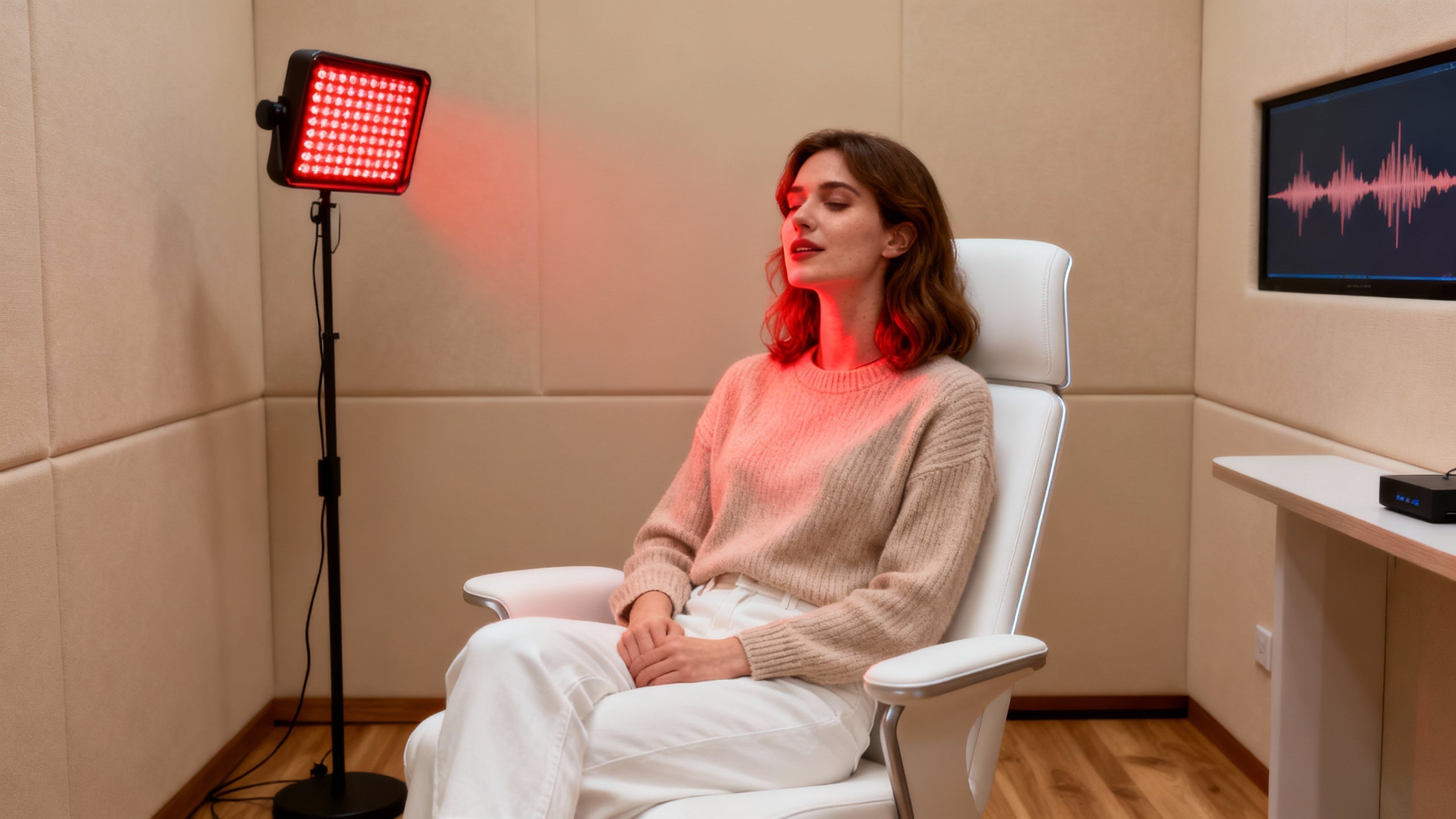
When you watch a dancer float across the stage, you are really watching feet doing brutal work. Pointe shoes, jumps, hard landings, late-night rehearsals on less-than-ideal floors: all of it concentrates load through a few square inches of tissue. After years of optimizing recovery protocols for high‑load performers, I have learned that you cannot fake resilient feet. The question is whether red light therapy, or photobiomodulation, truly moves the needle for dancer foot health or if it is just the wellness trend of the moment.
In this article I will walk through how red and near‑infrared light interact with foot tissues, which dancer‑specific problems they may help, what the evidence and podiatry literature actually say, and how to integrate this tool safely and pragmatically into a dancer’s recovery plan without buying into hype.
I will stay close to the published mechanisms and clinical reports from podiatry clinics, sports medicine centers, and medical publishers such as Stanford Medicine, WebMD, and University Hospitals, and I will flag where evidence is strong, weak, or simply not known yet.
Dancer Feet: A High‑Stress Test Bed
Dancers are, biomechanically, extreme endurance and plyometric athletes. Ballet, jazz, contemporary, ballroom, and hip‑hop all load the forefoot, midfoot, and ankle in repetitive, often asymmetrical patterns. A podiatry article on laser therapy for dance injuries notes that repetitive movements, muscle tension, overuse, and poor technique stack up to create sprains, strains, and even fractures in feet and ankles. Many dancers try to dance through pain, which increases the risk that a manageable irritation turns into a chronic problem.
From the foot‑care side, common conditions keep showing up: plantar fasciitis and heel pain, Achilles tendinopathy, chronic ankle pain, nerve irritation or neuropathy, and post‑surgical stiffness and swelling. Another research group focused specifically on classical ballerinas, designing a study on infrared laser effects on plantar pressure and static balance. That abstract alone tells you something important: clinicians who live in dance medicine are interested enough in light‑based therapies to study them specifically in ballerina feet.
Feet are also uniquely vascular and neural. A wellness article summarizing red light therapy for feet points out that the sole contains thousands of nerve endings, many pressure points, and a dense vascular network. Combine that biology with the high mechanical load of dance, and you end up with a perfect test bed for any modality claiming to enhance microcirculation, calm irritated nerves, and speed tissue repair.

What Red Light Therapy Actually Is
Red light therapy, more precisely called photobiomodulation or low‑level laser/light therapy, uses specific red and near‑infrared wavelengths, roughly in the 630–850 nanometer range, delivered by LEDs or low‑power lasers. Unlike high‑heat surgical lasers, the power is low and non‑thermal. The goal is not to heat or burn tissue but to modulate cellular biology.
Several independent sources converge on the same core mechanism. Light in this spectrum penetrates the skin and is absorbed by chromophores in mitochondria, particularly cytochrome c oxidase. Sports‑medicine and photobiomodulation reviews report that this interaction can displace nitric oxide from the mitochondrial enzyme, allowing oxygen to bind more effectively and restoring oxidative phosphorylation. The downstream result is increased ATP production, with some sports‑medicine authors citing up to roughly a two‑fold increase in cellular energy output under certain experimental conditions.
Beyond ATP, red and near‑infrared light are reported to trigger a cascade of effects that are directly relevant to dancer feet:
Light can promote vasodilation and nitric oxide release locally. Articles from HealthLight and other foot‑pain resources describe near‑infrared light triggering nitric oxide production at the treatment site, which dilates local blood vessels, increases blood flow, and delivers more oxygen and nutrients to stressed tissues.
Light can modulate inflammation and oxidative stress. Multiple podiatry and orthopedic sources describe reductions in inflammatory mediators such as prostaglandins and cytokines along with improved antioxidant defenses. This translates into less swelling, redness, and stiffness in clinical contexts like ankle sprains and plantar fasciitis.
Light can influence collagen synthesis and tissue repair. Reviews on foot and ankle pain, and sports‑recovery articles, emphasize increased collagen production, improved microcirculation, and enhanced cell proliferation. Those processes underpin tendon, fascia, and ligament healing.
Light can support nerve health. Foot‑focused articles on neuropathy and podiatric red light therapy highlight improved circulation to nerve tissue and increased mitochondrial energy in nerve cells. The claim, based on early clinical reports, is that this may ease burning, tingling, and numbness and support nerve repair.
Stanford Medicine’s overview of red light therapy puts all of this under the umbrella of photobiomodulation: a way of nudging biological processes rather than destroying tissue. It is crucial to remember that these photons are not magic. They are a stimulus that may tilt cellular signaling, blood flow, and repair in a favorable direction, within limits.

Key Foot Problems in Dancers and How Red Light May Help
Plantar Fasciitis and Heel Pain
Plantar fasciitis is an overuse injury of the plantar fascia, the thick band of tissue running from heel to toes. One podiatric source estimates that plantar fasciitis accounts for heel pain in roughly 10 percent of people at some point, and dancers are overrepresented in that group. Repeated jumps, relevés, and long hours standing in turnout create micro‑tears in the fascia that trigger inflammation, pain on first steps in the morning, and often substantial limitations in performance.
Chiropractic and podiatry clinics that use red light therapy describe it as a non‑invasive, drug‑free adjunct for plantar fasciitis. Mechanistically, they emphasize mitochondrial stimulation, enhanced metabolism, and local blood‑flow improvements, all framed as helping the body “heal at the source” rather than simply masking symptoms with painkillers. By stimulating collagen production and improving microcirculation around the fascia, photobiomodulation may help repair those micro‑tears and reduce inflammation.
A review of foot and ankle applications notes randomized controlled trials in plantar fasciitis where red light therapy outperformed placebo in pain relief and functional gains. Typical patterns in those trials often involve two to three sessions per week over three to six weeks. The same review stresses that red light should not be a stand‑alone cure; combining it with tissue‑specific exercise therapy, orthotics, and load management produced better functional outcomes.
For dancers, the implication is straightforward. If a clinician has already optimized calf and intrinsic foot strengthening, addressed technique and footwear, and ruled out other causes of heel pain, adding a structured block of red light sessions might help accelerate the transition from painful first steps to more comfortable pliés and jumps.
Achilles Tendinopathy and Chronic Ankle Pain
Achilles tendinopathy is another classic dancer injury. It reflects chronic overload of the tendon rather than a single rupture. Podiatric and sports‑medicine sources report that red light therapy can improve microcirculation around tendons, reduce inflammatory markers, and support collagen remodeling.
Clinical reports summarized in a foot and ankle pain article describe better tendon healing when red light therapy is combined with exercise therapy. The proposed mechanisms mirror what we see in fascia: increased ATP for repair, better blood flow, and modulation of inflammatory cytokines. In ankle sprains and post‑surgical cases, photobiomodulation is reported to reduce edema and swelling and modestly speed wound healing when appropriate devices and protocols are used.
Dance‑specific clinicians using laser systems, such as K‑laser, frame this as targeting the origin of pain in conditions like Achilles tendinitis and plantar fasciitis. They describe increased metabolic activity in cells, improved local circulation, and faster resolution of swelling and inflammation, often in brief sessions of around ten minutes, without medications or downtime. Many dancers reportedly feel only mild warmth during treatment.
What we do not have from the abstracts and practice descriptions is a large, uniform body of randomized trials specifically in dancers. What we do have are tendon and ankle studies in broader athletic and orthopedic populations and consistent mechanistic rationale. For a dancer coming back from an Achilles flare, that means photobiomodulation is a plausible adjunct to well‑designed loading and technique work, not a shortcut.
Neuropathy, Nerve Irritation, and “Hot” Feet
Dancers, especially those with metabolic risk factors or a history of nerve entrapment, can develop neuropathic symptoms: burning, tingling, numbness, or “hot” feet after rehearsals. Articles focused on red light therapy for feet define foot neuropathy as nerve damage in the feet that makes daily activity painful and unstable.
Red light therapy is promoted in that context as a non‑drug option that increases ATP production in nerve cells, improves local circulation, and reduces inflammation. By boosting energy availability and blood supply to nerves, the therapy may help damaged nerves function more effectively and potentially slow further damage. Clinic and home‑device writers connect this with fewer neuropathic symptoms over time when therapy is used consistently and combined with medical management of the underlying condition, such as diabetes.
Podiatry‑focused sources also discuss red light as a supportive modality for diabetic neuropathy, emphasizing not cure but partial symptom relief and improved quality of life through better circulation and reduced inflammation. For dancers, this is particularly relevant when neuropathic pain or numbness is limiting proprioception and balance.
Here the evidence is still developing. The sources emphasize potential and supportive use rather than definitive reversal of nerve damage. They also consistently advise maintaining collaboration with healthcare providers, because neuropathy carries systemic implications far beyond the dance studio.
General Muscle Fatigue, DOMS, and Performance
Dancers are essentially hybrid strength‑endurance athletes. Sports‑medicine literature on photobiomodulation in muscle shows that red and near‑infrared light, at appropriate doses, can increase muscle work capacity, reduce delayed onset muscle soreness, and improve certain performance metrics in controlled trials.
A systematic review of photobiomodulation in human muscle tissue compiled more than forty clinical and case‑control studies. Across upper and lower limb protocols, applying red or near‑infrared light before exercise often increased repetitions, total exercise time, or fatigue resistance. Several studies reported lower post‑exercise creatine kinase and inflammatory markers, and smaller drops in isometric force. However, results were not uniform. Some well‑controlled trials with different wavelengths or doses found no meaningful changes, underscoring how sensitive outcomes are to parameters like wavelength, dose, and timing.
Sports‑oriented clinics describe these effects in more accessible language. They note that red light can accelerate muscle repair, reduce inflammation, and allow harder or more frequent training, with some reports of reduced soreness by a substantial margin. Strength and endurance studies in athletes suggest that, when protocols are optimized, red light used before or after training can enhance gains and cut recovery time over a two‑ to four‑week period.
Stanford Medicine’s expert review, though, injects an important note of caution. It points out that claims about athletic performance, recovery, or sleep enhancement remain weakly supported in current human studies. There is promising theory and mixed findings, but not yet a rock‑solid consensus.
For dancers, the translation is this: if you are already nailed on sleep, nutrition, and intelligent periodization, adding red light sessions for the lower legs and feet may give you an edge in managing soreness and fatigue, but it is not a replacement for foundational recovery habits.
Clinical Foot Care and Podiatry Perspectives
Podiatrists and foot‑care clinics have been early adopters of red light for several reasons. They see a high volume of chronic foot conditions where medications either plateau or cause systemic side effects. Red light therapy offers a non‑invasive, drug‑free, localized option that is appealing to both clinicians and patients.
Several podiatry‑oriented articles highlight common use cases: plantar fasciitis, Achilles tendinopathy, foot fungus (onychomycosis), and diabetic neuropathy. For plantar fasciitis, they describe red light as helping increase blood flow, strengthen the fascia via collagen production, and reduce inflammation. For diabetic neuropathy, they emphasize improved circulation and nourishment of nerves, aiming to reduce pain, tingling, and numbness.
These sources also stress implementation details that matter for dancers:
They recommend consistent sessions, often two or three times per week for several weeks, rather than sporadic use.
They emphasize that medical‑grade devices, with known wavelengths and power outputs, are more likely to deliver therapeutic doses than cosmetic or low‑cost gadgets.
They frame red light therapy as one component of a broader plan that may include orthotics, targeted strengthening, manual therapy, and movement retraining.
On the safety side, podiatry and foot‑care articles agree with broader medical reviews. Low‑level red light is generally safe when used appropriately. However, they recommend avoiding direct use over active cancer sites, being cautious in pregnancy without medical guidance, and not shining light directly into the eyes. WebMD adds that people taking medications that increase photosensitivity, or those with a history of skin cancer or eye disease, should consult a physician first. High‑intensity exposure can cause skin redness or blistering, though this is described as unusual when devices are used as directed.
Device Types Dancers Are Actually Using
In practice, dancers encounter red light therapy in two main contexts: clinical settings and home setups. The landscape looks roughly like this:
Setting or device type |
Typical use around dancer feet |
Notes from the literature and practice reports |
Clinic full‑body beds or large panels (for example, NovoTHOR) |
Whole‑body sessions when dancers have multiple pain sites or systemic soreness, with extra emphasis on lower legs and feet |
Chiropractic and sports clinics promote these for systemic recovery and multi‑site pain; parameters are usually preset and supervised |
Clinic handheld lasers or LED clusters (such as K‑laser or Thor handheld devices) |
Focused applications to plantar fascia, Achilles tendon, ankle ligaments, and post‑surgical scars |
Used to deliver higher power density to small areas in brief sessions, often around ten minutes, and frequently combined with manual therapy or exercise |
Dedicated foot pads, boots, or wraps |
At‑home or in‑studio sessions where dancers place feet on or in a device targeting soles, heels, and ankles |
Commercial pages describe them as non‑drug foot‑pain tools using red and near‑infrared LEDs, often with built‑in timers for safety |
Small panels under desks or near a barre |
Low‑effort way to support circulation in the feet during seated work or between rehearsals |
Wellness articles suggest this as a lifestyle‑friendly option for people who stand or sit for long periods |
Clinic systems typically have known, documented wavelengths and power densities and are used by professionals familiar with dosing. Home devices range from serious medical‑grade units to very low‑power consumer gadgets, and effectiveness is likely to vary widely. Stanford Medicine and other medical sources note that clinic‑based systems are usually more powerful and better characterized than at‑home devices, which can make real‑world dosing inconsistent.
How to Integrate Red Light Therapy into a Dancer’s Foot‑Care Plan
From a “light‑therapy geek” perspective, the art is not in turning the device on; it is in integrating it into a coherent plan built around diagnosis, load management, and strength.
The starting point is always a proper assessment. Persistent foot pain in a dancer should be evaluated by a clinician who understands both dance and foot mechanics, such as a dance‑savvy podiatrist, physical therapist, or sports medicine physician. Plantar fasciitis, stress fractures, nerve entrapments, and inflammatory arthritis can all present with overlapping symptoms but require very different primary treatments. Red light therapy is an adjunct, not a diagnostic tool.
Once a working diagnosis is in place and the basics are addressed, red light fits in as follows.
For plantar fasciitis or chronic heel pain, a common clinical pattern derived from the foot‑and‑ankle literature involves using red or near‑infrared light two or three times per week for three to six weeks over the painful area, while also progressing a program of calf and intrinsic foot loading, soft‑tissue work where appropriate, and changes in rehearsal volume or footwear. The goal is to use photobiomodulation to calm inflammation and support tissue repair while the mechanical load on the fascia is being fixed.
For Achilles or ankle issues, photobiomodulation is usually applied along the tendon and around the ankle joint, either before loading exercises to reduce pain and stiffness or after intense rehearsals to dampen inflammatory response. Sports‑medicine articles describe pre‑exercise application as potentially beneficial for performance and post‑exercise application as aimed at recovery.
For neuropathic or nerve‑like symptoms, red light is often used at lower intensities or with careful supervision, given the underlying medical complexity. Foot‑pain and neuropathy resources consistently recommend that such use be coordinated with the physician managing the systemic condition, while maintaining expectations around partial symptom relief rather than cure.
At home, using a foot panel or pad, dancers typically work within the time windows discussed in sports and recovery articles. Those sources commonly describe ten to twenty minute sessions per area as a reasonable upper bound before diminishing returns, with closer distance to the light source requiring less exposure. Consistency over several weeks tends to matter more than a marathon session once in a while.
Safety habits are non‑negotiable. That means using appropriate eye protection when recommended, following manufacturer and clinician guidance on distance and session length, not using red light over unexplained lumps or lesions, and pausing use and consulting a professional if the skin reacts with significant redness or blistering.
Pros and Cons for Dancer Foot Health
The upside of red light therapy for dancer feet is compelling on paper. It is non‑invasive and generally painless, it avoids the systemic side effects of some medications, and it can be directed precisely where the dancer hurts. Mechanistically, it aligns with what dancers need most at the end of a rehearsal day: more efficient cellular energy production, better microcirculation, and lower inflammatory load in overloaded tissues. Clinical and practice‑based reports in plantar fasciitis, Achilles tendinopathy, arthritis, and neuropathy suggest real, if modest, improvements in pain and function when red light is added to good rehabilitation programs.
There is also a lifestyle advantage. Wellness‑oriented articles describe using small panels under a desk or by a couch, or short pre‑bed sessions to relax foot muscles and support blood flow. For dancers who log long hours at day jobs or in school before they even reach the studio, a low‑friction recovery tool is attractive.
The drawbacks are equally important to acknowledge. First, the evidence is not uniform. While foot‑specific trials in plantar fasciitis and ankle arthritis show promising pain reductions and functional gains, Stanford Medicine’s review highlights that broader claims for athletic performance and chronic pain remain weakly supported and sometimes inconsistent. A muscle‑focused photobiomodulation review also documents several well‑designed trials where certain protocols had no effect, illustrating that dose and timing are critical.
Second, home devices are a mixed bag. Medical centers and dermatology experts emphasize that clinic systems usually have known, tested wavelengths and power outputs, while many at‑home devices lack clear dosing information. This makes it hard to know whether a dancer is getting a therapeutic dose or mainly bright red ambiance.
Third, cost is real. University Hospitals and WebMD both note that treatments, especially in clinics, can be expensive and often are not covered by insurance. Consumer devices can range from under one hundred dollars for small handhelds to hundreds or thousands of dollars for larger panels or foot units. For many dancers, that is a significant investment, especially given that benefits often require repeated, ongoing sessions.
Finally, red light therapy is not a structural fix. It cannot realign bones, correct advanced joint deformity, or replace technique coaching. Clinicians caution that it is most useful for inflammatory and soft‑tissue problems, not for reversing severe mechanical damage. Used in the wrong way, it can even delay essential care if a dancer chases light‑based pain relief instead of addressing a stress fracture or serious tendon tear.

How a Veteran Recovery Geek Looks at Red Light for Dancers
After years of experimenting with recovery tools for athletes and performers, my lens for red light therapy is simple: mechanism, evidence, practicality, and opportunity cost.
Mechanism is solid for exactly the kind of problems dancers have in their feet: overuse inflammation, micro‑tears in fascia and tendons, and microvascular strain. The biology of nitric oxide, vasodilation, ATP production, and collagen synthesis fits the clinical picture of plantar fasciitis, Achilles tendinopathy, and neuropathic irritation.
Evidence is promising but bounded. The best‑supported foot applications are plantar fasciitis and certain arthritis or tendinopathy cases, where randomized trials and meta‑analyses show superior pain reduction and modest functional improvements compared to placebo. Neuropathy and athletic performance benefits are more tentative, with encouraging reports and mechanisms but less definitive human data. Chronic pain and multi‑system claims remain in the “experimental” category according to academic reviews.
Practicality is where dancers actually win. Foot‑specific devices and small panels make it realistic to integrate red light therapy into daily routines without a massive time burden. Short, frequent sessions around rehearsals and performances fit the reality of a dancer’s schedule far better than many elaborate recovery rituals.
Opportunity cost is the ethical filter. Red light therapy is worth considering only after or alongside fundamentals: proper diagnosis, smart load progression, strength and conditioning aligned with dance demands, and sleep and nutrition that support healing. Once those are in motion, red light becomes a potentially valuable amplifier rather than a distraction.
If you are a dancer or work with dancers, that is the mindset I recommend. Use the emerging science to inform you, the clinical reports to guide you, and your training priorities to discipline you. Let red light therapy be a precise tool in a well‑built recovery toolkit, not the entire kit.

Brief FAQ
Can red light therapy replace rest or physical therapy for dancer foot injuries?
No. Across podiatry, sports‑medicine, and academic sources, red light therapy is consistently presented as an adjunct, not a replacement, for load management and therapeutic exercise. It can help reduce pain and support healing, but it does not correct technique errors, strengthen weak muscles, or fix structural issues.
Is red light therapy safe for daily use on the feet?
Low‑level red light is generally considered safe when used correctly, and foot‑care articles even describe it as suitable for regular home use. Still, medical and dermatology sources advise using eye protection when appropriate, avoiding treatment over active cancer, being cautious in pregnancy, and checking with a physician if you have photosensitive conditions or take photosensitizing medications. If the skin becomes irritated, the device should be stopped and a clinician consulted.
How long before a dancer might notice changes?
Clinical and sports‑recovery reports often describe subtle improvements in stiffness or soreness after initial sessions, with more measurable changes in pain scores or function emerging over two to four weeks of consistent treatment. Foot‑focused trials in plantar fasciitis and ankle issues commonly span three to six weeks. Individual responses vary, and red light therapy should be evaluated in the context of the entire rehab plan.
In the end, dancer feet are both fragile and incredibly adaptable. Photobiomodulation will not change that fundamental truth. What it can do, when used intelligently and honestly within its evidence base, is tilt the biology of those overworked tissues in your favor just enough that training and artistry can do the rest.
References
- https://pmc.ncbi.nlm.nih.gov/articles/PMC5167494/
- https://med.stanford.edu/news/insights/2025/02/red-light-therapy-skin-hair-medical-clinics.html
- https://www.uhhospitals.org/blog/articles/2025/06/what-you-should-know-about-red-light-therapy
- https://www.physio-pedia.com/Red_Light_Therapy_and_Muscle_Recovery
- https://www.savapodiatry.com/red-light-therapy-for-foot-pain-and-inflammation
- https://www.3dmotiondance.com/blog/ballet-foot-care.html
- https://www.athleticlab.com/red-light-therapy-for-athletes/
- https://brighthealththerapy.com/products/light-therapy-foot-device?srsltid=AfmBOorG3hL1B1mVxGJF92-Yz4ow9NDLHYWRQz2_rW8SiE5YZlNqsER1
- https://www.cfoxdpm.com/blog/k-laser-for-dance-injuries.cfm
- https://elitefaor.com/benefits-of-redlight-therapy-in-foot-and-ankle-pain/