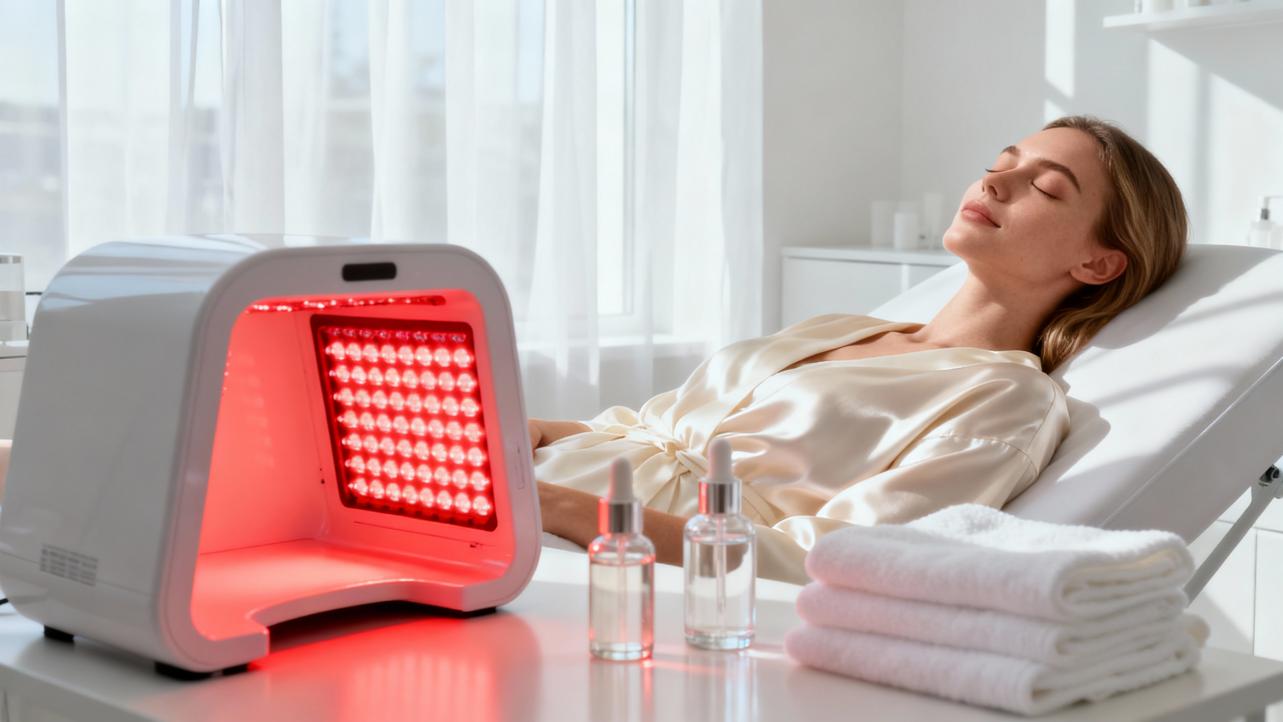
Walking into a red light therapy cabin feels a bit like stepping into a sci‑fi movie. As someone who has been experimenting with panels, masks, and full‑body systems for years, I can tell you this: red light can definitely change the way skin behaves. The real question is not whether it “does something,” but whether it can specifically help your skin hold on to moisture better.
To answer that, we need to unpack what moisture retention actually is, what red light therapy really does at a cellular level, and what the current science says about hydration, not just wrinkles and glow.
Hydration 101: What “Moisture Retention” Really Means
When people say their skin is “dry,” they lump together several different problems. From a physiologic standpoint, moisture retention is mainly about how well the outermost layers of the skin keep water in.
Dermatology and nutrition sources describe the top layer of skin, the stratum corneum, as a brick‑and‑mortar structure. The “bricks” are flattened, dead skin cells, and the “mortar” is a mixture of lipids that seal gaps between them. This layer needs enough water to stay plump and flexible. When hydration is adequate, skin looks smooth, elastic, and radiant. When it is not, skin becomes dull, flaky, more lined, and more easily irritated.
Two concepts matter most here:
Trans‑epidermal water loss (TEWL): the amount of water that passively evaporates through the skin barrier. High TEWL usually means a compromised barrier and poor moisture retention.
Barrier integrity: the health of the lipids, proteins, and structures that prevent water from escaping and irritants from getting in.
Articles on skin hydration and the gut–skin axis emphasize that water intake, lipids, and cellular repair all play a role in barrier function. Hydration is not just about drinking enough water; it is about whether the skin’s structure and microcirculation can keep that water where it belongs.
So any claim that red light therapy helps moisture retention has to come back to one of these levers: barrier repair, TEWL reduction, microcirculation, or the molecules that bind water in the skin, such as hyaluronic acid.

Red Light Therapy In A Nutshell
Red light therapy, often called low‑level light therapy or photobiomodulation, uses specific low‑intensity red and near‑infrared wavelengths to influence how cells function without heating or burning tissue. Clinical and review articles place effective ranges roughly between visible red wavelengths around 600–700 nanometers and near‑infrared wavelengths up to about 1,000 nanometers.
Cleveland Clinic describes red light therapy as an emerging treatment that appears safe in the short term, especially for skin appearance, but still lacks high‑quality evidence for many of the sweeping claims seen online. The technology first gained traction when NASA explored red light for plant growth and wound healing in space, and it is now widely used in dermatology settings and at home.
A few key points from dermatology and photobiomodulation reviews:
Red and near‑infrared light can penetrate several millimeters into the skin, with red light having the greatest dermal penetration in the visible spectrum.
Photons are absorbed by cellular “chromophores,” especially mitochondrial cytochrome c oxidase, which increases energy production (ATP) and triggers downstream signaling in repair and inflammation pathways.
Compared with ablative lasers and intense pulsed light, red light therapy is non‑ablative and non‑thermal at therapeutic doses. It does not intentionally damage tissue; it nudges biology toward repair and regeneration.
Stanford Medicine notes that the strongest evidence is for modest wrinkle reduction and hair regrowth, with mixed data for wound healing and limited high‑quality evidence for broader wellness claims. Hydration is not yet a headline indication in major medical reviews, but it intersects with many of the same mechanisms.
To ground the discussion, here is what a typical skin‑focused protocol looks like based on clinical guides and device recommendations:
Parameter |
Typical Range (skin use) |
Why It Matters |
Wavelength |
Red around 630–670 nm; some devices add 800–850 nm NIR |
Targets mitochondrial chromophores and dermal fibroblasts |
Session duration |
About 10–20 minutes per area |
Controls total energy dose to stay in a therapeutic window |
Frequency |
Roughly 2–5 sessions per week for several weeks |
Effects are cumulative and depend on consistency |
Dose (fluence) |
Often about 4–10 J/cm² per session in studies |
Supports repair pathways without tipping into overstimulation |
Those ranges are drawn from photobiomodulation guides, clinical trials, and practitioner protocols, not from marketing copy.

Mechanisms: How Could Red Light Help Skin Hold Water?
The key question is not whether red light therapy can make skin look better. Multiple trials say it can. The question is whether it can meaningfully impact moisture retention rather than just temporarily plumping the surface.
Several mechanistic pathways connect red light therapy to hydration:
Cellular Energy And Repair
Low‑level red and near‑infrared light is absorbed by mitochondrial enzymes such as cytochrome c oxidase. Reviews in photobiomodulation describe increases in ATP production and improved redox signaling after exposure. One clinical guide cites trials reporting roughly one‑third higher ATP generation with properly dosed red light.
Better energy availability allows skin cells to perform resource‑intensive tasks more efficiently, such as synthesizing proteins, lipids, and extracellular matrix components that support a strong barrier. Hydration is not just about adding water; it is about whether the barrier has the structural and metabolic capacity to hold that water.
Collagen, Elastin, And Dermal Matrix
Multiple sources, including dermatology reviews, brand‑neutral clinical summaries, and cosmetic medicine blogs, converge on a consistent finding: red light therapy increases collagen production and often elastin as well.
A controlled German trial of 136 volunteers receiving full‑body polychromatic red and near‑infrared light twice weekly for 30 sessions found:
Significant increases in ultrasonographically measured collagen density.
Significant improvements in skin roughness and blinded wrinkle assessments compared with untreated controls.
Participants also reported better complexion and skin feeling, and these benefits persisted, though somewhat reduced, at a six‑month follow‑up.
Separate LED studies summarized in an anti‑aging review report increased type I procollagen and reductions in matrix metalloproteinase activity, along with measurable improvements in elasticity and wrinkle depth.
Why does this matter for moisture retention? Collagen and elastin form the structural scaffold that keeps skin thick and springy. A healthier dermal matrix can reduce the appearance of dryness and lines and can indirectly support better water distribution in the skin by maintaining volume and resilience.
Microcirculation And Nutrient Delivery
Articles aimed at both clinicians and consumers, including resources from dermatologists and wellness clinics, consistently mention improved blood flow as one of the key effects of red light therapy. By widening small blood vessels and promoting angiogenesis, red light helps deliver more oxygen and nutrients while aiding removal of metabolic waste.
This matters for hydration because water is not just trapped inside the skin; it is constantly exchanged with the bloodstream. Improved microcirculation supports:
Delivery of water and electrolytes.
Transport of lipids and amino acids needed to rebuild the barrier.
Clearance of inflammatory mediators that can damage that barrier.
Several whole‑body red light providers frame increased circulation as central to the “glow” and improved skin tone their clients report, which aligns with the mechanistic data.
Barrier Function And Transepidermal Water Loss (TEWL)
A comprehensive dermatology review on photobiomodulation notes that in acne, low‑level light can reduce both sebum production and transepidermal water loss. In other words, properly dosed LED light helped normalize oil output and reduce passive water escape through the skin barrier.
Brand‑side hydration articles focused on red light therapy highlight similar ideas, arguing that strengthening the barrier with collagen and improved lipid organization leads to lower TEWL and better moisture retention. Although those particular pieces are commercial, they are consistent with the broader photobiomodulation literature that shows barrier strengthening in wound healing and radiation‑induced dermatitis.
If TEWL goes down and the barrier is more intact, the same internal hydration results in more comfortable, less flaky skin.
Hyaluronic Acid And Water‑Binding Molecules
Several cosmetic‑oriented but scientifically referenced articles point to a specific hydration mechanism: stimulation of hyaluronic acid production. Hyaluronic acid is a naturally occurring polysaccharide that can bind multiple times its weight in water and is a major contributor to skin plumpness.
One summary citing work in Journal of Clinical and Aesthetic Dermatology reports significant increases in skin hydration after red light exposure, linked in part to increased hyaluronic acid levels. Another review of anti‑aging light studies notes that red and near‑infrared LEDs upregulate genes involved in extracellular matrix and glycosaminoglycan synthesis.
A hydration‑focused guide for beginners explicitly recommends pairing red light sessions with topical hyaluronic acid, arguing that the therapy supports both barrier strength and the skin’s ability to hold that infused moisture.
The net effect is that red light may not just reinforce the “walls” of the barrier; it may also increase the number of “sponges” that hold water within those walls.
Inflammation, Irritation, And Hydration
Persistent low‑grade inflammation is a major enemy of moisture retention. It disrupts barrier lipids, increases TEWL, and sensitizes nerve endings so that ordinary environmental stressors sting and burn.
Dermatology reviews and clinical experience with LEDs show that red light has anti‑inflammatory effects, shifting macrophages toward healing phenotypes and modulating cytokine patterns. Clinics use red light after procedures, and in combination with lasers and peels, precisely because it reduces post‑treatment redness and supports faster repair.
From a hydration perspective, a calmer, less inflamed skin environment is easier to keep moisturized. If every product you apply burns, you are unlikely to layer humectants and occlusives consistently enough to maintain a healthy barrier. Red light’s calming effect can make a real difference in what your skin will tolerate.

What The Science Actually Shows About Hydration
The evidence base for red light therapy and skin hydration is younger and thinner than the evidence for wrinkles or acne, but several lines of data come together.
A few points that are actually documented in the literature and clinical summaries provided in the research notes:
A controlled full‑body red and near‑infrared trial in 136 people showed measurable improvements in collagen density, skin roughness, wrinkle appearance, and subjective skin feeling. Hydration was not directly measured, but improved texture and collagen are consistent with better moisture handling.
A dermatologic review of photobiomodulation reports reduced sebum production and reduced transepidermal water loss in acne patients treated with low‑level LEDs. That is direct support for the idea that light can influence barrier water loss.
A summary of cosmetic studies in infrared and red light therapy cites work where users experienced significant increases in skin hydration along with improved texture and elasticity after several weeks of LED treatment.
Hydration‑oriented brand content, though not peer‑reviewed science, aligns with these mechanisms, pointing to strengthened barrier function, lowered TEWL, better circulation, and enhanced hyaluronic acid production as contributors to more hydrated, plump skin.
At the same time, Cleveland Clinic emphasizes that for many uses of red light therapy, including broader wellness claims, the evidence is still considered preliminary. Stanford Medicine notes that strong clinical validation exists mainly for wrinkles and hair, with mixed or insufficient data for many systemic or performance benefits.
Putting it together: there is reasonable mechanistic support and early clinical evidence that red light therapy can improve structural and functional aspects of the skin that influence hydration and TEWL. However, red light therapy for moisture retention specifically is best viewed as an adjunct to good skincare and lifestyle, not as a stand‑alone hydration cure.
When Red Light Therapy Makes Sense For Dry Or Dehydrated Skin
In practice, there are a few scenarios where using red light therapy to support moisture retention is especially defensible.
Seasonal And Climate Stress
A seasonal skincare guide from a red light device company explains how rapid transitions between cold, dry indoor heating and hot, humid outdoor environments can stress the barrier, increasing redness, flares, and fine lines. In those contexts, red light used a few times per week over several months may help rebuild collagen, support microcirculation, and calm inflammation so that moisturizers and serums work over a healthier base.
From a “light geek” standpoint, I have seen this repeatedly: clients who travel frequently between climates or work in aggressively air‑conditioned offices often respond well to a three‑month block of regular red light therapy combined with a disciplined hydration routine.
Aging, Thinning Skin
Multiple clinical trials and reviews report that red and near‑infrared LEDs increase dermal collagen, improve elasticity, and reduce surface roughness. The large German trial mentioned earlier, plus other wrinkle‑focused studies, found objective improvements in collagen density and self‑reported skin softness and tone.
Aging skin that is thinner and more lined does not retain water as well; it simply has less “matrix” to hold it. By modestly thickening and firming the dermis, red light can make the same moisturizer produce a more robust, longer‑lasting plumping effect.
Acne‑Prone Yet Dehydrated Skin
Acne patients often walk around with an odd combination: oily surface, dehydrated barrier, and chronic inflammation. The photobiomodulation review that documented reduced sebum and TEWL with LED therapy in acne suggests red light can help normalize both oil and water handling, especially when paired with blue light to target bacteria.
This is one of my favorite use cases in the real world. A consistent protocol that uses blue light first for acne lesions, followed by red light for inflammation and repair, can calm breakouts while slowly rebuilding tolerance to hydrators that were previously too irritating.
Post‑Procedure And Barrier Repair
Medical centers and dermatology practices use red light after procedures such as laser resurfacing, microneedling, or peels because it speeds healing and reduces post‑treatment erythema and downtime. Wound healing trials and oncology‑related skin toxicity studies show that photobiomodulation can modulate all phases of wound repair, including re‑epithelialization and collagen remodeling.
In plain terms, that translates into a stronger, more organized barrier after injury. Whether the damage came from a controlled laser procedure or from sun and weather, that stronger barrier is better at retaining moisture.

Where Red Light Falls Short: Limits, Side Effects, And Hype
An evidence‑based light therapy geek has to be as excited about limitations as about benefits.
Major institutions such as Cleveland Clinic stress that most red light claims still lack large, high‑quality randomized trials. Many published studies are small, unblinded, or focused on surrogate endpoints. That includes much of what we know about hydration, which often comes from secondary measures or brand‑funded work rather than large independent trials.
Several realities follow from that:
Hydration benefits are generally modest and gradual, not dramatic or instant. Expect changes over four to eight weeks of consistent use, not overnight.
Red light therapy does not replace moisturizers, humectants, or a healthy diet. It can amplify what those tools do but does not obviate them.
Consumer devices vary wildly in wavelength accuracy, power output, and build quality. Clinic devices tend to be stronger and more standardized, as Stanford Medicine notes.
On the safety side, long‑term adverse events appear rare when red light is used correctly. Reviews and clinical guides report side effects that are usually mild and temporary: warmth, transient redness, occasional dryness, eye strain, headaches, or dizziness from bright light exposure. Several physicians and clinics recommend:
Using eye protection with higher‑intensity panels or whenever discomfort is felt.
Avoiding use over active cancerous areas and exercising caution with photosensitive neurological conditions.
Being careful if you are pregnant or on photosensitizing medications, where data are limited.
Overuse is real. Beginner guides and dermatology blogs both warn that chasing faster results by doubling or tripling recommended session times can backfire, increasing irritation and potentially worsening dryness in the short term.
Finally, there is the hype problem. Cleveland Clinic explicitly notes that there is no scientific support for red light therapy as a weight loss or cellulite treatment, or as a primary mental health intervention. Stanford Medicine likewise warns that claims around athletic performance, sleep, erectile function, pain, and dementia are not backed by strong clinical evidence yet. Hydration sits somewhere between the well‑supported wrinkle data and the speculative whole‑body performance marketing. It is promising but not definitive.

How I Use Red Light For Hydration In Real Life
From the perspective of a veteran wellness optimizer, the most valuable question is not “Does it work?” but “How do I stack the odds so it is worth my time and money?”
In my own routine, and in the protocols I design for clients, red light therapy for hydration is never isolated. It is always part of a hydration stack that includes topical humectants, barrier‑supportive lipids, internal water and electrolytes, and sleep.
A typical three‑month “hydration block” in my world looks like this.
Most evenings, after work, I start with a gentle cleanse to remove sunscreen and pollution without stripping. If the skin is reactive, I keep surfactants minimal and skip physical scrubs entirely.
On slightly damp skin, I apply a thin layer of a simple, water‑based serum with hyaluronic acid and possibly a soothing botanical such as chamomile or green tea, both of which are mentioned in photobiomodulation‑aligned topical discussions. I avoid strong acids or retinoids immediately before light exposure.
Then I position myself about a foot away from a red and near‑infrared panel that emits wavelengths in the 630–670 nm and 800–850 nm ranges. Sessions last around 12–15 minutes for the face and neck, three to four evenings per week. That fits within the 10–20 minute, multi‑sessions‑per‑week patterns described in photobiomodulation guides and clinical use.
After the session, I immediately seal in that hydration with a moisturizer that combines humectants with lipids and a mild occlusive. This is where I see red light’s structural support pay off: over a few weeks, the exact same moisturizer creates a deeper, more sustained plumpness and a reduction in late‑day tightness, especially in drier seasons.
Sleep is the final multiplier. Photobiomodulation articles and red light wellness discussions emphasize that much of tissue repair happens during deep sleep. I schedule the majority of hydration‑focused sessions in the evening to take advantage of the nighttime repair window.
Subjectively, the difference is most obvious during harsh winter or travel periods. The combination of light, humectants, and disciplined moisturization reliably keeps my skin supple on red‑eye flights and in over‑heated apartments where, years ago, I would have been peeling and itchy.
That is anecdotal, of course, but it is consistent with the mechanistic and clinical trajectory of the field.
Practical Guidance: Using Red Light To Support Moisture Retention
If your main goal with red light therapy is better moisture retention, here is how to approach it in a way that respects both science and real‑world constraints.
Start by fixing the basics. Nutrition and hydration‑focused pieces underline that drinking sufficient water, eating water‑rich fruits and vegetables, and maintaining a balanced diet are foundational for skin hydration. Gentle cleansing, daily sunscreen, and avoidance of very hot showers all reduce unnecessary barrier damage. No light device can compensate for chronically dehydrating habits.
Choose the right type of device for your lifestyle and target area. For pure facial hydration and fine lines, an LED mask or small panel with red wavelengths around 630–660 nm is usually the most practical. For more global skin and recovery benefits, full‑body panels or beds that add near‑infrared wavelengths make sense, but they come with higher cost and space requirements. Clinical and consumer guides suggest that many home devices cost between about two hundred and two thousand dollars, while clinic sessions might run roughly twenty‑five to one hundred dollars each.
Verify wavelength and safety. Whether you buy a mask, handheld, or panel, look for clearly stated wavelengths in the therapeutic red range, adequate power for reasonable session times, built‑in timers, and, ideally, FDA clearance for safety. Several dermatology and hospital sources recommend eye protection with brighter devices, and you should follow manufacturer instructions closely.
Set realistic dosing. Most evidence‑informed protocols cluster around ten to twenty minutes per session, two to five times per week for a given area, with benefits emerging over four to eight weeks. A beginner‑focused hydration guide suggests positioning devices about six to twelve inches from the face and starting with three to five sessions per week, which aligns with broader photobiomodulation recommendations. More is not automatically better; staying within studied dose ranges reduces the risk of irritation.
Prepare the skin deliberately. Cleanse gently, remove makeup and debris, and pat dry. Applying a light, water‑based serum containing hyaluronic acid before treatment can enhance hydration outcomes, as several hydration‑focused articles recommend. Avoid known photosensitizing agents immediately before a session unless a dermatologist specifically advises otherwise.
Lock in moisture after the light. One of the most common mistakes beginners make, according to hydration guides, is skipping moisturizer after red light therapy and then wondering why their skin still feels dry. After a session, apply a well‑formulated moisturizer to trap water and humectants in the skin while the barrier is being supported by the therapy. Add sunscreen in the morning to protect your newly supported barrier from ultraviolet damage.
Consider synergy with systemic supports. Articles on pairing red light with nutrition point out that nutrients such as protein, vitamin C, copper, iron, B vitamins, and silica all contribute to collagen and connective tissue health. Adequate hydration clearly influences mitochondrial performance and tissue resilience. For some people, targeted supplements such as CoQ10 or certain antioxidants may provide an extra nudge, although those should be chosen in consultation with a healthcare professional.
Track your own data. A wellness guide referencing a 2019 photobiomodulation study noted that people who carefully logged their sessions and outcomes had faster symptom reduction than those who used their devices sporadically. For hydration, this might mean keeping a simple six‑ to twelve‑week log of dryness, tightness, flaking, and product tolerance alongside your session timing.

Pros And Cons Of Red Light Therapy For Moisture Retention
To summarize the trade‑offs in a compact way:
Aspect |
Upside for Moisture Retention |
Limitations and Risks |
Mechanism |
Supports collagen, barrier repair, microcirculation, and HA synthesis |
Hydration effects are indirect, not a direct infusion of water |
Evidence |
Controlled trials show structural improvements and reduced TEWL in some contexts |
Few large trials measure hydration endpoints as primary outcomes |
Experience |
Many users report softer, plumper, less reactive skin over weeks |
Results vary; some people notice subtle or delayed changes |
Practicality |
Non‑invasive, no downtime, compatible with most skincare |
Requires consistency, time, and device investment |
Safety |
Generally well tolerated with mild, transient side effects |
Overuse can cause irritation; caution needed with photosensitivity, pregnancy, or active cancer |

FAQ: Red Light Therapy And Skin Hydration
Can red light therapy replace my moisturizer?
No. Red light therapy can improve the skin’s structural ability to hold water by supporting collagen, barrier integrity, and molecules such as hyaluronic acid, but it does not supply water or lipids directly. Think of it as upgrading the plumbing, while moisturizers and humectants are the water and sealant. The best hydration results come from using both.
How long does it take to notice hydration benefits?
Most clinical and practitioner protocols for skin benefits, including hydration‑related changes, are structured around several weeks of consistent use. Reviews of at‑home LED devices and practitioner experience suggest that visible improvements in skin tone and texture often appear after about three to four weeks, with continued gains over eight to twelve weeks. Hydration changes usually follow the same timeline rather than appearing overnight.
Should I prioritize red or near‑infrared light for hydration?
For surface hydration and barrier support, red wavelengths around 630–670 nanometers are the main players. Near‑infrared wavelengths can complement red by reaching deeper tissues, supporting circulation and deeper collagen structures, but they are not essential for every hydration‑focused routine. Several dermatology‑oriented guides suggest using red for superficial skin concerns and adding near‑infrared when deeper tissue benefits are desired.
In the end, red light therapy is not a magic drinking fountain for your skin, but it is a powerful way to upgrade the hardware that manages moisture. When you combine correctly dosed red light with smart skincare, solid hydration habits, and decent sleep, you give your skin a real chance to feel as good as it looks. That is the kind of quiet, sustainable optimization that keeps a light therapy geek like me coming back to the panel week after week.
References
- https://clinicaltrials.gov/study/NCT07025837
- https://pmc.ncbi.nlm.nih.gov/articles/PMC11049838/
- https://med.stanford.edu/news/insights/2025/02/red-light-therapy-skin-hair-medical-clinics.html
- https://my.clevelandclinic.org/health/articles/22114-red-light-therapy
- https://www.inbmedical.com/9-clinical-studies-that-demonstrate-the-anti-aging-benefits-of-infrared-light-therapy
- https://www.bswhealth.com/blog/5-benefits-of-red-light-therapy
- https://fuelhealthwellness.com/red-light-therapy-key-aspects-guide/
- https://jcadonline.com/light-emitting-diodes-a-brief-review-and-clinical-experience/
- https://www.skintherapeutics.com/the-complete-guide-to-red-light-therapy-for-wrinkles/
- https://thehydrationstation.com/the-benefits-of-red-light-therapy/